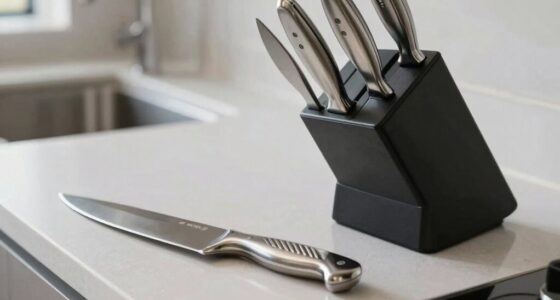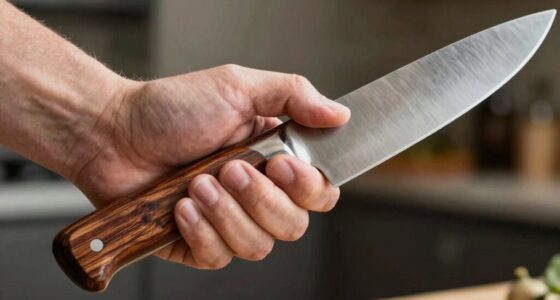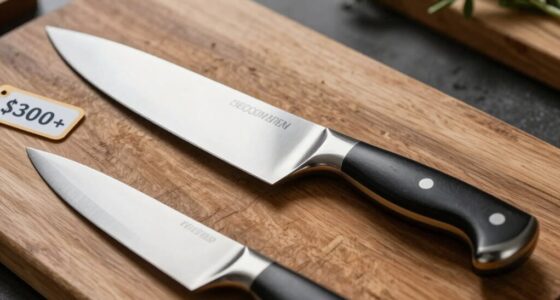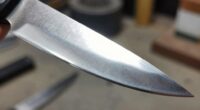
To choose between a santoku, nakiri, bunka, and gyuto, consider the types of ingredients you prep most often. If you want an all-around versatile knife, go for a gyuto; for vegetables and precise cuts, a nakiri or bunka works well. A santoku is lighter and great for smaller tasks. Think about your comfort and the tasks you do most—more details can help you find the perfect fit for your kitchen.

Get kitchen gear delivered free — and shop member deals
- Fast, free delivery on millions of items
- Access to Prime Big Deal Days deals on October 6–7
- Prime Video, Amazon Music and more included
Key Takeaways
- Consider the primary tasks: vegetables, meats, or general use, to match with each knife’s specialization.
- Evaluate blade shape and length: curved for gyuto, straight for nakiri, pointed for bunka, flat for santoku.
- Think about handling preference: lightweight santoku for ease, gyuto for control, nakiri for precision.
- Assess your skill level and comfort: beginner-friendly options like santoku or nakiri for precise control.
- Match your kitchen needs and maintenance willingness: versatile gyuto for all-purpose use or specialized knives for specific tasks.

Choosing the right kitchen knife can considerably improve your cooking experience, making prep work safer and more efficient. When selecting between a Santoku, Nakiri, Bunka, or Gyuto, you need to take into account your cooking style, the types of ingredients you handle most often, and how much maintenance each knife demands. Knife maintenance is vital because it keeps your blades sharp and prevents accidents, directly impacting kitchen safety. A dull knife requires more force to cut, increasing the risk of slips and injuries, so whichever knife you choose, keep in mind that regular sharpening and proper storage are necessary.
Choosing the right knife and maintaining it safely enhances your cooking efficiency and prevents accidents.
If you’re looking for a versatile all-around knife, the Gyuto is a great choice. It’s the Japanese equivalent of a Western chef’s knife, with a curved blade that allows for rocking cuts. Its size typically ranges from 8 to 10 inches, making it suitable for slicing, dicing, and chopping almost any ingredient. The Gyuto’s design offers excellent control, and with proper knife maintenance, it remains sharp longer, guaranteeing safer, cleaner cuts. It’s ideal if you handle a variety of ingredients and want a single knife that can do it all. Additionally, the Gyuto’s blade shape allows for more fluid movement, making it a favorite among professional and home cooks alike.
The Santoku is another popular Japanese knife, known for its shorter, flatter blade. Its name means “three virtues,” referring to slicing, dicing, and mincing. The Santoku’s straight-edge blade excels at precise, thin cuts and is perfect for vegetables, herbs, and boneless meats. Because of its shorter length and lighter weight, it’s easier to maneuver, especially for those with smaller hands or less strength. To keep it performing well, you need to maintain its edge regularly; a dull Santoku can compromise kitchen safety and make prep work more tiring. Moreover, the Santoku’s lightweight design makes it easier for users to control, which can reduce fatigue during prolonged prep sessions.
The Nakiri stands out for vegetable prep. Its straight, rectangular blade makes it ideal for pushing down and slicing through produce with minimal effort. The Nakiri’s flat edge provides full contact with the cutting board, which results in cleaner cuts and less bruising of delicate ingredients. If you primarily cook vegetables or prefer a lightweight, precise tool, the Nakiri can be a great addition. However, it’s less versatile for other tasks, so you might want a different knife for meat or fish.
The Bunka knife combines elements of the Santoku and Gyuto, with a distinctive, pointed tip and slightly curved blade. It’s versatile, suitable for slicing, mincing, and even some delicate tasks, thanks to its sharp point. The Bunka’s unique shape offers excellent control, making it a good choice if you want a multi-purpose knife that’s easier to handle than a Gyuto but more capable than a Nakiri. Proper knife maintenance ensures its edge stays sharp, contributing directly to kitchen safety and efficiency. Choosing the right knife depends on your cooking habits, but keeping your chosen blade sharp and well-maintained is vital for a safe and enjoyable cooking experience.
Japanese chef knife Gyuto 8 inch
As an affiliate, we earn on qualifying purchases.
As an affiliate, we earn on qualifying purchases.
Frequently Asked Questions
Which Knife Is Best for Slicing Bread?
For slicing bread, a serrated knife is your best choice. It uses bread cutting techniques that prevent crushing or tearing the crust while ensuring clean slices. Consider your crust preferences—thicker crusts need a serrated edge with longer teeth, while softer bread benefits from a finer serration. A bread knife’s saw-like motion makes it easier to handle different bread types without squishing the interior, giving you perfect slices every time.
Can I Use a Nakiri for Meats?
You can use a Nakiri for meats, but it’s not ideal. Its thin, straight blade is perfect for vegetables, offering precise cuts and versatility in vegetable prep. However, for meat preparation, especially for slicing or chopping, you’ll find a more suitable knife like a Gyuto or Santoku, which handle meat better due to their design. So, while possible, a Nakiri isn’t the best choice for meat tasks.
How Do I Sharpen a Bunka Knife?
To sharpen your Bunka knife, start with knife sharpening techniques like using a whetstone or honing rod. Soak the whetstone in water, then hold the blade at a 15-20 degree angle, sliding it across the stone in smooth, controlled strokes. Maintain the knife edge by consistently applying even pressure. Repeat on both sides until you achieve a sharp, polished edge, then clean and dry your knife thoroughly.
Are Gyuto Knives Suitable for Beginners?
Imagine you’re new to cooking, and a friend hands you a Gyuto knife. Yes, Gyuto knives are suitable for beginners because they’re versatile and easy to handle once you learn proper knife handling. They promote kitchen safety through balanced weight and ergonomic design, reducing accidents. With practice, you’ll appreciate their sharpness and flexibility, making them a great choice to develop your skills without feeling overwhelmed.
What’s the Difference Between a Santoku and a Chef’s Knife?
A santoku and a chef’s knife differ mainly in shape, size, and cultural origins. A santoku, originating from Japan, features a shorter, wider blade ideal for slicing and dicing, often made from high-quality stainless steel or layered Damascus steel. A chef’s knife, with roots in Western culinary traditions, has a longer, curved blade perfect for rocking cuts. Both use various knife materials, but the santoku’s design emphasizes precision and versatility.
Santoku kitchen knife lightweight
As an affiliate, we earn on qualifying purchases.
As an affiliate, we earn on qualifying purchases.
Conclusion
So, now that you’re armed with all this knife knowledge, go forth and make your kitchen a battlefield of blades. Whether you’re slicing, dicing, or just impressing guests with your sharpness, remember: choosing the right knife isn’t just about function, it’s about style—and maybe a little bit of ego. Just don’t blame me when your fancy new knife outshines your culinary skills. Happy chopping, superstar chef!
As an affiliate, we earn on qualifying purchases.
As an affiliate, we earn on qualifying purchases.
Fall Picks
fall essentials
As an affiliate, we earn on qualifying purchases.