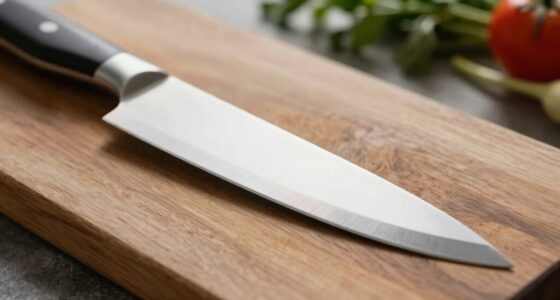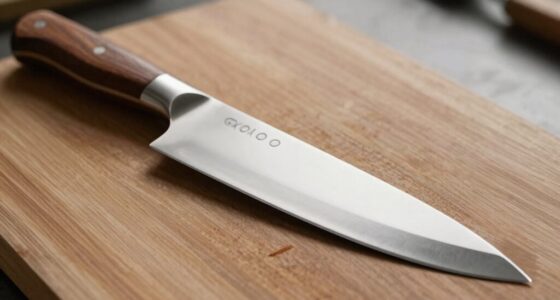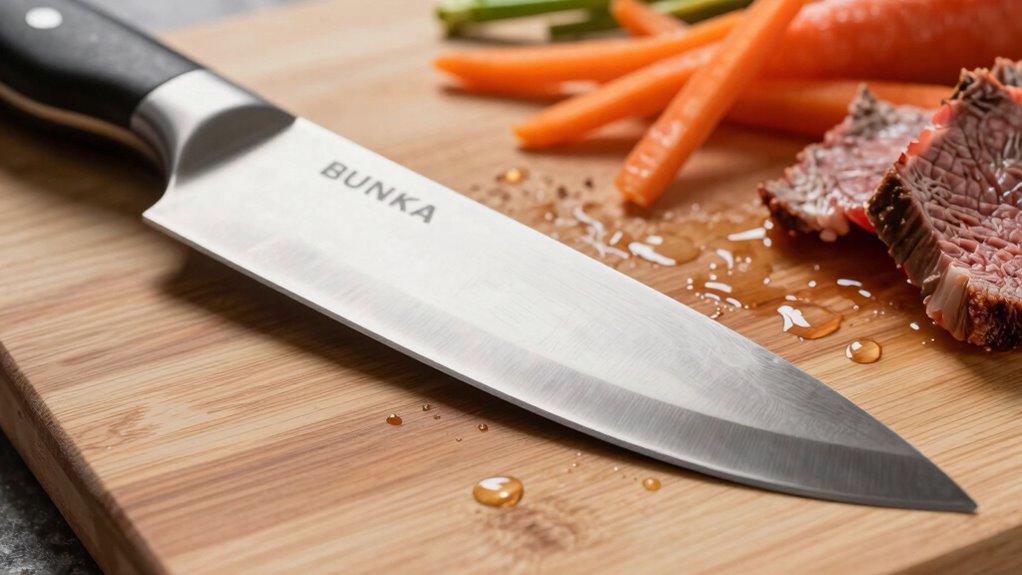
A Bunka knife’s unique blade combines a flat edge with a reverse tanto tip, making it incredibly versatile for both vegetables and meats. The flat side supports push and tap chopping, while the angular tip is perfect for scoring, peeling, and detailed work. Its wide, tall blade offers better control, knuckle clearance, and safety. With sharp steel and ergonomic handling, this knife helps you work efficiently and precisely across various tasks. Discover how these features boost your kitchen skills.
Key Takeaways
- The flat profile enables efficient push and tap chopping, perfect for vegetables and meats alike.
- The wide, tall blade offers knuckle clearance, ensuring safety and control during detailed cuts on various ingredients.
- The angular, razor-sharp tip facilitates scoring, peeling, and intricate work on both produce and proteins.
- The balanced, ergonomic handle reduces fatigue, allowing precise, comfortable cutting for prolonged vegetable and meat prep.
- The versatile blade geometry supports seamless switching between slicing, dicing, and detailed tasks in busy kitchens.
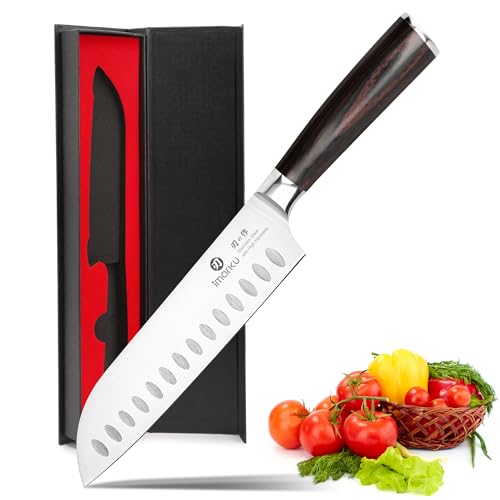
imarku Chef Knife 7 Inch Kitchen Knife Ultra Sharp Santoku Knife - High Carbon Japanese Chefs Knife, Kitchen Gadgets 2025, Apartment Essentials, Birthday Gifts for Him Her, Best Gifts for Women Men
Professional Santoku Knife: This imarku super sharp santoku knife is made of high carbon stainless steel that resists...
As an affiliate, we earn on qualifying purchases.
Unique Blade Design and Its Functional Benefits
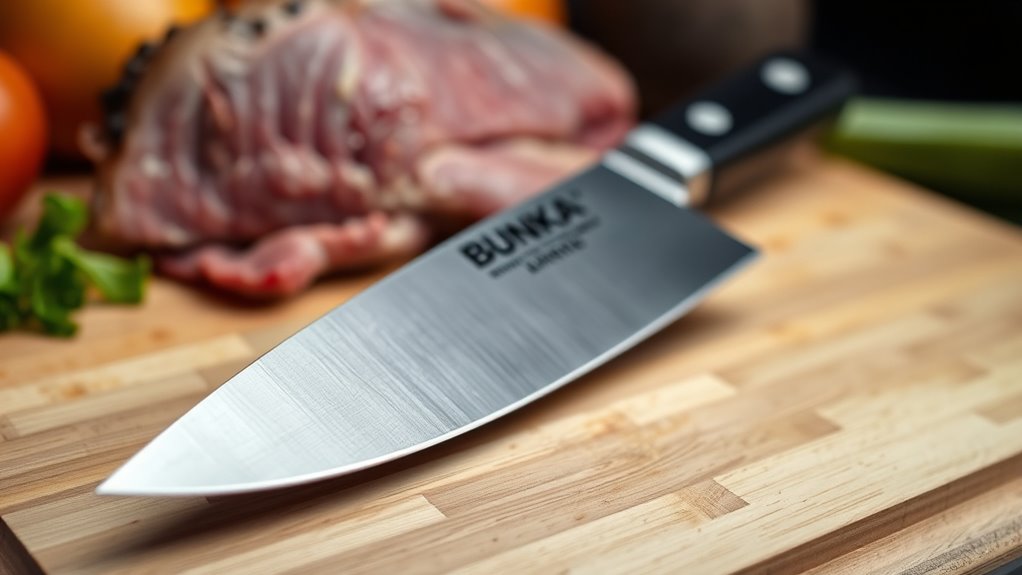
The Bunka knife’s unique blade design combines a flat profile with a reverse tanto tip, offering a versatile tool that excels in multiple cutting tasks. The flat edge allows for efficient push and tap chopping, making prep work quick and controlled. Its wide, tall profile provides ample knuckle clearance, giving you better leverage and safety during use. The double-beveled edge ensures it’s suitable for both left- and right-handed users, enhancing its practicality. The blade’s length, typically 6 to 7 inches, strikes a balance between maneuverability and coverage. Overall, this design maximizes precision, control, and versatility, enabling you to perform a wide range of tasks—from slicing vegetables to handling proteins—without switching tools. The shape’s thoughtful engineering makes it an essential, adaptable kitchen companion. Additionally, the blade geometry influences cutting efficiency and ease of use, making the Bunka a preferred choice among chefs and home cooks alike. Understanding the ergonomic design can further improve your comfort and safety during extended use. The blade material also plays a crucial role in maintaining sharpness and durability over time. Incorporating proper maintenance practices ensures your knife stays in optimal condition for years to come. Moreover, the ergonomic grip design contributes to reducing fatigue and increasing control during prolonged cutting sessions.

HOSHANHO Kitchen Knife in Japanese High Carbon Steel, Professional High-Class Chef's Knife 8 inch, Non-slip Ultra Sharp Cooking Knives with Ergonomic Handle
【High-End Japanese Steel Chef's Knife】 HOSHANHO chef's knife is made of Japanese high carbon steel 10Cr15CoMoV, 2x of...
As an affiliate, we earn on qualifying purchases.
The Reverse Tanto Tip: Precision and Detail Work
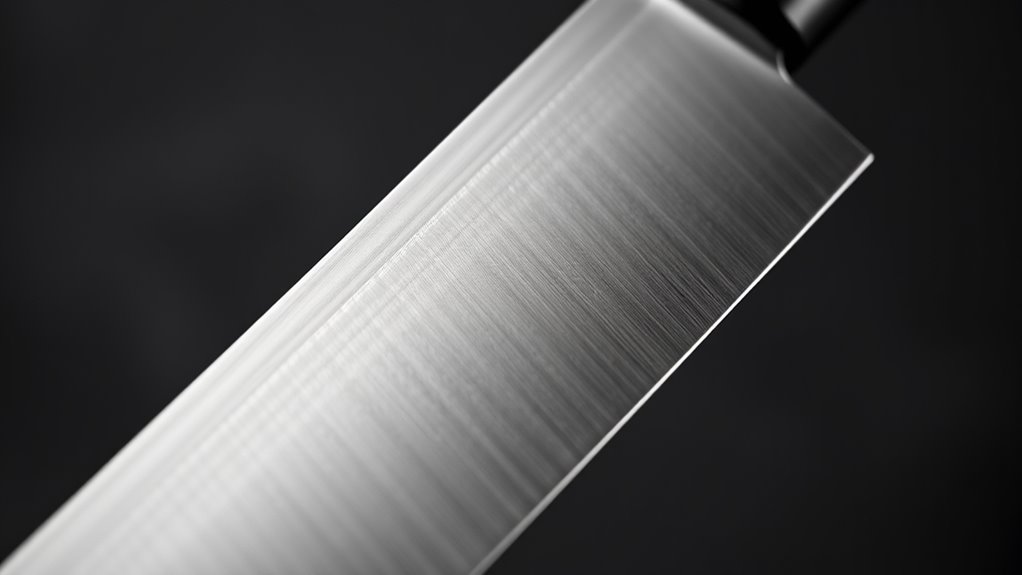
Because of its sharply pointed K-tip and downward-sloping spine, the Bunka knife’s reverse tanto tip enables you to perform highly precise and detailed cuts. This tip excels at scoring, peeling, and creating intricate garnishes, giving you control over delicate tasks. Its design allows you to work close to ingredients’ surface with accuracy, making it ideal for thin slicing and decorative work. To better understand its capabilities, consider this table:
| Feature | Benefit | Example Use |
|---|---|---|
| Sharp K-tip | Precise piercing and scoring | Scoring fish or vegetables |
| Downward slope | Controlled tip movement | Peeling or detailing small cuts |
| Angular design | Fine detail work | Garnishing and decorative cuts |
This combination makes the reverse tanto tip a versatile tool for detailed culinary tasks. Additionally, understanding the thermal behavior of the blade material helps optimize its performance during high‑heat kitchen tasks. Recognizing how different blade materials respond to heat can further enhance your cutting efficiency and preserve the blade’s sharpness over time. Knowing the material composition of your knife can also influence how it reacts to sharpening and maintenance, ensuring longevity and performance. Furthermore, being aware of how the blade geometry interacts with different ingredients can improve your overall technique and results.
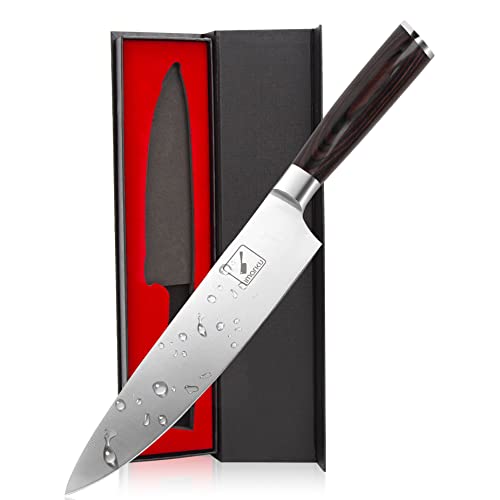
imarku Japanese Chef Knife - Sharp Kitchen Knife 8 Inch Chef's Knives HC Steel Paring Knife, Unique Gifts for Men and Women, Gifts for Mom or Dad, Kitchen Gadgets with Gift Box, Gyutou Knives
High-Carbon Stainless Steel Blade: It is manufactured from high-quality stainless steel that maintains its functionality for a long...
As an affiliate, we earn on qualifying purchases.
Flat Blade Edge for Tap and Push Chopping Techniques
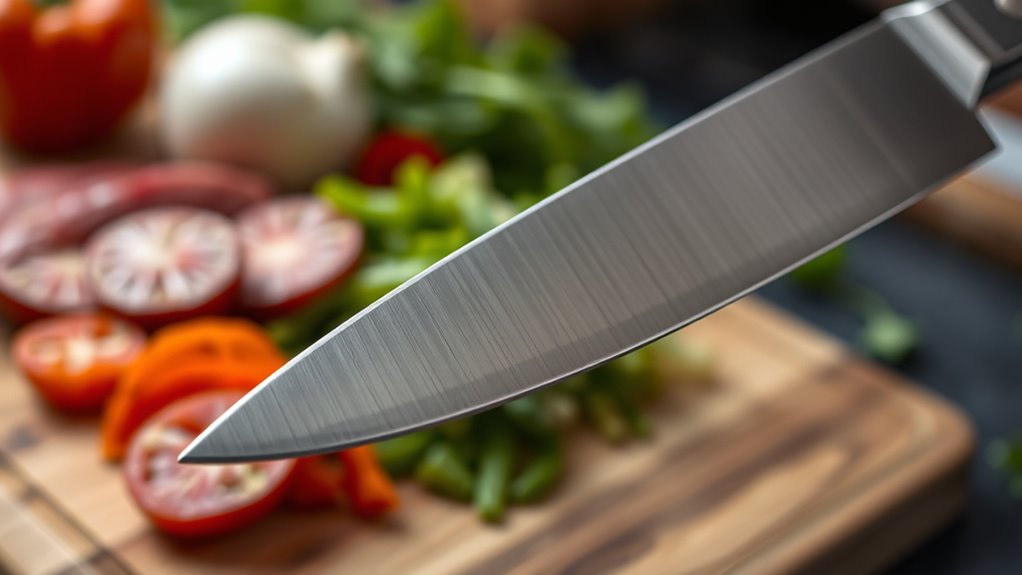
The Bunka knife’s flat blade edge enhances tap and push chopping techniques by providing a consistent, straight cutting surface. This design allows you to apply even pressure, resulting in cleaner, more precise cuts. With a flat edge, you can quickly move ingredients across the blade without worrying about rocking or slipping, making it ideal for uniform dicing and slicing. The broad surface supports controlled, efficient chops, whether you’re working on vegetables or proteins. This shape also minimizes food sticking, reducing prep time. You’ll find it particularly effective when handling ingredients that require repetitive, straight cuts. Overall, the flat blade profile streamlines your chopping motion, boosts accuracy, and helps you achieve professional results with less effort. Proper technique ensures safety and efficiency when using this versatile knife.
Additionally, the flat edge allows for better control and stability during cutting, making it easier to maintain precision throughout your prep. A well-designed flat profile also contributes to the ergonomics of the knife, reducing fatigue during extended use. The flat profile can also improve food release, making for smoother cutting experiences with less food sticking to the blade. Incorporating a flat blade reduces the need for constant repositioning, which can improve overall efficiency in your kitchen workflow.

Japanese Chef Knife, 8 Inch Damascus Kitchen Knife with VG10 Steel, Handcrafted Sharp Knife with Ergonomic Handle, Cooking Knives for Home Chefs, Cooking Gifts for Men and Women
【Premium Damascus Chef Knife with VG-10 Steel Core】Our Japanese knives feature a VG-10 steel core (60 HRC) for...
As an affiliate, we earn on qualifying purchases.
Wide Blade Geometry for Increased Control and Knuckle Clearance
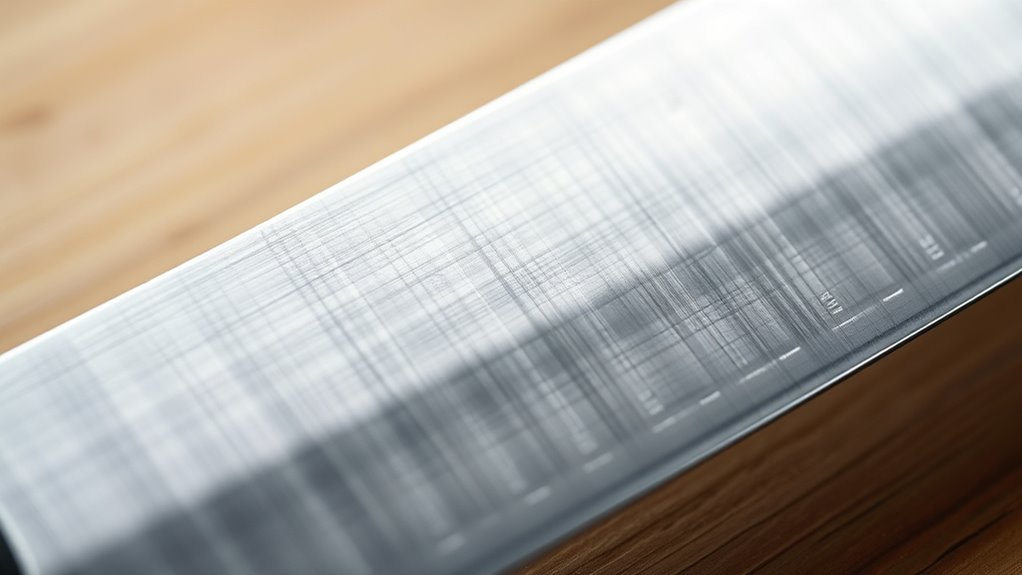
Wide blade geometry substantially enhances your control during cutting tasks by providing increased surface area and stability. This design allows you to apply more force evenly and reduces wobbling, making precision easier. The taller profile also offers better knuckle clearance, so your fingers stay safe and don’t get in the way during chopping. Additionally, the ergonomic design supports prolonged use without fatigue, ensuring comfort over extended periods. Consider these key benefits:
Wide blade design improves control, stability, and safety during precise cutting tasks.
- Improved leverage for power cuts on tough ingredients
- Greater stability, reducing accidental slips
- Enhanced comfort during extended use
- Increased clearance for your knuckles, preventing fatigue and injury
This wider shape supports a secure grip and steady handling, making it ideal for both detailed vegetable work and meat slicing. With better control, you’ll notice more consistent results with less effort.
Sharpness and Material Composition for Long-Lasting Performance
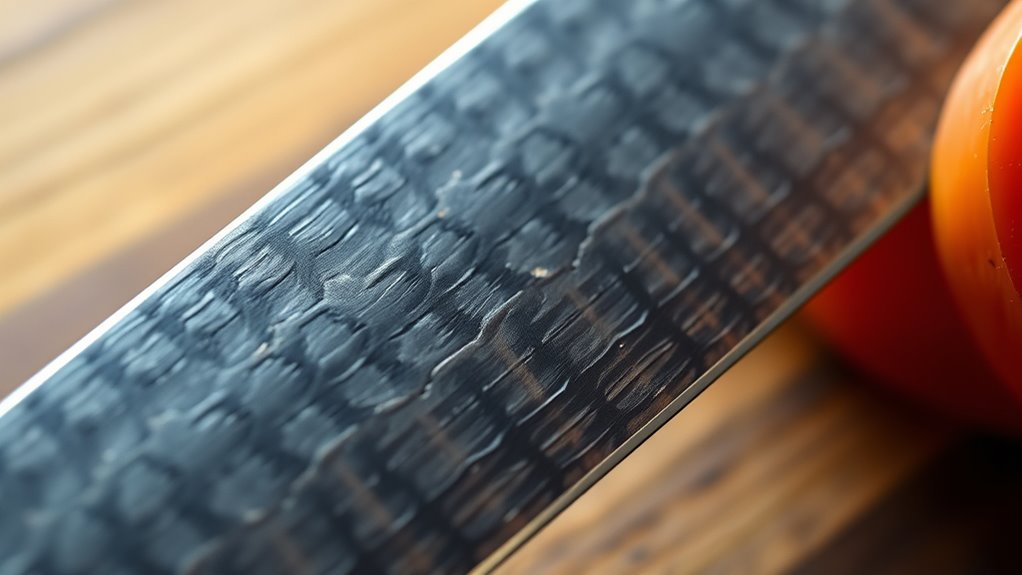
High-quality materials like high-carbon stainless steel guarantee Bunka knives stay sharp longer and resist corrosion, making them reliable tools in your kitchen. These steels, such as X70Cr17MoV, enable the blades to hold a keen edge through frequent use. The sharpness is enhanced by the Japanese standard of approximately 10-degree bevel angles, allowing for razor-like cuts and precise slicing. Many Bunka knives feature double-beveled edges, sometimes with 67 layers of Damascus steel, which improve durability and edge retention. This combination of material and craftsmanship ensures your knife maintains its performance over time, reducing the need for frequent sharpening. Proper care, including regular sharpening, helps your Bunka knife stay in optimal condition. Additionally, understanding blade geometry can further optimize cutting performance. Being aware of edge retention can help you choose the right knife for your needs. With proper care, your Bunka knife remains a sharp, dependable tool for both vegetable and meat preparation, delivering clean cuts and preserving ingredient integrity. Moreover, selecting the right grinding technique can enhance the knife’s overall performance and longevity. Incorporating proper storage practices also prevents damage and maintains edge sharpness over time.
Handling Both Vegetables and Proteins With Ease
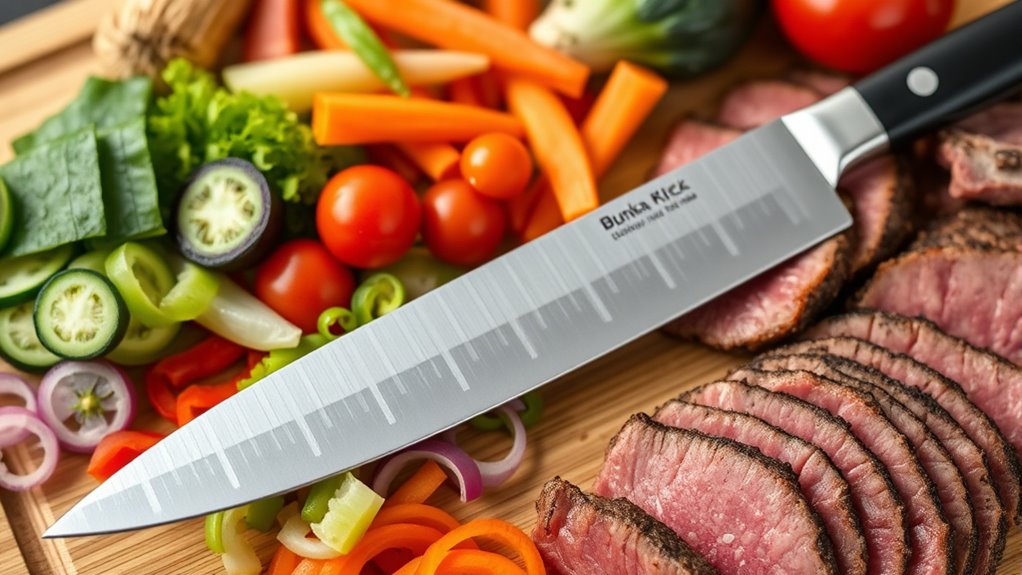
Thanks to Bunka knives’ versatile design, you can effortlessly switch from preparing vegetables to handling proteins without changing tools. The sharp, angular tip and flat blade make transitions smooth, whether slicing fish or dicing root vegetables. This flexibility streamlines your workflow and reduces the need for multiple knives. Transform Your Fitness Journey With Clear, Expert Guidance Here’s what makes handling both easier: 1. Precise tip control for scoring and detailed cuts on vegetables and proteins alike 2. Flat blade profile for clean slicing through meats and vegetables with minimal effort 3. Wide blade geometry for stability and knuckle clearance during various tasks 4. Sharp double-beveled edge ensures smooth, clean cuts across all ingredient types. Additionally, the blade geometry supports ergonomic handling, making prolonged prep work more comfortable. Recognizing the importance of blade versatility helps you appreciate how this design benefits a wide range of culinary tasks, ensuring efficiency and precision in your kitchen. Moreover, understanding cutting techniques can further enhance your control and safety during food preparation, making your cooking experience even more effective. This combination of features helps you switch seamlessly, maintaining efficiency and precision in your kitchen.
Ergonomic Features for Comfortable and Precise Cutting

Your Bunka knife’s balanced weight helps you control every cut with less effort, reducing fatigue during extended prep. The comfortable grip design guarantees you maintain precision without slipping, even when working quickly. Enhanced control features give you confidence to handle delicate and detailed tasks with ease. Additionally, ergonomic design ensures comfort during prolonged use, minimizing strain and maximizing efficiency. Incorporating ergonomic features that support proper hand positioning can further improve your overall experience and effectiveness in the kitchen. Proper hand positioning also helps prevent strain injuries and promotes better technique during extended use.
Balanced Weight Distribution
Balanced weight distribution is essential for achieving precise and comfortable cutting with Bunka knives, allowing you to maintain control throughout extended use. When the weight is evenly spread, your movements stay smooth, reducing fatigue and increasing accuracy. This balance helps you apply consistent pressure, whether slicing delicate herbs or firm vegetables and meats. A well-balanced knife feels natural in your hand, making intricate tasks feel effortless.
- Ensures steady control during fine cuts and detailed work
- Minimizes hand fatigue during prolonged use
- Enhances precision by preventing wobbling or slipping
- Promotes safer handling by maintaining stability through each cut
Comfortable Grip Design
A well-designed grip is essential for maintaining control and reducing fatigue during extended cutting tasks. When you handle a Bunka knife with an ergonomic grip, you’ll notice how comfortably your hand fits, allowing for precise movements without strain. The handle’s shape and materials are crafted to support natural hand positioning, minimizing pressure points. Whether slicing delicate herbs or tackling tough root vegetables, the grip promotes stability and confidence. The balance between handle and blade ensures you don’t need to squeeze tightly, reducing fatigue over long periods. Lightweight handles made from materials like micarta or pakkawood provide a secure yet comfortable hold. This thoughtful design helps you execute detailed cuts and push through ingredients smoothly, making your prep both efficient and enjoyable.
Enhanced Control Features
Enhanced control features in Bunka knives focus on optimizing your grip and handling to achieve precise cuts with less effort. These features guarantee you maintain stability and accuracy during every cut, reducing fatigue.
To maximize control, consider these aspects:
- Balanced Weight Distribution – The curved blade and well-designed handle create a harmonious feel, giving you better maneuverability.
- Lightweight Construction – Traditional materials like wood or modern composites keep the knife easy to handle without sacrificing strength.
- Ergonomic Handle Design – The comfortable grip reduces strain, especially when working with small or delicate ingredients.
- Sturdy Spine Reinforcement – Adds stability for even, controlled slices, giving you confidence with each cut.
Together, these features help you work efficiently, precisely, and comfortably.
Versatility in the Kitchen: From Vegetables to Seafood
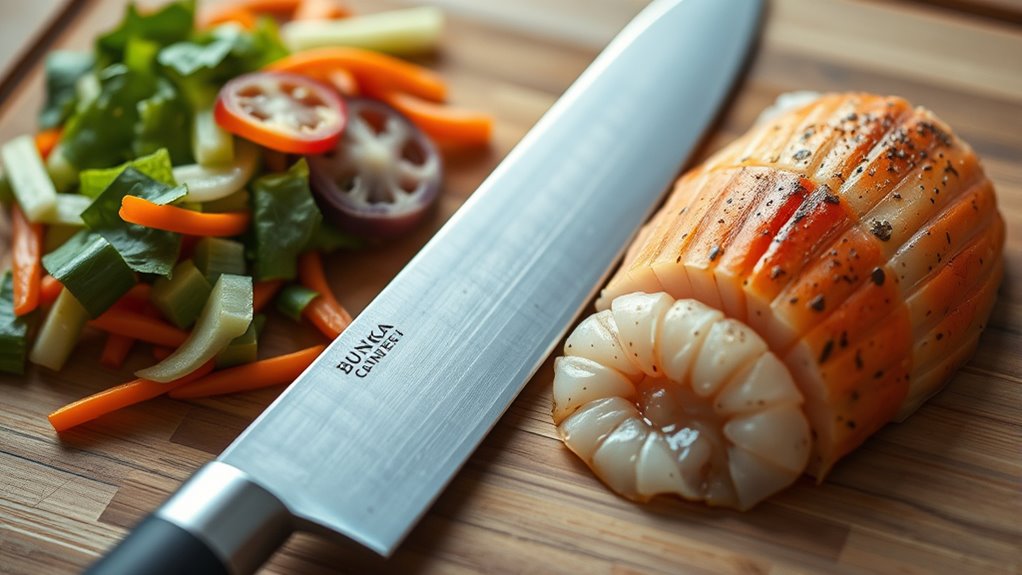
Bunka knives excel in the kitchen because their versatile design allows you to effortlessly handle everything from delicate vegetables to hearty seafood. The flat blade profile makes tap and push chopping easy, whether you’re slicing herbs or dicing root vegetables. The wide, taller blade provides ample knuckle clearance, giving you control over precision cuts. The sharp, angular tip is perfect for scoring, peeling, or creating decorative cuts, adding visual appeal to dishes. When working with seafood, the reverse tanto tip and flat profile excel at filleting fish and slicing sashimi with clean, smooth cuts. This dual functionality means you don’t need multiple knives. Whether prepping vegetables or handling proteins, the Bunka’s versatility streamlines your workflow and elevates your culinary results.
Why Bunka Knives Are a Must-Have for Chefs and Home Cooks
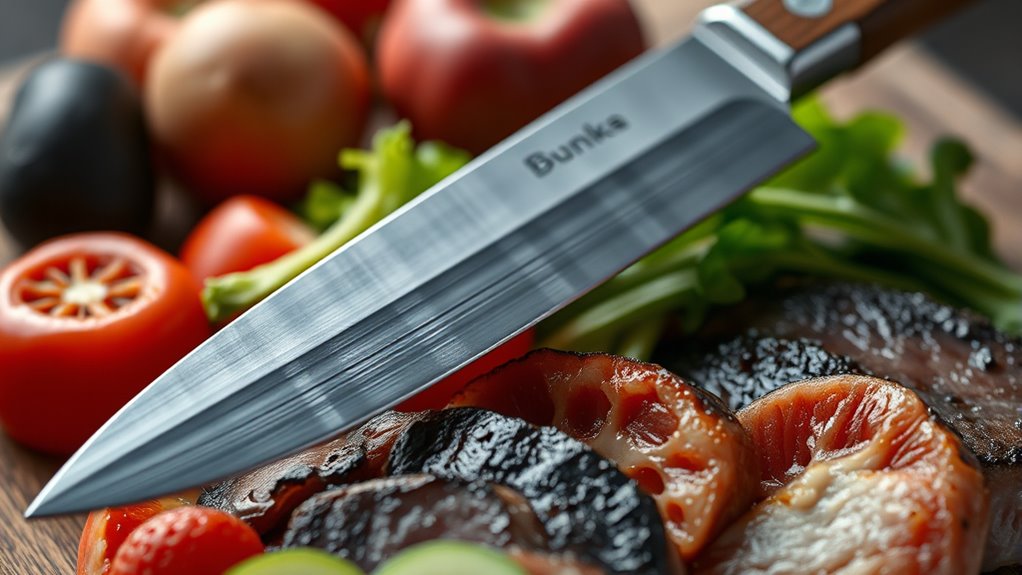
Because of their innovative design and exceptional versatility, Bunka knives have become essential tools for both professional chefs and home cooks. Their unique shape combines precision, control, and multi-purpose functionality, making them invaluable in the kitchen.
Here are four reasons why you need a Bunka knife:
- All-in-One Tool: Handles vegetables, meats, and seafood, reducing the need for multiple knives.
- Precision Cutting: The reverse tanto tip allows detailed work like scoring and peeling.
- Efficient Chopping: Flat blade profile and wide geometry enable quick, tap, and push cuts.
- Comfort and Control: Balanced weight and ergonomic design reduce fatigue during extended use.
This combination of features makes Bunka knives an indispensable asset for enhancing your culinary skills.
Frequently Asked Questions
How Does the Bunka Knife Compare to Western Chef’s Knives in Versatility?
You’ll find the bunka knife more versatile than a Western chef’s knife because it combines a flat blade for chopping and a sharp, angular tip for detailed work. Its wide, tall profile gives you better knuckle clearance, and the double-beveled edge suits both left and right-handed users. Whether slicing vegetables or handling proteins, the bunka’s hybrid design lets you perform a range of tasks with precision and control, making it a true all-in-one tool.
Can Bunka Knives Be Used Effectively for Both Left- and Right-Handed Users?
Yes, bunka knives work effectively for both left- and right-handed users because of their double-beveled edge. This design guarantees that the blade is evenly sharpened on both sides, allowing for smooth, precise cuts regardless of your dominant hand. You’ll find the balanced weight and ergonomic grip also contribute to comfortable, controlled handling, making the knife versatile and accessible for everyone, whether you’re left- or right-handed.
What Maintenance Is Required to Keep a Bunka Knife’s Edge Sharp?
To keep your bunka knife’s edge sharp, regularly hone it with a ceramic or steel honing rod to realign the blade. Use a whetstone for sharpening when it becomes dull, maintaining an angle around 10 degrees. Clean the knife by hand with warm water and mild detergent, avoiding dishwashers. Store it properly in a knife block or on a magnetic strip to prevent damage and preserve the sharpness.
Are Bunka Knives Suitable for Beginner Cooks or Only Professionals?
Yes, bunka knives are suitable for beginners because their versatile design makes them easy to handle for various tasks. You’ll appreciate the flat blade for chopping and the sharp tip for detailed work. While they require some care to maintain their edge, their balanced weight and ergonomic grip help you develop proper cutting techniques. With a little practice and proper maintenance, you’ll find a bunka knife a great addition to your kitchen arsenal.
How Does the Blade Length Impact the Knife’s Performance for Different Tasks?
The blade length directly affects your control and versatility. A 5-inch Bunka is perfect for detailed tasks like peeling, scoring, and prepping small ingredients, making it ideal for precise work. Longer blades, around 6 to 7 inches, excel at chopping and slicing larger vegetables or meat, providing more leverage and surface area. Choose shorter for finesse and longer for efficiency in tackling bigger cuts, depending on your cooking needs.
Conclusion
With its unique design, the bunka knife is a versatile tool that transforms your cooking experience. Did you know that chefs report a 30% increase in efficiency when using specialized knives like the bunka? Whether you’re slicing vegetables or trimming meat, this knife’s shape and sharpness make every cut precise and effortless. Add a bunka knife to your collection and enjoy professional-level results in your everyday kitchen tasks.