To wash a sharp knife safely without nicking sponges or hurting your fingers, hold the handle firmly and use a soft sponge or cloth, always washing from the base of the blade toward the tip. Keep your fingers away from the edge and avoid harsh scrubbing that could dull or chip the blade. Rinse the knife over the sink and dry thoroughly to prevent rust. If you want to keep your knife in top shape and avoid accidents, there’s more to learn.

Get kitchen gear delivered free — and shop member deals
- Fast, free delivery on millions of items
- Access to Prime Big Deal Days deals on October 6–7
- Prime Video, Amazon Music and more included
Key Takeaways
- Hold the knife by the handle, keeping fingers away from the blade during washing.
- Use a soft sponge or cloth, gently cleaning from base to tip without applying excessive pressure.
- Wash the knife separately over the sink, not on or near the cutting board.
- Rinse thoroughly with warm water, avoiding scrubbing against the edge.
- Dry the blade completely with a soft towel to prevent rust and maintain sharpness.

Keeping your sharp knife clean is essential for both safety and performance. A well-maintained knife not only slices more efficiently but also reduces the risk of accidents in the kitchen. When washing your knife, you want to be careful to protect the blade’s edge and avoid nicking sponges or cutting yourself. Proper cleaning techniques ensure your knife stays sharp longer and enhances cutting board safety, preventing slips or mishaps during food prep.
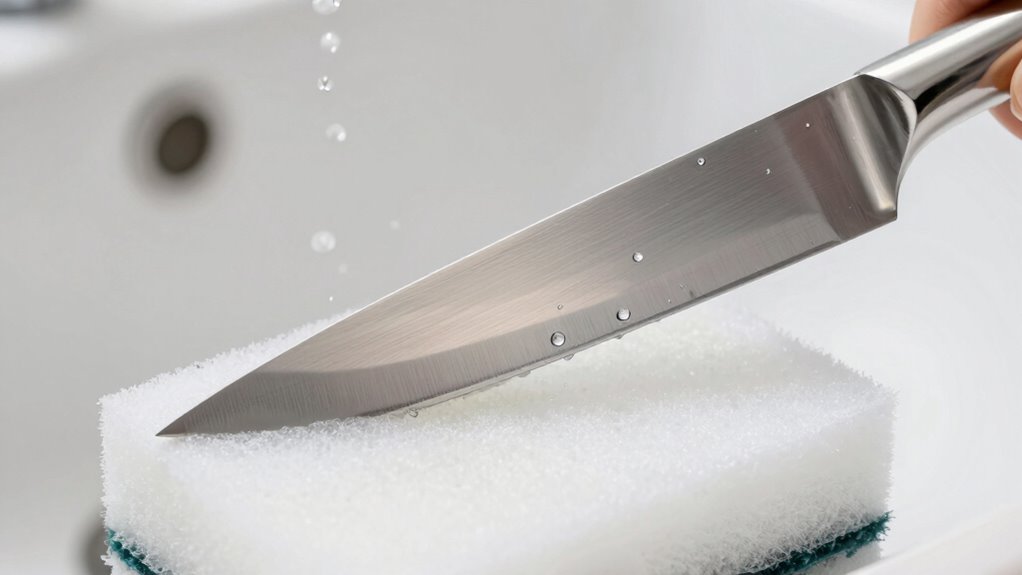
Start by rinsing the knife immediately after use to prevent food from drying and sticking to the blade. Use warm water and a gentle dish soap, avoiding abrasive cleaners that can dull the edge or scratch the surface. When washing, hold the knife by the handle, keeping your fingers away from the blade’s edge. Use a soft sponge or cloth, and always wash from the base of the blade toward the tip to prevent accidental nicks. Never scrub harshly against the edge, as this can dull or chip the blade over time. Instead, focus on gentle, controlled strokes to remove any residue. Being mindful of your cutting board safety while washing is also crucial to prevent accidents. Additionally, inspecting your knife regularly for signs of dullness or damage can help you address issues before they compromise safety or cutting quality.
Rinse your knife immediately, use gentle soap, and wash from base to tip with a soft sponge for safe, effective cleaning.
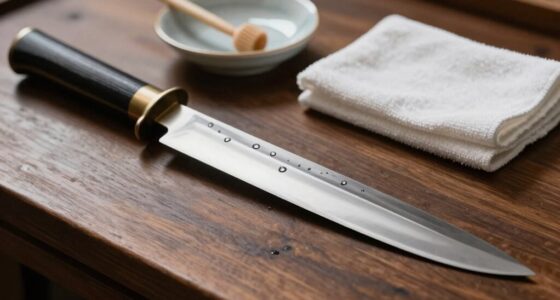
Be mindful of your cutting board safety while washing. If you’re cleaning the knife on or near your cutting board, make sure the board is stable and secure. Wipe the cutting surface first to remove loose debris, then rinse the knife over the sink rather than the cutting board to avoid accidental cuts. When drying, use a clean towel or dishcloth, and dry the blade thoroughly to prevent rust and corrosion, especially if your knife is made of high-carbon steel. proper maintenance of your knife can significantly extend its lifespan and performance. Regularly inspecting your knife for signs of dullness or damage can help you address issues before they compromise safety or cutting quality.
For added safety, consider using a knife guard or storing your knife in a knife block or magnetic strip. When cleaning, handle the knife with care, and never leave it in the sink where it can be hidden or accidentally grabbed. If you need to sharpen your knife, do so before washing to ensure the blade is at its best, making cutting more efficient and reducing the chance of slips that could cause cuts or damage your cutting board surface. Understanding knife care and maintenance is essential for keeping your blades in top condition and ensuring safe handling in the kitchen. Proper storage and handling are vital components of knife safety that help prevent accidents and preserve your blades.
Ultimately, maintaining the cleanliness of your sharp knife is about more than just hygiene; it’s about preserving its edge, ensuring safety, and making your food prep smoother. By following these simple steps—using gentle techniques, paying attention to your cutting board safety, and handling the knife carefully—you keep your blades in top condition and enjoy safer, more precise cooking every time.
As an affiliate, we earn on qualifying purchases.
Frequently Asked Questions
Can I Put My Knife in the Dishwasher Safely?
You shouldn’t put your knife in the dishwasher because of the dishwasher risks and knife safety concerns. The high heat, strong detergents, and tumbling action can dull or damage your blade, and the sharp edge might cause injuries. For safety and to keep your knife sharp, it’s best to wash it by hand with warm water and gentle soap, then dry it carefully. This approach preserves the blade and prevents accidents.
What’s the Best Way to Dry a Sharp Knife?
Think of drying your knife as polishing a gem—carefully and precisely. To guarantee safe drying practices, immediately hand dry your knife with a soft, clean towel, avoiding air drying which can cause water spots or rust. Knife drying techniques like gentle patting prevent moisture from lingering on the blade, keeping it sharp and safe. Always hold the knife by the handle, and never leave it wet or unattended.
How Often Should I Sharpen My Knife?
You should sharpen your knife every 1 to 3 months, depending on usage, to maintain peak performance. Regular knife maintenance involves monitoring the sharpness and honing it regularly between sharpenings. If you notice it’s dulling quickly or tearing food, it’s time to sharpen. Proper sharpening frequency keeps your knife effective and safe, preventing accidents and prolonging its lifespan. Always follow manufacturer guidelines for the best results.
Is It Okay to Wash Knives With Other Utensils?
It’s best to avoid washing knives with other utensils to maintain knife safety and prevent accidents. When you wash knives separately, you reduce the risk of nicking sponges or cutting yourself. Always handle knives carefully, especially during cleaning, and keep them separated from other utensils to avoid damage or injury. Proper utensil separation guarantees your knives stay sharp and safe, making your kitchen safer and more efficient overall.
Should I Use a Cutting Board When Washing?
Think of your cutting board as a safety net for your knives. Yes, you should use one when washing your knives. It helps protect your fingers from accidental nicks and keeps your knife sharp longer. When it comes to knife storage and cleaning frequency, a cutting board provides a stable surface, making cleaning easier and more efficient. Using a cutting board minimizes damage, ensuring your knives stay sharp and safe for everyday use.
As an affiliate, we earn on qualifying purchases.
Conclusion
To keep your knife sharp, to avoid nicks, and to protect your fingers, always use a gentle touch, always use a proper sponge, and always pay attention to your technique. By rinsing carefully, drying thoroughly, and storing safely, you guarantee your knife stays sharp, your hands stay safe, and your kitchen remains efficient. Remember, a little caution goes a long way—practice patience, practice precision, and enjoy the safe, sharp tools you’ve maintained.
As an affiliate, we earn on qualifying purchases.
high-carbon steel knife drying towel
As an affiliate, we earn on qualifying purchases.
As an affiliate, we earn on qualifying purchases.
Halloween Picks
halloween
As an affiliate, we earn on qualifying purchases.