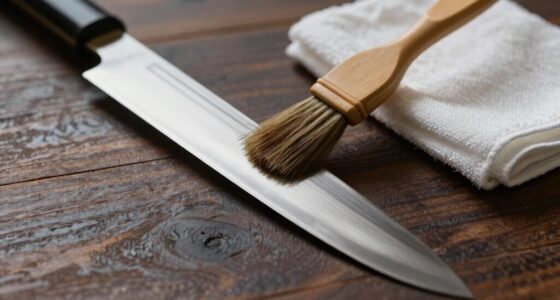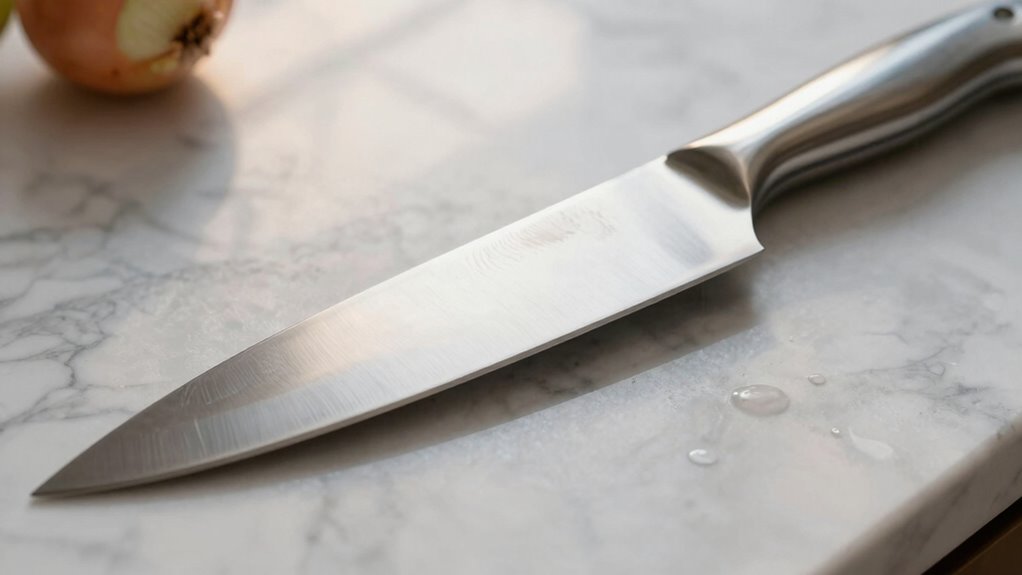

When your knife starts smelling like onion or fish, clean it immediately with warm, soapy water and a soft sponge, focusing on the handle area. Rubbing the blade with a baking soda paste or wiping it with lemon juice or vinegar helps neutralize odors. Rubbing the knife against stainless steel or regularly honing it also reduces residual smells. Store your knife properly to prevent odors from lingering; keep going for more tips to fully deodorize your knife.
Key Takeaways
- Immediately clean the knife with warm, soapy water and dry it thoroughly to remove residual odors.
- Rub the blade with a baking soda and water paste, then rinse to neutralize strong smells.
- Wipe the knife with lemon juice or vinegar, as acids help break down odor-causing compounds.
- Rub the knife against a stainless steel surface under running water to lift and neutralize odors.
- Store knives properly in a knife block or magnetic strip to prevent odor absorption and ensure good ventilation.
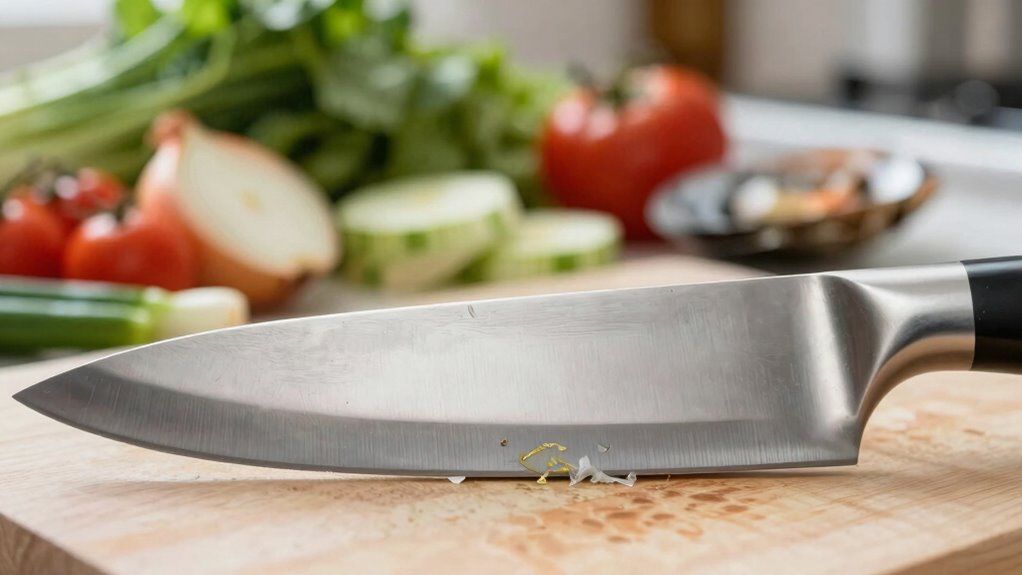
If your knife begins to smell like onion or fish, it’s a sign that residual odors are lingering from previous cuts, and it’s important to address the problem promptly. These odors can transfer to other foods, affecting their flavor and compromising your kitchen hygiene. The first step is to understand that good knife maintenance is essential to prevent odors from building up. Regularly cleaning your knife after each use, especially when switching between strongly scented ingredients, helps prevent odors from embedding into the blade. Use warm, soapy water and a soft sponge to thoroughly scrub the blade, paying attention to the area near the handle where residues can hide. Dry the knife immediately afterward to prevent rust and maintain the sharpness.
Regular cleaning and immediate drying prevent odor buildup and keep your knife sharp and hygienic.
When dealing with persistent odors, consider employing specific odor removal techniques. One effective method is to rub the blade with a mixture of baking soda and water, creating a paste that neutralizes smells. Apply the paste evenly along the entire blade, let it sit for a few minutes, then rinse thoroughly. Alternatively, lemon juice or vinegar can be used as natural deodorizers. Simply squeeze some lemon juice or dab vinegar onto a soft cloth and wipe down the knife. The acids help break down odor-causing compounds, leaving your knife smelling fresh. After this treatment, rinse and dry the knife carefully. Regularly cleaning and maintenance of your knives can also significantly reduce the likelihood of persistent odors. Additionally, incorporating proper storage practices can prevent odors from settling onto your knives over time.
Another technique involves using stainless steel as a deodorizing tool. Rub the knife against a stainless steel surface, like a spoon or a dedicated steel bar, under running water. The friction helps lift odors from the blade, and the stainless steel reacts with sulfur compounds that cause strong smells, neutralizing them. This method is especially effective because stainless steel can absorb and eliminate odors from the metal surface itself. Regularly honing your knife not only keeps it sharp but can also help prevent odor retention by reducing microscopic nicks and residues where smells can cling. Proper knife hygiene is crucial for preventing persistent odors and ensuring your tools stay in optimal condition. Additionally, air circulation in your kitchen can help dissipate lingering smells and maintain a fresher environment. Improving kitchen ventilation can also significantly reduce odors that settle on your knives and other utensils.
Proper storage also plays a role in maintaining your knife’s scent and condition. Keep your knives in a knife block, sheath, or on a magnetic strip, rather than loose in a drawer. This prevents contamination and reduces exposure to other odorous foods. Finally, if odors persist despite cleaning, consider using commercial odor-removing sprays designed for kitchen tools, but make sure they are food-safe. Consistent knife maintenance, combined with these odor removal techniques, ensures your knives stay fresh-smelling, sharp, and ready for culinary tasks.
stainless steel knife deodorizer
As an affiliate, we earn on qualifying purchases.
As an affiliate, we earn on qualifying purchases.
Frequently Asked Questions
Can Dishwasher Cleaning Remove Onion or Fish Odors From Knives?
Yes, dishwasher cleaning can help remove onion or fish odors from knives. It’s effective for kitchen odor and knife sanitization because the hot water and detergent break down odor-causing molecules. To boost results, you can run your knives through the dishwasher with a baking soda or vinegar rinse afterward. Just make certain your knives are dishwasher-safe to prevent damage, and always dry them thoroughly to maintain their condition.
How Long Does It Take for Odors to Dissipate Naturally?
Natural dissipation of odors usually takes a day or two, depending on the strength of the scent and air circulation. For odor elimination, make sure your knives are thoroughly rinsed and air-dried in a well-ventilated area. If you want to speed things up, try soaking them in a mixture of baking soda and water or lemon juice. With patience, your knives will have a fresh, clean smell once again.
Are There Specific Materials Better at Resisting Odor Absorption?
Odor-resistant materials are your best bet for preventing smells from lingering on your knives. Look for kitchen storage solutions made from stainless steel, silicone, or certain plastics, as they resist odor absorption better than wood or other porous materials. These materials help keep your knives fresh and reduce the need for frequent cleaning. Investing in odor-resistant knives or storage containers guarantees your kitchen stays odor-free and your tools stay hygienic.
Is It Safe to Use Bleach to Remove Odors From Knives?
Using bleach to remove odors from knives isn’t recommended because it can cause harmful chemical reactions and damage the material durability of your blades. Bleach may weaken the metal or handle over time, risking corrosion or deterioration. Instead, opt for safer cleaning methods like vinegar or baking soda, which effectively neutralize odors without compromising your knife’s integrity. Always prioritize gentle, food-safe solutions to maintain your knife’s longevity.
Can Storing Knives With Other Utensils Cause Odor Transfer?
Think of your kitchen as a symphony of scents—you don’t want your knives to be the unwelcome soloist. Storing knives with other utensils can transfer odors, making odor prevention tricky. To keep your knives fresh, practice proper knife maintenance by storing them separately or in a knife block. This prevents scent transfer, maintains their sharpness, and keeps your kitchen smelling inviting, not overpowering.
knife odor removal kit
As an affiliate, we earn on qualifying purchases.
As an affiliate, we earn on qualifying purchases.
Conclusion
Sometimes, the faint scent of onion or fish on your knife reminds you that even in the kitchen, life’s little coincidences linger. With a simple scrub or vinegar rinse, you can restore its freshness, just as unexpected moments can clear your mind. Remember, these odors are fleeting, much like the surprises that pop up when you least expect them. Embrace the small quirks—your knife and your day both benefit from a fresh start.
best knife cleaning and deodorizing products
As an affiliate, we earn on qualifying purchases.
As an affiliate, we earn on qualifying purchases.

Coninx Acacia Wood Kitchen Knife Block – 15 Slots Knife Holder – Professional Quality Wood Knife Organizer – Secure Knife Stand To Keep Knives Neat & Sharp – Knife Blocks for Kitchen Knife Storage
THE FIT-IT-ALL KITCHEN KNIFE HOLDER: The 15 universal slots of various sizes on this visually small knife block…
As an affiliate, we earn on qualifying purchases.
As an affiliate, we earn on qualifying purchases.