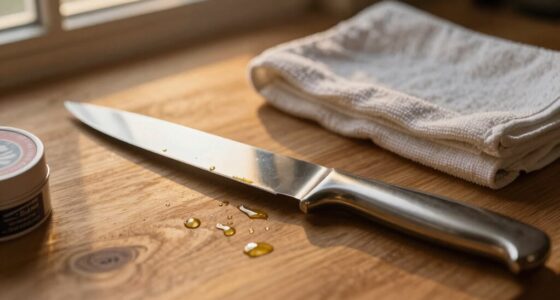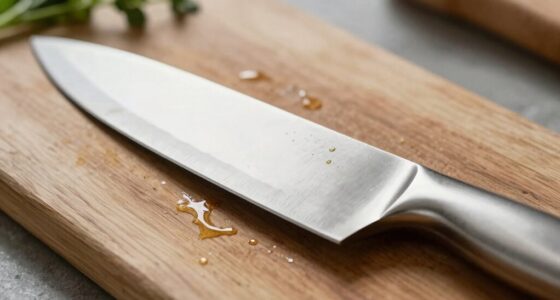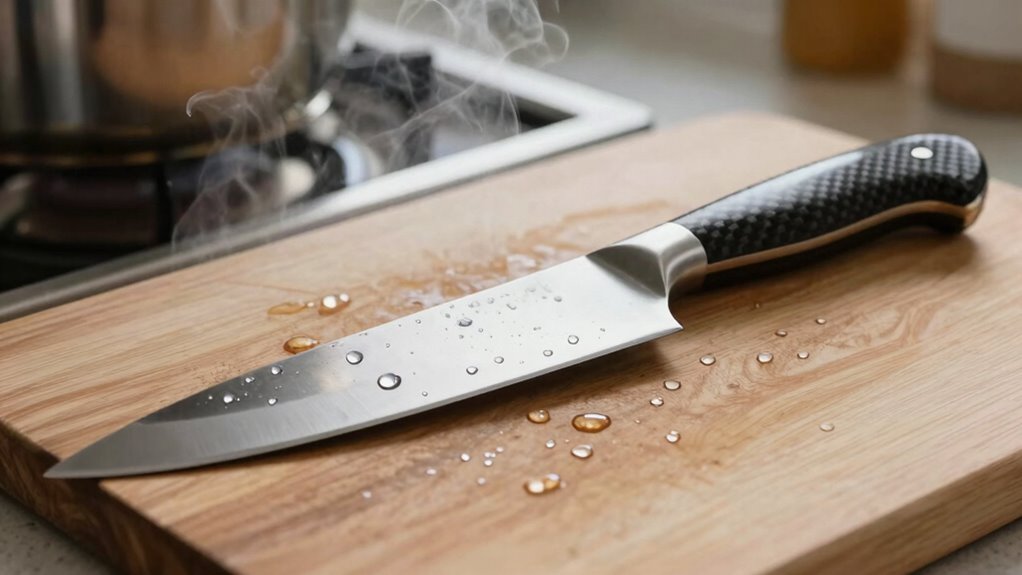

To prevent rust on your carbon steel knife in humid kitchens, you should clean it immediately after use with hot water and soap, then dry it thoroughly with a soft cloth or towel. Apply a thin layer of food-grade oil like mineral or camellia oil regularly, especially after cleaning or exposure to moisture. Keep your kitchen well-ventilated or use dehumidifiers to control humidity. Following these simple steps will help keep your knife rust-free — find out more to keep your blades in top shape.
Key Takeaways
- Dry the knife immediately after use with a clean towel to prevent moisture buildup.
- Apply a thin layer of food-grade mineral or camellia oil after drying to create a protective barrier.
- Store knives in a dry, well-ventilated area with moisture-resistant wraps or silica gel packs.
- Control kitchen humidity by using dehumidifiers, exhaust fans, and good ventilation to reduce rust risk.
- Regularly inspect and reapply oil, and remove any rust spots promptly with gentle cleaning methods.

Kate Naturals Mineral Oil for Wood Cutting Board, Butcher Block, and Knife. Food Grade Mineral Oil for Wooden Cutting Board & Utensils (8oz, Food Safe)
FOOD-GRADE MINERAL OIL FOR CUTTING BOARDS: Helps restore and protect dry cutting boards, butcher blocks, and wooden kitchen…
As an affiliate, we earn on qualifying purchases.
As an affiliate, we earn on qualifying purchases.
Understanding Why Rust Forms on Carbon Steel Knives

Rust forms on carbon steel knives mainly because moisture and oxygen react with the iron in the steel. When water touches the blade, it breaks down the metal, creating tiny iron particles that combine with oxygen to form iron oxide, or rust. Humid environments speed up this process since they keep moisture on the surface longer. Additionally, acids from foods, heat from cooking, and water exposure worsen rust formation. High-carbon steel is especially prone because it contains more iron and less corrosion-resistant alloys. Without proper care, your knife’s surface can quickly develop rust spots, which weaken the blade and make it less effective. Understanding these causes helps you take targeted steps to prevent rust and keep your knife sharp and safe. Proper drying and storage in a low-humidity environment can significantly reduce rust development by minimizing moisture exposure. Furthermore, applying protective coatings or frequent oiling creates a barrier against moisture, adding an extra layer of rust prevention. Regular maintenance and understanding the corrosion process can help extend the lifespan of your carbon steel knife. Being aware of oxidation and how it affects the metal can help you implement more effective rust protection strategies. Recognizing the role of environment in corrosion allows you to better tailor your care routine to your kitchen conditions.
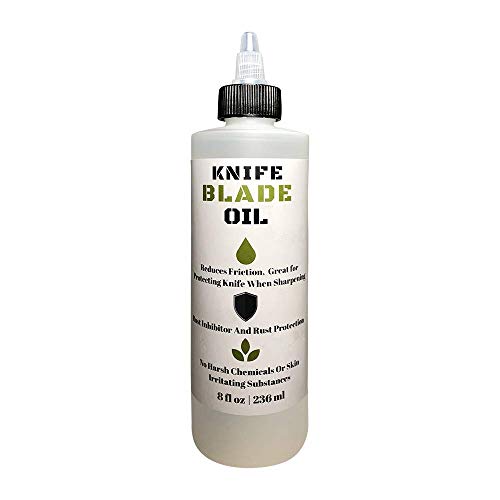
Premium Knife Blade Oil & Honing Oil – 8 Oz – Custom Formulated Food Safe Oil Protects Carbon Steel Knives & Sharpening Stone Ready…
NATURAL & SAFE: Our Knife Blade oil is composed of 100% natural food-safe ingredients to provide worry-free use….
As an affiliate, we earn on qualifying purchases.
As an affiliate, we earn on qualifying purchases.
Immediate Steps to Clean Your Knife After Use
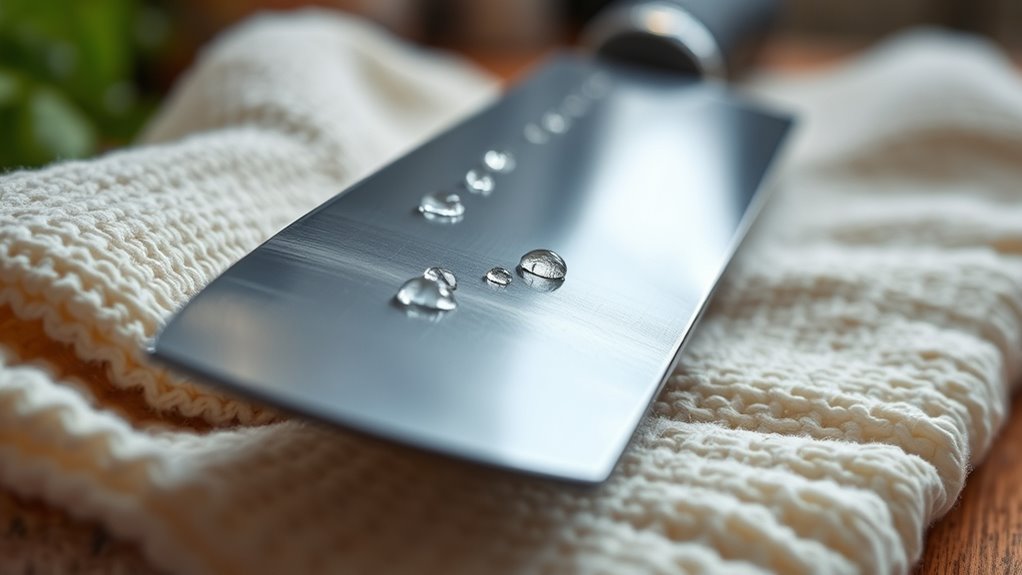
After you’ve finished using your carbon steel knife, it’s important to clean it promptly to prevent rust formation. Rinse the blade quickly with hot water and a small amount of dish soap to remove food particles and residues. Avoid letting it soak or leaving it in the sink, as prolonged exposure to water increases rust risk. Dry the knife immediately with a clean towel, preferably while the blade is still warm, to eliminate moisture. Wipe the entire blade thoroughly, including the handle, to ensure no water remains. Never put your knife in the dishwasher, as the high humidity and heat promote corrosion. Taking these quick, careful steps after each use helps keep your knife rust-free and ready for your next task. Additionally, storing your knife in a dry air purifier environment can help reduce moisture and prevent rust. Proper storage techniques are essential to maintaining the longevity of your carbon steel knife. Using a desiccant in your storage area can further absorb excess moisture and protect your knife from rusting over time. Incorporating a regular maintenance routine can also significantly prolong the life of your knife and keep it in optimal condition.

Yoshihiro 100% Pure Tsubaki Japanese Knife Maintenance Oil 3.4oz(100ml) with Complimentary Sabitori Rust Eraser and Microfiber Cloth
3.4oz(100ml) Pure Tsubaki knife Oil(Camellia Oil)
As an affiliate, we earn on qualifying purchases.
As an affiliate, we earn on qualifying purchases.
Proper Drying Techniques to Prevent Moisture Residue
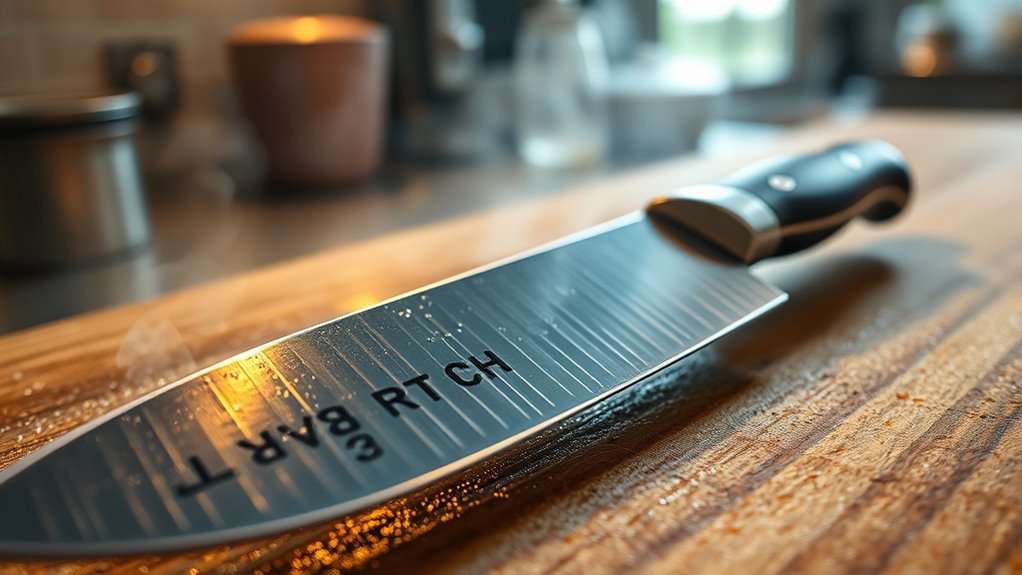
Proper drying is essential to prevent moisture from lingering on your carbon steel knife, which can lead to rust. After cleaning, you need to guarantee all water evaporates completely. Use a clean, dry tea towel or microfiber cloth to wipe the blade and handle thoroughly. Pay special attention to the area near the bolster and handle junctions, where moisture can hide. Avoid air drying or leaving your knife damp, as residual water promotes rust. For added protection, you can also use compressed air to blow out moisture from hard-to-reach spots. Here’s a quick guide:
| Step | Technique | Tip |
|---|---|---|
| Wipe immediately | Use a dry towel | Do it while the knife is warm |
| Focus on crevices | Use compressed air | Remove trapped moisture |
| Dry handle | Wipe thoroughly with cloth | Prevent moisture buildup |
| Air circulation | Store in dry, well-ventilated area | Avoid damp environments |
| Final check | Ensure no moisture remains | Feel for dryness |
Additionally, consider storing your knife in a well-ventilated environment to reduce the risk of rust formation over time. Proper drying techniques are crucial, especially in humid kitchens, to extend the lifespan of your carbon steel knife. Incorporating preventative maintenance can further safeguard your tools against corrosion. Regularly inspecting and maintaining your knife’s condition can greatly improve longevity, especially when humidity levels are high.

15 Pcs 20 Gram Silica Gel Packs, Transparent Desiccant, Desiccant Packets for Storage, Moisture Packs for Spices Jewelry Shoes Boxes Electronics Storage
GOOD ADSORPTION CAPACITY: Silica gel desiccant is a highly active adsorption material, has good thermal properties and chemical…
As an affiliate, we earn on qualifying purchases.
As an affiliate, we earn on qualifying purchases.
How and When to Apply Oil for Superior Protection

Knowing the right time to oil your knife is vital—apply it after cleaning and drying to create a protective barrier. Use proper techniques, like a thin, even layer on both the blade and handle, to avoid buildup. Choosing the right oil, such as food-grade mineral or camellia oil, guarantees your knife stays rust-free and maintains its sharpness. Regular maintenance ensures your knife remains in top condition and prevents corrosion over time protective barrier. Additionally, understanding the oxidation process helps you better care for your carbon steel knife and extend its lifespan, while consistent application of oil forms a barrier that slows down rust formation. Remember that environmental factors like humidity can accelerate oxidation, so frequent oiling is especially important in humid kitchens.
Optimal Oiling Timing
Applying oil at the right times is essential for keeping your carbon steel knife rust-free. You should oil the blade immediately after cleaning and drying, while it’s still slightly warm, to lock in moisture and create a protective barrier. Reapply oil whenever the blade looks dry or dull, typically once a week or after extensive use. If you notice any signs of rust or a loss of sheen, it’s time for a fresh oil coat. In humid environments, increase the frequency to prevent moisture buildup. Avoid oiling right before storage if the knife isn’t completely dry. Instead, wait until the blade is thoroughly dry, then apply a thin layer of oil. Proper timing ensures continuous protection, keeping your knife rust-free and ready for use. Regular maintenance is key to preventing rust and extending the lifespan of your carbon steel knife.
Proper Application Techniques
To achieve the best protection for your carbon steel knife, you need to focus on how and when you apply oil. Proper application ensures a strong barrier against moisture and rust. Always apply a thin, even layer of food-grade mineral oil after cleaning and drying your blade. Use a soft cloth or paper towel to spread the oil smoothly, covering both the blade and handle. Wipe off any excess to prevent stickiness or residue. Reapply weekly or whenever the surface looks dry. Timing is key: oil right after cleaning or before storing in humid conditions enhances protection. Remember, a consistent routine keeps rust at bay and preserves your knife’s sharpness and appearance. Additionally, understanding proper storage techniques can further help prevent rust and damage. Knowing how to store your knife correctly in humid environments can significantly extend its lifespan and maintain its performance. Incorporating climate considerations into your maintenance routine will ensure your knife remains in optimal condition despite humidity fluctuations.
Suitable Oil Choices
Choosing the right oil is essential for effectively protecting your carbon steel knife. Food-grade mineral oil is the best choice because it forms a protective barrier without affecting flavors or food safety. Camellia oil is also effective, especially for storage, as it resists oxidation. Apply a thin layer of oil after cleaning and drying your knife, then wipe off any excess with a clean cloth. The table below highlights common oils and their uses:
| Oil Type | Best For |
|---|---|
| Mineral Oil | Regular maintenance, humid environments |
| Camellia Oil | Long-term storage, rust prevention |
| Vegetable Oil | Quick protection, occasional use |
Choose oils based on your needs, and reapply periodically for ideal rust resistance. Regular maintenance practices help ensure your knife remains rust-free over time.
Best Methods for Removing Rust Safely and Effectively
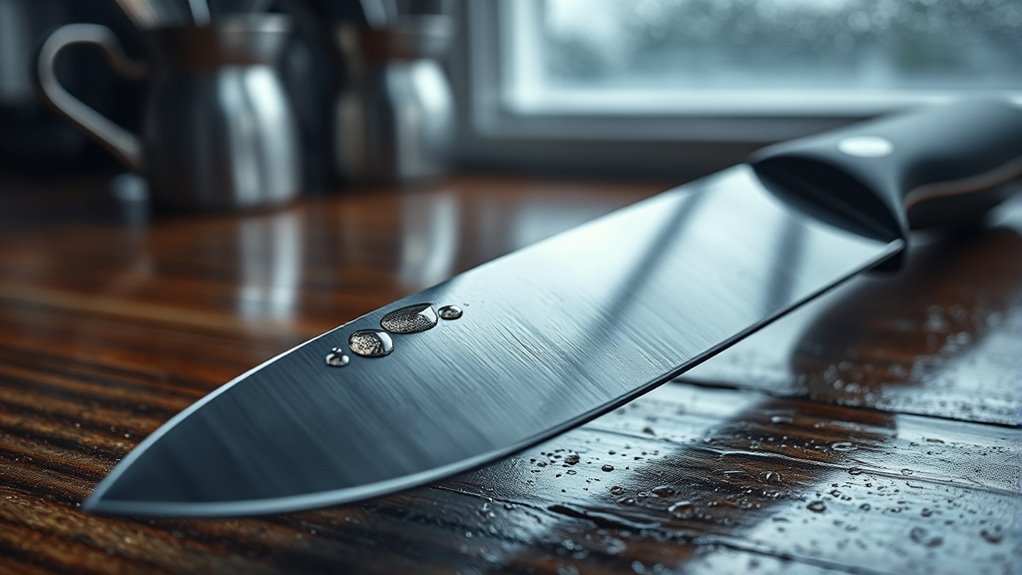
Removing rust from your carbon steel knife requires gentle, effective methods that won’t damage the blade. Start by choosing non-abrasive tools to avoid scratches. Use a rust eraser or fine steel wool carefully to lift rust spots without harming the surface. A baking soda paste made with water can gently scrub away rust with a soft sponge. Applying vinegar with a soft cloth helps loosen surface rust safely. For stubborn spots, boiling the knife briefly in water converts rust to a stable black patina, which you can then scrub off. Always dry the knife thoroughly afterward to prevent new rust. Regular maintenance and proper storage can prevent rust formation and extend your knife’s lifespan.
- Feel confident in your ability to restore your knife’s shine
- Protect your blade from further damage with gentle care
- Reclaim your kitchen tool’s sharpness and beauty
- Maintain your knife’s longevity with safe rust removal
- Keep your culinary gear rust-free for years to come
Storage Strategies to Keep Your Knife Rust-Free
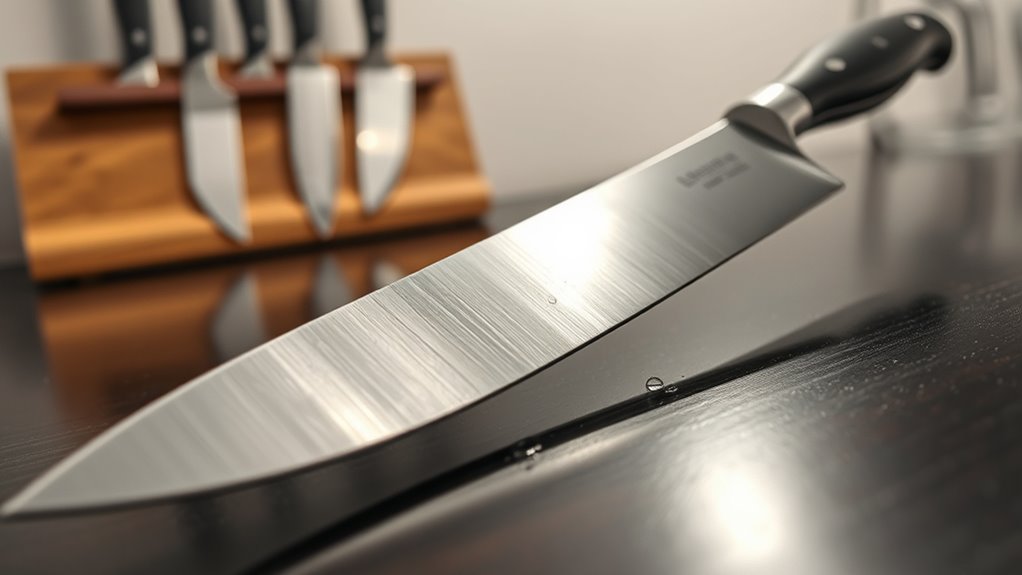
Proper storage plays a key role in keeping your carbon steel knife rust-free after cleaning and maintenance. To prevent moisture buildup, always store your knife in a dry, protected environment. Use a snug-fitting sheath or wrap it in moisture-resistant materials like silicone-coated parchment paper. Avoid damp areas or leaving it exposed to humidity. For added protection, place anti-rust papers or silica gel packs alongside your knife during long-term storage. Regularly check stored knives and reapply a thin layer of oil if needed. Developing a consistent routine ensures your blade remains rust-free and ready for use. Storage environment is crucial in maintaining the longevity of your knife. Additionally, choosing a storage location with good air circulation helps prevent trapped moisture that can lead to rust formation. Ensuring proper climate control in your storage space can further enhance rust prevention. Proper drying techniques after cleaning also contribute significantly to avoiding rust buildup. Incorporating preventive measures into your routine can significantly extend the lifespan of your carbon steel knife.
Choosing the Right Protective Coatings and Barriers
Choosing the right oil layers and storage barriers is essential to prevent rust on your carbon steel knife. You should select effective coatings that create a moisture-resistant shield and storage solutions that block humidity. By applying proper protective measures, you’ll keep your knife rust-free and ready for use.
Choosing Optimal Oil Layers
Selecting the right oil layer is essential for protecting your carbon steel knife from rust, especially in humid environments. The correct oil creates a moisture barrier, preventing oxygen and water from reaching the metal. Use a food-grade mineral oil or camellia oil for ideal protection. Apply a thin, even coat after cleaning and drying your knife. Be sure to wipe off any excess to avoid a sticky residue. Reapply regularly, especially if the knife looks dry or dull. A good oil layer not only shields against rust but also preserves the knife’s sharpness and appearance. Remember, consistency is key to keeping your knife rust-free and ready for use.
- Feel the confidence of a well-protected blade.
- Experience the smooth, rust-free surface every time.
- Avoid costly replacements with proper care.
- Keep your knife in pristine condition longer.
- Enjoy peace of mind in humid kitchens.
Effective Storage Barriers
To effectively prevent rust during storage, you need to use the right protective barriers that shield your knife from moisture and oxygen. Start by storing your knife in a snug-fitting sheath to prevent air exposure and friction. Wrapping it in silicone-coated parchment paper creates a moisture barrier, especially for long-term storage. Keep your knife in a dry, low-humidity environment, avoiding damp areas or un-dried blocks. For seasonal storage, anti-rust papers combined with a light oil layer provide extra protection for up to nine months. Embracing natural patina development also offers a protective layer that resists rust. Always ensure your knife is thoroughly dry before storing, and consider using additional barriers like silicone wraps or specialized rust-preventive papers to keep moisture and oxygen at bay.
Maintaining Your Knife for Long-Term Rust Prevention

Proper maintenance is essential to keep your carbon steel knife rust-free over the long term. Regularly inspect your knife for any signs of moisture or dullness, and address issues immediately. Establish a routine of cleaning, drying, and oiling after each use to create a protective barrier. Store your knife properly, away from damp environments, and consider using rust-preventive wraps or oils during long storage periods. Consistency is key—small daily habits prevent big rust problems later. Remember, your attentiveness can preserve the sharpness and integrity of your knife for years to come.
- Feel the pride of a spotless, rust-free blade every time you use it
- Experience the confidence of knowing your knife is fully protected
- Enjoy the smooth, effortless cutting with a well-maintained edge
- Relish the satisfaction of a long-lasting, beautiful tool
- Trust your routine to keep rust at bay, no matter the humidity
Recognizing Signs of Rust and Acting Quickly
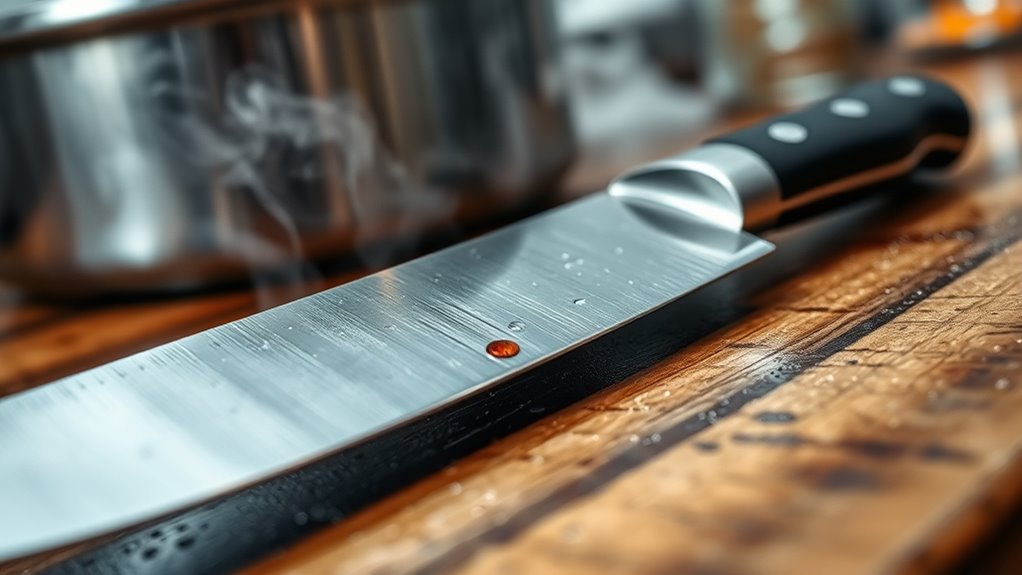
Rust can appear suddenly on your carbon steel knife if you’re not paying attention, so recognizing its early signs is essential. Look out for tiny, orange-brown spots or a rough, flaky texture on the blade. These indicate rust starting to form. Act quickly by cleaning the spot with a rust eraser or gentle baking soda paste. The following table helps you visualize rust signs:
| Early Signs | Common Locations | Immediate Action |
|---|---|---|
| Small orange spots | Near the edge or tip | Gently scrub with rust eraser |
| Rough, flaky patches | Along the blade surface | Wipe with vinegar or baking soda |
| Discoloration | Near handle junction | Dry thoroughly and oil immediately |
| Uneven texture | Random spots on blade | Apply a thin layer of mineral oil |
Prompt action prevents rust from spreading, preserving your knife’s sharpness and longevity.
Tips for Creating a Humidity-Resistant Kitchen Environment
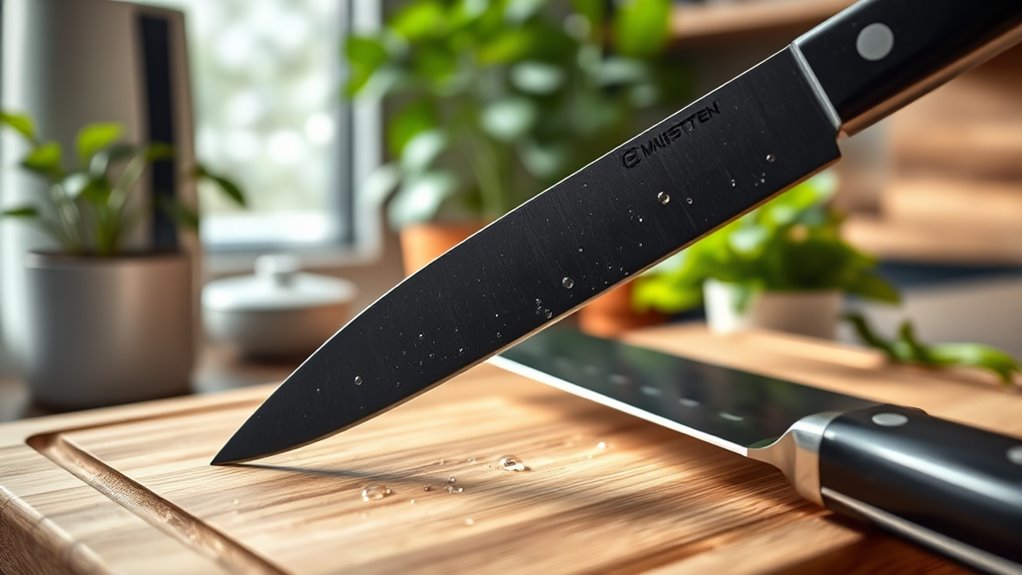
Controlling humidity in your kitchen is key to preventing rust on your carbon steel knives. You should guarantee proper ventilation by using exhaust fans or opening windows during cooking. Keeping the air dry reduces moisture exposure and helps maintain your knives’ condition.
Humidity Control Strategies
Creating a humidity-resistant kitchen environment starts with managing moisture levels effectively. You can achieve this by using simple strategies to keep humidity in check. First, consider installing a dehumidifier, especially in damp areas, to remove excess moisture from the air. Use exhaust fans during cooking and cleaning to vent humidity outside. Keep windows and doors closed when humidity is high, and avoid drying clothes indoors. Place moisture absorbers like silica gel packs or activated charcoal in cabinets and around your kitchen. Regularly monitor humidity levels with a hygrometer, aiming for below 60%. These steps help reduce moisture exposure, protecting your knives from rust and ensuring a safer, more durable kitchen environment. Stay proactive, and your tools will thank you.
Proper Ventilation Practices
Effective ventilation is essential for maintaining a humidity-resistant kitchen environment, especially when it comes to protecting your carbon steel knives from rust. Good airflow helps reduce moisture buildup, which accelerates rust formation. Make sure your kitchen has exhaust fans or range hoods that vent outside to remove excess humidity and cooking fumes. Open windows whenever possible to promote cross-ventilation, especially after boiling or steaming. Use a dehumidifier in particularly humid climates or during seasons with high moisture levels. Keep cabinets and storage areas dry by avoiding damp towels or sponges inside them. Regularly check vents and filters for cleanliness, ensuring they function efficiently. Proper ventilation minimizes moisture exposure, creating an environment where your knives stay dry and rust-free longer.
Frequently Asked Questions
Can Rust Develop Even With Frequent Oiling?
Yes, rust can still develop even with frequent oiling. Oil creates a barrier against moisture, but if you don’t dry your knife thoroughly after use or store it in a damp environment, rust can form. Make sure to wipe off excess oil, dry the blade completely, and keep your knife in a dry place. Combining proper drying, storage, and oiling gives your knife the best protection against rust.
How Often Should I Reapply Protective Coatings?
You should reapply a protective coating, like mineral or camellia oil, every week or when the blade looks dry or dull. Regularly oil your knife after cleaning and drying to maintain a moisture barrier. If you store it long-term or in humid conditions, reapply more frequently to prevent rust. Consistent application guarantees your knife stays rust-free and in top condition.
Are There Natural Remedies for Rust Removal?
Think of rust as a stubborn stain on your metal armor. Natural remedies like baking soda paste gently scrub away rust, acting like a soft brush clearing dirt from a treasure chest. Vinegar dissolves rust without harsh chemicals, while boiling your knife can turn rust into a stable black patina, like transforming rust into a protective shield. These methods preserve your blade’s strength and beauty naturally.
Does Storing in the Freezer Prevent Rust?
Storing your knife in the freezer doesn’t prevent rust. Cold temperatures don’t stop moisture from causing oxidation, which leads to rust. Instead, focus on keeping your knife dry and protected from humidity by wrapping it in moisture-barrier materials like silicone-coated parchment paper or using anti-rust papers. Always dry thoroughly before storage, apply a thin coat of mineral oil, and keep it in a dry environment to prevent rust effectively.
What Kitchen Conditions Accelerate Rust Formation?
Did you know humid environments can make your knives rust up to 50% faster? You’ll accelerate rust formation if you leave your carbon steel knife in damp conditions, expose it to moisture, or store it in humid kitchens. Acidic foods, heat, and water also worsen rust. To prevent this, keep your knife dry, apply oil regularly, and store it in a moisture-free place.
Conclusion
By following these simple steps, you turn your kitchen into a sanctuary where your carbon steel knife gleams like a polished mirror, untouched by rust’s silent invasion. Imagine your knife resting safely, shielded by a thin layer of oil, ready to slice through ingredients with ease. With consistent care, you create a haven of protection amid humid surroundings, ensuring your prized tool remains sharp, resilient, and beautifully rust-free for years to come.