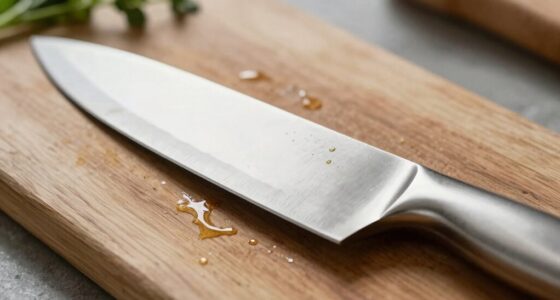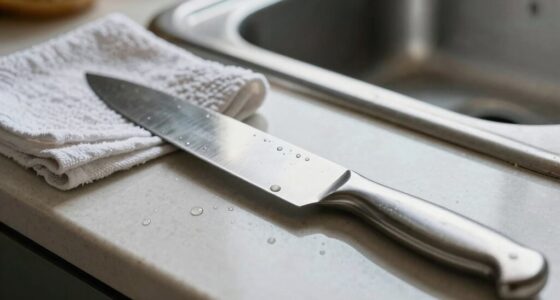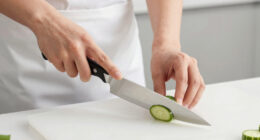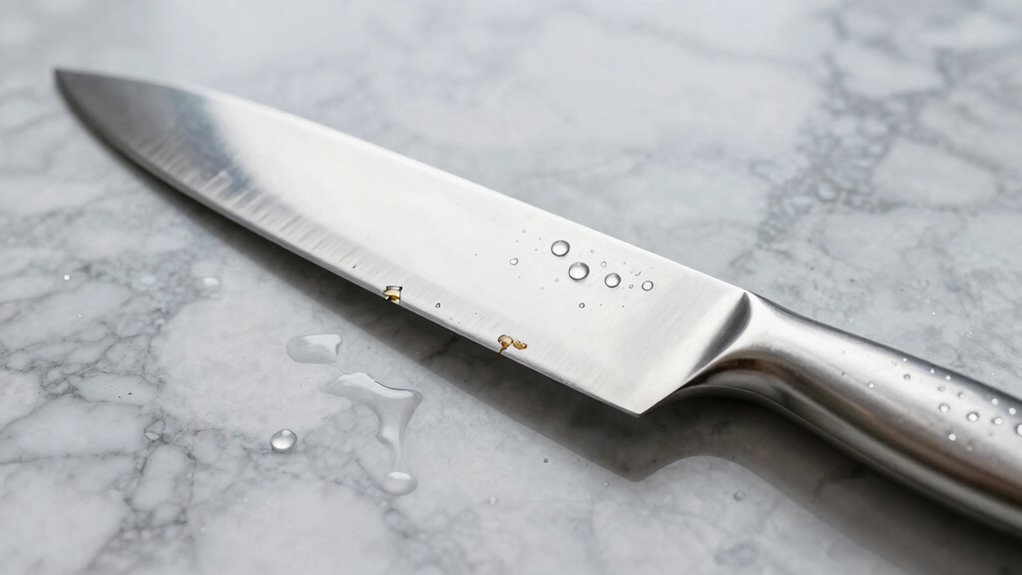

A sticky residue on your knife after washing usually comes from leftover food particles, mineral deposits, or corrosion from moisture and acids. To fix this, wash your knife with warm, soapy water, then dry it thoroughly to prevent buildup. Regular cleaning and proper storage can keep your blade smooth and clean. If you keep experiencing issues, there are simple tips that can help maintain your knife’s condition—discover them below.
Key Takeaways
- Residual food particles, especially starches or sugars, can leave sticky film after washing.
- Inadequate drying traps moisture, leading to food residue buildup and stickiness.
- Mineral deposits from hard water may create a sticky or cloudy film on the blade.
- Soap scum or improper cleaning can cause a sticky layer if residues aren’t fully rinsed.
- Corrosion or rust spots can develop if moisture remains, making the knife feel sticky and dull.
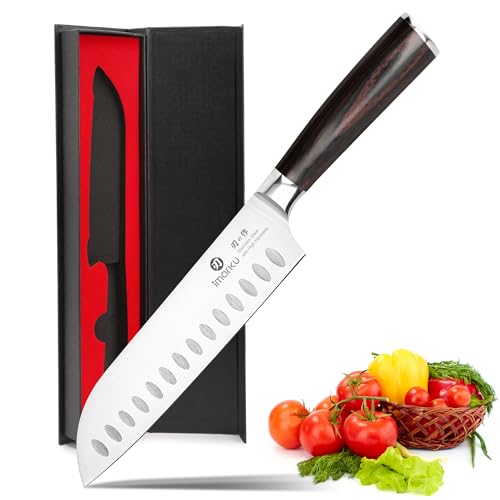
imarku Chef Knife 7 Inch Kitchen Knife Ultra Sharp Santoku Knife - High Carbon Japanese Chefs Knife, Kitchen Gadgets 2025, Apartment Essentials, Birthday Gifts for Him Her, Best Gifts for Women Men
Professional Santoku Knife: This imarku super sharp santoku knife is made of high carbon stainless steel that resists...
As an affiliate, we earn on qualifying purchases.
Common Causes of Sticky Residue on Kitchen Knives

Sticky residue on kitchen knives often results from leftover food particles, especially those high in starch or sugar. Over time, these residues can cause blade corrosion if not cleaned thoroughly, leading to rust and pitting that make the surface sticky. Additionally, persistent moisture and acidic foods can deteriorate the handle, especially if it’s made from wood or poorly sealed materials. Handle deterioration not only affects grip and safety but can also trap debris and moisture, worsening the sticky buildup. When you don’t remove food residues properly, the combination of moisture, sugars, and acids accelerates both blade corrosion and handle damage. Proper cleaning techniques, including thorough drying and appropriate storage, are essential to prevent these issues, ensuring your knives stay clean, functional, and safe to use. Regular maintenance practices can help extend the life of your knives and keep them in optimal condition, especially by understanding how cleaning methods influence residue buildup.

HOSHANHO Kitchen Knife in Japanese High Carbon Steel, Professional High-Class Chef's Knife 8 inch, Non-slip Ultra Sharp Cooking Knives with Ergonomic Handle
【High-End Japanese Steel Chef's Knife】 HOSHANHO chef's knife is made of Japanese high carbon steel 10Cr15CoMoV, 2x of...
As an affiliate, we earn on qualifying purchases.
Identifying the Types of Buildup and Their Sources

Understanding the different types of buildup on your knives can help you target cleaning efforts effectively. One common issue is sticky residue on the cutting edge, often caused by food particles or soap scum that cling after washing. Over time, mineral deposits from hard water can also leave a film, especially on the blade’s surface. Proper cleaning techniques are essential to prevent these issues from recurring. Blade corrosion, another concern, results from exposure to moisture and acidic substances, leading to rust and pitting that compromise the knife’s integrity. Identifying whether the buildup is sticky residue, mineral deposits, or corrosion helps determine the proper cleaning method. For instance, corrosion requires more intensive treatment, while residue may just need a thorough rinse. Recognizing these sources ensures you address the root cause and keep your knives sharp and safe. Regular cleaning, drying, and use of appropriate cleaning solutions can help prevent buildup and maintain the sharpness of your blades. Proper maintenance is essential for preserving the quality and longevity of your knives, especially in environments with mineral-rich water that can accelerate corrosion and deposits.

MOSFiATA 8" Super Sharp Professional Chef's Knife with Finger Guard and Knife Sharpener, German High Carbon Stainless Steel EN1.4116 with Micarta Handle and Gift Box
【High Carbon German Stainless Steel Laser-engraved Pattern(Not Damascus Pattern )】 MOSFiATA 8 inch pro chef's knife is made...
As an affiliate, we earn on qualifying purchases.
Simple Cleaning Techniques to Remove Stickiness

To effectively remove stickiness from your knives, start with simple cleaning techniques that you can do at home. Begin by washing your knife with warm, soapy water, scrubbing gently with a soft sponge to remove any residue. After drying thoroughly, use polishing techniques like a metal or ceramic polish to restore the blade’s smoothness and shine. Proper storage solutions also play a role; store your knives in a dry, well-ventilated drawer or on a magnetic strip to prevent moisture buildup that can cause stickiness. Avoid stacking knives directly or keeping them in damp environments. Regular cleaning and correct storage help maintain a clean, non-sticky blade, reducing the need for more intensive maintenance later. Additionally, understanding the importance of proper maintenance can extend the lifespan of your blades and keep them performing their best. Incorporating natural cleaning methods can also help keep your knives in top condition without harsh chemicals. Using appropriate cleaning tools that won’t damage the blade surface is essential, as they can prevent scratches that might trap residues leading to stickiness. Consistent care, including routine inspections, ensures your knives stay in optimal condition over time.
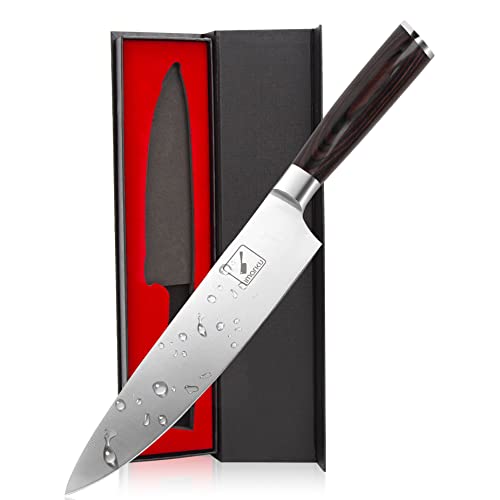
imarku Japanese Chef Knife - Sharp Kitchen Knife 8 Inch Chef's Knives HC Steel Paring Knife, Unique Gifts for Men and Women, Gifts for Mom or Dad, Kitchen Gadgets with Gift Box, Gyutou Knives
High-Carbon Stainless Steel Blade: It is manufactured from high-quality stainless steel that maintains its functionality for a long...
As an affiliate, we earn on qualifying purchases.
Preventative Measures to Keep Your Knife Smooth and Clean

Regularly applying preventative measures can keep your knives smooth and clean, reducing the chances of buildup and stickiness. Confirm proper knife storage by using a knife block, magnetic strip, or protective sheaths, which prevent blades from coming into contact with moisture or contaminants. Good cutting board hygiene is also essential; wash and dry your cutting surfaces thoroughly after each use to prevent residue buildup that can transfer to your knives. Avoid leaving knives in water or soaking them, as this can promote corrosion and sticky spots. Instead, dry knives immediately after washing with a soft towel. Proper maintenance not only preserves the sharpness of your blades but also helps prevent corrosion and sticky residue formation that can compromise their performance. Implementing preventative measures like these can greatly extend the lifespan of your knives and keep them performing at their best. Additionally, understanding knife material properties can help you choose the right maintenance techniques for your specific blades. Recognizing metal composition and how it reacts to environmental factors can further inform your care routine. These simple habits help maintain your knife’s smoothness, prolong its lifespan, and keep it performing at its best, free from unwanted stickiness.
When to Seek Professional Help for Knife Maintenance
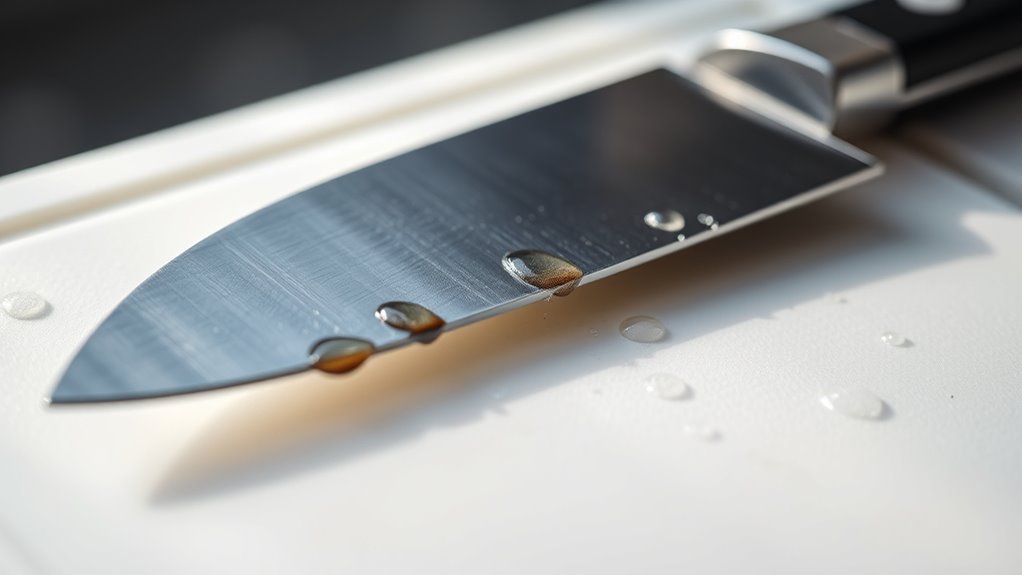
Even with proper care, there are times when your knife may develop persistent issues that DIY maintenance can’t fix. If you notice dullness despite sharpening, corrosion spots, or sticky residue that won’t go away, it’s time to seek professional help. Consider these signs:
- Your knife requires professional sharpening to restore a sharp edge.
- You see corrosion or rust that’s beyond simple cleaning, risking damage to the blade.
- Sticky buildup persists despite cleaning, indicating deeper issues like metal degradation or improper coating.
A professional can perform precise sharpening and apply corrosion prevention treatments to prolong your knife’s lifespan. Knowing when to consult an expert guarantees your knife stays safe, effective, and in top condition long-term.
Frequently Asked Questions
Can Dishwasher Detergents Damage My Knife’s Blade or Handle?
Dishwasher detergents can damage your knife’s blade or handle if they’re not dishwasher safe. Always check the knife material compatibility and dishwasher safety before washing. Some blades, like carbon steel or specialty knives, may corrode or dull if exposed to harsh detergents and high heat. To protect your knives, wash them by hand when unsure, and avoid strong detergents that could compromise the blade or handle over time.
Are There Specific Cleaning Products I Should Avoid on My Knives?
Think of your knives as delicate dancers that need gentle care. Avoid harsh cleaning products like bleach or abrasive scrubbers, as they can tarnish or damage the blade and handle. Stick to dishwasher-safe options if you’re in a hurry, but be mindful of cleaning frequency—overwashing can wear down their sharp edge. For best results, hand wash with mild soap and dry thoroughly to keep your knives performing gracefully.
How Often Should I Reapply Knife Lubricant or Protective Coatings?
You should reapply knife lubricant or protective coatings every 6 to 12 months, depending on your maintenance schedule and how often you use the knife. Regular reapplication guarantees the coating remains effective and prolongs its longevity. Keep an eye on signs of wear, and don’t wait too long—timely reapplication maintains ideal protection and keeps your knife performing smoothly. Consistent maintenance boosts coating longevity and overall safety.
Does Hard Water Cause More Residue Buildup on Knives?
Hard water can definitely encourage more residue buildup on your knives, making them feel sticky or grimy. Its minerals leave behind deposits that cling to blades after washing, especially if not dried thoroughly. To keep your knives in top shape, consider using softened water or thoroughly drying your blades. Regular cleaning with gentle, non-abrasive solutions will also help prevent stubborn residue, ensuring your knives stay sharp and smooth.
Are There Eco-Friendly Methods to Prevent Knife Stickiness?
Yes, there are eco-friendly methods to prevent knife stickiness. You can use biodegradable solutions like vinegar or lemon juice to clean your knives, which help remove residue naturally. Applying a small amount of natural oils, such as mineral or beeswax, creates a protective barrier that prevents buildup. Regularly wiping your knives with these natural remedies keeps them clean and sticky-free without harming the environment.
Conclusion
Your knife’s stickiness is like a stubborn shadow, lingering after every wash. But with the right techniques and preventative care, you can keep it shining like a polished mirror, slicing through your tasks smoothly. Think of your knife as a trusted ally—treat it well, and it’ll serve you with unwavering sharpness. Don’t let residue cling like unwanted baggage; instead, restore its glide and enjoy effortless cuts every time.