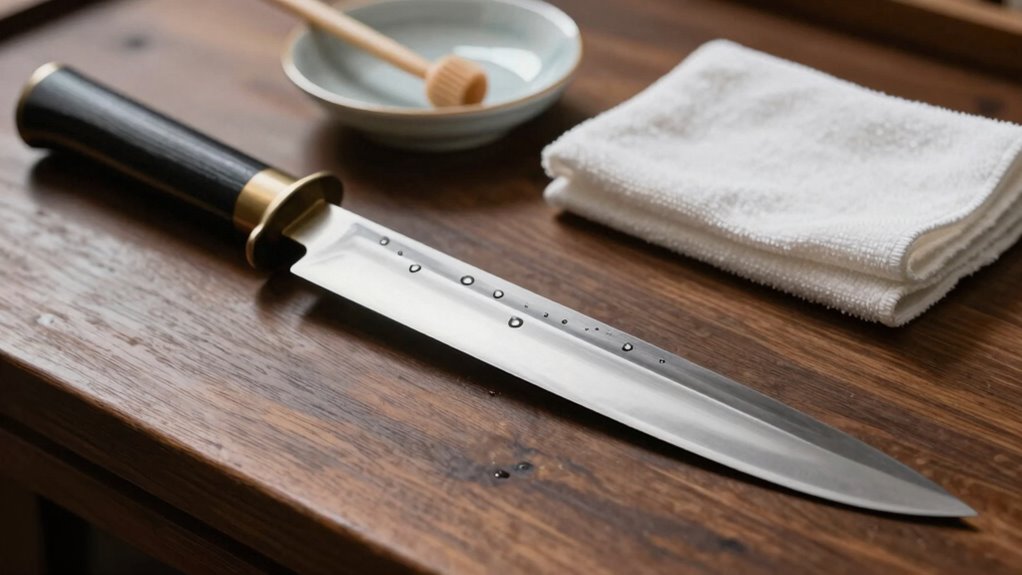
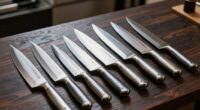
To care for your Japanese knife steel daily, wash it promptly with warm water and mild soap, then dry immediately with a soft cloth to prevent rust. Store it carefully in a dry, breathable wrapper or in a wooden saya, and regularly apply a thin layer of food-grade oil to protect against moisture. Inspect the blade often and address rust spots early to keep it sharp and rust-free. Keep going to discover more tips for long-lasting performance.
Key Takeaways
- Wash immediately after use with warm water, dry thoroughly, and avoid air drying to prevent rust formation.
- Store knives in dry, breathable wraps or in a dry environment, using knife guards or wooden saya for airflow.
- Regularly inspect for rust spots and gently scrub with fine abrasives, then dry and reapply a light layer of food-grade oil.
- Maintain the blade by honing weekly and sharpening monthly to keep edges sharp and prevent damage.
- Handle cutting carefully on stable surfaces, avoid twisting or forcing the blade, and store securely when not in use.

Yoshihiro 100% Pure Tsubaki Japanese Knife Maintenance Oil 3.4oz(100ml) with Complimentary Sabitori Rust Eraser and Microfiber Cloth
3.4oz(100ml) Pure Tsubaki knife Oil(Camellia Oil)
As an affiliate, we earn on qualifying purchases.
As an affiliate, we earn on qualifying purchases.
Proper Washing Techniques for Your Japanese Knife
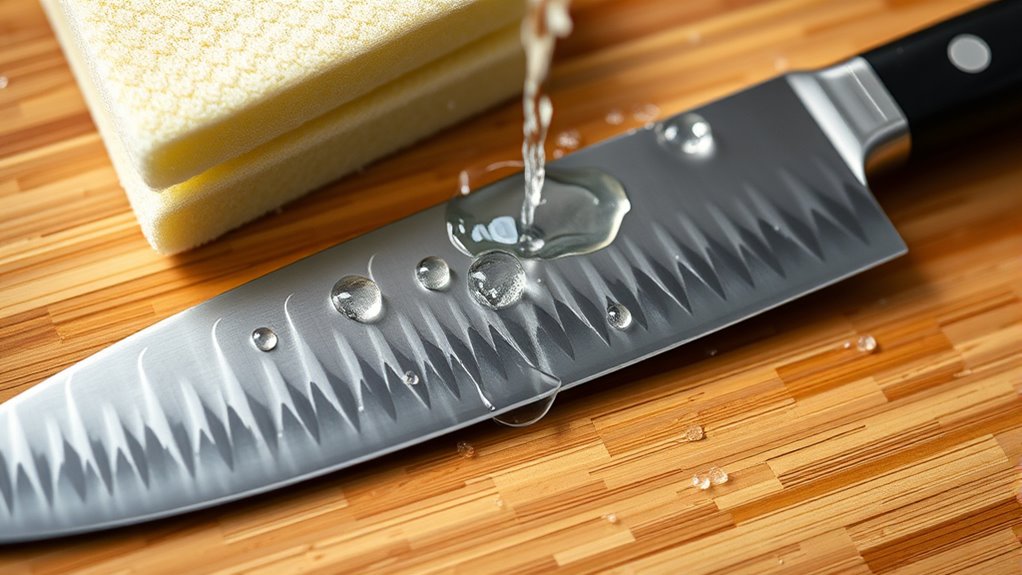
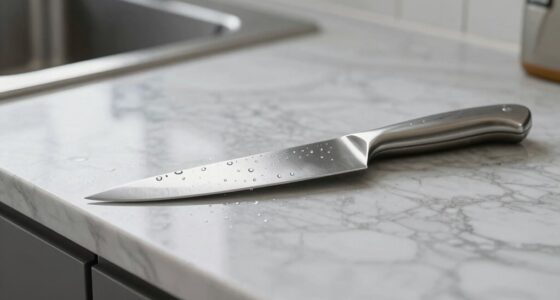
To properly wash your Japanese knife, you should do so immediately after use with warm water and a mild dish soap. Use a soft cloth or non-abrasive sponge to gently clean the blade, avoiding harsh scrubbers that can damage the finish. Focus on removing food particles and residues thoroughly, then rinse with clean water to make certain no soap remains. Even stainless steel knives benefit from quick hand washing to prevent rust, especially if they’ve been exposed to moisture for a prolonged period. Never use dishwashers or harsh detergents, as they can harm the steel and handle. Dry the knife immediately after washing with a soft, clean cloth to prevent water spots and corrosion. Proper washing preserves the sharpness and integrity of your Japanese knife.

Knife Guard for 210mm/8 Inch Gyuto & Chef's Knife, Magnetic Wood Saya Sheath, Japanese Blade Case Protector Cover, Wear Resistant Classical Cutter Bag Sleeve for Kitchen, Camping Outdoor, Culinary
Package: 1 x knife sheath/cover (knife blade not included). Color: Black. Size: as shown.
As an affiliate, we earn on qualifying purchases.
As an affiliate, we earn on qualifying purchases.
Immediate Drying Practices to Prevent Rust
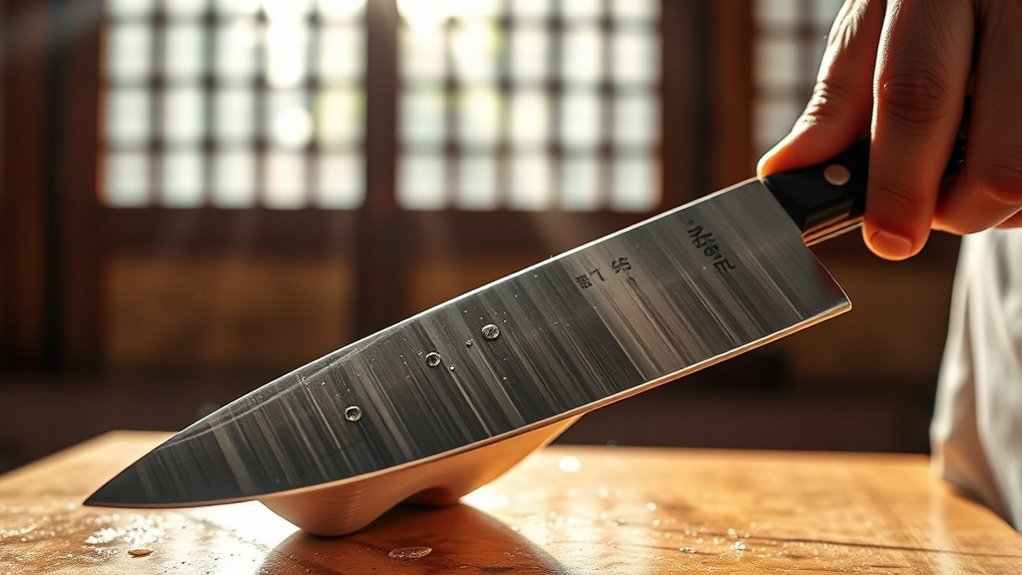
After washing your knife, make sure to wipe the blade promptly with a soft cloth to remove moisture. Never air dry your knife, as lingering humidity can cause rust and dullness over time. Properly drying your knife right away helps protect the steel and keeps it in top shape. Additionally, using proper drying techniques can help prevent rust formation on your knives’ surface, especially considering the advances in nanotechnology that enable the development of corrosion-resistant coatings. Incorporating water-resistant materials into your maintenance routine further enhances the longevity of your Japanese knives.
Wipe Blade Promptly
Have you ever noticed how quickly rust can form on a carbon steel knife? Moisture left on the blade accelerates oxidation, leading to rust spots. To prevent this, wipe the blade immediately after use with a clean, dry cloth. Don’t wait until the knife cools or air dries; prompt drying stops water from lingering. Pay attention to the entire surface, including the edge and handle. If the blade feels damp, wipe again until completely dry. This simple step forms the foundation of rust prevention, protecting your knife’s sharpness and integrity. Regularly drying your blade minimizes moisture exposure, ensuring it stays in top condition. Incorporating essential oil applications, such as a few drops of eucalyptus or tea tree oil on a cloth, can add an antimicrobial layer of protection. Using proper storage techniques like a knife sheath or dedicated block further reduces environmental factors that contribute to rust. Additionally, avoiding exposure to humidity in your storage environment can significantly extend the life of your knives. To further safeguard your blades, consider implementing protective coatings that form a barrier against moisture and oxidation. Make this habit part of your routine, and your traditional Japanese knife will reward you with long-lasting performance.
Use Soft Cloth
A soft cloth is essential for effectively drying your Japanese knife and preventing rust. After washing, gently wipe the blade to remove all moisture. Use a non-abrasive, lint-free cloth that won’t scratch the steel or damage the finish. Focus on the entire surface, including the edge and handle, ensuring no damp spots remain. Patting the blade dry prevents water from seeping into joints or handle gaps, which can cause corrosion or swelling. Avoid rough or abrasive materials that could scratch or dull the blade. Consistent use of a soft cloth helps maintain a smooth surface, prolonging the sharpness and preventing rust formation. Remember, thorough drying is key to protecting your knife’s delicate and valuable traditional steel. Incorporating proper drying techniques can further enhance your maintenance routine and prevent damage over time. Additionally, storing your knife in a dry environment helps reduce the risk of rust forming when not in use. Using a desiccant in your storage area can also help absorb excess moisture and keep the environment ideal for your knife. Paying attention to moisture control is crucial for long-term preservation of traditional Japanese steel.
Avoid Air Drying
To effectively prevent rust on your Japanese knife, you should avoid air drying the blade. After washing, immediately dry the knife with a clean, soft cloth to remove moisture. Air drying leaves water spots and promotes rust formation, especially on carbon steel blades. Make certain you dry from the base to the tip, covering the entire surface including the edge. Pay attention to the handle and tang as well, to prevent wood swelling or rust buildup. If you’re in a humid environment, wipe thoroughly and consider applying a light layer of oil afterward. Avoid leaving your knife wet or soaking, as prolonged moisture contact accelerates corrosion and dulls the edge. Proper drying habits are essential for maintaining a sharp, rust-free blade over time. Additionally, adopting seasonal variations in your care routine can help adapt to changing humidity levels and prevent rust formation. Incorporating proper storage techniques, such as using a knife guard or storing in a dry environment, further helps protect your blade from moisture exposure. Being mindful of air circulation around your storage area can also reduce the risk of rust formation.
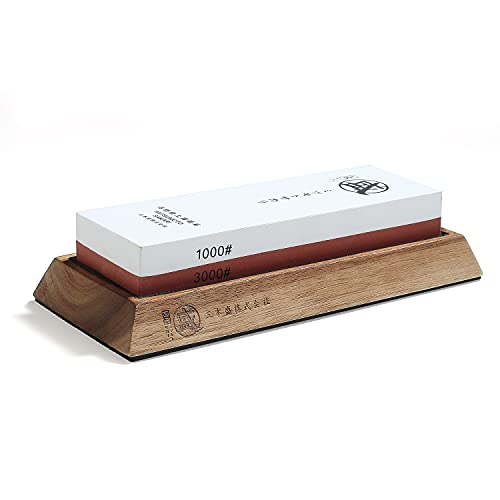
MITSUMOTO SAKARI Japanese Knife Sharpening Stone, Professional Double-Sided Whetstone 1000/3000 Grit, Kitchen Knife Sharpener Stones with Non-Slip Wooden Seat
HIGH QUALITY JAPANESE SHARPENING STONE: Professional sharpening stone made of durable white corundum. It consists of a wooden…
As an affiliate, we earn on qualifying purchases.
As an affiliate, we earn on qualifying purchases.
Regular Oiling Routines for Blade Protection
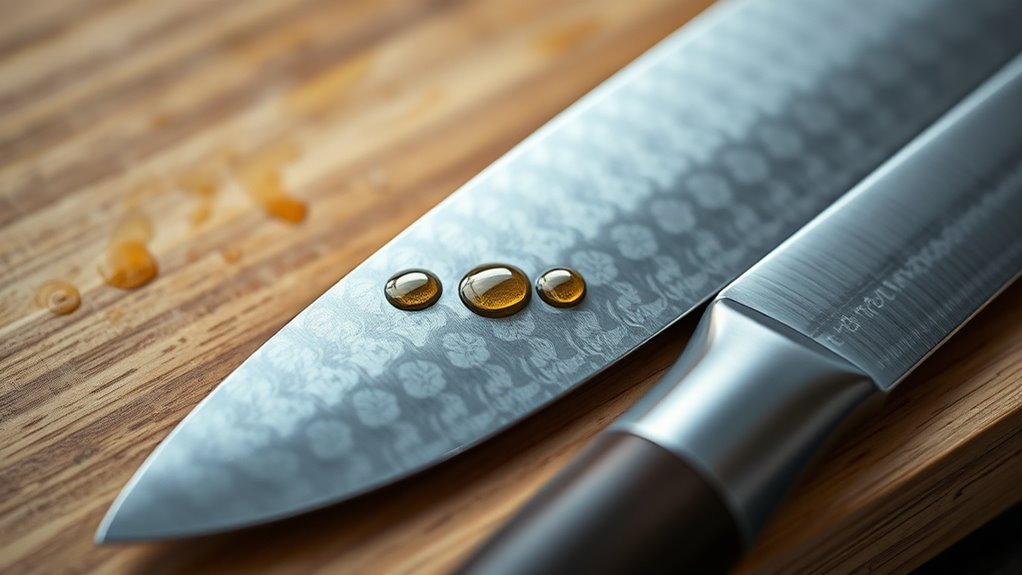
Regular oiling is essential for maintaining the durability and performance of your Japanese knife blades, especially those made from high-carbon steel. Proper routines create a protective barrier against moisture and rust. To do this effectively:
- Clean the blade thoroughly after use, then dry it completely with a soft cloth.
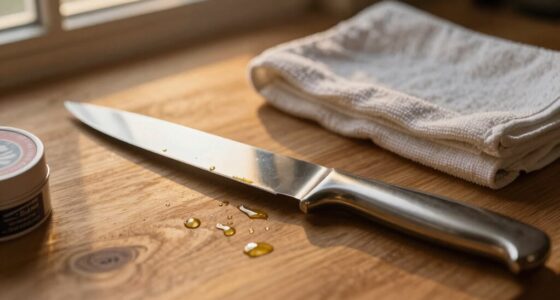
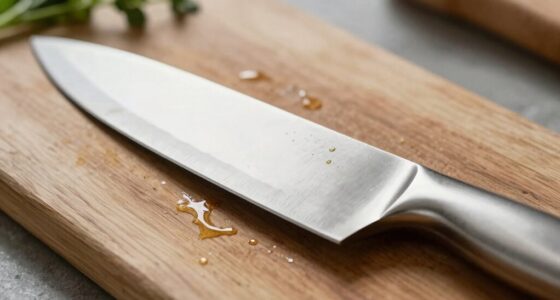
- Apply a thin, even layer of food-grade oil like camellia or mineral oil along the full length of the blade.
- Reapply after sharpening or if you notice any rust spots to reinforce the protective layer.
- Incorporating sound healing science techniques, such as gentle vibrations during oil application, can enhance the absorption and effectiveness of the oil on the blade’s surface.
Consistent oiling prevents oxidation and preserves your knife’s edge. For humid environments or long-term storage, increase the frequency. Remember, a well-oiled blade not only lasts longer but also maintains its sharpness and aesthetic appeal.

Shun Knife Care Kit, Polishing and Cleaning Kit for Knives, Restore Tarnish, Discoloration and Surface Rust, Knife Maintenance Set for Professional and Home Chefs
KNIFE CARE KIT: The Shun Knife Care Kit includes everything you need to maintain your knives and ensure…
As an affiliate, we earn on qualifying purchases.
As an affiliate, we earn on qualifying purchases.
Gentle Sharpening and Honing Methods
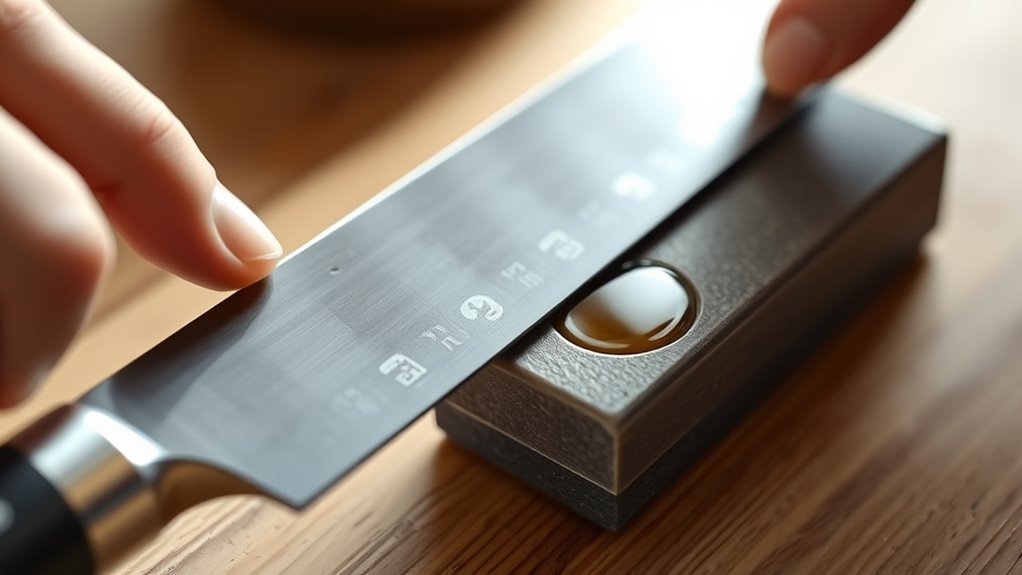
Gentle sharpening and honing are essential for maintaining your Japanese knife’s edge without damaging the blade. Use a whetstone at a 10-15 degree angle, applying steady, even pressure. For dull blades, start with a coarse grit to reshape the edge, then move to medium and fine grits for refinement. Hone weekly with a ceramic or steel rod to realign the edge, pushing away from your body with light pressure and pulling back gently. Always keep the stone wet or use water to prevent overheating and metal buildup. Avoid excessive force, which can chip or bend the blade. If you’re unsure, consider professional sharpening to preserve the steel’s integrity. Regular, gentle care ensures your knife stays sharp, rust-free, and in perfect condition.
Best Storage Solutions for Long-Term Preservation
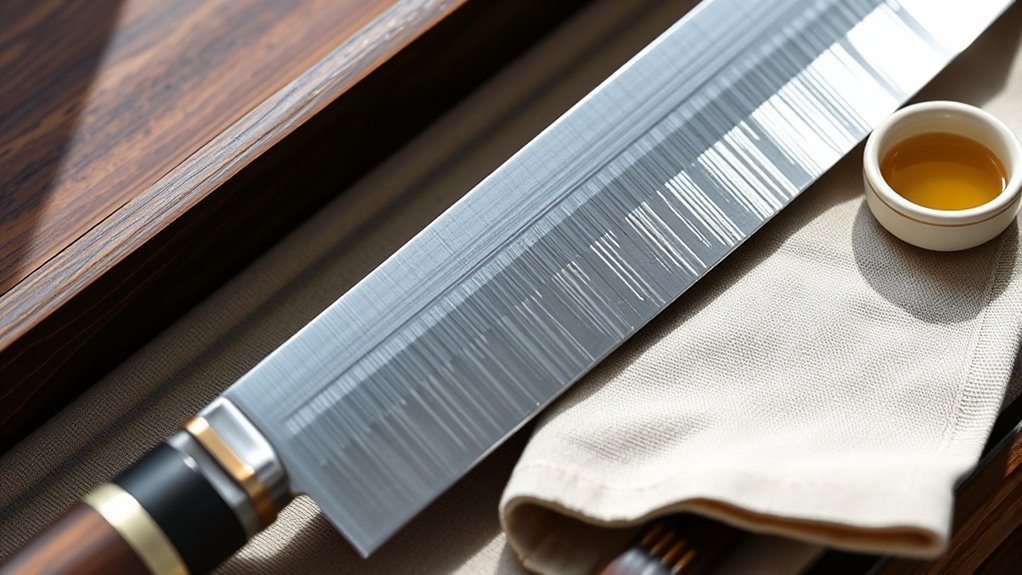
To keep your Japanese knives in top condition long-term, choosing the right wrap materials and storage environment is key. You should use breathable paper or cloth wraps to prevent moisture buildup and rust. Ensuring a controlled environment with low humidity will help preserve the steel and prevent corrosion over time.
Optimal Wrap Materials
For long-term preservation of your Japanese knife, choosing the right wrapping material is essential to prevent rust and maintain the blade’s condition. The ideal wrap should shield the knife from moisture, air, and contaminants. Consider these options:
- Oil-impregnated paper: Wrap in acid-free paper lightly coated with oil, providing a moisture barrier and preventing oxidation.
- Cloth or cotton wrap: Use natural fabric like linen or cotton, which breathes and absorbs excess moisture while protecting the blade.
- Wax paper or beeswax wrap: These create a protective layer against humidity and are reusable, offering an eco-friendly option.
- Regular inspection of your storage method is crucial to ensure that no rust or moisture buildup occurs over time, especially when relying on contamination prevention strategies.
Ensure the wrapping is snug but not tight, and inspect regularly for signs of rust or moisture buildup. Proper wrapping extends your knife’s life.
Controlled Environment Storage
Are you storing your Japanese knife in the ideal environment to guarantee long-term preservation? The right storage conditions are vital. Keep your knife in a cool, dry place with stable humidity levels to prevent rust and corrosion. Use a dedicated knife storage solution like a wooden saya or a magnetic strip that allows proper airflow and avoids contact with moisture. Avoid storing your knife in damp areas, such as near sinks or in humid basements, as excess moisture accelerates rust formation. Wrap the blade in acid-free paper and apply a light layer of oil before storing for added protection. Regular inspections help catch early rust spots, allowing you to address issues before they worsen. Proper controlled storage ensures your knife remains sharp, rust-free, and ready for use whenever needed.
Recognizing and Addressing Rust Spots Early
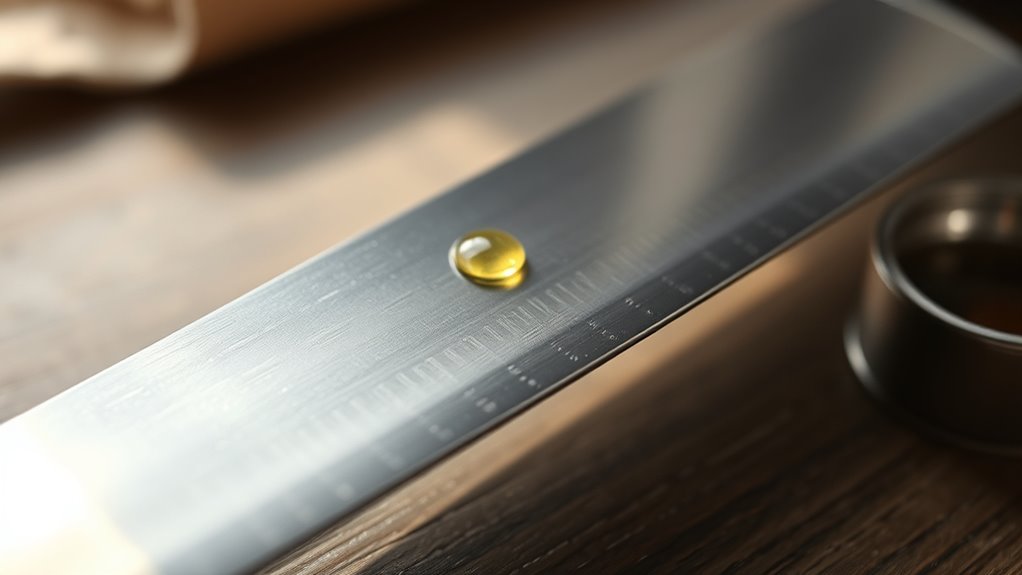
Rust spots can develop quickly on your knife if you don’t catch them early. The key is to stay vigilant and inspect your blade regularly. When you notice a small, dark stain or rough patch, act immediately. First, gently scrub the spot with steel wool or a fine abrasive pad to remove surface rust. Second, rinse thoroughly and dry the blade completely to prevent further spread. Third, reapply a thin layer of oil to protect the metal. This quick response prevents rust from penetrating deeper, preserving your knife’s sharpness and appearance. Regular inspections, especially after cleaning or exposure to moisture, help you spot rust early. Addressing rust spots promptly keeps your knife in top condition, ensuring its longevity and performance.
Handling and Using Your Knife Safely
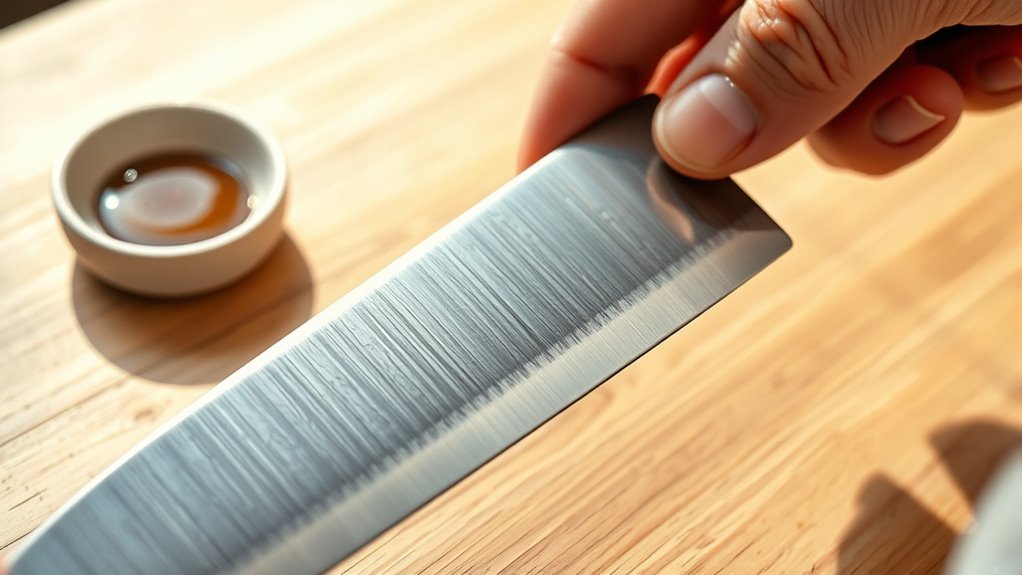
Handling your Japanese knife safely is essential to prevent accidents and preserve its sharpness. Always cut on a stable, soft surface like end-grain wood to protect the blade. Use proper technique by holding the handle firmly and guiding the knife with controlled, deliberate motions. Avoid twisting or forcing the blade through hard objects like bones or frozen foods, which can chip or crack the steel. Keep your fingers clear of the cutting edge, and never use a dull knife—sharp blades require less force and are safer. When not in use, store the knife securely in a sheath or in a designated knife holder to prevent accidental contact. Regularly check for damage or loosened handles, and handle your knife with respect to its delicate craftsmanship. Additionally, practicing proper maintenance and care can significantly extend the life of your knife and prevent rust or damage.
Tips for Maintaining the Blade’s Sharpness and Finish
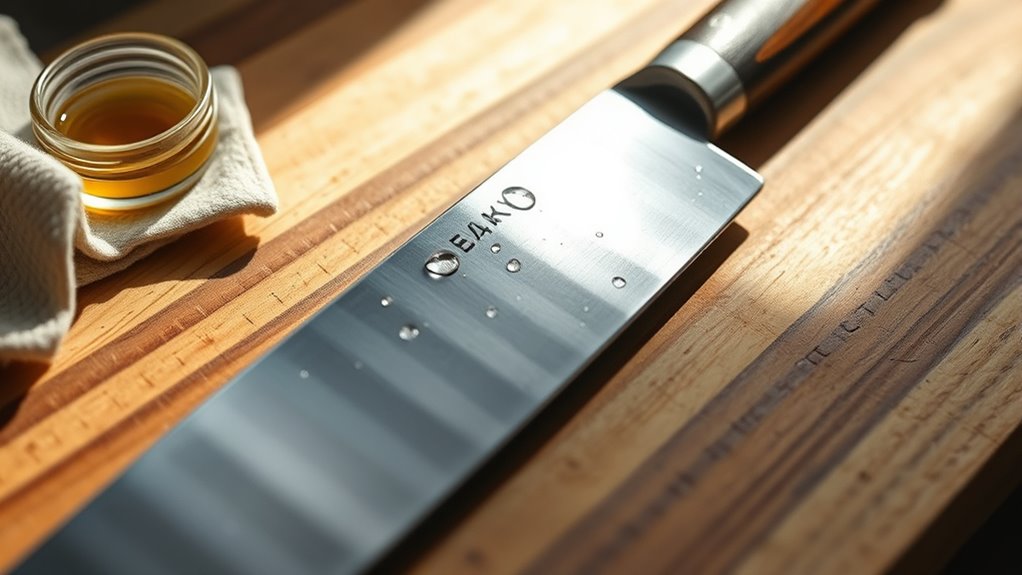
Maintaining the blade’s sharpness and finish requires consistent care and proper techniques. To keep your knife performing at its best, follow these steps:
- Regularly hone the edge with a honing rod to realign the blade, ideally weekly. Use gentle, consistent pressure and a 10-15 degree angle.
- Sharpen the blade monthly using a whetstone, progressing from coarse to fine grit. Maintain a steady angle and avoid excessive pressure.
- Clean and dry the knife thoroughly after each use, then apply a light coat of oil to protect the finish and prevent rust.
Frequently Asked Questions
How Often Should I Reapply Oil After Sharpening My Japanese Knife?
You should reapply oil to your Japanese knife immediately after sharpening. This helps restore the protective layer and prevents rust, especially on high-carbon steel blades. If you live in a humid area, consider oiling more frequently, such as after each use or every few days. Always guarantee the blade is thoroughly cleaned and dried before oiling. Regular oiling maintains the blade’s condition, prolongs its sharpness, and prevents corrosion.
Can I Use Vegetable or Olive Oil Instead of Traditional Oils?
You can use vegetable or olive oil on your Japanese knife, but it’s not ideal. Imagine noticing your knife developing rust spots after just a few weeks—this can happen if you choose oils that aren’t food-grade or prone to rancidity. Traditional oils like camellia or mineral oil form a better, longer-lasting barrier. For best protection, stick with these, especially in humid environments, to keep your knife in top shape.
Is It Safe to Store Knives in a Drawer or Should They Be Hung?
You should hang your knives instead of storing them in a drawer. Hanging keeps blades exposed to air, reducing moisture buildup and rust risk. It also prevents accidental nicks and dulling from contact with other utensils. If you must store in a drawer, use a knife guard or a dedicated knife block. Always make certain blades are completely dry and oiled before storage to prevent rust regardless of how you store them.
What Are Signs That My Knife Needs Professional Sharpening?
Like a knight’s sword dulled in battle, your knife shows signs it needs sharpening. If it struggles to cut through vegetables smoothly, feels dull, or requires excessive pressure, it’s time to hone it. Chips or nicks also signal a need for professional sharpening. Don’t ignore these signs, as a sharp knife improves safety and efficiency. Regular honing and timely sharpening keep your blade performing at its best.
How Can I Prevent Rust When Storing Knives in Humid Environments?
To prevent rust when storing knives in humid environments, you should oil the blades with camellia or mineral oil before wrapping them in newspaper or cloth. Keep them in a cool, dry place away from moisture, and consider using silica gel packs in storage areas to absorb humidity. Regularly inspect for rust spots, and if you find any, scrub gently with steel wool, then reapply oil to protect the blade.
Conclusion
Caring for your Japanese knife steel isn’t just about maintenance; it’s about honoring tradition and craftsmanship. By following these daily habits, you’ll keep your blade sharp, rust-free, and in top condition for years to come. Remember, a stitch in time saves nine—address rust spots early and handle your knife with care. With patience and consistent care, your knife will continue to serve you beautifully, just like a trusted old friend in the kitchen.