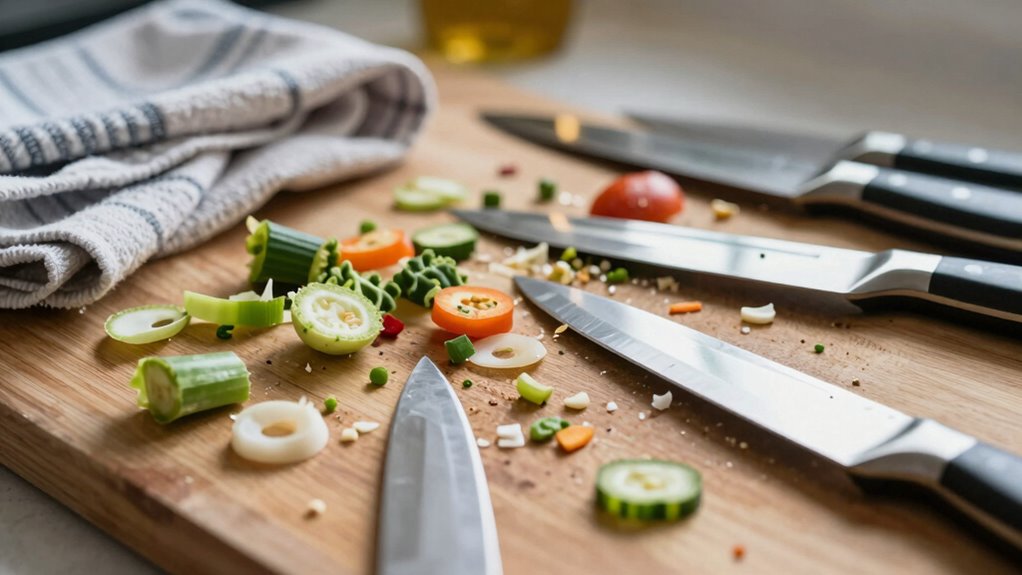
A messy cutting board makes your knife work riskier because clutter increases the chance of slips, accidental cuts, or injuries. When your surface is disorganized, ingredients can slip, and you might feel rushed or lose focus, leading to uneven cuts or accidents. Poor space management forces you to grip the knife awkwardly or apply more force, raising the risk of slips. Keep your workspace tidy to guarantee safer, more controlled cuts—stay with us to see how organization makes a difference.
Prime for Young Adults — start your free trial
Fast free delivery, streaming and member deals for eligible 18–24 year olds.
As an affiliate, we earn on qualifying purchases.
Key Takeaways
- Clutter causes ingredients to slip, increasing the risk of accidental cuts or injuries.
- Disorganized surfaces lead to hurried cuts, reducing control and precision.
- Messy boards force awkward grip adjustments, decreasing knife stability.
- Distractions from clutter impair focus, raising chances of mistakes and injuries.
- An unorganized workspace hampers safe cutting techniques, elevating accident risk.
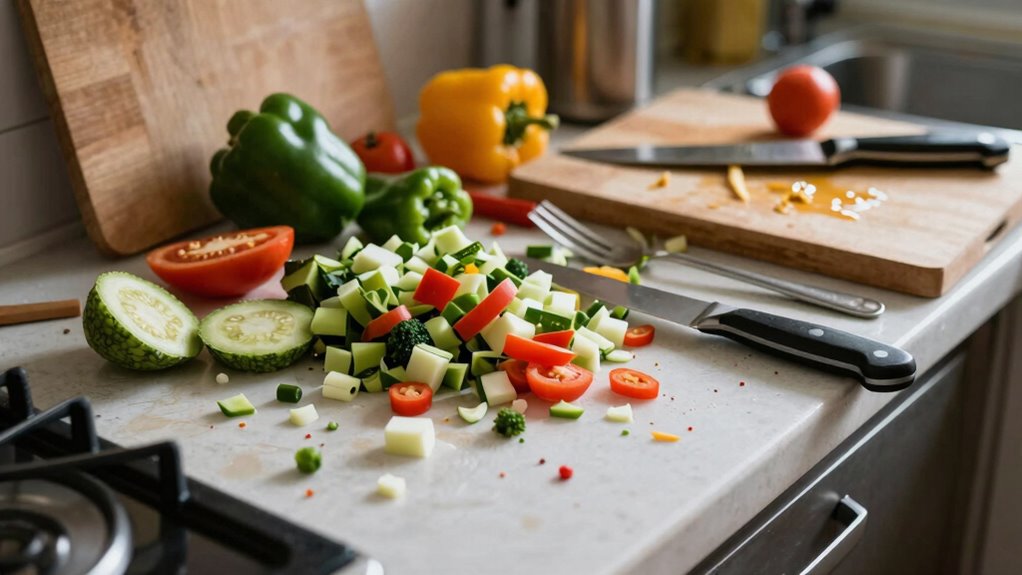
A messy cutting board might seem harmless, but it can pose serious safety risks when handling knives. When your workspace is cluttered, it’s easy for ingredients or debris to slip unexpectedly, making precise cuts more difficult. This chaos can throw off your knife grip and cutting technique, increasing the likelihood of accidents. You might find yourself gripping the knife too tightly to control it or adjusting your hand position mid-cut to avoid obstacles. These reactive movements can lead to slips, nicks, or even more severe injuries. Maintaining a clean, organized board helps you focus on your technique and reduces distractions that compromise safety. A cluttered workspace also hampers your ability to maintain proper technique, which is essential for safe and effective cutting. Your knife grip is fundamental to safe, effective cutting. When the board is cluttered, you might instinctively grip the knife differently—perhaps gripping more tightly or awkwardly to compensate for the uneven surface or hidden hazards. An improper grip diminishes control and can cause the knife to wobble, especially if your hand is not firmly positioned or if you’re gripping the handle too high or too low. A secure, proper grip involves holding the handle with a firm but relaxed grip, with your fingers wrapped comfortably around it. When your environment is messy, it’s harder to maintain this grip because you’re constantly adjusting to avoid obstacles, which increases the risk of slipping and compromises your control. Cutting technique also suffers when the board is cluttered. A disorganized surface often leads to hurried or inconsistent cuts as you try to navigate around debris or misplaced ingredients. This rush compromises your precision, leading to uneven slices or accidental slips. When ingredients are scattered, it’s tempting to cut through faster or apply more force, which increases the chance of losing control. A clean cutting surface encourages you to adopt a steady, deliberate technique—using smooth, controlled motions rather than force or haste. This approach not only produces better results but also keeps your hands and fingers safer. In a cluttered environment, you’re more likely to make mistakes or lose focus, which can have serious consequences when using sharp knives. Keeping your cutting board tidy allows you to enhance your safety, maintain a proper knife grip, follow a consistent cutting technique, and stay alert. Additionally, organized workspaces promote better focus and reduce the cognitive load, making precise and safe cuts more achievable. Creating a clutter-free zone minimizes distractions and helps you concentrate fully on your task. When you remove unnecessary obstacles and organize your workspace, you’re more likely to cut safely and efficiently. Remember, safety isn’t just about being careful—it starts with creating the right conditions. A clean, orderly board supports your technique and helps prevent accidents, keeping your fingers intact and your kitchen safer for everyone.
As an affiliate, we earn on qualifying purchases.
Frequently Asked Questions
How Often Should I Clean My Cutting Board to Prevent Accidents?
You should clean your cutting board after each use to prevent accidents and maintain proper knife maintenance. Regular cleaning keeps food particles and bacteria away, making your cutting technique safer. For tougher stains or residues, wash with hot, soapy water and dry thoroughly. Avoid letting debris pile up, as it can cause slipping or dull your knife. Consistent cleaning guarantees safer, more precise cuts every time you cook.
What Types of Knives Are Most Affected by Messy Boards?
Ever wondered which knives suffer most from messy boards? You’ll find that high-carbon steel and delicate, fine-edged knives are most affected by cluttered surfaces. A chaotic board can cause knife damage and reduce chopping precision, making it harder to control your cuts. These knives require a steady, clean surface to stay sharp and safe. Keeping your board tidy ensures your knives perform effectively and last longer, making your prep safer and more efficient.
Can a Cluttered Board Cause Cross-Contamination?
A cluttered board can definitely cause cross-contamination. When you don’t maintain good board hygiene, bacteria from raw meats or other foods can spread to vegetables or cooked items. This increases the risk of foodborne illnesses. To prevent cross contamination, always keep your boards organized, clean them thoroughly after each use, and use separate boards for different food types. Proper hygiene is key to safe food handling.
Are There Specific Board Materials That Are Safer for Knife Work?
You should choose plastic boards for safer knife work because of their durability and ease of cleaning, which reduces bacteria buildup. Wood safety is also important; high-quality, dense woods like maple are less prone to deep cuts that harbor germs. Both materials can be safe if properly maintained, but plastics tend to be more resistant to cross-contamination due to their non-porous surfaces, making them a safer choice overall.
How Can I Organize My Workspace to Minimize Risks?
Sure, because chaos is the safest choice, right? To minimize risks, you should organize your workspace with smart storage solutions—think magnetic strips or dedicated knife blocks—keeping blades accessible but secure. Improve workspace ergonomics by maintaining a clean, clutter-free surface and proper knife placement. This way, you’ll prevent accidents, reduce fatigue, and work efficiently. After all, a tidy kitchen isn’t just pretty; it’s downright safer!
As an affiliate, we earn on qualifying purchases.
Conclusion
A messy cutting board isn’t just clutter—it increases your risk of accidents. Studies show that nearly 60% of kitchen injuries occur when knives slip on cluttered surfaces. Keeping your board tidy not only makes prep easier but also markedly reduces your chances of cuts. So next time you cook, take a moment to clear your workspace. A clean, organized board keeps your fingers safe and your cooking smoother—because safety starts with a tidy workspace.
As an affiliate, we earn on qualifying purchases.
As an affiliate, we earn on qualifying purchases.
Fall Picks
fall essentials
As an affiliate, we earn on qualifying purchases.