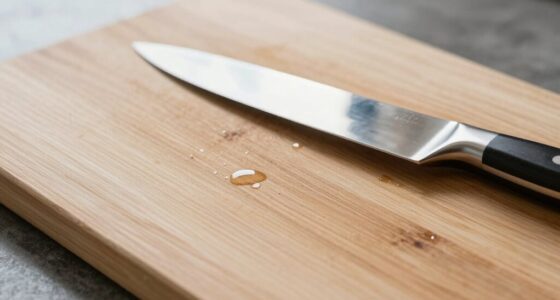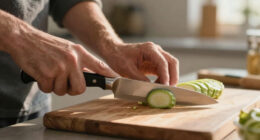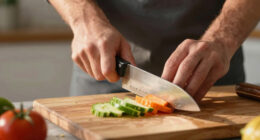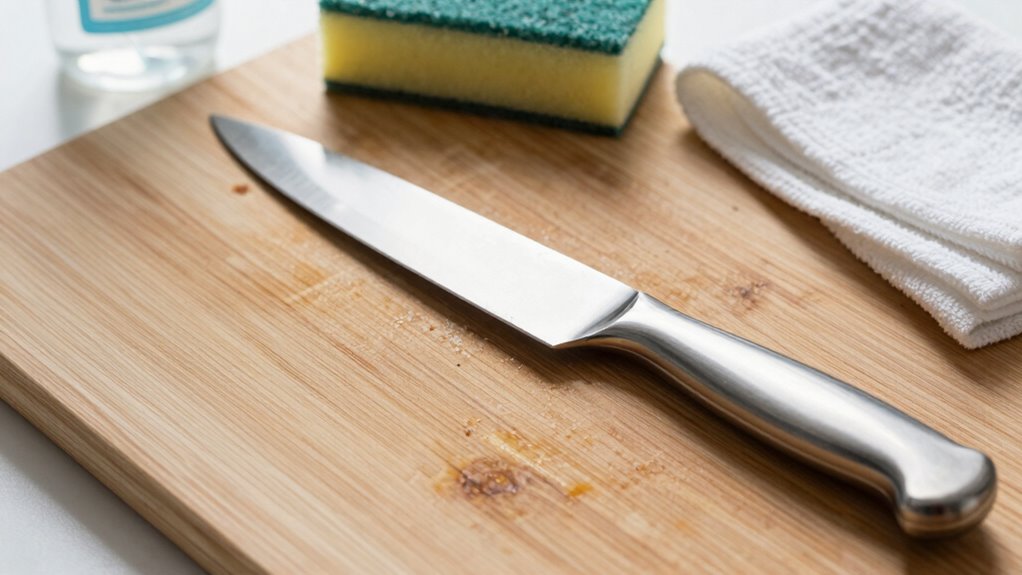

To protect your knife’s edge, keep your cutting boards hygienic by rinsing them with warm water and a damp sponge after each use, then dry thoroughly with a clean towel. Use wooden or soft plastic boards to prevent dulling your blades, and deep clean with natural agents like lemon juice or vinegar periodically. Proper storage and regular maintenance extend both your tools’ lifespan and their sharpness—learn more ways to keep your knives in top shape.
Key Takeaways
- Clean cutting boards thoroughly with warm water and a damp cloth, avoiding harsh detergents that can damage the surface.
- Dry boards completely, standing upright or in a well-ventilated area, to prevent warping and bacterial growth.
- Use natural sanitizers like lemon juice, vinegar, or salt to disinfect and eliminate odors, maintaining a hygienic surface.
- Avoid soaking wooden boards; instead, wipe them quickly and dry immediately to prevent moisture absorption and mold.
- Store boards properly upright or in a dry space to prevent warping and ensure they stay hygienic for knife maintenance.
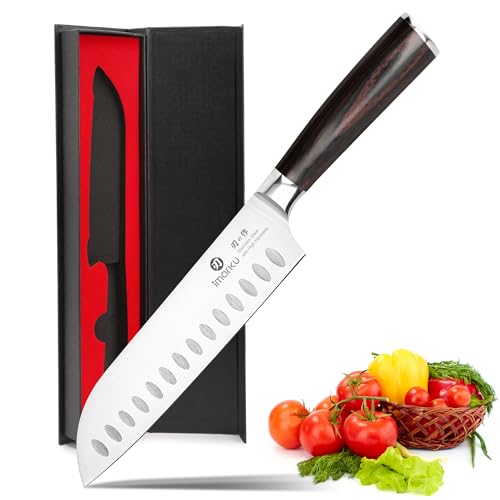
imarku Chef Knife 7 Inch Kitchen Knife Ultra Sharp Santoku Knife - High Carbon Japanese Chefs Knife, Kitchen Gadgets 2025, Apartment Essentials, Birthday Gifts for Him Her, Best Gifts for Women Men
Professional Santoku Knife: This imarku super sharp santoku knife is made of high carbon stainless steel that resists...
As an affiliate, we earn on qualifying purchases.
Essential Daily Cleaning Routines for Cutting Boards and Knives
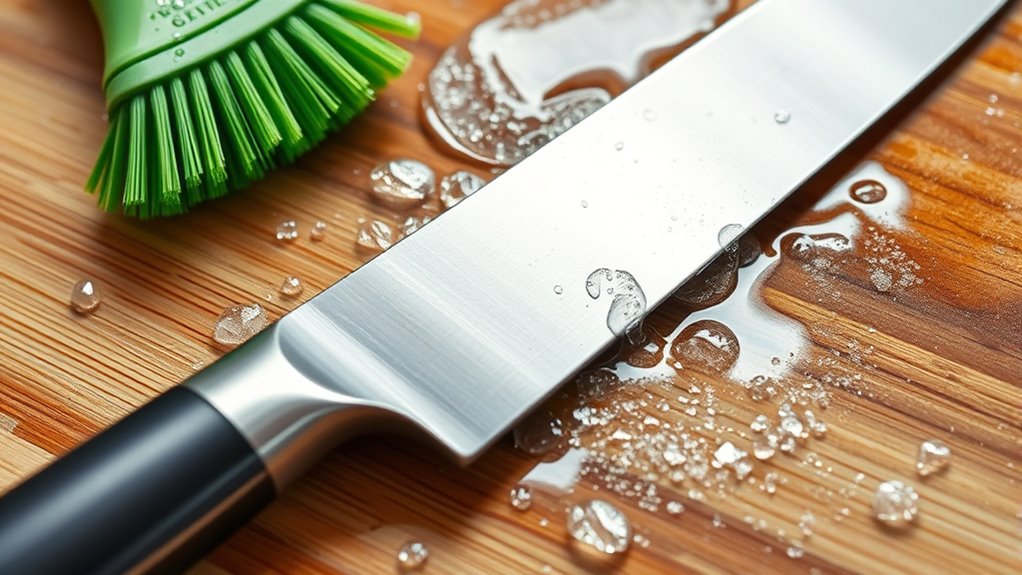
To maintain ideal hygiene and prolong the life of your cutting tools, you should establish a daily cleaning routine for both your cutting boards and knives. After each use, rinse your knives under running water to remove food residue, then wipe them with a clean, dry cloth or paper towel to prevent moisture buildup. For wooden cutting boards, wash with warm water using a damp sponge or dishbrush, avoiding harsh detergents. Rinse thoroughly and dry immediately with a clean towel to prevent warping and mold growth. Don’t leave knives or boards soaking—this can cause corrosion or damage. Regular cleaning helps eliminate bacteria and food particles, keeping your tools safe and sharp. Consistent habits ensure your knives stay fine-edged and your boards free of cross-contamination. Additionally, avoiding harsh chemicals and proper drying techniques can further protect your tools from damage and maintain their longevity. Incorporating electric tools like electric knives, if used, also requires careful cleaning to prevent electrical hazards and ensure safe operation. Proper cleaning and maintenance are essential for kitchen safety and the durability of your equipment, especially considering how cleaning practices influence the longevity of your tools.
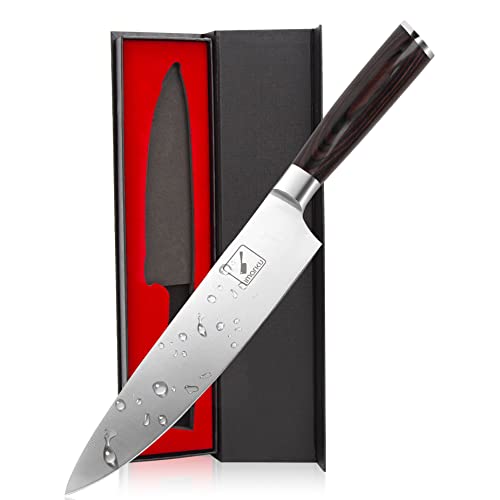
imarku Japanese Chef Knife - Sharp Kitchen Knife 8 Inch Chef's Knives HC Steel Paring Knife, Unique Gifts for Men and Women, Gifts for Mom or Dad, Kitchen Gadgets with Gift Box, Gyutou Knives
High-Carbon Stainless Steel Blade: It is manufactured from high-quality stainless steel that maintains its functionality for a long...
As an affiliate, we earn on qualifying purchases.
Proper Drying Techniques to Maintain Your Tools’ Longevity
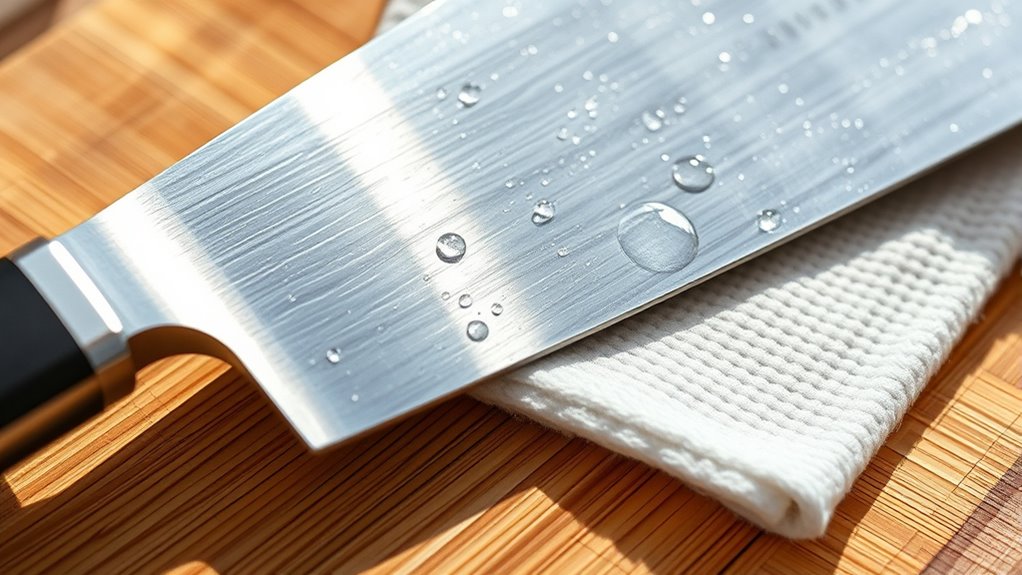
Proper drying techniques are essential for preserving the sharpness and preventing rust or warping of your knives and cutting boards. After cleaning, you should thoroughly dry your tools with a clean, absorbent cloth or paper towels. For knives, wipe the blades immediately to remove moisture, paying special attention to the edges and tips. Use a soft towel or linen cloth to prevent scratching or damage. Wooden cutting boards require complete drying to avoid warping and bacterial growth; stand them upright or place them in a well-ventilated area. Avoid air-drying for extended periods, as residual moisture can lead to corrosion or warping. Always guarantee your tools are completely dry before storing to extend their lifespan and maintain optimal performance. Additionally, proper drying techniques help prevent the development of rust, which can compromise the integrity of your blades and cutting surfaces. Incorporating routine maintenance practices ensures your tools remain in top condition over time.

HOSHANHO Kitchen Knife in Japanese High Carbon Steel, Professional High-Class Chef's Knife 8 inch, Non-slip Ultra Sharp Cooking Knives with Ergonomic Handle
【High-End Japanese Steel Chef's Knife】 HOSHANHO chef's knife is made of Japanese high carbon steel 10Cr15CoMoV, 2x of...
As an affiliate, we earn on qualifying purchases.
Selecting and Caring for Cutting Boards to Safeguard Knife Edges
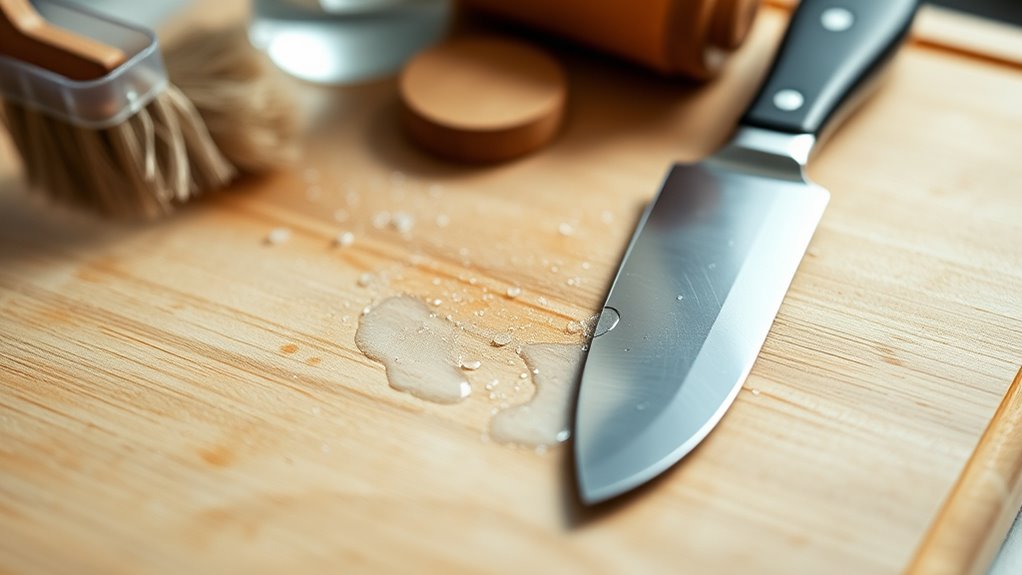
Choosing the right cutting board is essential for protecting your knives’ edges and ensuring safe, efficient food prep. Use wood, soft plastic, or rubber boards to minimize dulling. End grain wooden boards are ideal because they absorb impact and reduce edge damage. Store wooden boards upright with the grain vertical to prevent warping. Avoid hard surfaces like glass, ceramic, or metal, which dull blades quickly. Regularly clean your boards with warm water and a damp cloth, and deep clean them with lemon juice and salt or vinegar to eliminate bacteria and odors. Keep boards dry to prevent warping and bacterial growth. Proper selection and maintenance of your cutting boards help preserve your knife edges and extend their lifespan. Additionally, using proper cleaning techniques can significantly reduce bacteria and prolong the life of your cutting surfaces. Ensuring your boards are properly sanitized helps prevent cross-contamination and keeps your kitchen safer. Maintaining your cutting boards properly is also vital, as bacteria buildup can compromise food safety and affect your knives’ longevity.

Japanese Chef Knife, 8 Inch Damascus Kitchen Knife with VG10 Steel, Handcrafted Sharp Knife with Ergonomic Handle, Cooking Knives for Home Chefs, Cooking Gifts for Men and Women
【Premium Damascus Chef Knife with VG-10 Steel Core】Our Japanese knives feature a VG-10 steel core (60 HRC) for...
As an affiliate, we earn on qualifying purchases.
Deep Cleaning Strategies for Optimal Hygiene and Performance
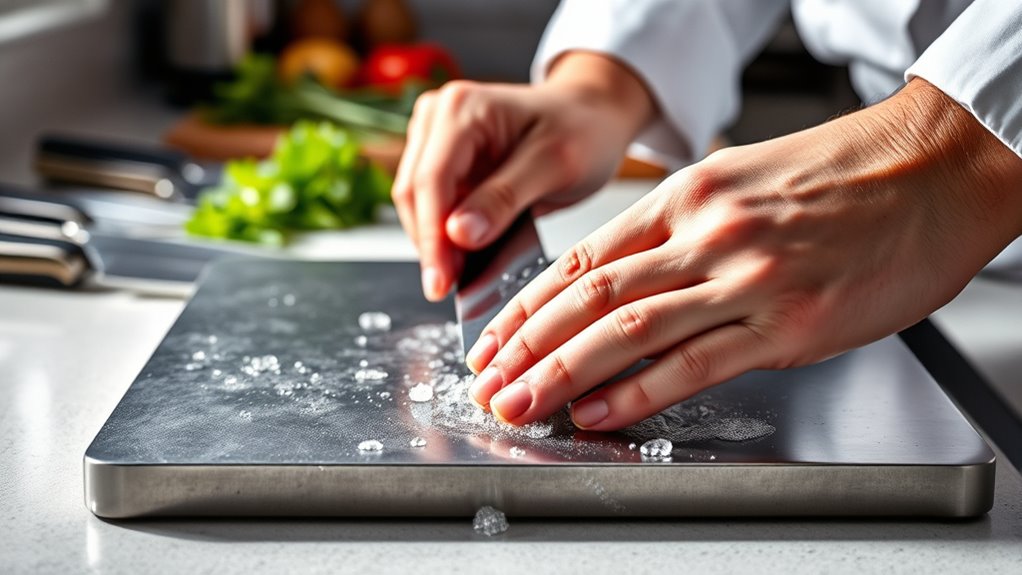
Deep cleaning your cutting boards and knives regularly removes bacteria, odors, and stubborn stains that everyday washing might miss. To achieve this, focus on thorough techniques that go beyond routine rinsing. Use natural agents like lemon juice and salt to disinfect and brighten wooden surfaces, or opt for white vinegar as a powerful alternative. Baking soda paste effectively eliminates onion and garlic odors. Always rinse with warm water and dry thoroughly to prevent mold and corrosion. Remember these key practices:
Regular deep cleaning with natural agents keeps your knives and boards hygienic and odor-free.
- Apply lemon-salt or vinegar for deep sanitation.
- Use baking soda paste for odor removal.
- Rinse thoroughly and dry immediately.
- Avoid abrasive sponges to prevent scratches.
- Incorporating smart cleaning devices can help monitor cleanliness levels and ensure consistent hygiene.
These strategies ensure your tools stay hygienic, sharp, and in top condition for precise, safe cutting.
Storage Solutions That Preserve Blade Sharpness and Prevent Damage

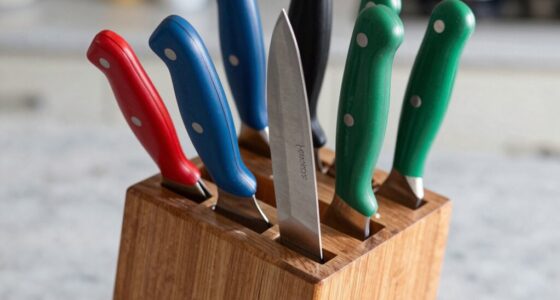
Storing your knives correctly is essential for maintaining their sharpness and preventing damage. Proper storage minimizes contact with hard surfaces and reduces dulling or chipping. Consider using a magnetic strip, knife sheath, or roll to keep blades protected and dry. Wooden blocks or drawers with individual slots also work well if they’re clean and dry. Ensuring your storage choices align with blade preservation techniques can further enhance their longevity. Here’s a visual guide:
| Storage Method | Benefits |
|---|---|
| Magnetic strip | Easy access, prevents contact |
| Knife roll | Portable, protects blades |
| Wooden block | Keeps edges sharp, safe placement |
| Drawer with slots | Organized, reduces scratching |
| Saya (knife sheath) | Protects blade during storage |
Choosing the right storage solutions can also help support overall blade maintenance and longevity. Proper storage not only safeguards the blades but also contributes to blade longevity by reducing exposure to damaging elements. Additionally, using appropriate storage options helps prevent accidental injury and keeps your kitchen organized. Incorporating these practices can make a significant difference in preserving your knives’ performance over time.
Frequently Asked Questions
How Often Should I Replace My Cutting Boards to Ensure Hygiene?
You should replace your cutting boards every 1 to 3 years, depending on usage and wear. Regularly inspect for deep cuts, cracks, or excessive staining, which can harbor bacteria. If you notice these issues or if the surface becomes hard to clean thoroughly, it’s time to get a new one. Maintaining hygiene is essential, so don’t hesitate to upgrade your board to guarantee food safety and protect your knives.
Can Using Abrasive Cleaners Damage My Knives or Boards?
Using abrasive cleaners can definitely damage your knives and boards. Think of it like trying to polish a vintage car with steel wool — it scratches the surface and wears down the material. For knives, abrasives cause scratches, dulling the edge and risking corrosion. For boards, they create grooves where bacteria hide. Stick to gentle scrubbing tools like soft sponges or cloths to keep your tools in top shape and safe.
What Are the Signs of a Dull or Damaged Knife Edge?
You’ll notice your knife starting to dull when it requires more pressure to cut through foods, and it may slip or crush delicate items instead of slicing cleanly. A damaged edge often looks chipped, bent, or uneven, and you might see a rough or jagged surface. If your cuts become uneven or tearing occurs, it’s a sign that your knife needs sharpening or repair to restore its sharpness and efficiency.
How Do I Remove Rust Spots From Carbon Steel Knives?
Think of rust on your carbon steel knives like weeds in a garden—you need to remove them to keep your tools sharp. To do it, make a paste with baking soda and water, then gently scrub the spots with a soft cloth or sponge. Rinse thoroughly, dry immediately, and apply a light coat of oil to prevent future rust. Regular maintenance keeps your knives pristine and ready for action.
Is It Safe to Use Vinegar on All Types of Cutting Boards?
Yes, vinegar is safe for most cutting boards like wood, plastic, and rubber. You can use it for deep cleaning or disinfecting, as it effectively kills bacteria and removes odors. Just avoid soaking wooden boards in vinegar for too long, as prolonged exposure can damage the wood. Rinse thoroughly afterward and dry completely. For delicate or porous boards, spot testing first is always a good idea to prevent any potential damage.
Conclusion
Think of your knives and cutting boards as your trusted teammates—they perform best when well cared for. Just like a chef who regularly sharpens their blades to ensure perfect slices, maintaining your tools through proper cleaning and storage keeps them sharp and ready. When you neglect hygiene, it’s like trying to cut with a dull blade—frustrating and inefficient. Invest a little time daily, and you’ll enjoy safer, cleaner, and more precise cooking every time.