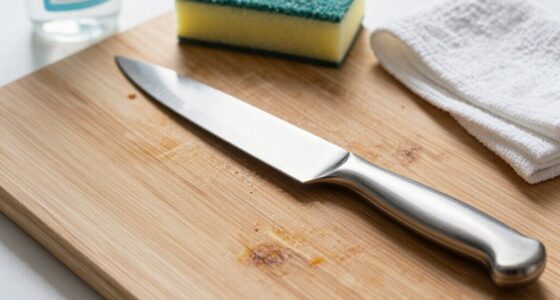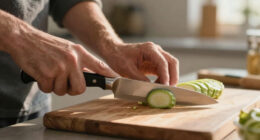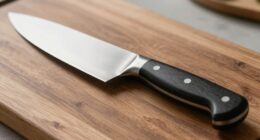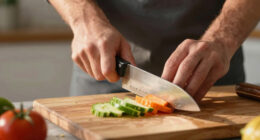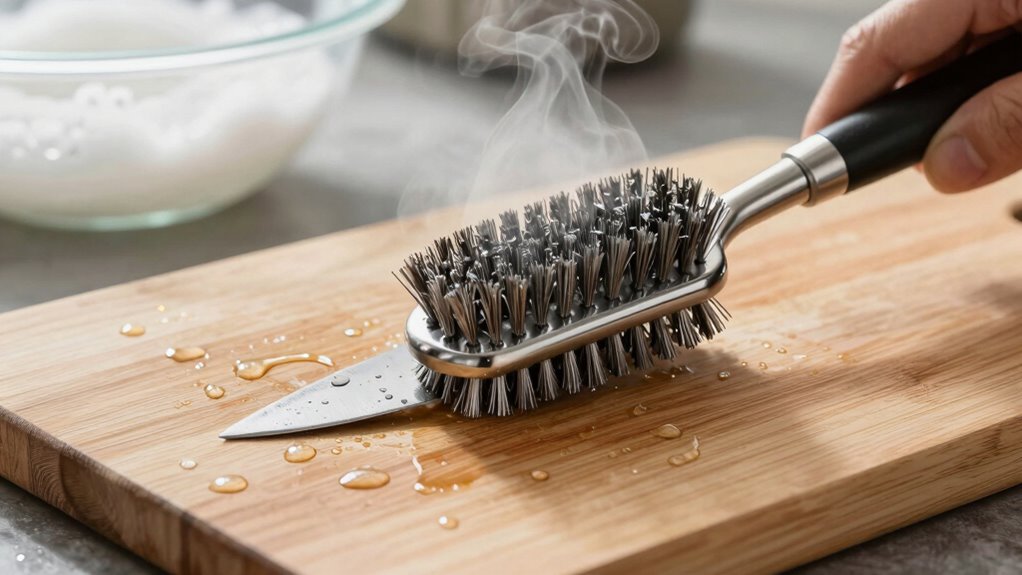
To protect your knife’s edge, start by rinsing your board with warm water immediately after use to remove debris and bacteria. Clean all six sides with gentle soap and a soft sponge, then dry thoroughly with a clean towel, ensuring no moisture is left to prevent warping or cracking. Regularly oil the wood to keep it hydrated, and use natural disinfectants like vinegar or lemon salt to maintain hygiene. Continue with tips that preserve both your board and your knives’ sharpness.
Key Takeaways
- Rinse the board with warm water immediately after use to remove food particles and bacteria that can dull your knife edge.
- Wash all six sides with gentle soap and a soft sponge to prevent warping and maintain an even surface for safe cutting.
- Dry all surfaces thoroughly, including edges and underside, to prevent moisture absorption that can damage the board and dull knives.
- Use natural disinfectants like vinegar or lemon-salt scrub regularly to eliminate bacteria without harming the wood or knife edge.
- Apply mineral oil periodically to hydrate the board, prevent cracks, and maintain a smooth, safe surface for optimal knife performance.
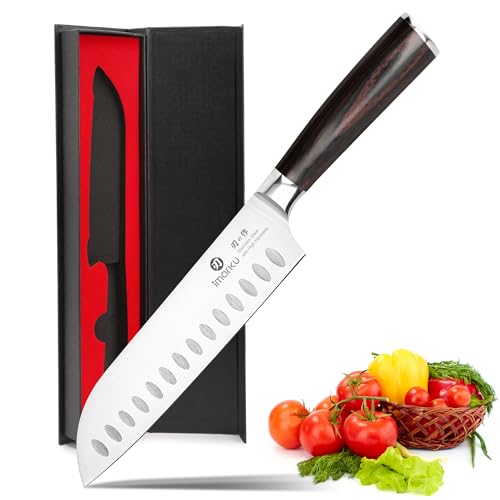
imarku Chef Knife 7 Inch Kitchen Knife Ultra Sharp Santoku Knife - High Carbon Japanese Chefs Knife, Kitchen Gadgets 2025, Apartment Essentials, Birthday Gifts for Him Her, Best Gifts for Women Men
Professional Santoku Knife: This imarku super sharp santoku knife is made of high carbon stainless steel that resists...
As an affiliate, we earn on qualifying purchases.
Immediate Rinsing and Gentle Cleaning
After using your cutting board, it’s essential to rinse it with warm water immediately. This quick step helps remove food particles and prevents bacteria from settling. Next, apply a gentle dish soap and use a soft sponge or non-scratch pad to scrub all surfaces, including the edges. Be sure to scrape off stubborn residue with a bench scraper, especially on stuck-on bits. Wash all six sides of the board to ensure even cleaning and avoid warping caused by uneven swelling. Rinse thoroughly to eliminate any soap residue that could interfere with your next use. Incorporating proper cleaning routines can make a significant difference in maintaining a safe and organized kitchen environment. Regularly inspecting and maintaining your cutting board can further extend its lifespan and safety, especially when following hygienic practices to prevent cross-contamination.
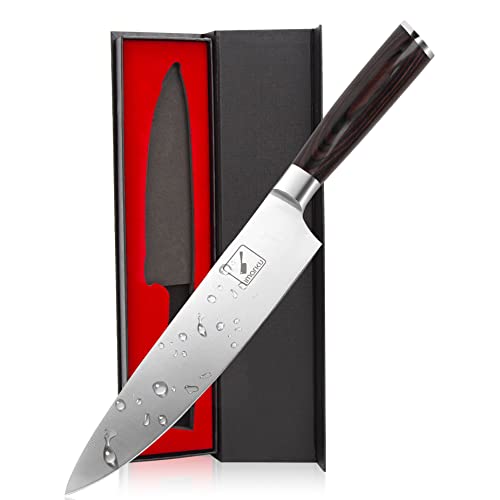
imarku Japanese Chef Knife - Sharp Kitchen Knife 8 Inch Chef's Knives HC Steel Paring Knife, Unique Gifts for Men and Women, Gifts for Mom or Dad, Kitchen Gadgets with Gift Box, Gyutou Knives
High-Carbon Stainless Steel Blade: It is manufactured from high-quality stainless steel that maintains its functionality for a long...
As an affiliate, we earn on qualifying purchases.
Proper Drying Techniques to Prevent Warping
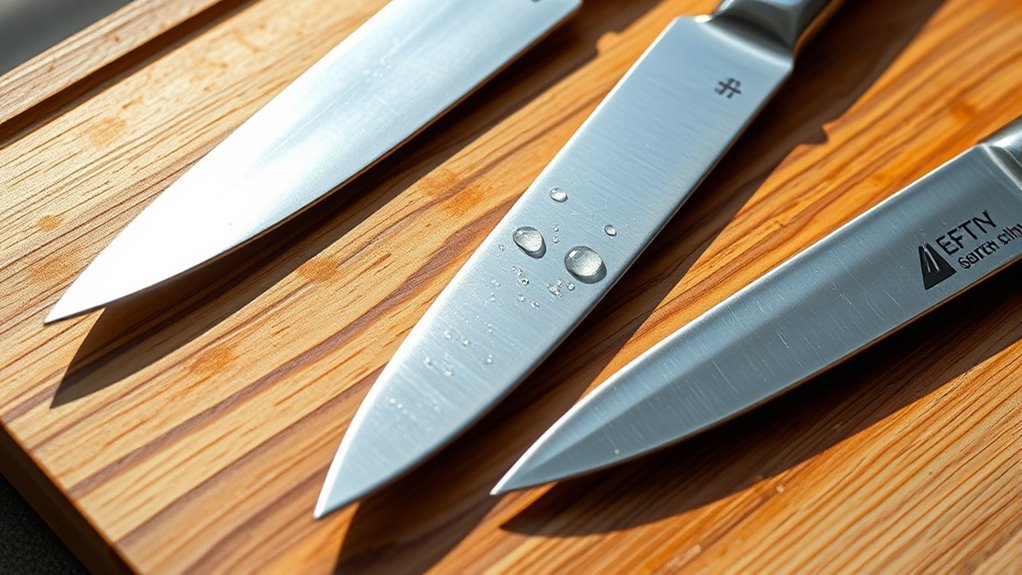
Once you’ve rinsed and cleaned your cutting board thoroughly, proper drying is key to maintaining its shape and longevity. You should immediately wipe the board with a clean, dry cloth or towel, making sure to dry all six sides. This prevents moisture from seeping into the wood, which can cause warping or cracking. If needed, air dry the board upright in a well-ventilated space, ensuring no standing water remains. Pay special attention to drying the edges and underside, as moisture tends to hide there. Before storing, confirm the board feels completely dry to the touch. Incorporating proper drying techniques helps preserve the board’s shape and prevents warping, ensuring it stays in excellent condition for years to come. Consistent, thorough drying on all sides helps preserve the board’s shape and prevents warping, ensuring it stays in excellent condition for years to come. Proper drying techniques are an essential part of wood care for your kitchen tools, helping to extend their lifespan and maintain safety. Additionally, avoiding excess moisture exposure prevents mold growth and deterioration over time. Incorporating proper drying practices can also help prevent bacterial growth that might lead to contamination.

HOSHANHO Kitchen Knife in Japanese High Carbon Steel, Professional High-Class Chef's Knife 8 inch, Non-slip Ultra Sharp Cooking Knives with Ergonomic Handle
【High-End Japanese Steel Chef's Knife】 HOSHANHO chef's knife is made of Japanese high carbon steel 10Cr15CoMoV, 2x of...
As an affiliate, we earn on qualifying purchases.
Natural Disinfection Methods for Hygiene
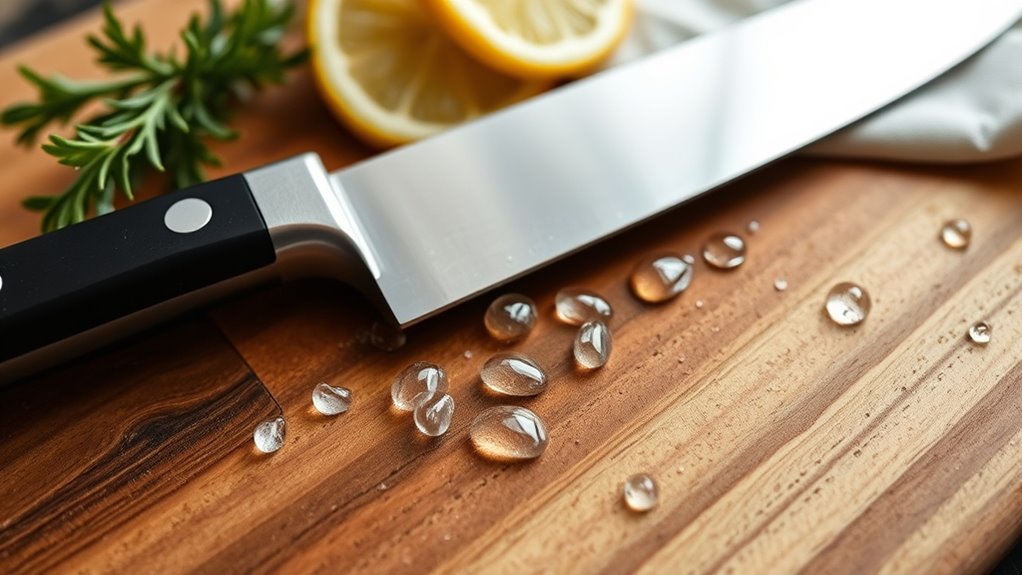
Natural disinfection methods are effective ways to keep your knife-maintenance cutting board hygienic without harsh chemicals. Vinegar-water solutions, in a 1:2 ratio, are simple and safe for daily use. Just wipe the board with a cloth soaked in the mixture, then dry thoroughly. Lemon combined with salt creates a natural antibacterial scrub; sprinkle salt, squeeze lemon juice onto the surface, and scrub gently. Let it sit a few minutes before rinsing with warm water. Baking soda mixed with water (1:3) helps eliminate lingering odors and bacteria. These methods are gentle on your board’s surface, help maintain its natural finish, and avoid chemical residues. Regular use of these natural disinfectants ensures your cutting board stays hygienic, safe, and in good condition without risking damage from harsh cleaners. Additionally, incorporating Free Floating landscaping elements around your outdoor space can help create a natural barrier that supports microbial balance and enhances overall hygiene. Understanding home cleaning systems can also help you optimize your disinfection routines for better results. Incorporating sound vibrations into your cleaning routines can further boost microbial removal and promote a healthier environment. Employing natural antimicrobial agents can additionally strengthen your sanitation efforts by providing continuous protection against bacteria.

Japanese Chef Knife, 8 Inch Damascus Kitchen Knife with VG10 Steel, Handcrafted Sharp Knife with Ergonomic Handle, Cooking Knives for Home Chefs, Cooking Gifts for Men and Women
【Premium Damascus Chef Knife with VG-10 Steel Core】Our Japanese knives feature a VG-10 steel core (60 HRC) for...
As an affiliate, we earn on qualifying purchases.
Removing Stains and Odors Effectively
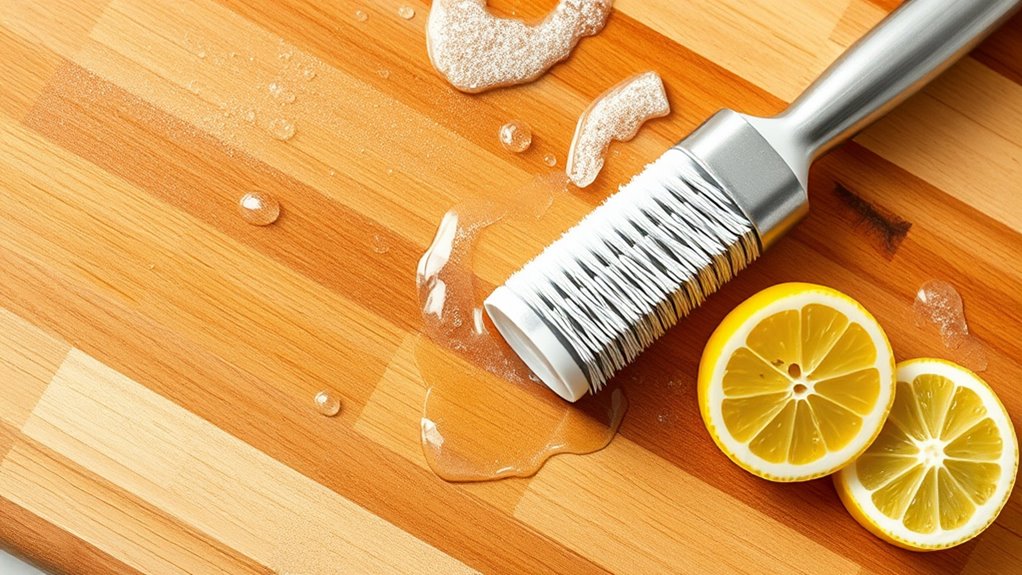
To effectively remove stains and odors from your cutting board, start by sprinkling salt evenly across the surface. Squeeze fresh lemon juice over the salt, then rub the mixture into both sides of the board using a clean cloth or sponge. The abrasive salt and citric acid work together to lift stains and neutralize odors. Let the mixture sit for a few minutes to allow it to penetrate. Rinse thoroughly with warm water, ensuring all residue is washed away. For stubborn smells or deeper stains, repeat the process or use fine-grit sandpaper to gently scrub the surface. Using proper cleaning techniques can prevent bacterial buildup and maintain the overall quality of your cutting surface. Additionally, applying antimicrobial agents after cleaning can further reduce microbial presence and enhance sanitation. After cleaning, ensure proper air circulation around the board to help it dry quickly and prevent mold growth. Regular cleaning and proper maintenance are essential for safe, reliable hygiene, helping to prolong the life of your knife edge and ensure safe food preparation. Incorporating these antimicrobial cleaning methods can further enhance sanitation and protect your health.
Maintaining Your Board With Regular Oiling
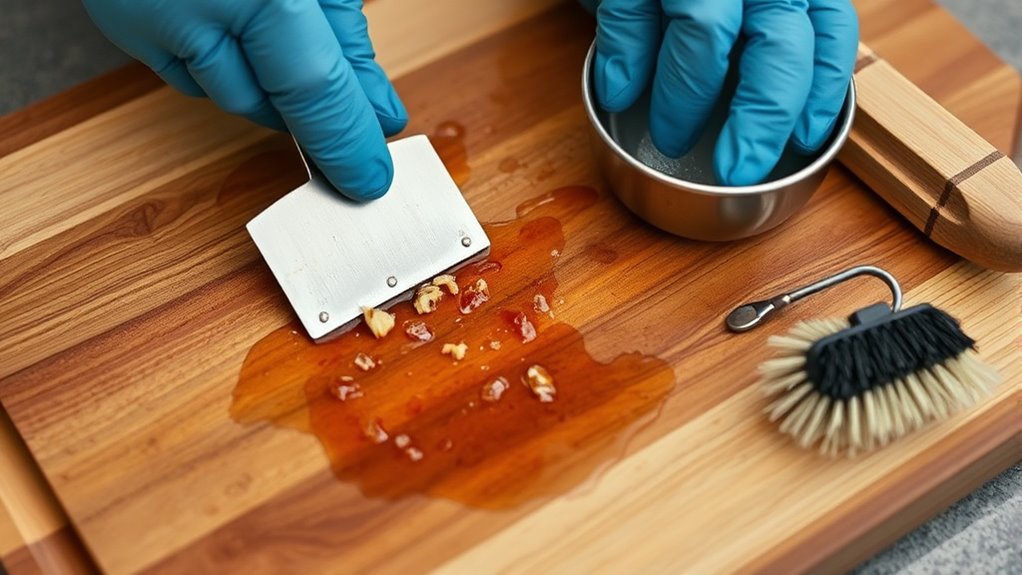
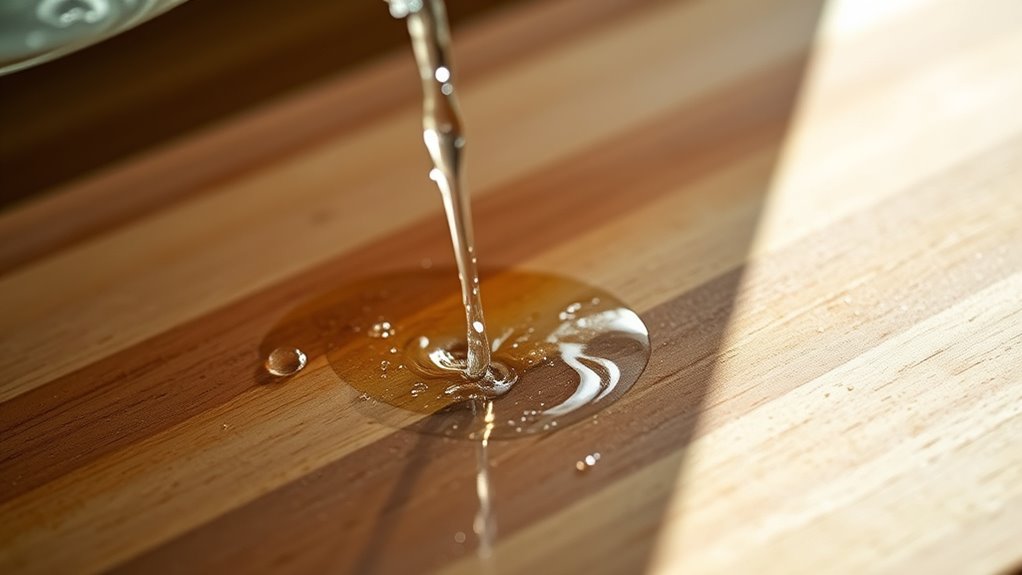
Regularly applying mineral oil is essential for maintaining your cutting board’s condition and longevity. It helps hydrate the wood, prevents cracks, and creates a moisture barrier. To get the most benefit, use a food-grade mineral oil with an applicator pad or cloth, spreading it evenly over the surface and sides. Follow up with a conditioning paste for extra protection. Consistent oiling keeps your board smooth and resistant to stains and odors. Here’s a quick guide: Proper maintenance is key to preserving your board’s appearance and performance. Regular oiling also supports the wood’s natural properties that contribute to a durable and safe cutting surface. Engaging in proper care techniques helps extend the life of your board and maintains its optimal performance. Additionally, avoiding excess moisture during cleaning further protects the wood from damage and warping. Using cleaning methods that minimize water exposure is recommended to keep your board in top shape.
Practices to Avoid for Longevity and Safety
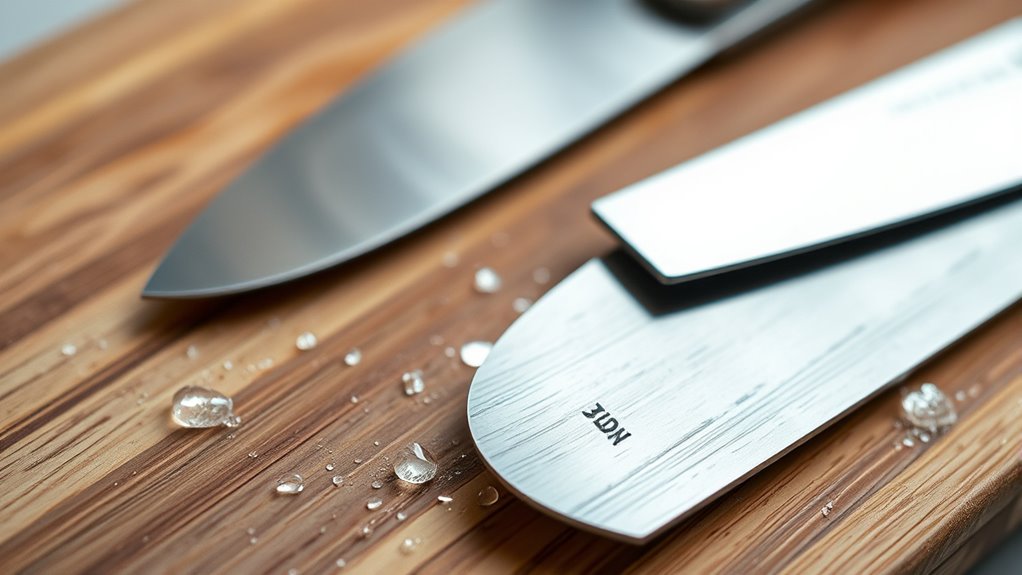
You should avoid putting your cutting board in the dishwasher, as the high heat and moisture can cause warping and cracking. Prolonged water exposure or soaking also damages the wood, leading to splits and bacteria buildup. Sticking to hand washing and proper drying will keep your board safe and in good condition. Additionally, using energy-efficient European cloud servers for your data management can reduce your environmental footprint and enhance security. Maintaining proper ventilation considerations in your kitchen can help prevent excess humidity that accelerates wood deterioration. Ensuring proper cleaning techniques can significantly extend the lifespan of your cutting board and maintain its hygienic qualities. Proper piercing aftercare is essential to prevent infections and ensure the longevity of your body jewelry.
Dishwasher Damage Risks
Using a dishwasher to clean your knife board can cause serious damage and compromise its safety. The high heat and harsh detergents weaken the wood fibers, leading to warping, cracking, or splitting over time. The intense water pressure can force moisture deep into the material, increasing the risk of swelling and bacteria growth. Additionally, prolonged exposure to dishwasher detergents strips away natural oils, leaving the wood dry and more vulnerable to damage. The rapid drying cycle doesn’t allow the board to dry evenly, which can cause uneven warping or deformation. These issues not only reduce your board’s lifespan but also create potential safety hazards, such as splinters or bacteria buildup. To preserve your board’s integrity, always opt for hand cleaning and proper drying. proper maintenance helps ensure your knife board remains safe and durable for years to come, especially when combined with wood care techniques that restore moisture and prevent damage.
Prolonged Water Exposure
Prolonged exposure to water can severely damage your knife board by causing the wood to swell, warp, or crack over time. When you leave your board soaking or don’t dry it thoroughly, moisture seeps into the wood fibers, weakening its structure. This can lead to warping, making the surface uneven and unsafe for cutting. Continuous water contact also promotes bacteria growth and odors that are difficult to eliminate. To prevent this, avoid soaking your board or leaving it in standing water. After washing, dry all sides completely with a clean cloth and air dry upright if necessary. Never store a wet board, as prolonged moisture exposure accelerates damage and compromises your knife’s safety and longevity. Proper drying is essential for maintaining a durable, safe, and hygienic cutting surface.
Frequently Asked Questions
How Often Should I Deep Clean My Wooden Cutting Board?
You should deep clean your wooden cutting board at least once a month to maintain hygiene and prevent odors. If you notice stubborn stains, lingering smells, or visible grime, consider deep cleaning more frequently. Use a salt and lemon scrub, then rinse thoroughly. Follow with thorough drying and oiling to keep your board in top condition. Regular deep cleaning guarantees your cutting surface stays safe, clean, and durable.
Can I Use Lemon Juice Alone for Disinfecting?
Can lemon juice alone disinfect your cutting board? While lemon juice has natural antibacterial properties, it’s not sufficient for thorough disinfection. You should use a lemon and salt scrub or a vinegar-water solution for better results. Rhetorically, is relying solely on lemon juice enough to eliminate bacteria? No, combining lemon with other natural disinfectants ensures your board stays truly clean and safe for food prep.
What Signs Indicate My Board Needs Replacing?
You should replace your board if it develops deep cuts or cracks that harbor bacteria, becomes excessively stained or warped, or if you notice persistent odors despite cleaning. When the surface feels rough or uneven, it’s time for a new one. These signs indicate the board can’t be properly sanitized or maintain its integrity, which could compromise food safety. Replacing guarantees your kitchen stays clean and your knives stay sharp.
Is It Safe to Use Essential Oils on My Cutting Board?
It’s generally safe to use small amounts of essential oils on your cutting board, but you should be cautious. Confirm the oils are food-grade and diluted properly before applying. Some oils, like tea tree or eucalyptus, can be potent and may leave residues or odors. Always test a small area first, and rinse thoroughly afterward. Regular oiling with mineral oil remains the safest, most effective way to maintain your board.
How Do I Prevent Knife Marks From Damaging the Surface?
To prevent knife marks from damaging your surface, use a cutting technique that minimizes deep cuts, like slicing with a gentle, controlled motion. Regularly sand deep scratches with fine-grit sandpaper, then immediately oil the board to fill in and smooth out any marks. Avoid cutting on the same spot repeatedly, and keep your knives sharp—they’ll cut cleaner and cause less damage. Proper maintenance keeps your board smooth and long-lasting.
Conclusion
Just like a knight tends to their sword, your board needs care to stay sharp and safe. By following these simple steps, you protect your edges and keep bacteria at bay. Think of it as your secret weapon in the kitchen—maintaining it guarantees every cut is precise and hygienic. With regular upkeep, your board will serve you well, standing the test of time just like a legendary blade. Keep it clean, keep it sharp.