
TL;DR

Get kitchen gear delivered free with Prime
- Fast, free delivery on millions of items
- Prime Video, Amazon Music and more included
- Member-only deals all year
A Livingetc report says warm, relatively dim household bulbs can shift how wall paint appears after dark, making some colors look warmer or less distinct than they do in daylight. Interior designer Emily Brooks recommends choosing paint in natural daylight and using a considered mix of bulb temperatures and layered lighting rather than rushing to repaint.
Warm household lighting can make wall paint look different after dark, according to a Livingetc report featuring interior designer and color consultant Emily Brooks and Pooky Lighting’s Jo Plant. They say the shift from daylight to warmer, dimmer bulbs can change how colors read, and recommend checking paint in natural light and adjusting evening lighting before deciding a color choice has failed.
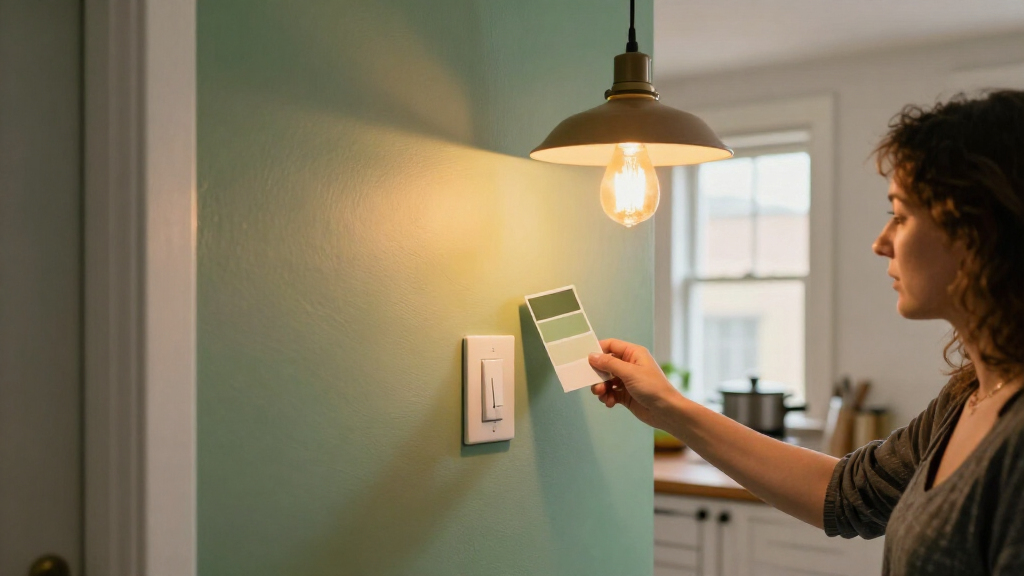
Brooks explains that people perceive paint color through light reflected from its pigments. The color temperature and strength of the light hitting a wall can therefore affect how the shade appears. Paint selected in daylight may not look the same beneath a warm lamp, even though the paint itself has not changed.
Plant says natural light is around 5,000 Kelvin, while many household bulbs fall between 2,500K and 3,000K. These figures describe approximate light color temperatures, not a guarantee of how a particular paint will look in every room. Plant says warm evening light can make warm blues feel warmer and can leave cooler hues looking muddy or flat.
The report’s proposed remedy is not automatically to replace every bulb or repaint. Brooks advises selecting the paint’s tone and lightness under natural daytime conditions, then tuning the evening lighting to suit the room. She says the paint, its finish and the light should be considered together, and describes changing lamp temperature as one way to influence the wall’s nighttime appearance.
Why Evening Light Changes the Room
A paint sample viewed in a bright store or under daytime conditions does not show how a room will look through every hour of use. For people who spend evenings in bedrooms and living rooms, the difference can affect both color perception and the room’s atmosphere. A wall that appears balanced in daylight may seem more golden, muted or less vivid under the bulbs used at night.
The report matters to homeowners because the apparent mismatch may come from the lighting rather than a mistake in the paint selection. Before committing to a costly repaint, residents can assess their bulbs, fixture placement and mix of light sources. That is practical guidance, not a promise that lighting changes will suit every paint, finish or room: the outcome depends on the specific combination.
adjustable LED light bulbs for living room
As an affiliate, we earn on qualifying purchases.
As an affiliate, we earn on qualifying purchases.
Daylight Is Only One Test
Paint is often chosen when a room is lit by natural daylight, but home lighting changes as the sun sets and lamps are switched on. Plant says that contrast is often overlooked. The reported difference between roughly 5,000K daylight and common 2,500K–3,000K household bulbs helps explain why the same wall can appear to shift during the day.
Brooks’s advice is to treat lighting as part of the color scheme, rather than as a final add-on. She gives terracotta as an example: a cooler bulb may bring out pink or purple tones, while warmer light may emphasize its yellow base. These are her observations about how a particular shade can respond, not universal results for every terracotta paint or bulb.
““We actually only see the color in our paint colors due to the light refracting off the pigment.””
— Emily Brooks, interior designer and color consultant, as quoted by Livingetc
As an affiliate, we earn on qualifying purchases.
How Each Paint Will Respond
The supplied report does not provide controlled measurements showing how specific paints change under particular bulbs, nor does it give a single bulb temperature that works for every room. Its color examples are expert guidance, and individual results may vary with the paint’s undertone and finish, bulb output, fixture position, furnishings and the amount of daylight entering the room.
The material also does not specify a product or technical standard for choosing bulbs beyond their approximate color-temperature range. It is unclear how much changing a bulb alone would alter any one reader’s room. Testing the actual paint and lighting combination in the space remains necessary.
As an affiliate, we earn on qualifying purchases.
Test the Room Before Repainting
Readers concerned about a nighttime color shift can compare the wall or a sample in daylight and again under the room’s evening lights. The report points to several adjustments to test: a different bulb temperature, softer or diffused overhead light, and more ambient light from lamps and wall fixtures. Brooks says layered sources can distribute light around a room and add depth to the walls.
No further study or product announcement is identified in the supplied material. The practical next step is to assess the room under the lighting conditions in which it is used, then make changes one at a time before deciding whether the paint needs to change.
lighting layer kit for living room
As an affiliate, we earn on qualifying purchases.
As an affiliate, we earn on qualifying purchases.
Key Questions
Why can paint look different at night?
Paint reflects light, and light color and intensity affect how people perceive its pigments. Warm household bulbs can make some shades appear warmer, muddier or flatter than they do in daylight.
What bulb temperatures does the report cite?
Jo Plant gives an approximate figure of 5,000K for natural light and says many home bulbs sit between 2,500K and 3,000K. These are general ranges, not a prescription for every room.
Should I repaint if I dislike the color after dark?
Not necessarily. The report recommends checking the room’s bulbs and lighting arrangement first. A change in bulb temperature or a more layered setup may change how the paint appears, though results depend on the room and shade.
What lighting setup does the report recommend?
Brooks advises diffusing overhead light and using lamps and wall lights as ambient sources instead of relying only on a central ceiling light or harsh downlights. She also suggests choosing bulb temperature to suit the desired appearance of the paint.
Source: rss
Fall Picks
fall essentials
As an affiliate, we earn on qualifying purchases.