
TL;DR

Get kitchen gear delivered free — and shop member deals
- Fast, free delivery on millions of items
- Access to Prime Big Deal Days deals on October 6–7
- Prime Video, Amazon Music and more included
Spooky themed kitchen gadgets are a seasonal niche within holiday kitchenware, with sales peaking from August through October, though the year-round goth kitchencore movement is changing that. Small tools run $5–20 while themed appliances cost $30–100+. Quality varies widely, so check materials and food-safety certifications before buying cheap imported items.
Your kitchen blender doesn’t need to look like it belongs in a witch’s lair. But if you’ve ever cracked an egg into a spider-leg egg separator and watched the whites drip through ceramic legs like something out of a B horror movie, you know the appeal is real.
Spooky themed kitchen gadgets are a seasonal niche within holiday kitchenware, peaking in sales from August through October. They range from pure novelty trinkets to genuinely functional tools with a macabre aesthetic — and the gap between those two categories is wider than most people expect.
In this guide, you’ll learn which gadgets actually earn their counter space, what you should pay, where to shop (including year-round sources), and how to spot the cheap imports that aren’t food-safe. Let’s separate the treats from the tricks.
Spooky kitchen gadget sales peak August–October, but the year-round goth kitchencore movement means specialty sellers like Etsy now stock these items every mon…
Expect to pay $5–20 for small tools and $30–100+ for themed appliances and serving sets; buy seasonal stock early because it sells out fast.
Check for food-safety certification (BPA-free, lead-free glaze, LFGB/FDA marks) before using cheap imported items with food — painted ceramics are a known lead…
A tasteful goth kitchen comes from two or three permanent dark staples plus restrained seasonal layering, not replacing everything in October.
The best party investment is a smoking cocktail kit plus a coffin serving board — roughly $60–80 for pieces you reuse every year.
Why Spooky Kitchen Gadgets Are No Longer Just an October Thing
Spooky themed kitchen gadgets used to disappear from stores the moment November 1st rolled around. Now they’re a year-round market, thanks to the “Halloween Everyday” and goth kitchencore movements that blew up on TikTok and Instagram.
According to retail trend data, Target’s seasonal Hyde & Eek! line still dominates the fall rush, but specialty goth shops and Etsy sellers now sell matte black utensils, occult-themed cutting boards, and cauldron bowls in March. Search any #gothkitchen hashtag and you’ll find kitchens that look like a dark academia library collided with a coffee shop — and stayed that way all year.
Why does this shift matter for you as a shopper? Because the two markets behave completely differently, and knowing which one you’re buying in changes your strategy. The seasonal market runs on scarcity: big-box retailers stock limited quantities from August through October, so a cauldron slow cooker spotted at Target in September could be gone by the first week of October. The year-round market runs on craft pricing: an Etsy seller’s hand-carved coffin cutting board is available in November, but at $60–90 instead of the $25 you’d pay for a mass-produced version during the season. In other words, seasonal buyers trade selection for price, while year-round goth buyers trade price for availability. Neither is wrong — but if you walk into October expecting Etsy prices at Target, or expecting Target selection in March, you’ll be disappointed on both counts.
There’s also a quality implication buried in this split. Year-round sellers live and die by repeat customers and reviews, so they tend to use better materials — solid wood, food-grade ceramic, stainless steel. Seasonal big-box stock is often produced cheaply for a single selling window, which is where the flimsy plastic and questionable glazes sneak in. The result? Two distinct shopper groups now buy the same products: the seasonal host planning one creepy October dinner party, and the year-round goth homeowner who wants a coffin-shaped cutting board on permanent display. Retailers have noticed, and inventory increasingly sticks around past Halloween — but the best pieces still move fastest when the season peaks.
If you see something you love in September, buy it. Seasonal stock sells out fast, and the year-round supply is mostly limited to specialty sellers at higher prices.
The Gadget Lineup: What Actually Exists (and What’s Worth Buying)
Spooky kitchen gadgets cluster into a few recognizable categories, and each one differs wildly in function. Here’s the honest breakdown of what’s out there right now:
- Skull measuring cups and spoons — genuinely functional, stack neatly, and work year-round if your aesthetic runs dark.
- Spider-leg egg separators — the cult favorite. Silly? Absolutely. But they separate eggs perfectly and cost under $15.
- Coffin cutting boards and serving trays — solid wood versions double as charcuterie boards and wall decor.
- Skeleton-hand utensil stands and wine glass holders — great conversation starters, moderate functionality.
- Cauldron bowls, fondue pots, and slow cookers — the workhorses of the category. A cauldron crockpot makes actual dinner.
- “Bloody” knife designs and blood-drip glassware — pure novelty. Fun for a party, useless beyond it.
- Cookie cutters (bats, ghosts, witches, cats) — cheap, durable, and the easiest entry point at $5–10 a set.
My personal test: if a gadget does its job worse than a plain version would, it’s a decoration pretending to be a tool. A skull measuring cup measures exactly as well as a round one. A flimsy plastic cauldron ladle? That’s a decoration.
Functional vs. Novelty: A Quick Way to Judge Before You Buy
Not every spooky gadget deserves your money, and the fastest way to decide is a simple materials-and-function check. Quality differs dramatically between a $30 handmade Etsy cauldron bowl and a $6 imported plastic one.
| Feature | Genuinely Functional | Novelty Only |
|---|---|---|
| Material | Stainless steel, solid wood, food-grade ceramic | Thin plastic, unmarked painted coatings |
| Food-safety labeling | BPA-free, LFGB or FDA noted, lead-free glaze | No certification marks at all |
| Everyday use | Works as well as a standard version | Performs worse than a plain tool |
| Price logic | $10–30 for tools, $50–100+ for appliances | Under $10, feels flimsy in hand |
| Dishwasher safe | Usually yes, clearly stated | Often unclear or hand-wash only |
The lead question is real. Painted ceramics from unverified importers can carry lead in decorative glazes — fine for a display shelf, not fine for your morning coffee. If a listing doesn’t state food-safe certification, treat the item as decor first.
Where to Shop: Budget Picks vs. Splurges That Last
You can build a spooky kitchen on almost any budget — the key is matching the retailer to what you’re buying. According to current retail data, small themed tools typically run $5–20, while themed appliances and serving sets run $30–100+. But price alone doesn’t tell you much; the real question is what each retailer is actually good at, and where each one will let you down.
For budget buys, hit Target’s Hyde & Eek! line, Amazon, HomeGoods, and Spirit Halloween between August and October. Cookie cutters, silicone molds, and seasonal glassware are all safe bets at the low end. A concrete example: a set of bat and ghost cookie cutters at Target runs about $8 and will outlast a decade of October baking sessions — the stamped-metal design hasn’t changed in years because it doesn’t need to. HomeGoods is the treasure-hunt option; you never know if you’ll find a $12 stoneware cauldron bowl or nothing at all, which is exactly why enthusiasts check weekly once fall inventory lands.
For investment pieces, go to Williams Sonoma for licensed collections (think Beetlejuice, Hocus Pocus, and Nightmare Before Christmas) and Etsy for handmade and custom work. The tradeoff here is the opposite of the budget tier: you’re paying $40–70 for a skull colander or licensed stand mixer attachment, but you’re getting materials and durability that survive daily use. Etsy sellers in particular have built a real business on custom gothic kitchen and wedding gifts — a hand-carved coffin cutting board for a goth couple’s housewarming is a whole micro-industry now. Picture the scenario: the couple registers for standard white dinnerware like everyone else, and a friend who knows them adds an engraved walnut coffin board with their wedding date burned into the lid. That’s the kind of gift that gets pulled out at every dinner party for the next twenty years — which is exactly why sellers can charge $60–90 and still sell out.
The practical implication: budget tier for things that touch food briefly or barely at all (cookie cutters, molds, party glassware), investment tier for things you’ll use weekly (cutting boards, measuring tools, appliances). Getting this backwards — spending $70 on a licensed novelty you’ll use once, or serving food off a $6 uncertified painted board — is how spooky kitchens get expensive or unsafe.
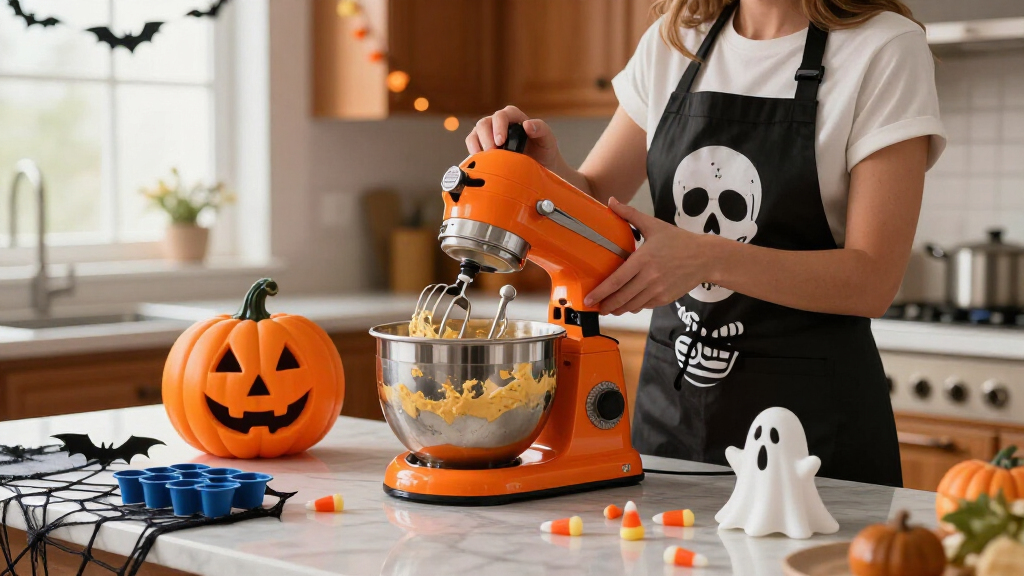
Limited-edition appliance drops — Halloween stand mixers, air fryers, waffle makers — sell out fast and often resell above retail. If you want one, don’t hesitate in October.
How to Build a Goth Kitchen That Doesn’t Look Tacky
The difference between a chic goth kitchen and a Halloween pop-up shop comes down to restraint. Pick a permanent base of two or three dark staples, then layer seasonal items on top rather than replacing everything in October.
- Start with matte black or dark wood everyday tools — utensil crock, cutting board, knife block. These work all year.
- Add one statement piece: a cauldron bowl, a skeleton-hand wine holder, or skull measuring cups on open shelving.
- Layer in true seasonal items (blood-drip glassware, pumpkin pans) only for October, then store them.
- Keep color tight — black, deep purple, copper, and bone white. A rainbow of Halloween orange reads as costume.
- Buy quality over quantity. Five well-made pieces beat twenty plastic ones.
Think of it like a little black dress: one strong dark foundation, and the accessories do the talking. A kitchen with black granite-look counters, copper pots, and a single coffin serving board feels intentional. The same kitchen buried in inflatable spiders feels like a haunted house lobby.
Storage tip: keep seasonal pieces in a single labeled bin with bubble wrap between ceramics. You’ll thank yourself when the cauldron crock survives eleven months in the garage.
Hosting a Creepy Dinner Party: The Gadgets That Earn Their Keep
If you’re throwing an October dinner party, spooky gadgets go from cute to essential. The right three or four pieces can carry an entire tablescape.
Start with the smoking cocktail kit and dry ice server — nothing lands like a cauldron punch bowl rolling with fog when guests walk in. The hiss of dry ice in a witch’s brew drink dispenser is instant atmosphere. Follow with a coffin-shaped charcuterie board as your centerpiece, skeleton-hand wine holders flanking it, and finish dessert with a cake from a skull mold.
Budget roughly $60–80 total for a party kit: $20 on the smoking kit, $25–35 on a quality coffin board, $15 on glassware. That’s less than most people spend on alcohol for the night, and you reuse everything next year.
Skip the single-use stuff. Plastic “bloody” tablecloths and flimsy props end up in the trash by November. The gadgets above become annual traditions instead.
Frequently Asked Questions
Are spooky kitchen gadgets actually functional or just novelty?
It varies widely by item and brand. Skull measuring cups, cauldron slow cookers, and cookie cutters are fully functional; blood-drip glassware and cheap plastic props are novelty only. Test each item by asking whether it performs its job as well as a plain version — if not, treat it as decor.
Where can I buy spooky kitchen gadgets year-round?
Etsy and specialty goth shops are your best year-round sources, especially for handmade and custom pieces. Target’s Hyde & Eek! line, Spirit Halloween, and HomeGoods stock heavily from August through October, while Williams Sonoma carries licensed collections (Beetlejuice, Hocus Pocus) seasonally.
Are the materials food-safe?
Reputable brands label their products as BPA-free and lead-free, and quality ceramics use food-safe glazes. The risk sits mainly with cheap imported items that carry no certification marks — painted decorative glazes can contain lead. If food-safety labeling is absent, use the item for display only or contact the seller before eating from it.
What’s a good spooky kitchen gift for a Halloween-obsessed friend?
Spend $20–40 on one quality piece rather than several cheap ones: a solid wood coffin cutting board, a spider-leg egg separator, or skeleton-hand wine holders are consistent hits. Custom gothic kitchen gifts from Etsy sellers are also a strong option for weddings and housewarmings.
How should I store seasonal spooky kitchen items?
Use one labeled storage bin with bubble wrap or dish towels between ceramics and glassware. Keep cookie cutters and small tools in a zip bag inside the same bin, and store it in a climate-stable spot — extreme garage heat can warp plastic molds and silicone over time.
Conclusion
Here’s the whole game in one rule: buy spooky gadgets that would still be worth owning if they weren’t spooky. A solid cauldron crock, a well-made coffin board, skull measuring cups — these earn permanent counter space. Everything else is October decoration, and that’s fine too, as long as you know which is which.
So ask yourself before the next checkout: would I use this in April? If the answer is yes, it’s a tool. If it’s no, it’s a costume for your kitchen — and costumes are meant to come off.
Fall Picks
fall essentials
As an affiliate, we earn on qualifying purchases.