TL;DR

Get kitchen gear delivered free with Prime
- Fast, free delivery on millions of items
- Prime Video, Amazon Music and more included
- Member-only deals all year
A Livingetc report outlines five storage principles associated with Japanese kitchens: declutter before adding organizers, choose containers for their function, keep frequently used cooking items easy to reach, use cookware that can also serve food, and limit counter displays. The advice comes from designers and home-goods experts; it is guidance, not evidence that every Japanese kitchen follows the same rules.
Livingetc has published five storage lessons drawn from Japanese kitchen design, urging readers to clear out unneeded items before buying organizers and to choose storage and cookware for specific jobs. The report presents advice from London-based interior designer Yoko Kloeden and Nakagawa executive vice president Tasuku Ogino, focused on making small or busy kitchens easier to use without adding unnecessary clutter.
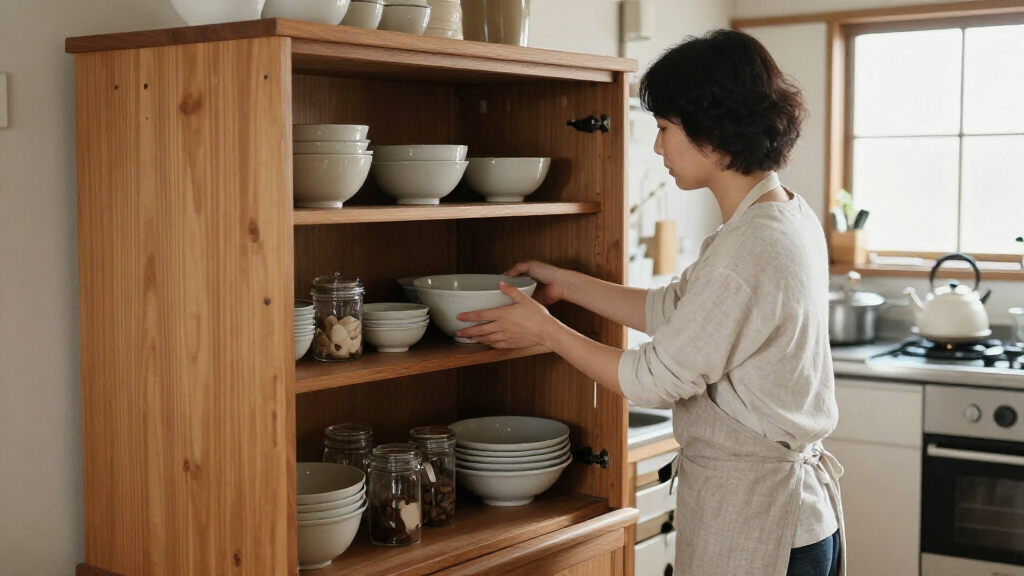
Kloeden’s first recommendation is to declutter before adding storage. Rather than respond to a crowded cabinet by buying more containers, she suggests taking one shelf at a time and checking the purpose of each item. The report frames this as a practical way to avoid spending money on organizers that may simply make an overfilled kitchen harder to manage.
Its next two lessons concern how items are stored and accessed. The report advises matching containers to their contents: Kloeden says dried goods and tea can be stored in paulownia wood boxes, while clear containers are useful when visibility is the priority. For ingredients and tools used repeatedly while cooking, she recommends choosing vessels that are easy to open and keeping essentials within reach. Her examples include ceramic jars for salt and sugar, which she says can clump in their original bags, and a lidded pot for cooked rice.
The final two principles are to give cookware more than one role and to be selective about counter displays. Kloeden describes using vessels that can store leftovers, reheat food and go to the table, reducing transfers and dishes. For counters, she relays a test attributed to Nakagawa: an item should be used daily and have visual appeal to merit being left out. Ogino describes the resulting look as a deliberate contrast, rather than a surface filled with packaging and miscellaneous objects.
Less Clutter, More Usable Space
The advice matters because kitchen organization is not only about fitting more into cabinets. Removing items with no clear purpose can free existing shelf and counter space, while placing frequently used ingredients and utensils within reach may make everyday cooking more straightforward. Multifunctional cookware can also reduce the number of vessels needed for cooking, storing and serving.
These are design recommendations, not measured results or rules that apply to every household. Their usefulness will depend on a kitchen’s layout, cooking habits and the needs of the people using it. The shared principle is to make storage choices based on actual use rather than buying products in response to clutter alone.
Japanese style kitchen storage containers
As an affiliate, we earn on qualifying purchases.
As an affiliate, we earn on qualifying purchases.
The Ideas Behind the Advice
The Livingetc report presents these lessons as ideas to borrow from Japanese kitchens, where it says careful organization is associated with limited space and home cooking. It attributes the specific recommendations chiefly to Yoko Kloeden, whose London architecture and interior design studio combines Japanese aesthetics with natural materials. The article also cites Tasuku Ogino, an executive vice president of Nakagawa, a Nara-based home-goods company.
One concept Kloeden mentions is ichibutsu tayō, described in the report as one object serving many uses. The article also gives a Japanese phrase for keeping counters orderly, but the supplied material does not provide independent cultural research or detail on how widespread these practices are. The lessons are best understood as attributed design guidance, rather than a comprehensive account of Japanese household habits.
“Before you add storage, take one shelf and ask what each thing on it is for.”
— Yoko Kloeden, interior designer, as quoted by Livingetc
As an affiliate, we earn on qualifying purchases.
Where the Advice May Not Fit
The source does not establish that these practices are followed in all Japanese kitchens, nor does it provide research comparing them with other approaches to storage. Several statements about materials and food storage are Kloeden’s advice as reported by Livingetc; the article does not supply testing or additional expert verification. Readers should follow product instructions and food-safety guidance when choosing containers or storing ingredients.
The report also does not offer cost comparisons, measurements of space saved or evidence that the suggestions will improve cooking efficiency for every household. The supplied source material gives no publication date, so the timing of the article cannot be stated more precisely.
clear food storage containers with lids
As an affiliate, we earn on qualifying purchases.
As an affiliate, we earn on qualifying purchases.
Applying the Lessons at Home
The report offers practical steps rather than a scheduled follow-up: start with one shelf, remove items without a clear purpose, and identify which ingredients and tools are used regularly. Only after that review should a household decide whether additional storage is needed. Container choices can then be based on visibility, ease of access and the needs of the contents.
For counters, readers can try leaving out daily-use items they find useful and putting away packaging or equipment used less often. The source points readers toward the Japanese 5S method for further decluttering advice, but it does not detail that method in the supplied material. No product purchase or specific organizing system is presented as necessary.
As an affiliate, we earn on qualifying purchases.
Key Questions
What are the five Japanese kitchen storage lessons?
Declutter before buying organizers, match containers to their function, keep frequently used cooking items accessible, choose cookware that can also serve food, and leave counter space for a small number of useful, intentional items.
Should I buy organizers before clearing out my kitchen?
Kloeden’s advice in the Livingetc report is to review and clear a shelf first. That can show whether extra storage is actually needed and prevent organizers from making an overfilled space more crowded.
Why use cookware that can also go to the table?
The report says a vessel that can cook, store and serve food may mean fewer transfers and fewer dishes. Whether that works depends on the cookware and the way a household prepares meals.
What should I leave on my kitchen counter?
The test Kloeden relays from Nakagawa is whether an item is used daily and has visual presence. The report suggests putting away branded packaging and less-used objects, but this is a design recommendation rather than a universal rule.
Source: rss
Halloween Picks
halloween
As an affiliate, we earn on qualifying purchases.