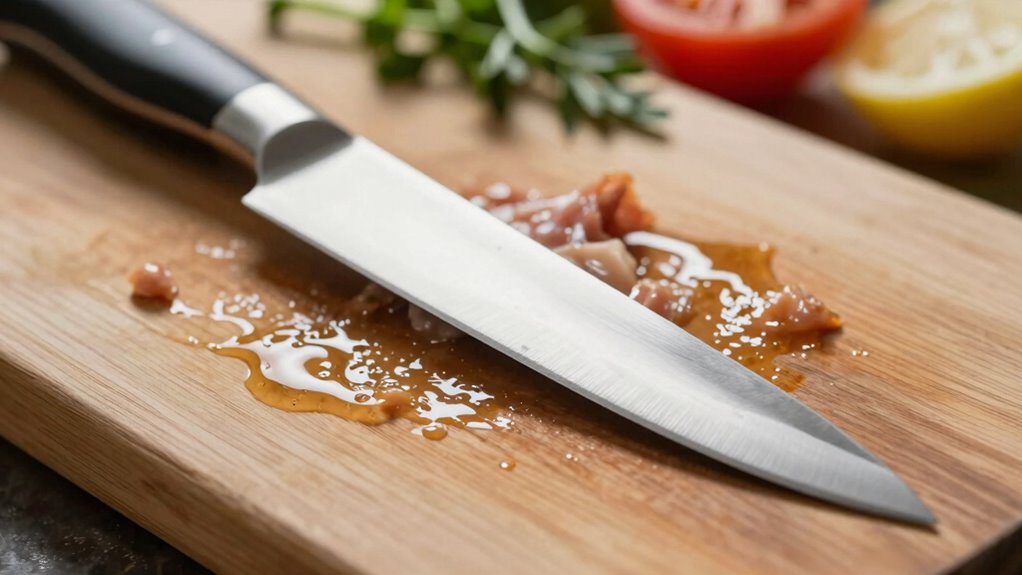
A good boning knife for poultry and meat features a flexible blade that easily follows contours, making precise cuts without tearing the skin or meat. You’ll want a comfortable handle made from non-slip materials that’s easy to grip, even when wet. The knife should allow for control and safety, reducing the risk of slips. Maintaining the blade with regular sharpening keeps it performing at its best. If you want to master these skills, there’s more you can discover.

Get kitchen gear delivered free with Prime
- Fast, free delivery on millions of items
- Prime Video, Amazon Music and more included
- Member-only deals all year
Key Takeaways
- A flexible blade that easily maneuvers around bones and joints for precise, clean cuts without tearing meat or poultry skin.
- Ergonomic, non-slip handle materials that provide comfort and control during extended use.
- Proper blade maintenance, including regular sharpening and cleaning, to ensure consistent sharpness and safety.
- A design that balances flexibility and stiffness for detailed cuts and overall control.
- Durability and quality materials that ensure longevity and reliable performance over time.
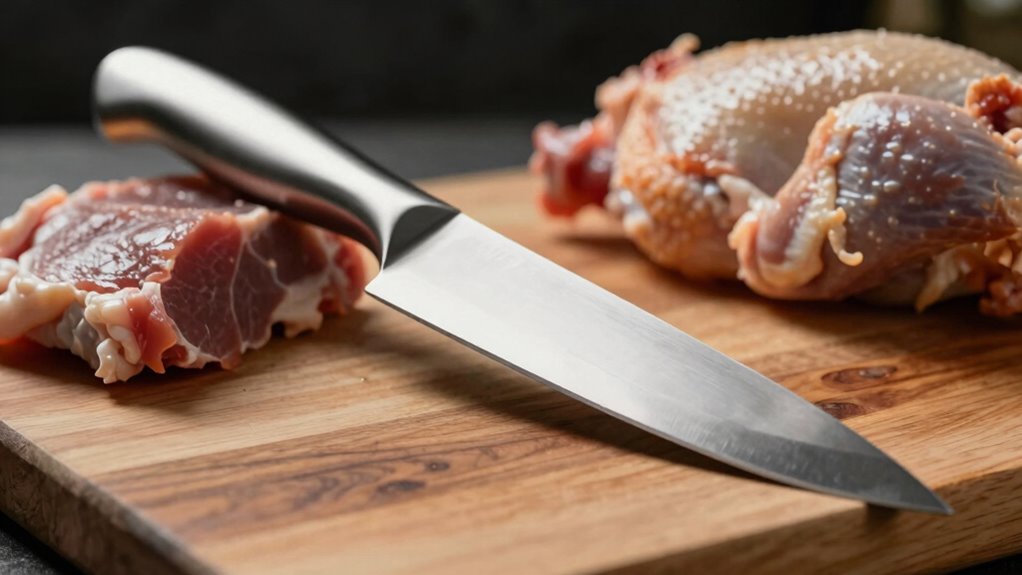
Choosing the right boning knife is essential if you want to efficiently and safely prepare poultry and meat. The right knife makes all the difference between a smooth, precise cut and a frustrating, dangerous experience. One of the key factors to contemplate is blade flexibility. A good boning knife features a blade that’s flexible enough to maneuver around bones and joints but stiff enough to maintain control. This flexibility allows you to glide effortlessly along the contours of the meat, reducing the risk of slipping or damaging the flesh. When you use a blade with ideal flexibility, you can easily separate meat from bone, get close to the bone without tearing, and achieve cleaner cuts. It’s this balance that makes a boning knife effective, especially when working with delicate poultry skin or intricate cuts of meat. Additionally, choosing a knife with ergonomic design can significantly improve comfort and control during extended use.
Handle comfort is just as important as the blade itself. If your handle isn’t comfortable or secure, fatigue quickly sets in, and your precision diminishes. A well-designed handle should fit comfortably in your hand, providing a secure grip even when your hands are wet or greasy. This ensures better control and reduces the chance of accidents. Look for handles made from non-slip materials like textured rubber or ergonomic plastics, which help you maintain a firm grip during extended use. The shape of the handle should also promote natural hand positioning, reducing strain on your wrist and fingers. When your handle feels good in your hand, you’re more likely to work efficiently and safely, especially during those longer but necessary tasks like deboning a whole chicken or trimming large cuts of meat. Recognizing the importance of blade flexibility in achieving precise cuts can significantly impact your overall experience. Proper knife maintenance techniques are also crucial to prevent dullness and corrosion, helping extend the lifespan of your knife and keep it performing at its best. Regular sharpening and cleaning are key components of knife care, ensuring your tool remains effective and safe to use.
A good boning knife combines these features — a flexible blade and a comfortable handle — to give you the control, precision, and safety you need. The flexibility of the blade allows for finesse and accuracy, while handle comfort ensures you can work comfortably for longer periods without fatigue. When you choose a knife with these qualities, you’re investing in a tool that will serve you well for years, making your preparation tasks easier and more enjoyable. Remember, the right boning knife isn’t just about sharpness or brand; it’s about how well it fits your hand and suits your cutting needs. When you find that perfect balance, you’ll notice a significant difference in your kitchen experience, making meat and poultry prep safer, cleaner, and more precise every time.
best boning knife for poultry and meat
As an affiliate, we earn on qualifying purchases.
As an affiliate, we earn on qualifying purchases.
Frequently Asked Questions
How Often Should I Sharpen My Boning Knife?
You should sharpen your boning knife every 2 to 4 weeks, depending on how often you use it and the blade’s durability. Regular sharpening with proper techniques maintains its precision and prevents damage. If you notice the blade becoming dull or sticking, it’s time to hone. Using a honing steel between sharpenings also helps retain the edge longer. Proper care ensures your knife stays effective and safe for cutting poultry and meat.
Can I Use a Boning Knife for Fish?
Using a boning knife for fish is like wielding a scalpel through delicate waves. It’s great for fish filleting and precise cuts, thanks to its thin, flexible blade. While it can handle fish, specialized fishing techniques and tools often yield better results. A boning knife’s sharpness and maneuverability make it ideal for removing bones, but for larger or more delicate fish, a fillet knife might be your best catch.
What Safety Precautions Are Necessary When Using a Boning Knife?
When using a boning knife, you should always prioritize safety. Keep a firm knife grip to control your cuts, preventing slips. Make certain your cutting surface is stable and clean to avoid accidents. Always cut away from your body and use a rocking motion. Wearing cut-resistant gloves can add extra protection. Stay focused and avoid distractions to guarantee safe and precise handling of your boning knife.
Is a Longer Blade Better for Boning?
A longer blade can be better for boning because it offers increased cutting precision and smoother, more efficient cuts over larger areas. With a longer blade, you can navigate around bones more easily, reducing the need for multiple cuts. However, it’s essential to balance blade length with control—too long might be unwieldy for detailed work. Choose a length that complements your skill level and the tasks you perform most often.
How Do I Clean and Maintain My Boning Knife?
You can keep your boning knife in top shape with simple cleaning techniques and maintenance tips. After each use, wash it by hand with warm, soapy water, avoiding the dishwasher to prevent damage. Dry it thoroughly to prevent rust. Regularly sharpen and hone the blade, and store it in a knife block or sheath. These steps guarantee your knife stays sharp, safe, and effective for years to come.
flexible boning knife with ergonomic handle
As an affiliate, we earn on qualifying purchases.
As an affiliate, we earn on qualifying purchases.
Conclusion
So, next time you’re slicing through poultry or meat, remember that a good boning knife isn’t just about sharpness—it’s about precision and control. Ironically, the better your knife, the less you’ll struggle to carve out those perfect, clean cuts. Instead of wrestling with dull blades, you’ll glide through with ease, making you wonder how you ever managed without one. After all, isn’t it funny how a tiny tool can turn a messy job into a culinary ballet?
professional boning knife for butchering
As an affiliate, we earn on qualifying purchases.
As an affiliate, we earn on qualifying purchases.
sharpening and cleaning boning knife
As an affiliate, we earn on qualifying purchases.
As an affiliate, we earn on qualifying purchases.
Fall Picks
fall essentials
As an affiliate, we earn on qualifying purchases.