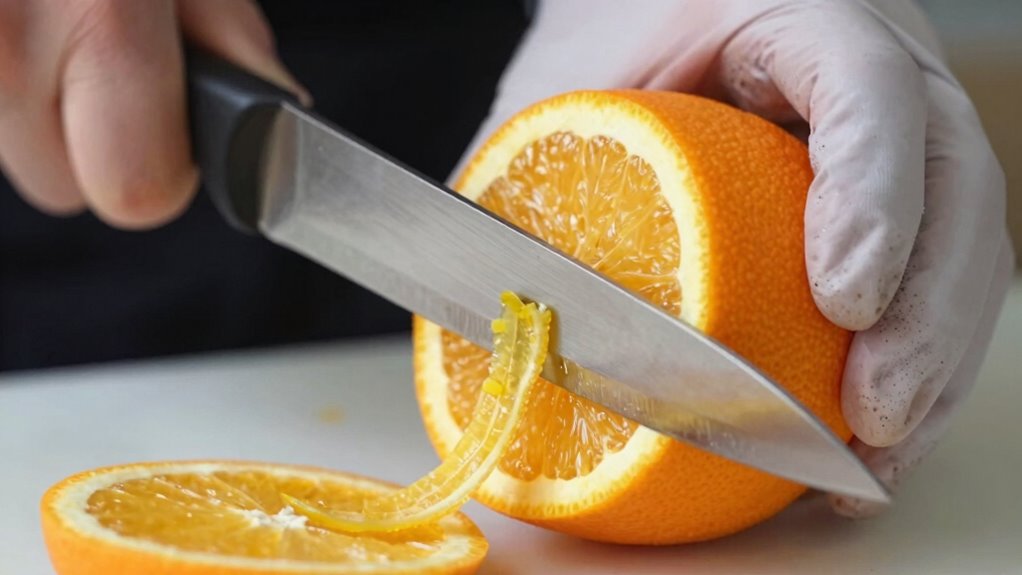

To prep citrus zest safely with a knife and avoid bitterness, start with a sharp paring knife and a secure cutting board. Hold the fruit firmly, keeping fingers curled back, and use gentle, controlled sawing motions to remove only the colorful outer layer, avoiding the white pith. Always cut away from your body and keep your fingers clear of the blade. Proper technique and attention keep you safe while getting vibrant zest—continue to explore how to master this process efficiently.

Get kitchen gear delivered free — and shop member deals
- Fast, free delivery on millions of items
- Access to Prime Big Deal Days deals on October 6–7
- Prime Video, Amazon Music and more included
Key Takeaways
- Use a sharp paring knife and hold the citrus firmly on a cutting board.
- Cut away only the colorful outer peel, avoiding the white pith.
- Use a gentle sawing motion, keeping the knife at a slight angle to remove thin zest strips.
- Trim away any pith remaining on the zest with the tip of the knife.
- Always cut away from your body and keep fingers clear of the blade’s path.
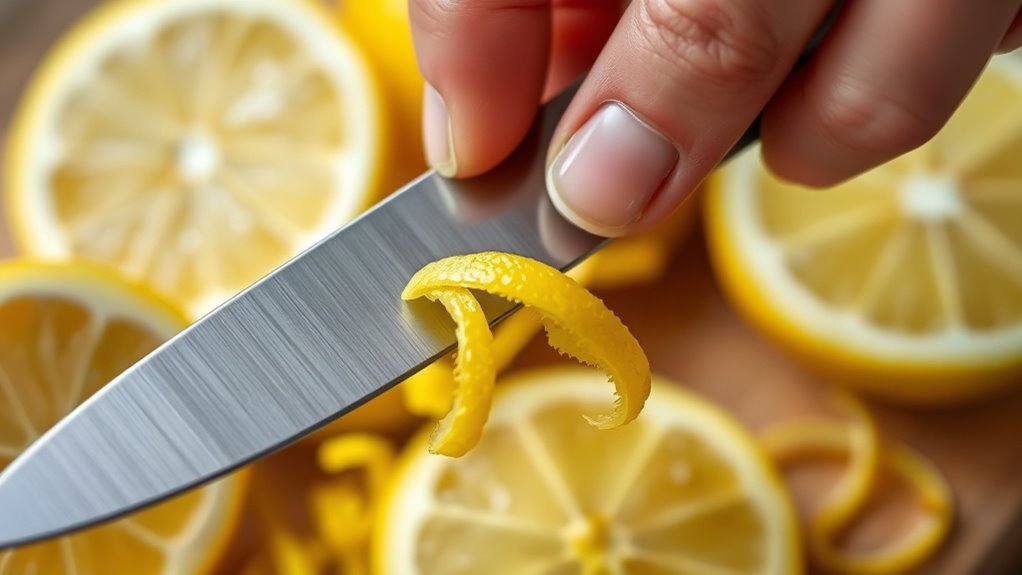
Ever wondered how to zest citrus fruits safely? Mastering zest extraction with a knife isn’t just about getting the perfect flavor; it’s about doing so without risking cuts or ending up with bitter pith. The key lies in honing your knife safety skills while carefully removing only the colorful outer layer of the fruit. To start, choose a sharp paring knife. A dull blade forces you to apply more pressure, increasing the risk of slips and cuts. A sharp knife provides better control, making the zest extraction smoother and safer.
Before you begin, wash your citrus thoroughly to remove any pesticides or wax. Hold the fruit firmly on a cutting board with one hand, keeping your fingers curled back to avoid accidental nicks. With your other hand, grip the knife firmly, keeping the blade at a slight angle. Instead of pressing straight down, use a gentle, steady sawing motion to peel off the zest. The goal is to remove only the thin, colorful outer layer, avoiding the bitter pith underneath, which can ruin the flavor of your dish.
As you work, keep your fingers away from the blade’s path. Always cut away from your body and use controlled, deliberate movements. Think of the zest as a delicate layer—if you press too hard, you risk cutting into the pith and creating jagged edges or slipping. Remember, safety isn’t just about the knife—your focus and hand positioning matter just as much. Hold the fruit securely, but don’t squeeze too tightly, which could cause your hand to slip. If you’re unsure, take small, manageable sections rather than trying to zest the entire fruit in one go.
When you reach the end of the fruit, pause to check your progress. You want to see fine, strips of zest, not chunks or bits of pith. If you accidentally cut into the pith, just trim it away with the tip of your knife. To avoid bitterness, discard any zest that contains the white pith, or use it for infusions or zesting in less visible ways. Throughout the process, stay attentive and maintain good knife safety practices. Keep your workspace clear, and always cut away from your body.
Additionally, understanding the role of color accuracy in your tools can help you better judge the freshness and quality of your citrus, which can affect the zesting process and flavor outcome.
In short, safe zest extraction with a knife relies on a sharp blade, proper technique, and attentiveness. By respecting the knife’s edge and your own safety, you’ll produce beautiful, flavorful zest without risking injury or bitter flavors. With practice, this process becomes second nature, turning what seems tricky into a quick, safe step in your culinary routine.
sharp paring knife for citrus zesting
As an affiliate, we earn on qualifying purchases.
As an affiliate, we earn on qualifying purchases.
Frequently Asked Questions
Can I Use a Grater Instead of a Knife for Zesting?
Yes, you can use a grater instead of a knife for zesting. A grater makes zesting easier and faster, especially for fine, even strips, while a knife gives you more control for thicker or more textured zesting. When zesting with a grater, gently press the citrus against the fine side and avoid the bitter pith. Both techniques work well, but choose based on your desired zest texture and your comfort with each method.
How Do I Prevent the Pith From Turning Bitter?
To prevent bitterness from the pith, focus on proper pith removal during zesting. Use a sharp knife to carefully cut away just the outermost zest, avoiding the white pith underneath, which causes bitterness. Keep your strokes light and precise, removing as little pith as possible. This bitterness control ensures your citrus zest adds bright flavor without unwanted bitterness, making your dish taste fresher and more vibrant.
Is There a Difference in Zesting Citrus Fruits at Room Temperature Versus Cold?
You might notice that zesting citrus at room temperature improves zesting efficiency because the fruit’s skin is softer and easier to work with. Cold citrus can be tougher, making it harder to get fine, even zest. Temperature effects influence how smoothly your knife glides and how much zest you can extract without damaging the pith or getting bitter flavors. So, for best results, zest citrus at room temperature.
Can I Use the Same Technique on All Types of Citrus?
You can use the same zesting technique on all citrus types, but remember, fruit peel variations affect zesting. Thinner-skinned fruits like tangerines or lemons are easier, releasing vibrant citrus zest aromas. Thicker peels, like grapefruits, may require gentler pressure. No matter the fruit, stay close to the surface to avoid the bitter pith, and you’ll enjoy fragrant, flavorful zest every time, no matter the citrus type you’re working with.
How Do I Store Citrus Zest to Keep It Fresh?
You should store citrus zest in airtight containers to keep it fresh longer. For short-term storage, keep the container in the refrigerator, and it’ll last about a week. For longer storage, consider freezing it using ice cube trays or airtight freezer bags. Once frozen, transfer the zest to a freezer-safe container or bag, and it can last for several months without losing flavor, ensuring you always have fresh zest on hand.
As an affiliate, we earn on qualifying purchases.
Conclusion
Now that you’ve mastered the art of zesting without bitterness, you’re like a culinary wizard channeling the zest of life itself. With your sharp knife and steady hand, you can unveil fresh, vibrant flavors just as a magician reveals secrets from their hat. Remember, every slice brings you closer to creating dishes that sing with citrus brightness. So go ahead—embrace your newfound skill and add a spark of sunshine to every plate, just like the first light of dawn.
kitchen cutting board for zesting
As an affiliate, we earn on qualifying purchases.
As an affiliate, we earn on qualifying purchases.
As an affiliate, we earn on qualifying purchases.
Fall Picks
fall essentials
As an affiliate, we earn on qualifying purchases.