
To keep herbs bright and flavorful, prep them promptly after purchase or harvest by inspecting and removing any damaged leaves. For soft herbs, wrap them loosely in a damp paper towel and store in the fridge’s crisper drawer to retain moisture. For sturdier herbs, place them upright in a jar of water with a loose plastic cover. Freezing chopped herbs in ice cubes helps preserve their vibrant color and aroma for later use. Continue exploring for more tips on maintaining herb freshness.
Key Takeaways
- Handle herbs promptly after purchase or harvest to lock in their natural oils and brightness.
- Select only fresh, undamaged herbs to ensure vibrant color and flavor.
- Wrap soft herbs in a damp paper towel and store in airtight containers to maintain moisture and prevent wilting.
- Store sturdier herbs upright in water with a loose plastic cover to extend freshness and brightness.
- Freeze chopped herbs in ice cube trays with water or oil for long-term preservation without losing color.

To keep your herbs vibrant and flavorful, proper preparation is vital. The way you handle and store your herbs can make a significant difference in how long they stay fresh and how well they retain their taste. When it comes to herb storage, the goal is to preserve their natural oils and aroma, which are responsible for the flavor and potency. To achieve this, start by choosing the right herbs for your needs and inspecting them carefully. Remove any damaged leaves or stems to prevent spoilage and guarantee you’re working with the freshest possible ingredients.
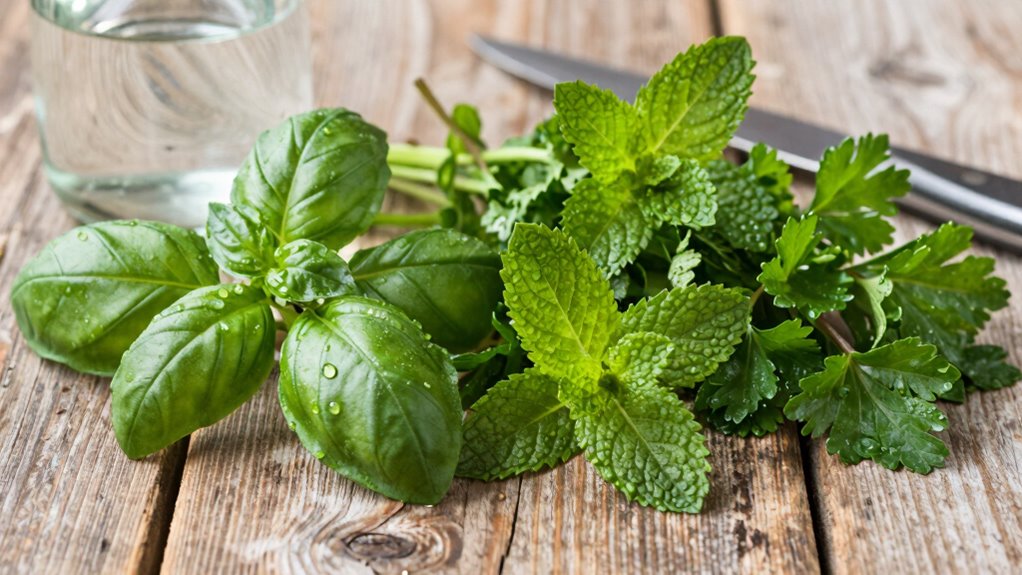
Once you’ve selected and trimmed your herbs, the next step is to determine the best method of storage to maximize flavor preservation. For soft herbs like basil, cilantro, and parsley, wrapping them loosely in a damp paper towel helps retain moisture without making them soggy. Place the wrapped herbs inside a resealable plastic bag or airtight container and store them in the crisper drawer of your refrigerator. This method keeps their leaves from wilting while maintaining the humidity they need to stay fresh. For sturdier herbs such as rosemary, thyme, or oregano, you can store them upright in a jar or glass of water, similar to a bouquet. Cover the herbs loosely with a plastic bag and keep them in the fridge or a cool spot. This approach allows the herbs to breathe, reducing the risk of mold while extending their shelf life.
Timing is essential when prepping herbs for storage. The sooner you handle them after purchase or harvesting, the better their flavor preservation. Fresh herbs begin to lose their aroma and oils almost immediately after harvesting, so getting them into proper storage as quickly as possible helps lock in their freshness. If you’re not planning to use the herbs right away, consider freezing them for long-term storage. Chopped herbs can be placed in ice cube trays, covered with water or olive oil, then frozen. This method preserves their flavor and makes adding herbs to dishes effortless later on.
herb storage containers
As an affiliate, we earn on qualifying purchases.
As an affiliate, we earn on qualifying purchases.
Frequently Asked Questions
Can I Freeze Herbs Without Damaging Their Flavor?
Yes, you can freeze herbs without compromising their flavor by using proper freezing techniques. To preserve herb flavor, chop the herbs and place them in ice cube trays with a little water or olive oil. Once frozen, transfer the cubes to an airtight container. This method helps maintain their vibrant taste and aroma, making it easy to add fresh flavor to your dishes later. Proper freezing techniques ensure herbs stay flavorful and fresh.
What’s the Best Way to Dry Herbs Quickly?
Think of herb preservation like a race against time—quick drying is your winning move. To dry herbs fast, gather sprigs and hang them upside down in a warm, well-ventilated space, or use a food dehydrator set on low. These drying techniques help lock in flavor and color, ensuring your herbs stay vibrant. Just remember, rapid drying preserves essential oils, giving you fresh-tasting herbs whenever you need them.
How Do I Store Chopped Herbs Long-Term?
To store chopped herbs long-term and maintain herb preservation and flavor retention, place them in an airtight container or freezer bag. Squeeze out excess air before sealing to prevent freezer burn. For best results, consider freezing herbs in ice cube trays with a bit of water or oil, then transfer the cubes to a sealed bag. This method keeps your herbs fresh, flavorful, and ready for use whenever you need them.
Are There Herbs That Don’T Need Refrigeration?
Some herbs, like rosemary, thyme, and bay leaves, don’t need refrigeration because their herb preservation relies on dry, cool environments. You can store them in a paper bag or jar in a pantry, freeing up fridge space. Don’t fall for refrigeration myths that all herbs must be kept cold; many stay fresh longer without it. Focus on proper storage to keep your herbs vibrant and flavorful.
How Can I Tell if Herbs Are Still Fresh?
You can tell if herbs are still fresh by checking their color and texture. Fresh herbs should have vibrant herb color indicators and a lively, bright appearance. Feel for texture freshness signs like firm, crisp leaves that aren’t limp or wilted. If the herbs are dull, discolored, or slimy, it’s a sign they’ve lost their freshness and are best discarded. Always choose herbs that look lively and smell fragrant.

Ice Cube Trays Set of 2, Easy Release 15 Flexible Silicone Ice Cube Molds with Removable Lid Reusable Freezer Ice Trays Stackable for Whiskey, BPA Free (BAMBOO GREEN)
Food-Grade Silicone Ice Cube Trays: Made from BPA-free, food-grade silicone, these ice cube trays are safe, durable, and…
As an affiliate, we earn on qualifying purchases.
As an affiliate, we earn on qualifying purchases.
Conclusion
By following these simple prep tips, you can keep your herbs vibrant and flavorful for longer. Did you know that properly stored herbs can last up to two weeks, compared to just a few days otherwise? Timing really does matter—prepping your herbs at the right moment makes all the difference. So, take a little extra time to handle them correctly, and enjoy fresh, bright herbs in every dish. Your taste buds will thank you!
fresh herb wrap damp paper towel
As an affiliate, we earn on qualifying purchases.
As an affiliate, we earn on qualifying purchases.

Teenyyou 12 Set Hydroponic Garden Mason Jar Kit Self Watering Herb Hydroponic Planter Starter Kit with Net Pot Garden Flower Plant Growing Gift for Indoor Herbs Windowsill Gardening
Comprehensive 12 Piece Set: this hydroponic herb planting kit provides a comprehensive 12-piece set, includes 12 mason jars,…
As an affiliate, we earn on qualifying purchases.
As an affiliate, we earn on qualifying purchases.