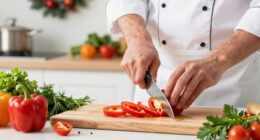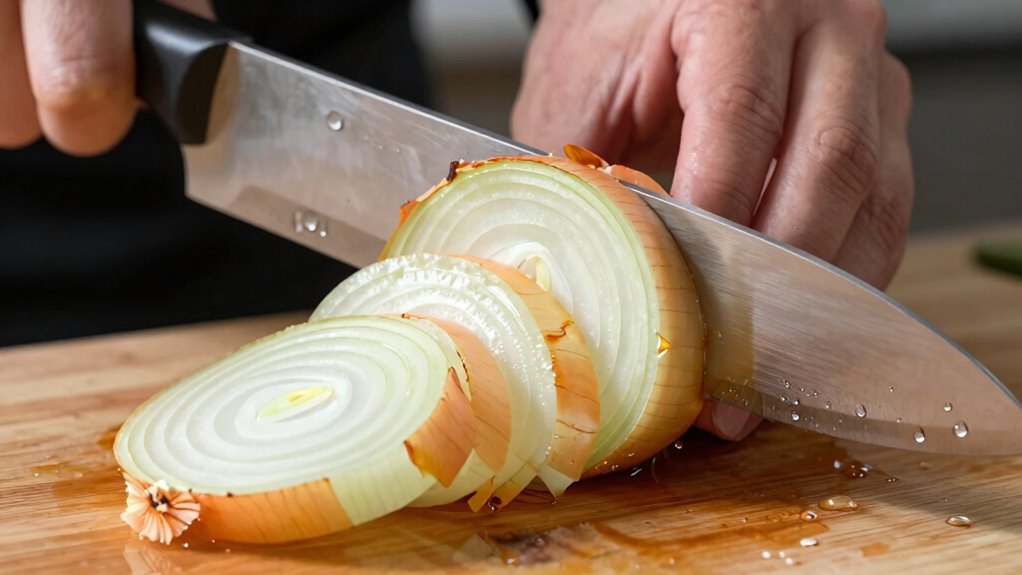
To prep onions for caramelizing, start by choosing your onion type and halving large ones at the root for stability. Use a sharp knife to slice the onion into thin, consistent pieces about 1/8 inch thick, holding the onion steady with curled fingers. Make smooth, deliberate cuts from root to stem, maintaining even thickness throughout. Proper technique guarantees even cooking and ideal flavor development—stick around to learn more tips for perfect caramelized onions.

Get kitchen gear delivered free — and shop member deals
- Fast, free delivery on millions of items
- Access to Prime Big Deal Days deals on October 6–7
- Prime Video, Amazon Music and more included
Key Takeaways
- Use a sharp knife and a stable cutting board to ensure clean, precise slices.
- Cut the onion in half through the root and stem for stability.
- Slice the onion into uniform 1/8-inch thick pieces, maintaining consistent thickness throughout.
- Hold the onion with curled fingers to keep fingers safe and control slicing.
- Make slow, deliberate cuts from root to stem for even caramelization and improved texture.
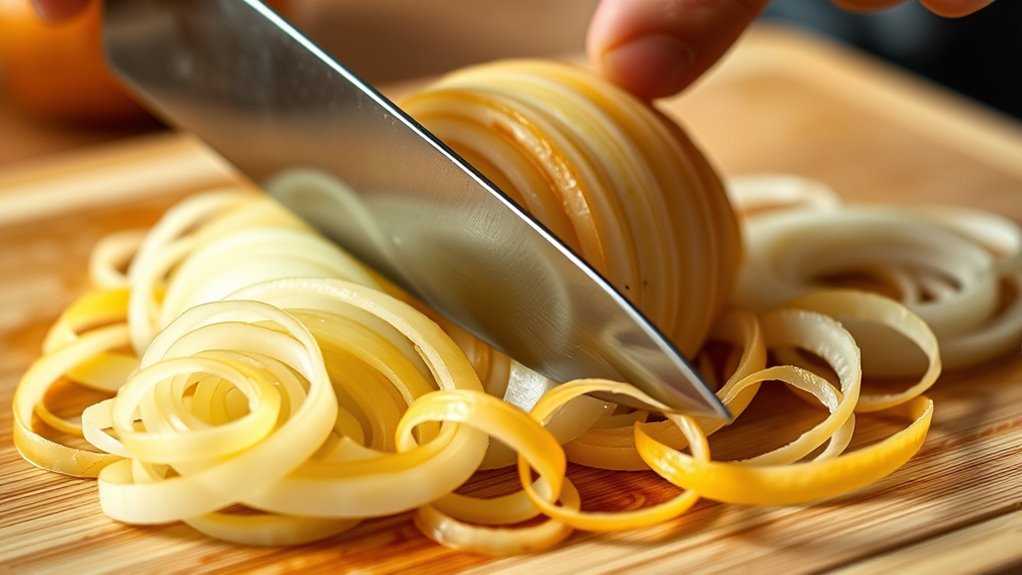
Caramelizing onions starts with proper preparation, which guarantees they cook evenly and develop their natural sweetness. The key to achieving that perfect, tender, and flavorful result lies in how you slice the onions and understand the different onion varieties. When you focus on slicing techniques, you ensure each piece cooks uniformly, preventing uneven caramelization or burning. Using sharp knives is essential, as it allows for clean cuts that reduce crushing or tearing of the onion layers. You want to cut the onion into thin, even slices—about 1/8 inch thick—so they soften at the same rate and release their sugars uniformly.
Your choice of onion varieties also makes a noticeable difference. Yellow onions are the most common for caramelizing because they have a balanced sweetness and a sturdy structure that holds up well during the long cooking process. Red onions can add a vibrant color and a slightly sharper flavor, but they tend to become milder and sweeter as they cook down. Sweet onions, like Vidalia or Walla Walla, already have higher sugar content, so they caramelize faster and produce a richer, more intensely sweet result. Knowing which onion to use helps you tailor the flavor profile and texture to your dish.
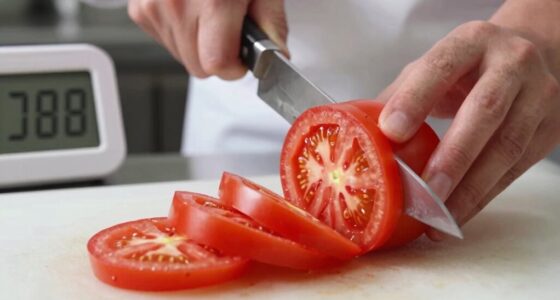
When you approach slicing, hold the onion steady with your non-dominant hand, curling your fingers inward to keep them safe. Make smooth, consistent cuts from root to stem, maintaining the same thickness throughout. This precision ensures that the slices will cook evenly without some pieces turning to mush while others remain firm. If you’re dealing with large onions, halving them first through the root end gives you a flat surface, making it easier to stabilize the onion while slicing. Take your time to make deliberate, even cuts; rushing can result in uneven slices that compromise the caramelization process. Consistent slicing techniques are crucial for even cooking and optimal flavor development.
Frequently Asked Questions
Can I Use Red Onions Instead of Yellow for Caramelizing?
Yes, you can use red onions instead of yellow for caramelizing. Red onions are a great onion color alternative, and they add a slightly sweeter, milder flavor compared to yellow onions. Keep in mind, the flavor differences might influence your dish’s final taste, but red onions caramelize beautifully and offer a vibrant color. Just thinly slice them evenly, and you’ll get delicious caramelized onions regardless of the onion color you choose.
Should Onions Be Refrigerated Before Slicing for Caramelization?
You might think refrigerating onions affects their flavor, but it’s better to keep them at room temperature before slicing for caramelization. Cold onion storage can make onions harder to cut and dull their natural sweetness. As you slice, the refrigeration effects fade, revealing their true texture and flavor. So, leave onions out of the fridge for a bit—your caramelized results will thank you with richer, deeper flavor.
Is It Necessary to Peel Onions Before Slicing?
Yes, you should peel onions before slicing. Use peeling techniques like trimming the ends and removing outer layers to get rid of onion skins. Grip the onion firmly, make a shallow cut through the skin, and peel back the layers with your fingers or a knife. Peeling guarantees smooth, even slices and prevents unwanted textures or flavors from the tough outer layers, making your caramelized onions perfect.
How Do I Prevent Onions From Burning During Caramelization?
To prevent onions from burning during caramelization, you should use proper cooking techniques and ingredient preparation. Keep the heat on low or medium-low, stirring frequently to avoid sticking and burning. Use a good-quality, heavy-bottomed pan for even heat distribution. Add a little oil or butter, and patience is key—cooking slowly allows natural sugars to develop without burning. Adjust heat as needed, and you’ll achieve perfectly caramelized onions.
Can I Caramelize Onions in a Microwave Instead of Stovetop?
Yes, you can try microwave caramelization, but it’s not quite the same as stovetop alternatives. Start by spreading thin onion slices in a microwave-safe dish, then cook in short bursts, stirring frequently. The process speeds up, but you might not get the same deep flavor or texture, so keep an eye on it. For richer results, stovetop methods remain your best bet, but microwave can work in a pinch.
Conclusion
Now that you know how to prep onions for caramelizing with thin, even slices, you’re ready to elevate your dishes. Proper preparation guarantees even cooking and perfect sweetness. Did you know that onions contain over 150 flavor compounds, making them one of the most complex vegetables? This complexity is best showcased through slow caramelization. So, take your time slicing and enjoy the rich, sweet flavor that properly prepared onions bring to your meals.
Fall Picks
fall essentials
As an affiliate, we earn on qualifying purchases.