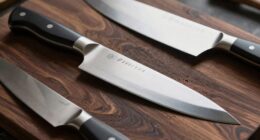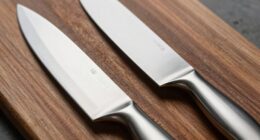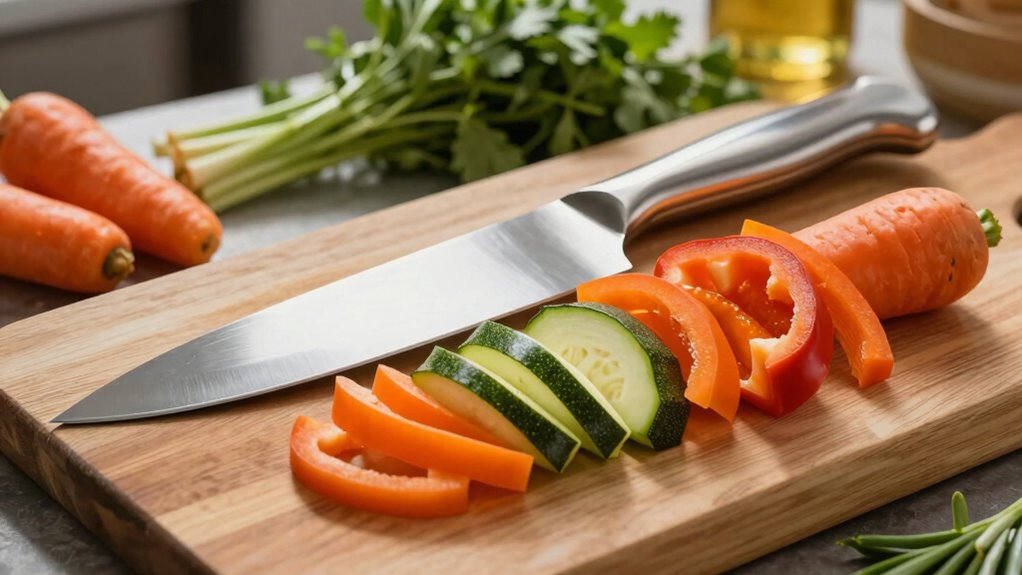
Pairting the right knife with your cuisine speeds up prep, makes cuts cleaner, and improves safety. Use a chef’s knife for Western dishes like roasts and stir-fries. For Asian cuisine, a santoku or nakiri is perfect for vegetables and delicate slicing. Poultry or heavy meats benefit from boning knives or a cleaver. For detailed garnishes and fruit carving, a paring knife is ideal. Stick around to learn which knives best suit each kitchen task for faster, neater results.
Key Takeaways
- Western dishes benefit from a versatile chef’s knife for chopping, slicing, and carving, streamlining prep for roasts, vegetables, and meats.
- Asian cuisine favors the santoku and nakiri for precise vegetable slicing, julienning, and preparing sashimi or stir-fry ingredients efficiently.
- Fruit and vegetable art requires paring knives for detailed carving and garnishing, ensuring clean, decorative presentation.
- Heavy meats and bones are best handled with cleavers and flexible or stiff boning knives for accurate deboning and heavy-duty cuts.
- Specialty and presentation tasks like carving or mincing are optimized with carving and mincing knives for faster, more precise results.

HOSHANHO Kitchen Knife in Japanese High Carbon Steel, Professional High-Class Chef's Knife 8 inch, Non-slip Ultra Sharp Cooking Knives with Ergonomic Handle
【High-End Japanese Steel Chef's Knife】 HOSHANHO chef's knife is made of Japanese high carbon steel 10Cr15CoMoV, 2x of...
As an affiliate, we earn on qualifying purchases.
Mastering the Chef’s Knife for Western Classics
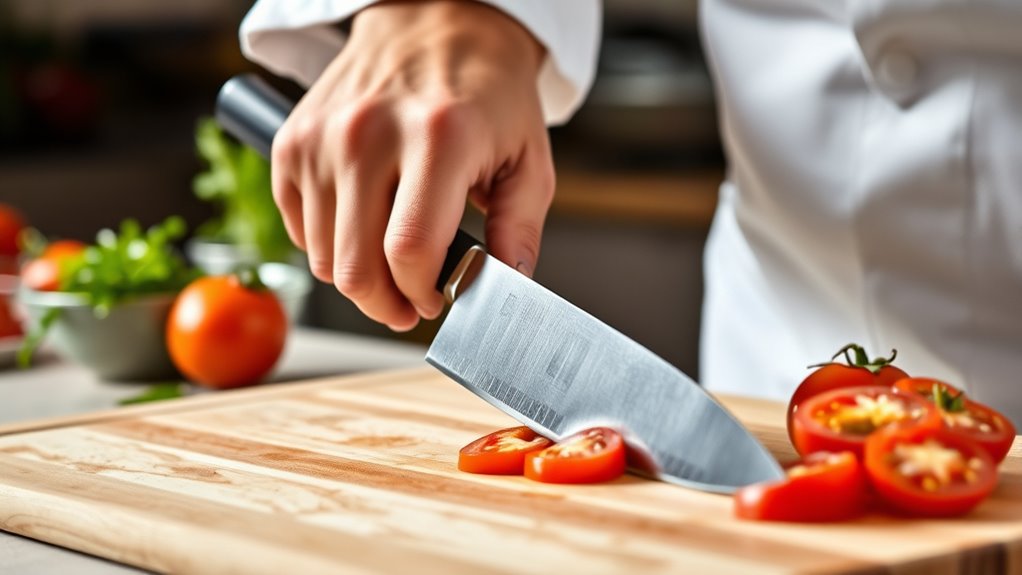
To master Western classics in the kitchen, you need to become proficient with your chef’s knife, the most versatile tool in your arsenal. This knife handles everything from chopping vegetables to slicing meats and dicing herbs, making it essential for classic dishes like stews, roasts, and stir-fries. With a blade ranging from 6 to 14 inches, it provides the length and sharpness needed for precise cuts and efficient prep. You’ll use it to disjoint poultry, carve roasts, and prepare a variety of ingredients quickly. While it’s not ideal for bone-cracking or bread slicing, its broad blade excels at handling prime cuts and vegetables with ease. Mastering your chef’s knife streamlines your workflow, helping you create authentic Western dishes with confidence and speed.
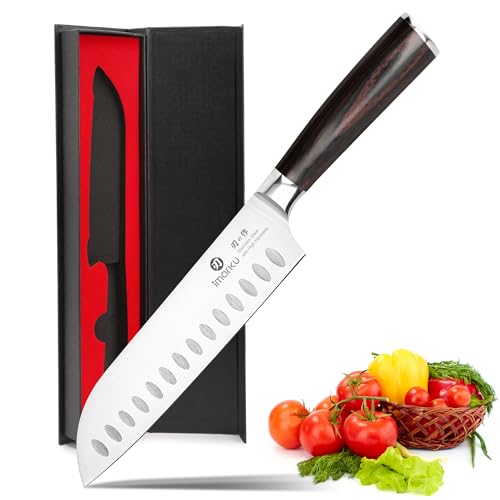
imarku Chef Knife 7 Inch Kitchen Knife Ultra Sharp Santoku Knife - High Carbon Japanese Chefs Knife, Kitchen Gadgets 2025, Apartment Essentials, Birthday Gifts for Him Her, Best Gifts for Women Men
Professional Santoku Knife: This imarku super sharp santoku knife is made of high carbon stainless steel that resists...
As an affiliate, we earn on qualifying purchases.
Using the Santoku for Asian-Inspired Dishes
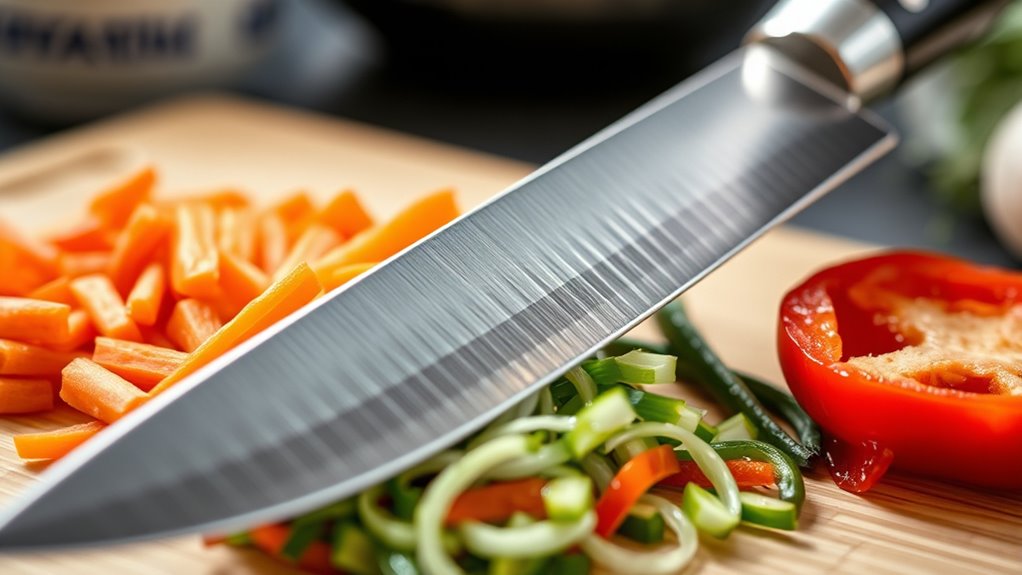
The Santoku knife is an essential tool for preparing Asian-inspired dishes, thanks to its lightweight design and precise control. Its shorter, sheepsfoot blade makes straight-down cuts easy, perfect for slicing sashimi, dicing ginger, or mincing garlic. The dimpled edge prevents ingredients from sticking, speeding up prep and reducing mess. You’ll find it especially useful for slicing vegetables like bok choy, bell peppers, and scallions, ensuring clean, even cuts. Its wide blade allows you to scoop up chopped ingredients quickly, transferring them to your cooking pan. The agility of the Santoku helps you work faster and more accurately, making it ideal for dishes like stir-fries, sushi, and dumplings. With this knife, you’ll enjoy more efficient prep and beautifully presented Asian-inspired meals. Additionally, maintaining proper knife safety and sharpness ensures optimal performance and reduces the risk of accidents during prep. Proper knife maintenance practices help keep your blade in top condition, ensuring safety and efficiency. Incorporating high-quality cutting tools like the Santoku can further enhance your cooking experience and precision. Regularly sharpening your knife with appropriate sharpening tools maintains its cutting edge, ensuring smooth and safe slicing. Using the right technique and ensuring your knife stays sharp can significantly improve your overall prep speed and safety.
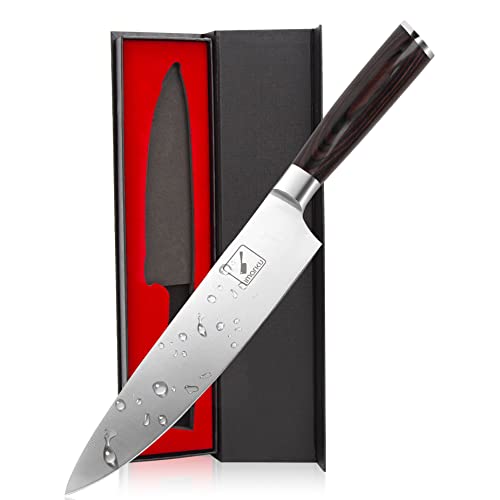
imarku Japanese Chef Knife - Sharp Kitchen Knife 8 Inch Chef's Knives HC Steel Paring Knife, Unique Gifts for Men and Women, Gifts for Mom or Dad, Kitchen Gadgets with Gift Box, Gyutou Knives
High-Carbon Stainless Steel Blade: It is manufactured from high-quality stainless steel that maintains its functionality for a long...
As an affiliate, we earn on qualifying purchases.
Precision With the Paring Knife in Fruit and Vegetable Art
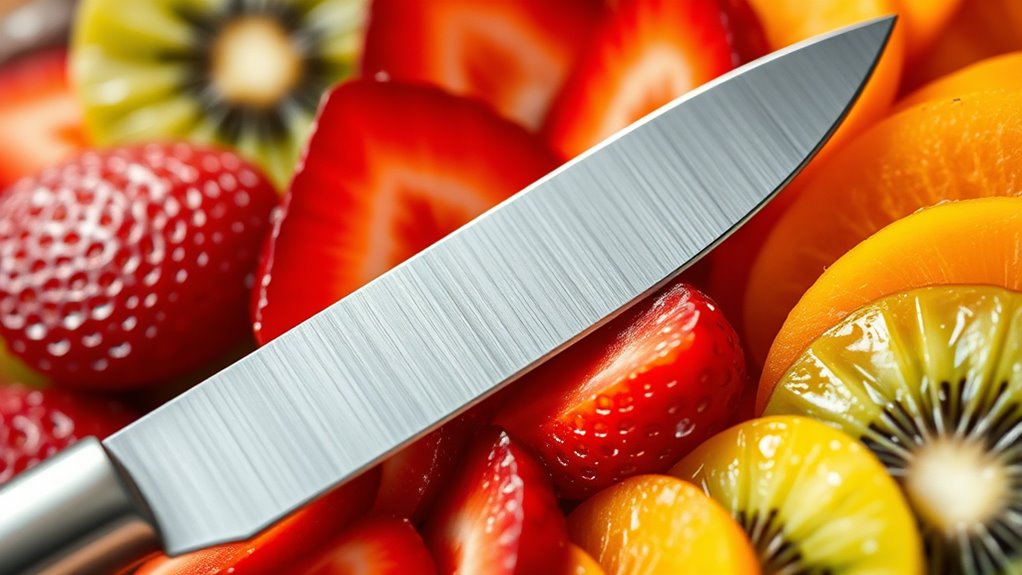
Your paring knife is essential for creating detailed garnishes and intricate fruit carvings. With precise control, you can transform simple produce into stunning decorative pieces. Mastering these techniques elevates your presentation and showcases your skill in fruit and vegetable art. Additionally, understanding knife safety ensures you can execute these delicate tasks confidently and efficiently. Proper cutting techniques help prevent injuries and improve your overall precision when working with fine and delicate produce.
Detailed Garnishing Techniques
Mastering garnishing techniques with a paring knife allows you to create intricate and visually appealing fruit and vegetable art. You can elevate dishes by adding delicate touches and elegant designs. Focus on precise cuts to achieve symmetry and detail. Techniques include peeling thin strips for decorative curls, carving leaves and flowers, creating tiny rosettes, shaping fruits into animals or shapes, and adding tiny cuts for texture. To enhance presentation, consider these methods:
- Carving petal and leaf shapes with controlled, shallow cuts
- Creating spiral curls from citrus or cucumbers
- Shaping fruits into miniature flowers and animals
- Making tiny, uniform cuts for texture and patterns
- Using pointed tips for fine, detailed designs
With practice, your garnishes will transform simple plates into artful displays. Incorporating appliance maintenance plans can ensure your kitchen tools remain in top condition, making your garnishing efforts more efficient and safe. Proper knife sharpening is essential for achieving clean, accurate cuts and maintaining your tool durability, which directly impacts the quality of your garnishing work. Regularly sharpening your knives not only improves precision but also reduces the risk of accidents during intricate carving. Understanding Youngster Choice can help you select the right tools and techniques suited for your skill level and desired results.
Precision Fruit Carving
Precision fruit carving elevates garnishing from simple decoration to true art, showcasing your skill with a paring knife. You’ll use its sharp, small blade to create intricate designs like delicate flowers, animals, or elaborate shapes. The key is steady, controlled movements that allow you to carve fine details without tearing the fruit. Start with softer fruits like melons, apples, or kiwis, which are easier to shape. Use the tip for delicate cuts and the side for larger shaping. Precision is essential—each cut should be deliberate and clean. As you practice, your carvings become more detailed and refined, transforming basic fruit presentations into eye-catching centerpieces. Mastering this skill can turn simple garnishes into impressive works of edible art, perfect for elevating any dish or platter.

Japanese Chef Knife, 8 Inch Damascus Kitchen Knife with VG10 Steel, Handcrafted Sharp Knife with Ergonomic Handle, Cooking Knives for Home Chefs, Cooking Gifts for Men and Women
【Premium Damascus Chef Knife with VG-10 Steel Core】Our Japanese knives feature a VG-10 steel core (60 HRC) for...
As an affiliate, we earn on qualifying purchases.
Boning Knives for Perfect Poultry and Fish Preparation
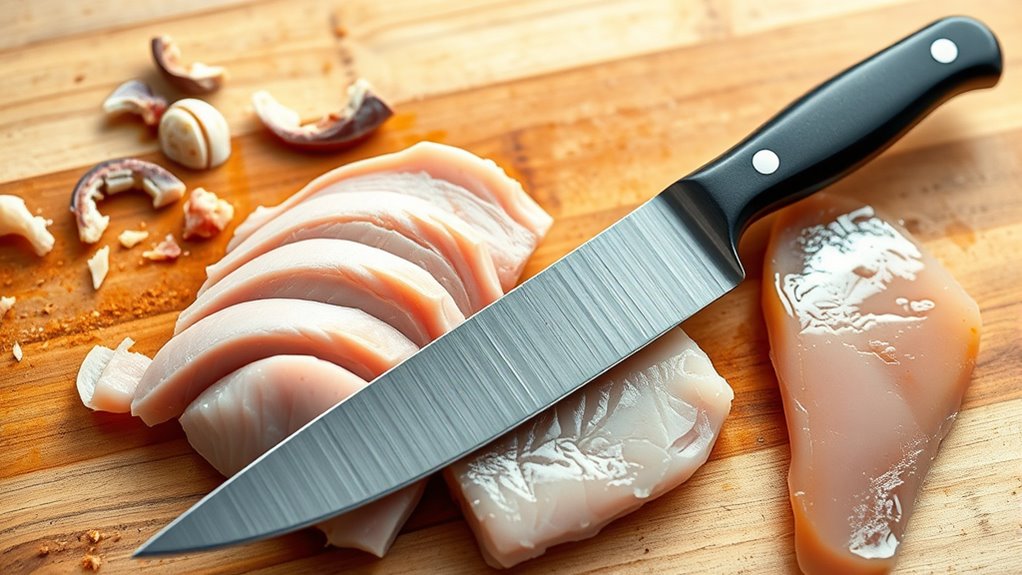
Boning knives are essential tools for achieving clean, precise cuts when preparing poultry and fish. Their narrow, flexible blades allow you to maneuver around bones and joints effortlessly. With the right technique, you can remove skin, trim fat, and fillet meat with minimal waste. A stiff boning knife provides extra force for denser cuts like beef, while a flexible version excels with delicate fish fillets. To maximize efficiency, consider these features:
- Narrow, tapered blades for precision
- Flexibility for maneuvering around bones
- Sharp points for joints and cartilage
- Lightweight design for control
- Variable stiffness for different meats
Choosing the right boning knife also involves selecting the appropriate blade flexibility, which can significantly impact your prep speed and accuracy. Additionally, understanding meat texture helps in selecting the optimal knife for each task, ensuring cleaner cuts and reducing fatigue. The knife type you choose can also influence your cutting technique, making your prep more efficient and safe. Using a boning knife correctly shortens prep time and yields cleaner, more professional results in your poultry and fish dishes. Moreover, selecting a quality material for the blade enhances durability and edge retention, which can save time on sharpening during busy kitchen sessions.
Utility Knives as All-Around Tools for Everyday Cooking
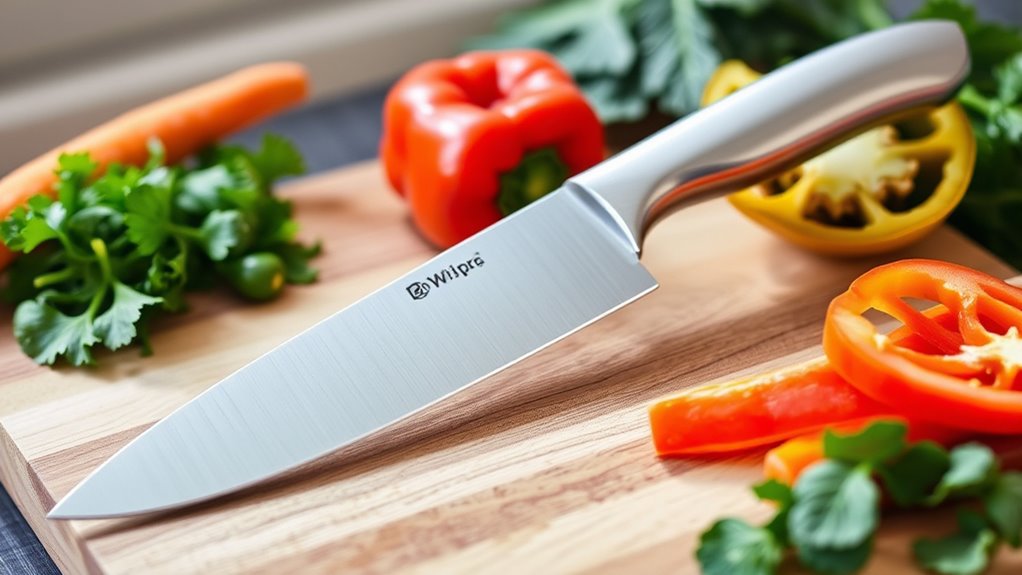
Utility knives are your go-to tool for everyday kitchen tasks because they combine versatility and ease of use in a single blade. With a mid-sized, thinner design, they handle slicing fruits, deli meats, and tender proteins effortlessly. The 4.5-inch blade offers precise control for chopping herbs, dicing vegetables, or trimming small cuts of meat. They’re perfect for quick prep work that doesn’t require a full-sized chef’s knife or a paring knife. Whether you’re making sandwiches, slicing baked goods, or peeling small fruits, utility knives make these tasks faster and cleaner. Their lightweight feel reduces fatigue, and their sharp edge ensures smooth cuts. As an all-purpose tool, they simplify your routine, making everyday cooking more efficient without switching between multiple knives. For optimal results, consider using a high-quality grip to enhance safety and control during use. Additionally, choosing a durable material can ensure the knife maintains its sharpness longer and withstands frequent use. Incorporating a proper sharpening routine will also help keep your utility knife performing at its best over time. Moreover, understanding the variety of knife types can help you select the right tool for different culinary tasks, streamlining your prep process.
Leveraging the Cleaver for Heavy Meat and Bone Work
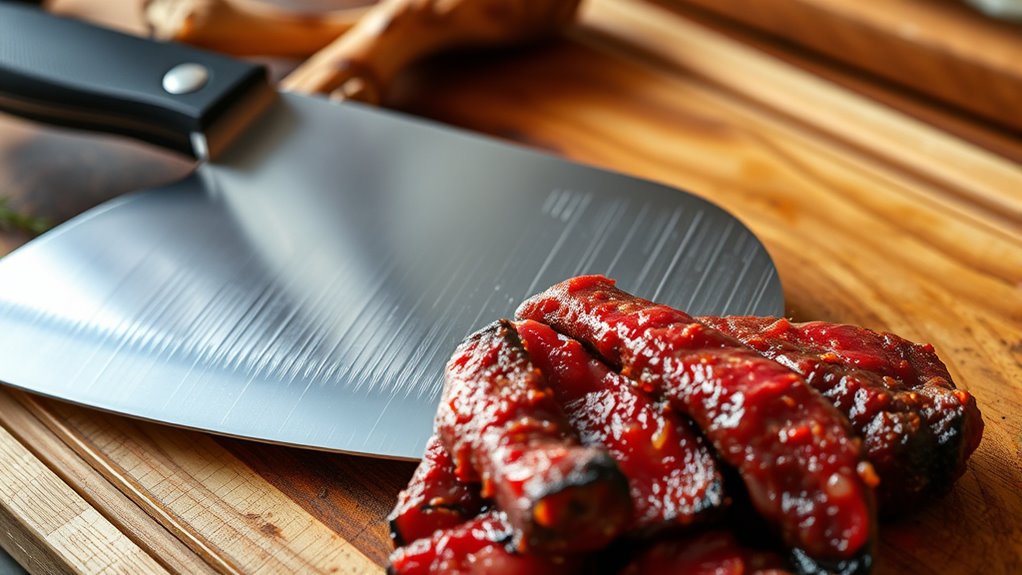
When tackling heavy meat and bone work, a cleaver becomes an indispensable tool in your kitchen arsenal. Its weight and broad blade allow you to cut through dense bones, cartilage, and thick cuts with authority. To maximize efficiency, consider these key techniques:
- Use the weight of the cleaver to crush bones or joints with controlled force
- Apply a rocking motion for precise cut-throughs
- Position the bone on a sturdy cutting board for stability
- Maintain a firm grip to prevent slipping during forceful strikes
- Regularly sharpen the blade for clean, effortless cuts
- Remember that proper tool maintenance is essential for safe and effective cutting and ensuring optimal performance.
- Additionally, understanding the importance of proper technique can significantly reduce the risk of accidents and improve your overall efficiency in the kitchen.
- Incorporating safe handling practices can further enhance your safety and confidence when working with heavy-duty cuts.
The Nakiri’s Role in Vegetable-Centric Cuisine
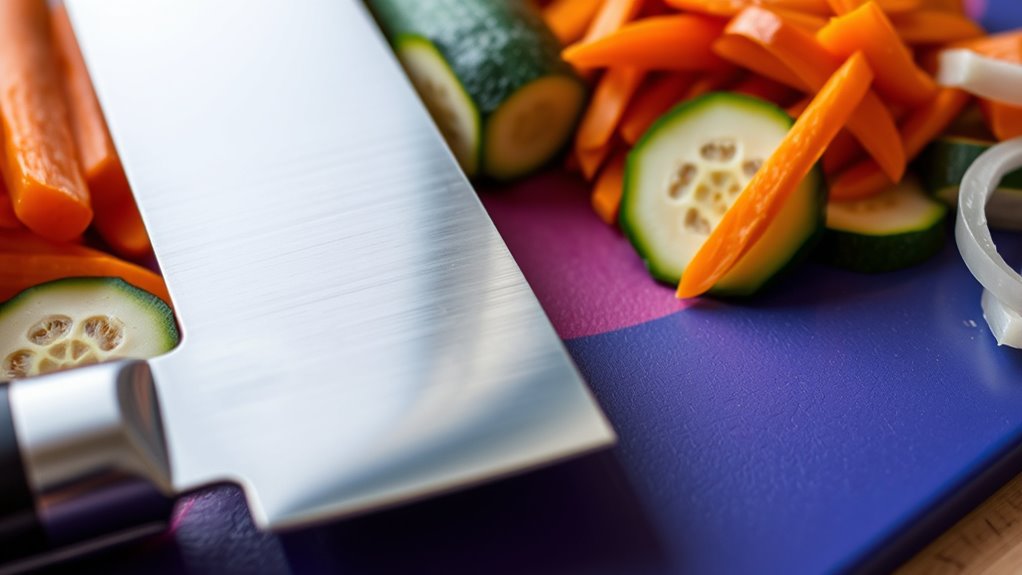
Have you ever wondered how professional chefs achieve perfectly uniform vegetable cuts? The Nakiri knife is essential in vegetable-centric cuisine. Its straight, thin blade allows you to make clean, precise cuts through delicate produce like cabbage, carrots, and zucchini. The flat edge guarantees full contact with the cutting board, resulting in even slices every time. Its lightweight design reduces fatigue during extended prep sessions, and the sharpness helps you glide smoothly through vegetables without crushing or tearing. The Nakiri excels at slicing, julienning, and shredding, giving you control and accuracy. If you frequently prepare salads, stir-fries, or vegetable dishes, this knife makes your work faster and cleaner, bringing professional-quality results to your kitchen.
Carving Knives for Elegant Meat Presentations
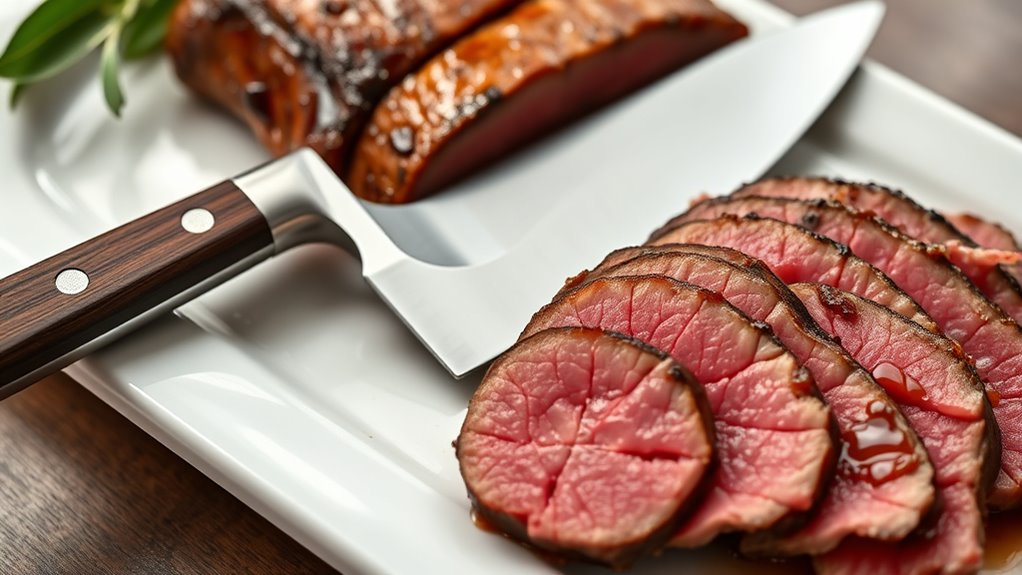
A carving knife allows you to cut meat with precision, ensuring each slice looks perfect on the plate. Mastering technique enhances presentation elegance and highlights the quality of your dish. With the right skills, you can create stunning meat presentations that impress your guests. Additionally, selecting the appropriate cutting tools can streamline your prep process and improve overall presentation. Proper knife maintenance also ensures your tools stay sharp and effective, making your work easier and more consistent. Understanding knife sharpening techniques is essential for maintaining optimal performance over time. Staying informed about market trends can help you choose the best tools for your needs.
Precision in Slicing
Carving knives excel at creating elegant, thin slices of cooked meat, making them essential for presentation and serving. Their sharp, narrow blades enable you to achieve uniform cuts that enhance visual appeal. To master precision slicing, focus on:
- Using a smooth, steady motion to avoid tearing the meat
- Allowing the knife to do the work, not forcing it through
- Maintaining a consistent angle for even slices
- Resting the meat before slicing to preserve juices
- Employing a slicing guide or fork for stability
These techniques ensure clean, consistent slices that elevate the dish’s presentation. With practice, your carving knife becomes a tool for showcasing your culinary skill, transforming cooked meats into artful servings that impress every guest.
Presentation Elegance
Achieving presentation elegance with a carving knife transforms a simple meat dish into a stunning centerpiece. A sharp, well-balanced carving knife allows you to slice meat cleanly and uniformly, creating visually appealing portions. With smooth, precise cuts, you can showcase the meat’s texture and juiciness, enhancing its overall presentation. Using a carving knife, you can carve thin, even slices for a refined look or thicker cuts for a hearty appearance, depending on the dish. Proper technique combined with the right knife ensures your meat looks professional and appetizing. This attention to detail elevates your plating, impressing guests and making your culinary skills stand out. Ultimately, the right carving knife helps you craft an elegant, polished presentation that complements your cuisine perfectly.
Technique Tips
To create elegant meat presentations with a carving knife, focus on mastering proper slicing techniques that promote clean, even cuts. Use a smooth, steady motion, applying minimal pressure to avoid tearing the meat. Keep the knife at a consistent angle, usually around 15-20 degrees, for uniform slices. Rest the meat before carving to allow juices to settle. Sharpness is essential—ensure your knife is well-maintained. For refined results, slice against the grain to enhance tenderness. Here are some tips to improve your technique:
- Use a gentle sawing motion for delicate cuts
- Maintain a firm grip for control and precision
- Keep the knife blade close to the cutting surface
- Slice in a single, continuous motion
- Let the knife do the work, avoiding excessive force
Mincing and Slicing With Specialty Knives for Flavorful Dishes
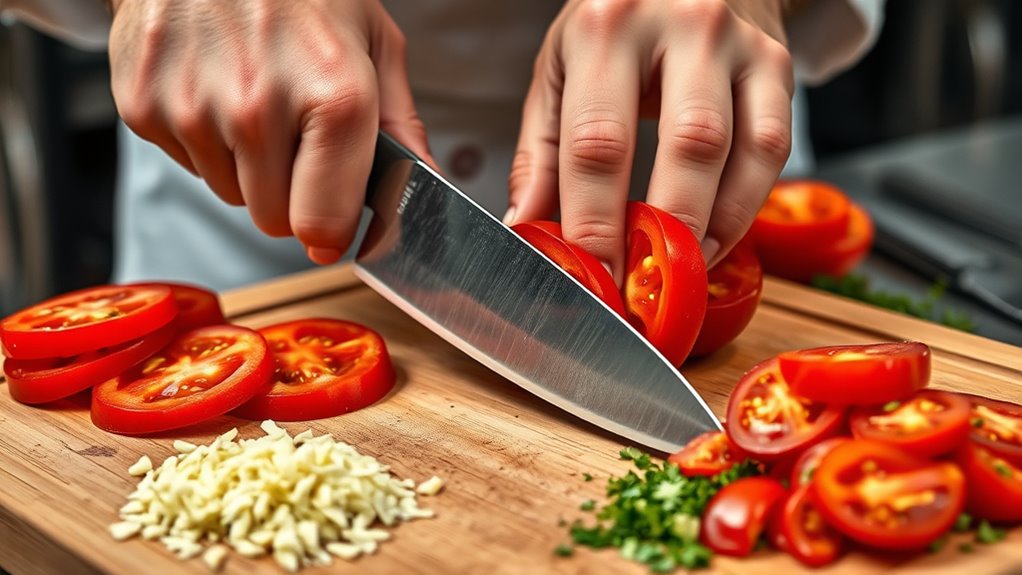
Specialty knives like the mincing knife and Nakiri excel at preparing ingredients that boost the flavor and presentation of your dishes. With a mincing knife, you can rapidly chop garlic, herbs, and onions, releasing their essential oils for maximum aroma and taste. Its rocking motion allows for quick, fine mincing without crushing ingredients. The Nakiri, with its straight, sharp blade, makes slicing vegetables cleanly and uniformly, preserving freshness and aesthetics. Use it to cut cabbage, squash, or carrots for salads and stir-fries. Both knives help you achieve precise cuts that enhance flavor absorption and presentation. By choosing the right specialty knife, you streamline prep, improve ingredient texture, and elevate the overall quality of your flavorful dishes.
Frequently Asked Questions
How Do I Choose the Right Knife for My Cooking Style?
You choose the right knife by matching it to your cooking style and tasks. If you chop lots of vegetables, go for a versatile chef’s knife. For delicate slicing or Asian dishes, a santoku works best. If you do detailed work or peel fruits, a paring knife is ideal. For bones or tough meats, a cleaver or boning knife is necessary. Consider your comfort, the types of food you prepare, and how precise you want your cuts.
Can a Single Knife Replace Multiple Specialty Knives?
Certainly, a single knife can sometimes substitute for specialty knives, but it’s tricky. You’ll want a versatile chef’s knife for most tasks—chopping, slicing, and dicing—because it handles many ingredients with ease. However, for precision peeling or delicate mincing, a paring or utility knife is ideal. While one knife can cover many culinary needs, owning a few sharp, specialized tools guarantees faster, cleaner, and more confident cooking.
What Maintenance Is Needed to Keep Knives Sharp and Safe?
To keep your knives sharp and safe, regularly hone them with a whetstone or honing steel to realign the edge. Avoid cutting on hard surfaces like glass or stone, and hand wash with mild soap and dry immediately to prevent rust. Store knives properly in a sheath, block, or on a magnetic strip to protect the blades and prevent accidents. Routine maintenance guarantees longevity and safe, efficient use.
Are There Safety Tips for Handling Different Types of Knives?
When handling different knives, always keep your grip firm and fingers curled away from the blade to prevent cuts. Use a stable cutting surface and cut away from your body. For delicate knives like paring or santoku, focus on controlled movements. When not in use, store knives safely in a block or sheath. Always clean knives carefully to avoid accidental cuts and keep blades sharp for safer, more precise cuts.
How Do Different Blade Shapes Influence Cutting Techniques?
Blade shapes directly influence your cutting techniques. A chef’s knife’s broad, curved blade lets you rock-chop efficiently, ideal for chopping and dicing. Santoku blades, with straight edges and dimpled surfaces, excel at slicing and mincing delicate ingredients. Paring knives’ small, pointed blades give precision control for detailed work. Boning knives’ narrow, flexible blades allow you to maneuver around bones smoothly. Adjust your technique based on blade shape for best safety and efficiency.
Conclusion
Choosing the right knife isn’t just about speed; it’s about opening a new level of precision and artistry in your cooking. Each blade type holds secrets that can transform ordinary prep into extraordinary creations. Are you ready to master these tools and discover the unexpected? The right knife can change everything—if you dare to explore what lies beyond the cut. Your next culinary breakthrough might be just a blade away.