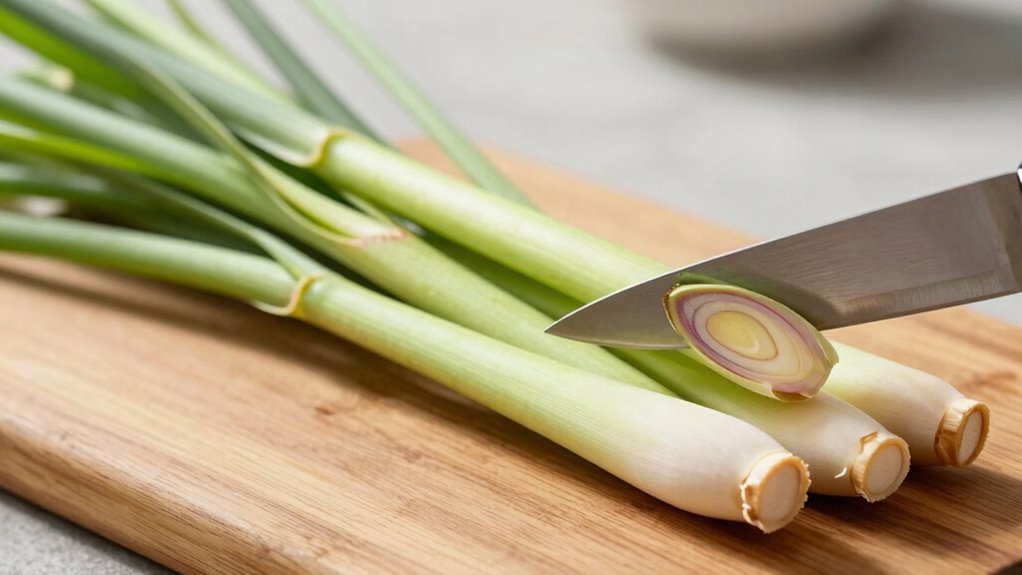
To prep lemongrass using the trim-and-slice method, start by selecting firm, fresh stalks with tight leaves. Trim off the tough root end and peel away any brown, dry outer layers. Cut away the bottom third of each stalk to remove the woody part. Then, use a sharp knife to slice into thin rounds or strips, applying light pressure to release more flavor. For even better aroma, try crushing the slices before adding to your dish — and if you keep going, you’ll discover even more tips to maximize flavor.
Key Takeaways
- Trim off the woody root end and peel away dry outer layers for cleaner, more flavorful stalks.
- Discard the tough bottom third of each stalk to improve tenderness and aroma.
- Use a sharp knife to slice lemongrass into thin rounds or strips, maintaining even thickness.
- Lightly crush or bruise slices to release more aromatic oils and enhance flavor extraction.
- Infuse broths by tying stalks in bundles or using cheesecloth, then remove before serving.
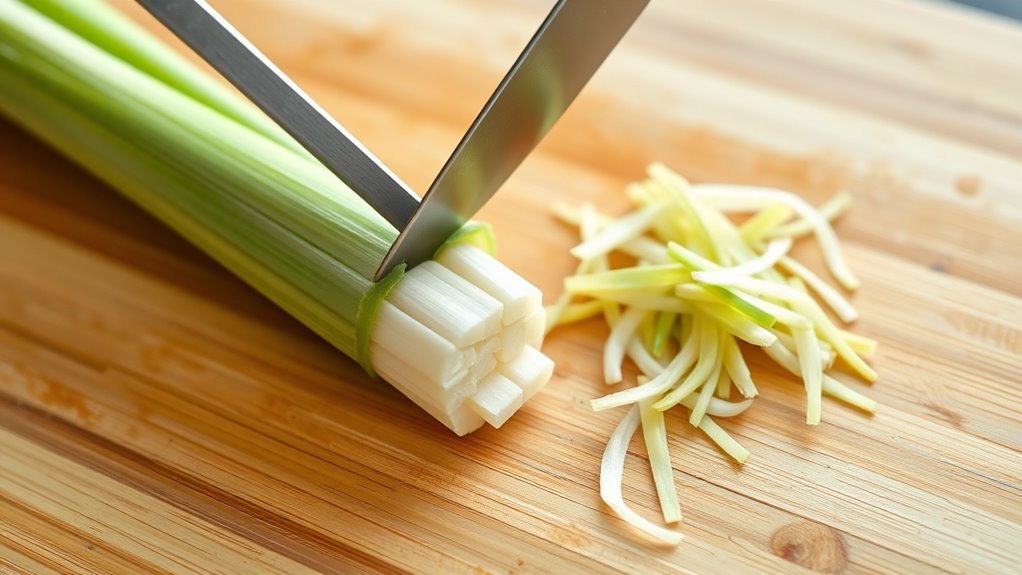
Are you ready to reveal the fresh, citrusy flavor of lemongrass in your cooking? The first step is mastering how to prep it properly, and that starts with stalk removal. Lemongrass comes in thick, fibrous stalks that need some work before they’re ready to release their flavor. To begin, select firm, pale green stalks with tight, fresh-looking leaves. When you’re ready to prep, trim off the root end, which is usually a bit woody and tough. Then, peel back any outer layers that look dry or brown—these don’t contribute much flavor and can interfere with your flavor extraction process. Once you’ve cleaned the stalks, cut away the tougher, bottom part, usually about one-third of the length, where the stalk becomes denser and more fibrous.
Now, with your cleaned stalks, it’s time to focus on slicing. The key to maximizing flavor extraction is to thinly slice the lemongrass. Use a sharp knife to cut the stalks into thin rounds or fine strips, depending on your recipe. Thin slices allow the oils and aromatic compounds within the lemongrass to be released more effectively during cooking, giving your dishes that vibrant citrus aroma. When slicing, hold the stalk steady and work carefully to maintain even thickness, which ensures consistent flavor release throughout your dish.
As you prepare to cook, remember that the fibrous outer layers may still be tough, especially if you’re using thicker stalks. If needed, you can lightly crush or bruise the slices with the side of your knife or a mortar and pestle. This technique helps to break down the cell walls, further aiding in flavor extraction. Alternatively, some cooks prefer to tie whole stalks into a bundle or use a cheesecloth to infuse flavor into broths, then remove the stalks before serving. This method allows you to enjoy the fresh, citrusy notes without any unwanted fibrous texture.
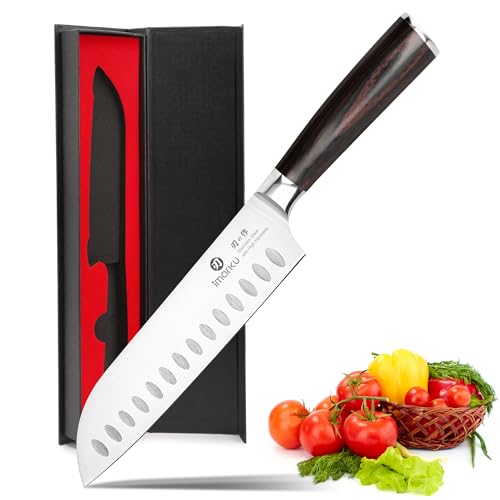
imarku Chef Knife 7 Inch Kitchen Knife Ultra Sharp Santoku Knife - High Carbon Japanese Chefs Knife, Kitchen Gadgets 2025, Apartment Essentials, Birthday Gifts for Him Her, Best Gifts for Women Men
Professional Santoku Knife: This imarku super sharp santoku knife is made of high carbon stainless steel that resists...
As an affiliate, we earn on qualifying purchases.
Frequently Asked Questions
Can I Freeze Lemongrass After Trimming and Slicing?
Yes, you can freeze lemongrass after trimming and slicing. Use freezing techniques like placing the slices in an airtight container or freezer bag to prevent freezer burn. Freezing helps preserve flavor retention, so your lemongrass stays fresh and flavorful for future recipes. Just make sure to squeeze out excess air before sealing, and label the package with the date to keep track of freshness.
What’s the Best Way to Store Prepared Lemongrass?
To store prepared lemongrass, follow these storage tips for the best shelf life. Keep it in an airtight container or resealable plastic bag in the refrigerator, ideally within a week. For longer storage, consider freezing it in portions—this extends its shelf life up to three months. Be sure to label and date it, so you always know how fresh it is. Proper storage helps maintain its flavor and aroma.
How Do I Tell Fresh Lemongrass From Older Stalks?
Imagine spotting a vibrant, lively green jungle; that’s what fresh lemongrass feels like. You’ll notice freshness indicators in its firm, pale stalks with tight, fragrant layers. Older stalks appear duller, yellowed, and limp, showing signs of maturity and loss of flavor. So, when choosing, pick stalks that are crisp, bright, and sturdy—these signals tell you you’re getting the freshest, most flavorful lemongrass for your dish.
Is Dried Lemongrass as Flavorful as Fresh?
Dried lemongrass isn’t as flavorful as fresh, but it still offers a pleasant lemongrass aroma. Dried vs fresh lemongrass, you’ll notice the dried version has a milder, more concentrated aroma, while fresh stalks deliver a vibrant, citrusy scent. When cooking, use more dried lemongrass to compensate for its weaker flavor, but for the best aroma and taste, fresh lemongrass is preferred.
How Long Does Prepared Lemongrass Stay Fresh?
Prepared lemongrass stays fresh for about 1 to 2 weeks when stored in an airtight container in the fridge. To extend its shelf life, you can freeze it for up to 6 months. If you’re out of fresh lemongrass, herb substitutes like lemon zest or citronella can mimic its bright, citrusy flavor profile. Always check for signs of spoilage before using to guarantee maximum flavor and safety.
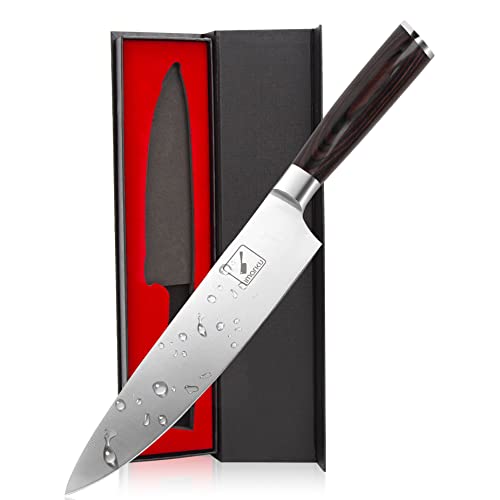
imarku Japanese Chef Knife - Sharp Kitchen Knife 8 Inch Chef's Knives HC Steel Paring Knife, Unique Gifts for Men and Women, Gifts for Mom or Dad, Kitchen Gadgets with Gift Box, Gyutou Knives
High-Carbon Stainless Steel Blade: It is manufactured from high-quality stainless steel that maintains its functionality for a long...
As an affiliate, we earn on qualifying purchases.
Conclusion
Now that you’ve mastered the trim-and-slice method, prepping lemongrass becomes a breeze—no need to summon a wizard’s patience. With just a few simple steps, you can add this fragrant herb to your dishes, elevating your cooking game to legendary status. Remember, even a humble kitchen muggle like you can turn into a culinary wizard with the right prep skills. So go forth and create magic—your taste buds will thank you!

HOSHANHO Kitchen Knife in Japanese High Carbon Steel, Professional High-Class Chef's Knife 8 inch, Non-slip Ultra Sharp Cooking Knives with Ergonomic Handle
【High-End Japanese Steel Chef's Knife】 HOSHANHO chef's knife is made of Japanese high carbon steel 10Cr15CoMoV, 2x of...
As an affiliate, we earn on qualifying purchases.

Japanese Chef Knife, 8 Inch Damascus Kitchen Knife with VG10 Steel, Handcrafted Sharp Knife with Ergonomic Handle, Cooking Knives for Home Chefs, Cooking Gifts for Men and Women
【Premium Damascus Chef Knife with VG-10 Steel Core】Our Japanese knives feature a VG-10 steel core (60 HRC) for...
As an affiliate, we earn on qualifying purchases.