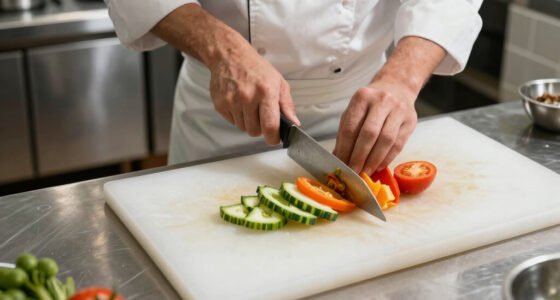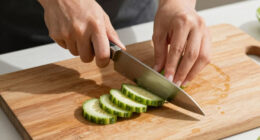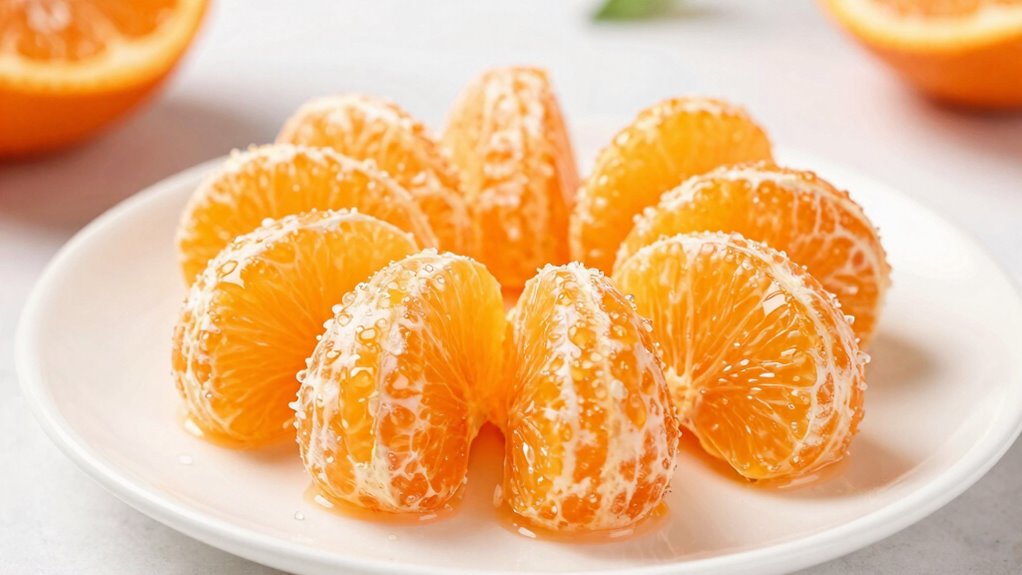

To cut citrus segments cleanly for salads and desserts, start by stabilizing the fruit on a cutting board and making shallow cuts along the membrane with a paring knife. Score the membrane to weaken it, then gently insert the knife between the membrane and flesh to lift out each segment smoothly. Focus on making precise, clean cuts to minimize waste and mess, and recognize the citrus variety to adjust your technique. Keep practicing, and you’ll master perfect, professional-looking segments with ease.
Key Takeaways
- Position the fruit securely on a cutting board and make shallow cuts along the membrane to weaken it.
- Score the membrane at the edges before gently inserting the knife to lift out clean, pith-free segments.
- Use a paring knife for controlled, precise cuts to minimize flesh damage and waste.
- Work slowly and carefully, especially with delicate or juicy citrus varieties.
- Recognize the specific citrus type to adjust techniques for thinner membranes and better results.

Next, make shallow cuts along the membrane to expose the individual segments. Position the fruit on a cutting board and carefully follow the contour of the fruit, slicing just deep enough to cut through the membrane but not into the flesh. The goal is to weaken the membrane so that you can gently lift the segments without tearing the flesh or leaving behind pith. If the fruit is particularly juicy or slippery, work slowly and use a paring knife for better control. Additionally, understanding the membrane structure helps in making precise cuts and avoiding unnecessary mess. Recognizing the traditional methods used in citrus preparation can also enhance your technique and presentation. Developing a steady hand through practice will further improve your ability to make clean cuts and minimize waste. Being aware of the varieties of citrus can also influence how you approach segmenting, as some types have thinner membranes or more delicate flesh. Moreover, employing proper knife skills can significantly improve your efficiency and the quality of your segments. Once the membrane is scored, gently insert the knife between the membrane and the flesh at one edge, and then carefully lift out each segment. This method, often called “supreme” or “segmenting,” produces clean, pith-free citrus pieces that are perfect for elegant salads and desserts. Practice makes perfect—over time, you’ll develop a smooth technique that minimizes mess and maximizes presentation. Remember, understanding the specific characteristics of each citrus variety and employing *ideal* peeling techniques will vastly improve your ability to cut citrus segments neatly and efficiently.
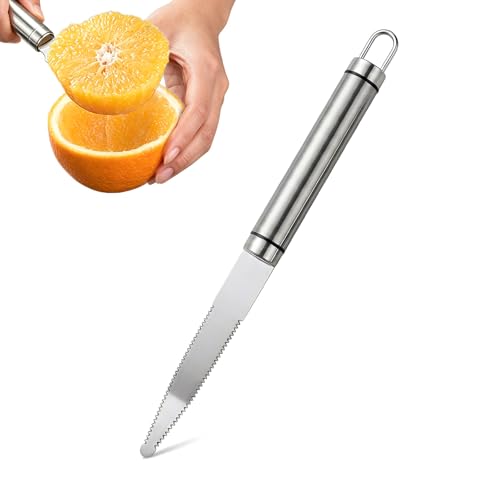
Stainless Steel Grapefruit Knife Curved Serrated Blade – Ergonomic Fruit Cutter for Citrus, Kitchen Tool with Dishwasher Safe Design
- Premium Stainless Steel: Resists rust and maintains sharpness
- Curved Serrated Blade: Ensures precise, clean cuts
- Ergonomic Design: Facilitates effortless slicing
As an affiliate, we earn on qualifying purchases.
As an affiliate, we earn on qualifying purchases.
Frequently Asked Questions
Which Citrus Fruits Are Easiest to Segment?
You’ll find that easy-to-segment citrus varieties like clementines, mandarins, and tangerines are your best bets. Their thin, loose skins and naturally segmented structure make them less challenging to peel and segment. These citrus fruits have a lower segmenting difficulty, meaning you can remove the individual sections cleanly without much fuss. Stick to these varieties for quick, neat segments perfect for salads, desserts, or snacking.
How Do I Prevent Citrus Juice From Squirting?
To prevent citrus juice from squirting during citrus juicing, hold the fruit firmly and angle it slightly away from your face. Use a gentle but steady pressure, and avoid squeezing too hard. When segment preservation is your goal, cut the citrus carefully, making precise cuts to avoid breaking the segments. This technique minimizes juice splatter and helps keep the segments intact, making your citrus preparation neater and more efficient.
What’s the Best Knife for Citrus Segmenting?
Choosing the right knife for citrus prep is like selecting a fine-tuned instrument—sharp, precise, and comfortable. A serrated paring knife or a small, flexible utility knife works best for citrus segmenting. Use proper knife techniques, keeping the blade close to the fruit’s surface, to peel away the skin and membranes smoothly. This guarantees clean, perfect segments every time, making your citrus prep effortless and professional-looking.
Can I Segment Citrus Ahead of Time?
Yes, you can segment citrus ahead of time, but keep it refrigerated in an airtight container to preserve freshness. Doing so allows you to enjoy the flavor pairings and nutritional benefits later, especially in salads or desserts. Just remember, the citrus might lose some juiciness over time, so plan accordingly. Pre-segmented citrus adds a bright, tangy touch to your dishes while maintaining its health benefits.
How Do I Store Citrus Segments Properly?
You should store citrus segments in an airtight container to keep them fresh. Place the container in the refrigerator to slow down spoilage, ensuring proper citrus storage. Be sure to consume the segments within 2-3 days for ideal fruit preservation. This method prevents moisture loss and keeps the citrus vibrant and flavorful longer, making your fruit ready for salads or desserts whenever you need it.

Kuhn Rikon Colori+ Non-Stick Straight Paring Knife with Safety Sheath, 4 inch/10.16 cm Blade, Funky Fruit Citrus
- Versatile Kitchen Prep Tool: Ideal for chopping, peeling, slicing
- Sharp Japanese Steel Blade: Hand-ground, durable, ultra-sharp
- Non-Stick Coating: Ensures easy, neat food release
As an affiliate, we earn on qualifying purchases.
As an affiliate, we earn on qualifying purchases.
Conclusion
Now that you know how to cut citrus segments flawlessly, imagine the possibilities—salads bursting with vibrant flavor, desserts that wow, and the perfect finishing touch. But there’s one secret step that can elevate your citrus game even further—are you ready to discover it? Don’t stop now; the best citrus creations are just one cut away. Keep practicing, and soon, you’ll be the master of citrus elegance, transforming simple slices into stunning culinary artwork.

Orange Peeler Tools Citrus Peel Cutter Easy Fruit Vegetable Slicer Lemon Opener Remover Fruit Tool Kitchen Utensils Gadgets (2PCS Orange)
- Material: Food-grade, non-toxic plastic
- Eco-Friendly: Environmentally friendly and corrosion resistant
- Hand-Free Peeling: Keeps hands and nails clean
As an affiliate, we earn on qualifying purchases.
As an affiliate, we earn on qualifying purchases.
As an affiliate, we earn on qualifying purchases.