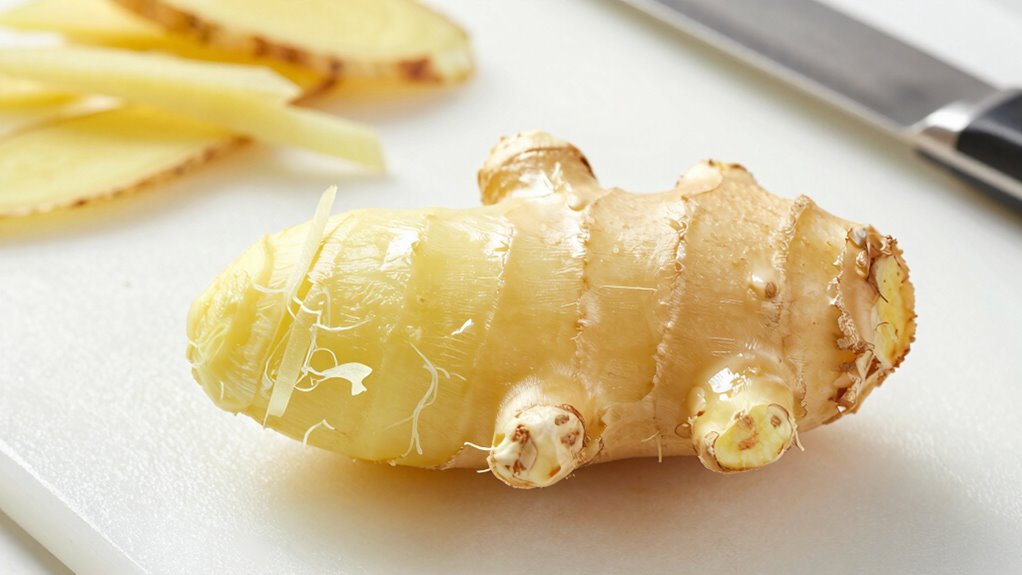
To prep ginger without a fibery mouthfeel, start by selecting fresh, firm roots with vibrant skin. Use a sharp paring knife or spoon to peel carefully, preserving more flesh. For softer texture, briefly blanch the peeled ginger in boiling water, then drain and dry. When cutting, employ fine grating or julienne techniques against the grain to break down fibrous strands. Mastering these steps helps achieve smooth, fiber-free ginger—learn more tips to perfect your prep.

Get kitchen gear delivered free — and shop member deals
- Fast, free delivery on millions of items
- Access to Prime Big Deal Days deals on October 6–7
- Prime Video, Amazon Music and more included
Key Takeaways
- Select fresh, firm ginger with tight skin and a fragrant aroma to ensure minimal fibrous texture.
- Peel ginger thoroughly using a spoon or sharp paring knife to remove skin and reduce fibrous layers.
- Use a microplane or fine grater to finely grate ginger, breaking down fibers for smoother incorporation.
- Blanch ginger briefly in boiling water to soften fibrous strands before using in recipes.
- Cut ginger against the grain and opt for thin slices or julienne to minimize chewiness and fibrous mouthfeel.
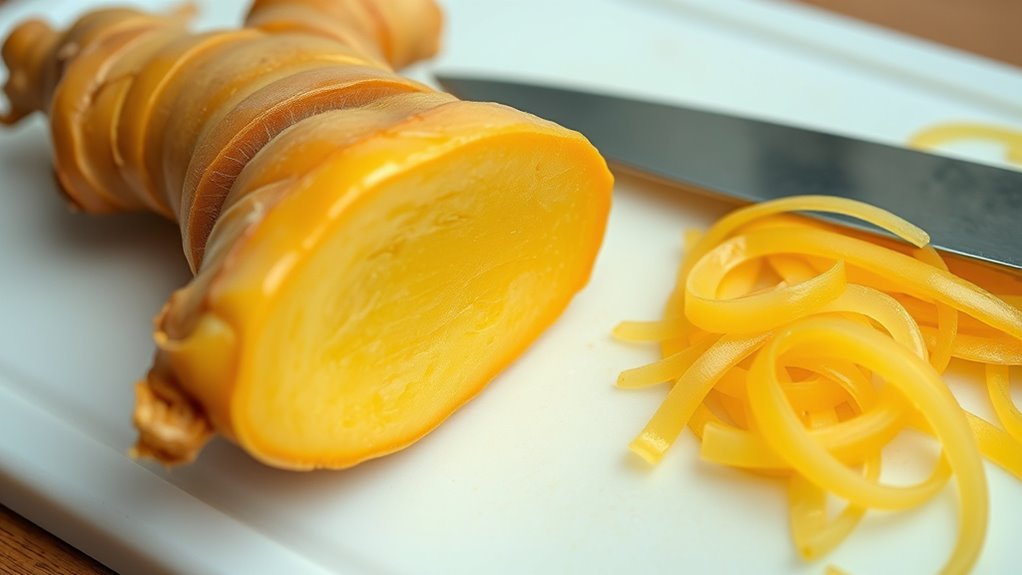
Ginger adds a vibrant kick to dishes and drinks, but its fibrous texture can sometimes create an unpleasant mouthfeel. When you bite into a piece of fresh ginger, those stringy fibers can feel tough and chewy, detracting from the dish’s overall enjoyment. To truly enjoy the bright ginger flavor without the fibery interference, you need to prep it properly. The key lies in technique and the right kitchen tools.
First, start with selecting fresh ginger. Look for firm, smooth, and plump roots with a fragrant aroma. Using a sharp paring knife, you can peel the ginger easily, but a small spoon often works even better. Hold the ginger steady with one hand and gently scrape the spoon’s edge along the surface to remove the skin. This method preserves more of the ginger’s flesh and reduces waste. Once peeled, you can prepare your ginger depending on your recipe—slicing, mincing, or grating.
To eliminate the fibrous mouthfeel, you’ll want to focus on cutting techniques. For finer use, like in sauces or drinks, grating the ginger is ideal. Use a microplane or a fine grater, pressing firmly to extract the juice and flavor while leaving behind the fibers. When you grate ginger, it breaks down the fibrous structure into tiny particles, making it much easier to incorporate into recipes without that chewy texture. Additionally, understanding the fiber structure of ginger can help you choose the best preparation method for desired results.
If you prefer slices or julienne strips, ensure you cut the ginger against the grain. This minimizes the length of fibrous strands, reducing their chewiness. A sharp chef’s knife or a mandoline slicer can help you achieve uniform, thin slices quickly and precisely. These tools give you better control, resulting in pieces that blend seamlessly into your dishes or beverages.
Another effective technique is to blanch the ginger briefly in boiling water before using it in recipes. Boiling softens the fibers, making the ginger less fibrous and easier to chew. After blanching, drain the ginger and pat it dry before chopping or grating. This step is especially useful when preparing candied ginger or adding fresh ginger to smoothies, where a smooth texture is desired.
Ultimately, the right kitchen tools—sharp knives, graters, and peelers—are essential to prepping ginger without the unwanted fibery mouthfeel. By peeling carefully, choosing the proper cutting method, and using techniques like blanching, you ensure the ginger flavor shines through without the chewy distraction. This way, every bite or sip delivers that vibrant, spicy punch you’re after, with a silky smooth consistency that enhances your dishes and drinks.
microplane fine grater for ginger
As an affiliate, we earn on qualifying purchases.
As an affiliate, we earn on qualifying purchases.
Frequently Asked Questions
Can I Freeze Ginger Without Affecting Its Texture?
Yes, you can freeze ginger without affecting its texture if you follow proper steps. Wrap the ginger tightly in plastic wrap or place it in an airtight container to preserve its ginger flavor and prevent freezer burn. When you need it for culinary uses, just grate or slice directly from frozen. Freezing helps maintain the fresh ginger’s flavor and aroma, making it easy to use in your favorite recipes without a fibery mouthfeel.
What’s the Best Knife for Peeling Ginger Smoothly?
You should use a paring knife for peeling ginger smoothly. Its small, sharp blade allows you to follow the ginger’s natural curves, preserving its flavor and ensuring clean peeling. Hold the ginger firmly and use peeling techniques that match its shape, removing only the thin skin without wasting too much. This method keeps the ginger’s flavor vibrant and reduces fibrous mouthfeel, making your dishes tastier and more enjoyable.
Does Peeling Ginger Remove Its Nutritional Benefits?
Peeling ginger is like peeling an onion—some nutrients stay just beneath the surface. Removing the ginger peel does slightly reduce its nutrients, but most benefits remain in the flesh. Peeling ginger benefits include removing dirt and fibers, making it easier to digest and incorporate into recipes. If you want maximum nutrients, use a sharp knife to peel gently, keeping most of the peel intact.
How Long Can I Store Prepared Ginger?
You can store prepared ginger in the refrigerator for up to a week if kept in an airtight container. Ginger storage varies depending on whether it’s peeled or unpeeled; peeled ginger typically lasts about 1-2 weeks, while unpeeled can stay fresh for up to three weeks. For longer shelf life, consider freezing ginger, which can preserve its freshness for several months. Always check for mold or spoilage before use.
Is It Safe to Use a Vegetable Peeler on Ginger?
Yes, it’s safe to use a vegetable peeler on ginger for peeling techniques during ginger preparation. The peeler easily removes the thin skin, giving you clean, smooth ginger without fibrous bits. Just hold the ginger firmly and peel in long strokes, similar to peeling a potato. This method helps you avoid a fibrous mouthfeel, making your ginger perfect for grating or slicing into dishes.
As an affiliate, we earn on qualifying purchases.
Conclusion
Now that you know how to prep ginger without that unpleasant fibery mouthfeel, you’ll enjoy its fresh, zesty flavor even more. Remember, peeling and slicing thinly can make all the difference in achieving that perfect texture. So, next time you’re cooking, why settle for fibery bits when you can have smooth, tender ginger instead? With these simple tips, your dishes will taste better and feel more enjoyable—what’s stopping you from giving it a try?
As an affiliate, we earn on qualifying purchases.
As an affiliate, we earn on qualifying purchases.
Fall Picks
fall essentials
As an affiliate, we earn on qualifying purchases.