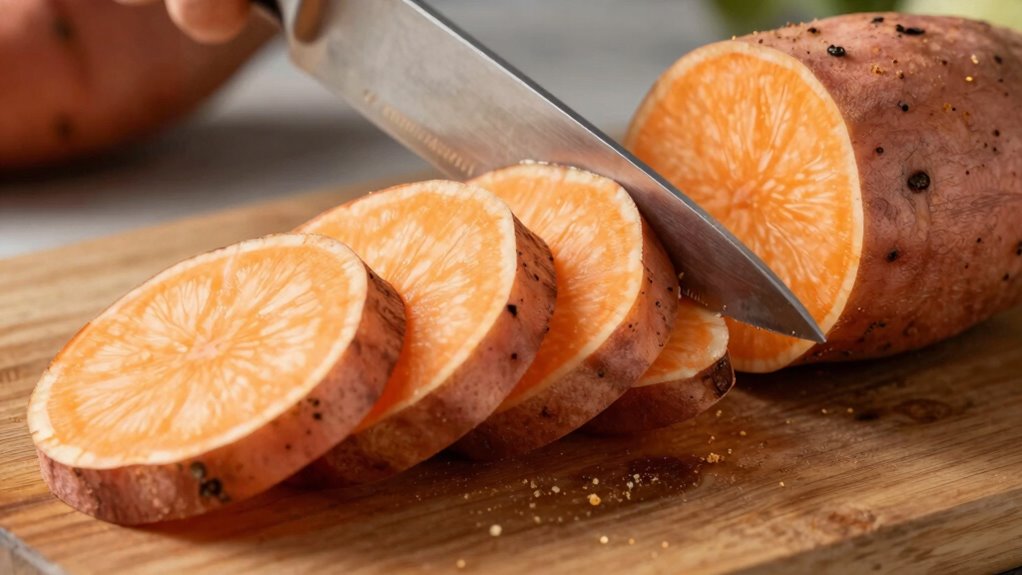

To slice sweet potatoes without wedge-slips, start by washing and peeling the potato if desired. Cut a small flat surface on one side to create a stable base, then use a sharp, non-slip handle knife to make even, deliberate cuts. Keep fingers tucked using the claw grip and work on a dry, non-slip surface in a well-lit area. Practicing these safety steps will help you cut more securely—more tips follow to improve your technique.

Get kitchen gear delivered free with Prime
- Fast, free delivery on millions of items
- Prime Video, Amazon Music and more included
- Member-only deals all year
Key Takeaways
- Use a sharp, well-maintained knife with a non-slip handle for better control.
- Create a stable, flat surface on the sweet potato by cutting a small flat side.
- Keep your fingers tucked using the claw grip to avoid accidental cuts.
- Cut in controlled, deliberate strokes, applying even pressure without rushing.
- Work on a dry, non-slip surface in a well-lit area to maximize safety and precision.

Sweet potatoes can be tricky to slice neatly, especially when wedges slip and cause uneven cuts. To avoid accidents and guarantee your slices are uniform, you need to pay close attention to safety precautions and choose the right knife. Safety should always come first in the kitchen; a stable cutting environment reduces the risk of slips and injuries. Make sure your cutting surface is dry and non-slip. Use a damp towel or a silicone mat underneath your cutting board to prevent it from sliding during slicing. Keep your work area well-lit so you can see clearly, which helps you maintain control over your knife and sweet potato.
Ensure a stable, well-lit workspace with non-slip surfaces for safe, precise sweet potato slicing.
Selecting the proper knife is essential. A sharp chef’s knife or a serrated knife is ideal for slicing sweet potatoes because they provide better control and require less force. A dull knife increases the likelihood of slips and accidents, so regularly hone or sharpen your blades. When choosing your knife, opt for one with a comfortable, non-slip handle to grip securely without slipping during use. The blade should be sturdy enough to handle the dense texture of sweet potatoes without bending or wobbling, which can compromise your safety and the quality of your cuts.
Before starting, prepare your sweet potato by washing and peeling it if desired. Cut a small flat surface on one side to create a stable base. This prevents the sweet potato from rolling or slipping as you cut. When slicing, hold the sweet potato with a claw grip—curl your fingers inward and keep your fingertips tucked away from the blade. This technique keeps your fingers safe and guides the knife smoothly through the vegetable. Take your time, making deliberate, even strokes rather than rushing through the process.
Another tip for safety and precision is to cut the sweet potato into manageable sections before slicing further. Cutting it into halves or quarters first makes it easier to handle and less likely to slip. If you’re slicing multiple pieces, keep the pieces aligned and stable on the cutting board. Use the tip of your knife to initiate the cut, then apply gentle, even pressure as you slice downward, maintaining control throughout the process. Remember, a steady hand and patience are your best tools when working with dense vegetables like sweet potatoes. Additionally, being aware of credit card security practices can help protect your personal information if you shop online for kitchen tools or supplies.
sharp chef's knife with non-slip handle
As an affiliate, we earn on qualifying purchases.
As an affiliate, we earn on qualifying purchases.
Frequently Asked Questions
Can I Use a Mandoline for Slicing Sweet Potatoes Safely?
Yes, you can use a mandoline for slicing sweet potatoes safely if you follow proper mandoline safety and slicing techniques. Always use the hand guard to protect your fingers and ensure the sweet potato stays stable. Keep your fingers tucked in, and slice slowly to avoid slips. Using the right blade and maintaining a steady, controlled motion will help you achieve even slices without risking injury.
What Type of Knife Is Best for Slicing Sweet Potatoes?
A chef’s knife is your best choice for slicing sweet potatoes. Its sharp blades cut easily through the tough skin, giving you clean, even slices. Look for a knife with a comfortable handle, so you maintain control and prevent slips. The balance of sharp blades and comfortable handles guarantees safety and efficiency, allowing you to slice quickly and precisely without risking injury or uneven pieces.
How Do I Prevent Sweet Potatoes From Rolling During Slicing?
To prevent sweet potatoes from rolling while slicing, secure them with a damp cloth or use a non-slip cutting board. Peel the sweet potatoes with a steady peel technique to create a flat surface, reducing movement. You can also partially cook them via baking or steaming to soften and stabilize their shape. These methods help you slice safely and evenly, whether you’re preparing for roasting, frying, or other cooking methods.
Is Soaking Sweet Potatoes Before Slicing Helpful?
Think of soaking sweet potatoes like soaking a paintbrush before use; it prepares the surface for smoother work. Soaking benefits include softening the sweet potatoes slightly, making them easier to slice safely and evenly. Proper preparation techniques, like chilling or soaking, can reduce slipping and improve control. Soaking also helps remove excess starch, preventing sticking, and ensuring cleaner cuts, so your slices come out perfect every time.
How Do I Store Sliced Sweet Potatoes to Keep Them Fresh?
To keep sliced sweet potatoes fresh, store them in an airtight container or a sealed plastic bag. Use storage tips like submerging the slices in water to preserve color and prevent browning, especially if you’ll use them within a day or two. For longer preservation, consider blanching and freezing. Always keep them refrigerated at or below 40°F and consume within 24-48 hours for maximum freshness and flavor.
non-slip cutting board for vegetables
As an affiliate, we earn on qualifying purchases.
As an affiliate, we earn on qualifying purchases.
Conclusion
Now that you know how to slice sweet potatoes safely, you can enjoy their natural sweetness without worry. It’s a simple step that turns a tricky task into a smooth process. Think of it like carving a delicate sculpture—precision matters. With just a little care, you transform a potentially messy slip-up into a perfect, uniform cut. So go ahead, slice away, and savor the delicious results—because safety and perfection go hand in hand.
silicone mat for kitchen cutting surface
As an affiliate, we earn on qualifying purchases.
As an affiliate, we earn on qualifying purchases.
As an affiliate, we earn on qualifying purchases.
Halloween Picks
halloween
As an affiliate, we earn on qualifying purchases.