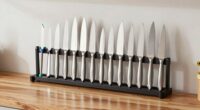
Edge stability is all about how well your blade resists deformation, chipping, and dulling over time. It’s more important than sharpness because a fine edge can lose its cutting ability quickly if it isn’t consistent. A stable edge maintains performance, lasts longer, and ensures safety during use. When your blade has good edge stability, you can rely on it for consistent results. Keep going to discover how to choose tools with the best durability.

Get kitchen gear delivered free with Prime
- Fast, free delivery on millions of items
- Prime Video, Amazon Music and more included
- Member-only deals all year
Key Takeaways
- Edge stability refers to a blade’s ability to resist deformation, wear, and chipping during use, ensuring consistent performance.
- Maintaining edge stability prevents rapid dulling, making blades more durable and reducing the frequency of sharpening.
- Stable edges require less force during cutting, enhancing safety and reducing slip risks during use.
- Edge stability ensures the blade retains its shape under stress, suitable for demanding or professional tasks.
- Prioritizing edge stability over sharpness results in longer-lasting, reliable blades with better overall performance.
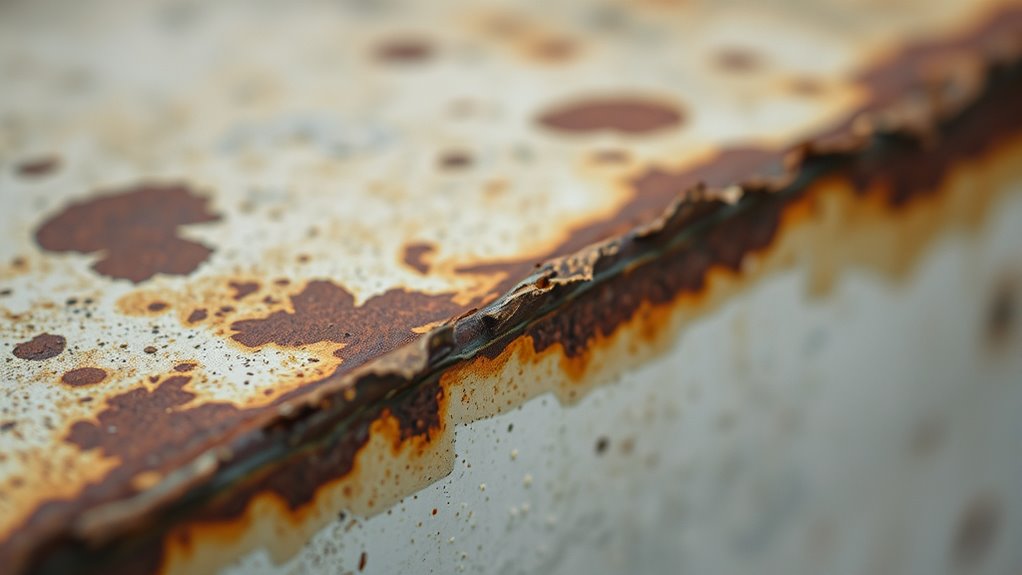
When choosing a knife or blade, you might assume that a sharper edge is always better, but edge stability actually plays a more essential role in performance and safety. Sharpness alone can be misleading because an extremely fine edge often loses its cutting ability quickly, especially when faced with tougher materials. This is where edge stability, which relates closely to edge durability and blade resilience, becomes key. A blade with high edge stability maintains its cutting performance over time, resisting dulling and chipping, so you spend less time resharpening and more time working efficiently.
Edge stability involves the blade’s ability to resist deformation and wear during use, which directly influences how long the blade remains effective. Edge durability is about how well the blade’s edge withstands repeated use without significant degradation. When a blade is resilient, it resists deformation, chipping, and dulling. This means that even after multiple cuts, the edge remains consistent, allowing for cleaner, more precise cuts. If your knife or blade is prone to dulling quickly, you might find yourself constantly stopping to sharpen, which interrupts your workflow and can lead to uneven edges. A resilient blade, however, keeps its edge longer, reducing maintenance and increasing safety because you don’t have to apply excessive force to compensate for a dull edge, which can cause slips or accidents.
Blade resilience also impacts safety. When the edge is stable and resilient, you exert less pressure during cutting, lowering the risk of slips and injuries. Conversely, a blade with poor edge stability dulls rapidly, forcing you to press harder and increasing the chance of losing control. You’ll notice that blades with high edge resilience often feel more reliable and predictable during use, giving you confidence in your cuts. This resilience is achieved through careful material selection and manufacturing processes that enhance the blade’s ability to withstand wear and tear without losing its integrity.
Moreover, edge stability influences how well a blade maintains its shape under stress. A stable edge doesn’t bend or deform easily, which means it can handle tougher tasks without losing its effectiveness. This resilience is especially important in professional settings or demanding tasks, where consistent performance is essential. When you prioritize edge stability, you’re investing in a tool that offers better performance over time, reduces downtime for sharpening, and minimizes the risk of accidents caused by a dull or unstable edge.
high edge stability kitchen knives
As an affiliate, we earn on qualifying purchases.
As an affiliate, we earn on qualifying purchases.
Frequently Asked Questions
How Is Edge Stability Measured in Knives?
You measure edge stability in knives by checking how well the edge resists microchipping and deformation under use. A stable edge maintains its sharpness longer, showing minimal signs of chip formation or bending. To test this, you might run the knife through a series of controlled cuts, inspecting for microchipping or deformation. Consistent performance indicates a highly stable edge, essential for reliable, long-lasting cutting.
Can Edge Stability Be Improved After Sharpening?
Yes, you can improve edge stability after sharpening by focusing on proper sharpening techniques that enhance edge durability. Use consistent, controlled strokes and select the right grit to avoid creating weak spots. Maintaining a proper angle and honing regularly helps reinforce the edge, making it more resistant to dulling. This approach guarantees your knife retains its sharpness longer and maintains better overall edge stability over time.
What Materials Contribute to Better Edge Stability?
You can improve edge stability with high-quality blade materials like VG-10 or powdered steels, which resist dulling and chipping. For example, a chef using a knife made from VG-10 notices it stays sharp longer during busy service. Manufacturing processes like cryogenic treatment or forging further enhance edge stability by refining grain structure. These materials and techniques work together to make sure your blade maintains a durable, reliable edge over time.
Does Edge Stability Affect the Longevity of a Blade?
Yes, edge stability directly impacts your blade’s longevity. When your blade maintains its edge well, it experiences less wear and tear, enhancing its durability. Additionally, a stable edge often correlates with better corrosion resistance, which protects the blade from rust and damage over time. This means your blade stays sharper longer and retains its overall integrity, saving you replacements and repairs, and ensuring consistent performance.
How Does Edge Stability Influence Cutting Performance?
Edge stability keeps your cuts precise, even when facing tough materials, unlike a blade that dulls quickly. You’ll notice smoother cuts with good edge stability, thanks to balanced blade flexibility that prevents chipping and handle ergonomics that reduce fatigue. This stability guarantees your blade maintains its performance, allowing you to work longer without sharpening. So, focus on edge stability to enhance cutting accuracy and make your tasks easier and more efficient.
As an affiliate, we earn on qualifying purchases.
Conclusion
Remember, it’s not just about having razor-sharp edges—it’s about edge stability. When your blade stays steady and true, you gain confidence, safety, and precision. Think of it like a sturdy bridge over turbulent waters; without stability, even the sharpest tools can falter. So, prioritize edge stability, and let it be the silent guardian behind every cut. Because in the end, true mastery lies in consistency, not just in fleeting moments of sharpness.
As an affiliate, we earn on qualifying purchases.
long-lasting edge blades for woodworking
As an affiliate, we earn on qualifying purchases.
As an affiliate, we earn on qualifying purchases.
Fall Picks
fall essentials
As an affiliate, we earn on qualifying purchases.