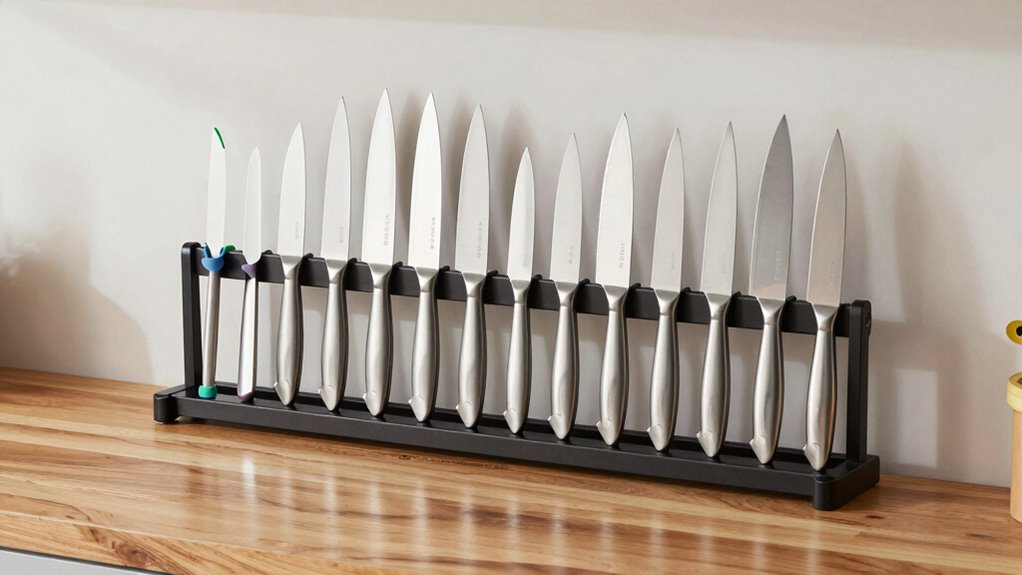

To keep knives organized in a shared kitchen without dulling edges, use storage options like magnetic strips mounted securely or individual slots in knife blocks and drawer organizers. Always handle knives carefully, clean and dry them after use, and store them separately from other utensils. Portable knife cases with impact protection also work well. Proper maintenance and responsible sharing help prolong sharpness and ensure safety—keep exploring for more tips to safeguard your blades effectively.

Get kitchen gear delivered free — and shop member deals
- Fast, free delivery on millions of items
- Access to Prime Big Deal Days deals on October 6–7
- Prime Video, Amazon Music and more included
Key Takeaways
- Use individual slots in knife blocks or in-drawer organizers to prevent blades from knocking and dulling.
- Store knives separately with protective sheaths or blade guards during sharing to avoid contact and damage.
- Regularly clean, dry, and oil blades to prevent corrosion and maintain sharpness in shared environments.
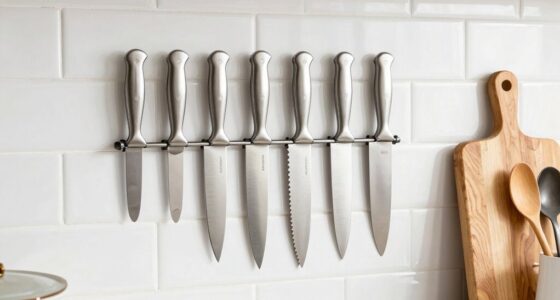
- Mount magnetic strips securely on walls, ensuring full contact with blades, and check magnets periodically for safety.
- Communicate storage routines and handle knives carefully to prevent accidental dulling or injury in shared kitchen spaces.
magnetic knife strip for kitchen
As an affiliate, we earn on qualifying purchases.
As an affiliate, we earn on qualifying purchases.
Choosing the Right Storage Solution for Shared Spaces

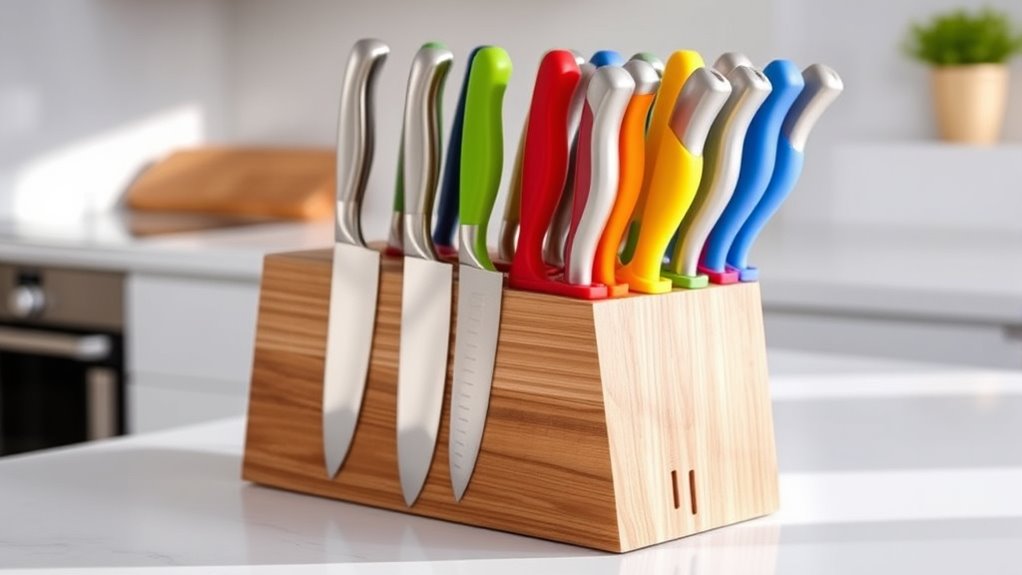
When sharing a kitchen, selecting the right knife storage solution is essential to keep everyone’s tools organized, accessible, and safe. You need options that suit various users and minimize damage. Knife blocks are great for countertop access and keep blades protected, especially if they have slots for different sizes. Magnetic strips save space and let you display knives attractively, but require clean blades and aren’t suitable for all types. In-drawer organizers keep knives out of sight, reducing clutter and preventing accidents, especially in busy kitchens. Knife rolls offer portable storage for chefs on the move, while tool cabinets provide secure, high-capacity storage but can be costly. Additionally, choosing energy-efficient storage solutions aligned with sustainable practices can help reduce your overall environmental footprint. Consider your space, budget, and usage to choose the best solution that balances accessibility with safety. Incorporating safe storage practices can further enhance safety and prolong the life of your knives. Proper storage methods can also help prevent blade dulling caused by improper handling or contact with other utensils. Using appropriate materials for storage can further protect your knives from corrosion and damage over time. Incorporating proper organization techniques can also streamline your kitchen workflow and prevent accidental injuries.
As an affiliate, we earn on qualifying purchases.
Organizing Knives to Protect Their Edges
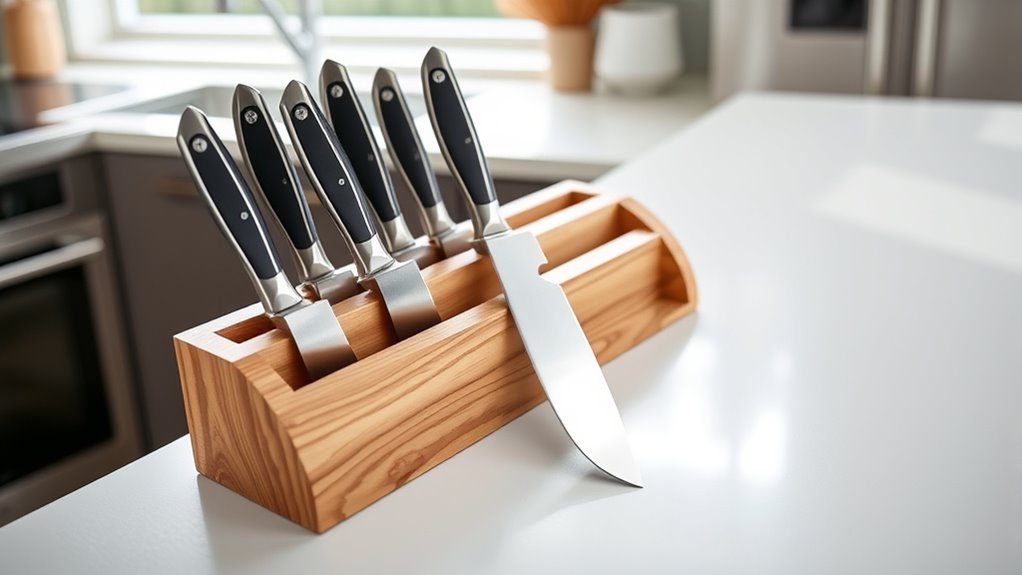
To protect your knife edges, choosing the right storage method is essential. You should handle knives carefully, avoiding unnecessary contact with hard surfaces that can dull blades. Using suitable materials, like cork or magnetic strips, helps keep edges sharp and prevents damage over time.
Proper Storage Techniques
Proper storage techniques are essential for maintaining your knives’ sharpness and preventing damage. Start by choosing storage options that keep blades secure and avoid unnecessary contact. Knife blocks with individual slots are ideal, as they prevent blades from knocking against each other. Magnetic strips are great for quick access and keep edges safe if mounted properly, ensuring blades don’t bend or dull. In-drawer organizers with snug slots protect blades from knocks and keep them out of sight. Avoid tossing knives loosely into drawers or stacking them, which can dull edges or cause accidents. Use cork liners or blade guards when storing knives in drawers to cushion edges. Regularly clean and dry your knives before storage to prevent corrosion and maintain their sharpness longer. Additionally, understanding the importance of contrast ratio in projectors can help you create an optimal viewing environment, ensuring your movies look vibrant and detailed even in dimly lit rooms. To extend the lifespan of your knives and keep them in top condition, consider proper handling techniques, which minimize wear and tear during use.
Safe Handling Practices
Organizing your knives with care is essential to safeguard their edges and ensure safety. Always handle blades carefully, avoiding grabbing by the sharp edge. When placing knives in storage, hold the blade firmly by the handle and avoid forcing them into tight spots that can dull or chip the edge. Use gentle pressure when inserting knives into blocks or sheaths, and never force a blade where it doesn’t fit. Keep blades dry and clean to prevent corrosion, and oil the edges periodically with food-safe oil to maintain sharpness. Store knives separately from other utensils to prevent banging. When passing a knife, hand it handle-first, never by the blade. By practicing mindful handling, you protect your knives and reduce the risk of injury.
Suitable Storage Materials
Choosing the right storage materials is essential for keeping your knives’ edges sharp and preventing damage. The goal is to protect blades from dulling and chipping while ensuring easy access. Here are three effective options:
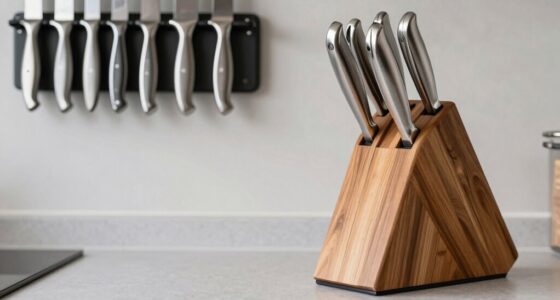
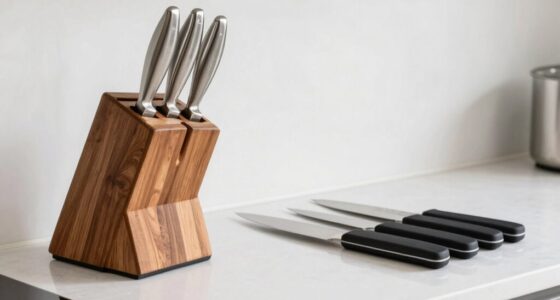
- Wooden Knife Blocks – Their individual slots securely hold knives, preventing contact with other blades and minimizing edge wear.
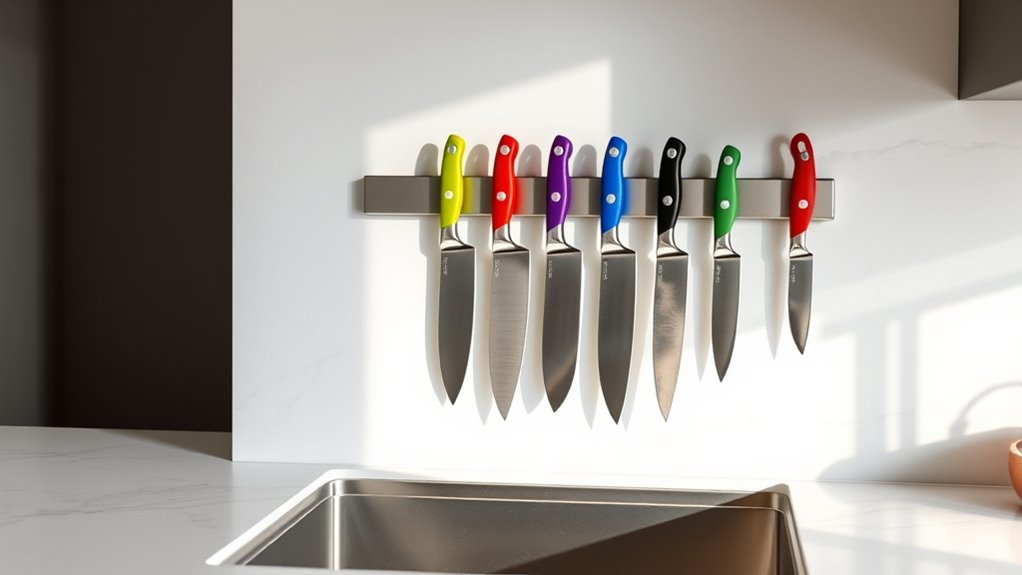
- Magnetic Strips – Mount these on the wall to keep blades separated and visible, reducing the risk of dulling or accidental damage.
- In-Drawer Organizers – Use snug-fitting, slotted trays or foam inserts that keep knives protected and organized inside drawers, away from other utensils. Proper storage methods can also help maintain the market value of your knives over time.
Select storage materials based on your kitchen layout, usage habits, and the type of knives you own to maintain their sharpness longer.
As an affiliate, we earn on qualifying purchases.
Best Practices for Using Magnetic Strips Safely
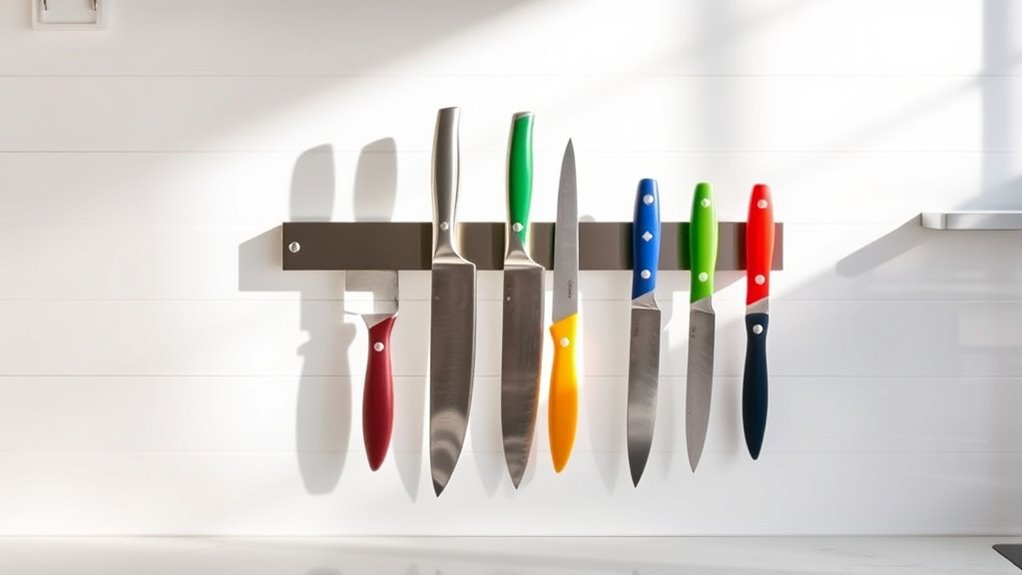
To keep your knives safe on magnetic strips, always keep blades clean before hanging them to prevent dirt from scratching edges. Handle knives carefully when placing or removing them to avoid accidental cuts or damage. Regularly check the strip for loose or damaged magnets to guarantee your knives stay secure and safe.
Keep Blades Clean
Have you ever wondered how to keep your knives clean and safe when using magnetic strips? Keeping blades spotless ensures hygiene and sharpness. Here are some easy tips:
- Wipe blades immediately after use with a damp cloth to remove food particles and moisture, preventing rust.
- Regularly clean the magnetic strip itself to remove dust and metal shavings that can transfer onto blades.
- Avoid storing ceramic or titanium knives on magnetic strips, as they may chip or get damaged if they come into contact with other metal tools.
- Ensuring proper maintenance of your knives can extend their lifespan and keep them performing at their best.
- Proper air purifier placement around your kitchen can also help reduce airborne dust and particles that settle on utensils, including knives.
Use Proper Handling Techniques
Although magnetic strips are convenient for quick access, handling knives safely requires attention to proper techniques. Always pick up knives by the handle, avoiding the blade itself to prevent cuts. When placing a knife on the strip, hold it firmly by the handle, and slide it in smoothly without force. Verify the blade fully contacts the strip to prevent slipping. Keep your fingers away from the sharp edge at all times. When removing a knife, grip the handle securely and lift it straight off, avoiding swinging or pulling at an angle. Regularly check the strip for loose or damaged magnets to ensure safety. Never force a knife onto a strip that’s too tight, as this can damage the blade or cause it to slip. Proper handling preserves your edges and minimizes accidents. Additionally, secure storage methods like magnetic strips should be complemented with regular maintenance to ensure safety and longevity.
Regularly Inspect Strip Safety
Regularly inspecting your magnetic strip is essential to guarantee it remains safe and effective. Over time, strips can weaken or become loose, risking knives falling or causing injury. To stay safe, check your strip at least once a month. Additionally, consider the preservation of historical sites and the cultural significance of maintaining traditional practices, as this mindset can also be applied to regularly caring for and maintaining your kitchen equipment to ensure longevity. Proper magnetic force is vital for secure knife storage, so ensure the strip’s strength remains adequate for your collection. Here’s what to look for:
- Magnetic strength: Ensure it holds knives securely; replace if it feels weak or loose.
- Mounting hardware: Tighten screws or brackets to prevent wobbling or detachment.
- Surface condition: Clean the strip regularly to remove grease or debris that might reduce magnetism or cause slipping.
- Piercing care and hygiene Regular maintenance and cleaning of the strip can prevent buildup of debris and ensure the magnetic force remains strong. Additionally, understanding the interest rate and how it influences your budgeting can help you allocate funds for necessary replacements or upgrades.
portable knife case with impact protection
As an affiliate, we earn on qualifying purchases.
As an affiliate, we earn on qualifying purchases.
Utilizing Drawer Organizers for Secure Knife Storage
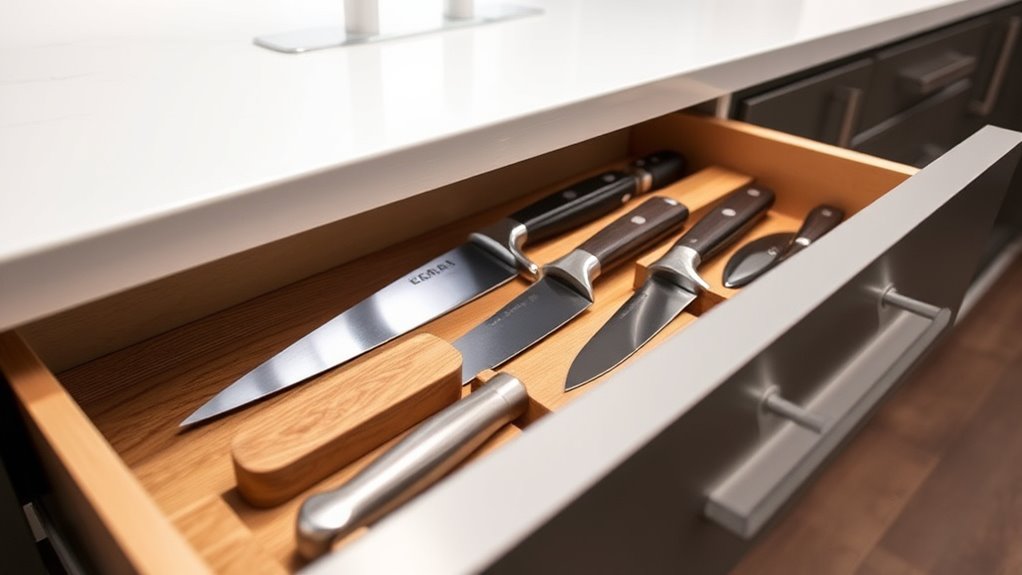
Drawer organizers are an effective way to keep your knives secure and easily accessible while protecting their edges from damage. Use a flat or tiered in-drawer organizer to snugly hold each blade, preventing movement that could dull edges or cause accidents. Expandable options let you customize your space as your collection grows. Bamboo organizers are eco-friendly and durable, fitting neatly into your drawer and maximizing space. Additionally, choosing knife storage solutions that prevent movement can extend the lifespan of your knives.
Portable Options for Moving Knives Without Damage

Looking for a safe way to transport your knives without dulling their edges or risking injury? Portable options keep your blades protected and accessible on the go. Here are three effective choices:
- Knife Rolls: Made of durable leather or waxed canvas, they feature individual slots for each blade. Straps make carrying easy, and they’re perfect for chefs or travelers needing reliable protection. Some knife rolls also include pocket organization to keep accessories separate and secure. Many models are designed with durable materials to withstand frequent use and travel conditions. Ensuring proper storage techniques can extend the life of your blades and prevent damage during transport. Additionally, choosing a knife roll with shock absorption features can provide extra protection against impacts during transit.
- Blade Guards or Sheaths: These slip over the blade, preventing contact with other objects and minimizing dulling. Compact and simple, they’re great for quick transport or storage in a bag.
- Magnetic Cases: Small, sturdy containers with magnetic strips hold blades securely. They prevent movement and scratches, ideal for organizing multiple knives safely during transport.
- When choosing pinball machines for entertainment, consider models with advanced technology and durable design to ensure long-lasting fun and protection during use.
Proper Edge Protection Techniques and Maintenance
Protecting your knife edges during storage and maintenance helps guarantee they stay sharp and safe to use. Start by avoiding uneven slots or tight fits that can dull blades; use a butter knife to gently adjust them. Cork-lined drawers absorb moisture and secure blades without scratching. Before storing, coat blades with a light layer of oil like Tuf-Glide to prevent rust and corrosion. Consider vacuum-sealing knives with activated charcoal or silica beads to eliminate moisture exposure. Regularly hone your knives with a honing steel to realign edges and maintain sharpness. Sharpen blades with a whetstone or professional sharpener when needed, but avoid over-sharpening. Proper maintenance ensures your knives remain effective, safe, and long-lasting in a shared kitchen environment. Using garbage disposal units can help manage food scraps properly, reducing mess and prolonging the life of your knives. Additionally, incorporating moisture control measures like silica gels can further prevent rust and corrosion, which are common issues affecting knife edge durability. Incorporating storage solutions designed specifically for knives can further protect edges and improve organization.
Tips for Sharing Knife Storage Responsibly
Sharing knife storage in a shared kitchen requires clear organization and communication to prevent accidents and preserve edges. To do this responsibly, follow these tips:
Organize and communicate clearly to keep shared knives safe and sharp.
- Label storage spaces—designate specific spots for each person’s knives, whether in a drawer, on a magnetic strip, or in a knife block. This avoids mix-ups and accidental damage. Proper labeling can also facilitate safe handling and ensure knives are stored correctly. Additionally, using knife edges guards can help maintain blade sharpness over time.
- Use protective covers or sheaths—store knives with blade guards or in rolls to prevent dulling and protect others from cuts.
- Communicate regularly—keep everyone informed about updates, cleaning routines, or damage. Ensure knives are clean, dry, and stored properly after each use to maintain sharpness.
- Be aware of knife safety guidelines—adhering to proper handling and storage practices reduces the risk of injury and keeps your knives in optimal condition.
Following these steps helps keep knives sharp, safe, and ready when needed.
Maintaining a Safe and Efficient Shared Kitchen Environment

A well-organized shared kitchen relies on clear communication and consistent routines to guarantee safety and efficiency. You should designate specific storage spots for knives and ensure everyone knows where they are. Regularly check that knives are stored securely, whether in magnetic strips, in-drawer organizers, or knife blocks, to prevent accidents. Encourage members to handle knives carefully, always pointing blades away from themselves and others. Keep work areas clean and dry to avoid slips and corrosion. Use designated cutting zones and avoid clutter that can cause knives to fall or become damaged. Establish rules for passing knives safely and reporting damaged or dull blades. Consistent routines and respectful handling keep the environment safe, prolong knife edges, and streamline kitchen workflow. Proper storage methods help maintain knife sharpness and reduce the risk of injury.
Frequently Asked Questions
How Often Should I Sharpen Shared Knives for Optimal Edge Retention?
You should sharpen shared knives every 2 to 4 weeks, depending on how often you use them. Regular honing with a steel keeps edges aligned, but actual sharpening removes dullness. If you notice the knife isn’t cutting well or requires more pressure, sharpen it sooner. Use a quality sharpening stone or professional service for best results, and avoid over-sharpening to prolong the edge’s life.
Can Knife Storage Methods Prevent Cross-Contamination in Shared Kitchens?
Ever thought about how your knife storage can prevent cross-contamination? Using dedicated knife blocks, magnetic strips, or in-drawer organizers keeps each blade separated, reducing contact with other utensils. Regularly sanitizing these storage options and avoiding shared or cluttered spaces also help. Do you want a safe, hygienic kitchen? Prioritize storage solutions that keep knives apart and clean, ensuring food safety and preventing harmful bacteria transfer.
What Are the Safest Ways to Handle Dull or Damaged Knives in Shared Spaces?
When handling dull or damaged knives in shared spaces, you should prioritize safety. Wear cut-resistant gloves and use a towel to grip the blade firmly. Avoid using damaged knives for tasks that could worsen the damage. Instead, take them to a professional for sharpening or repair. Keep dull knives stored separately in a designated, secure container to prevent accidental injuries and guarantee everyone handles them with caution.
How Do I Prevent Theft or Misuse of Knives in Communal Kitchens?
Think of your knives like precious jewels; you don’t leave them lying around or in careless hands. To prevent theft or misuse, keep knives in a secure, designated spot—like a locked drawer or a dedicated, labeled container. Educate everyone on proper handling, and consider using a knife safety lock or limited access. This way, you protect your tools and maintain safety in your shared kitchen.
Are There Specific Storage Options Recommended for Serrated Versus Straight-Edged Knives?
You should store serrated and straight-edged knives separately to preserve their edges. Use individual slots in knife blocks or in-drawer organizers for straight-edged knives, which are gentler on their blades. For serrated knives, consider magnetic strips or specialized slots that prevent unnecessary contact. Avoid storing both types together in a single slot to prevent dulling or damage, ensuring each knife retains its sharpness longer.
Conclusion
By choosing the right storage solutions and handling knives carefully, you can keep your edges sharp and your shared kitchen safe. Don’t worry about limited space—magnetic strips and drawer organizers are effective options. Remember, proper maintenance and respectful sharing habits prevent damage and accidents. Even if you’re concerned about safety, using secure storage and following best practices makes sharing knives easy and worry-free, ensuring everyone stays safe and your knives stay in top condition.
Fall Picks
fall essentials
As an affiliate, we earn on qualifying purchases.