If your knife feels sharp at first but quickly dulls, the problem might be improper sharpening or use. You could be sharpening at the wrong angle, using an unsuitable surface, or storing it improperly, which damages the blade. Worn or low-quality blades, combined with rough handling, also cause fast dulling. Paying attention to proper techniques and maintenance can help, and there’s more you can do to keep that edge longer.

Get kitchen gear delivered free with Prime
- Fast, free delivery on millions of items
- Prime Video, Amazon Music and more included
- Member-only deals all year
Key Takeaways
- Improper sharpening techniques or inconsistent angles cause a fragile edge that dulls quickly.
- Using hard surfaces like glass or ceramic damages the blade and accelerates dulling.
- Poor storage or impacts can chip or weaken the edge, reducing sharpness lifespan.
- Low-quality blade materials wear faster and lose sharpness sooner with regular use.
- Incorrect handling, excessive force, or misuse speeds up dulling and damages the blade.
As an affiliate, we earn on qualifying purchases.
Improper Sharpening Techniques
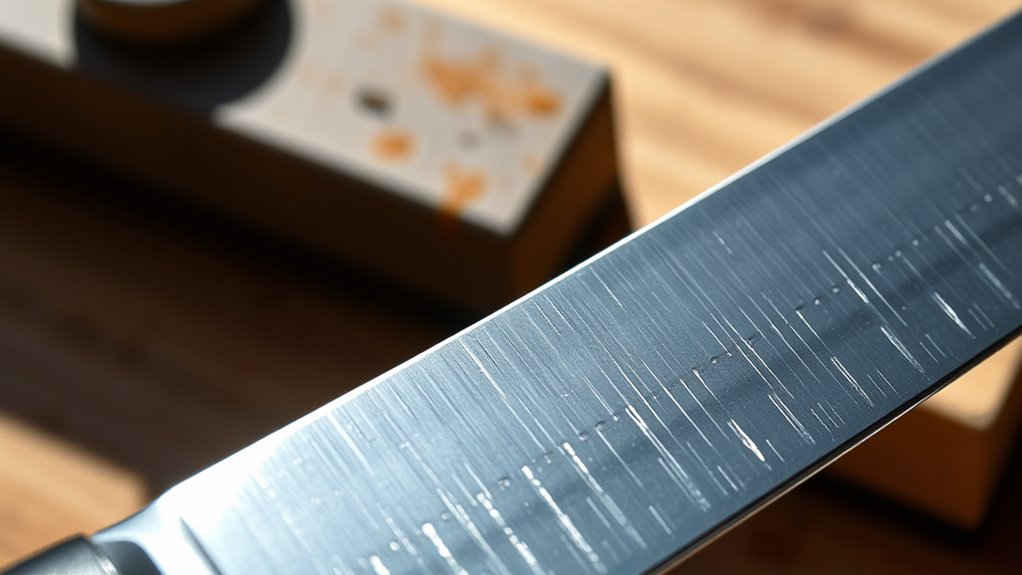
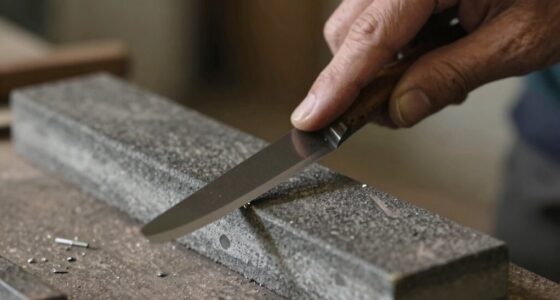
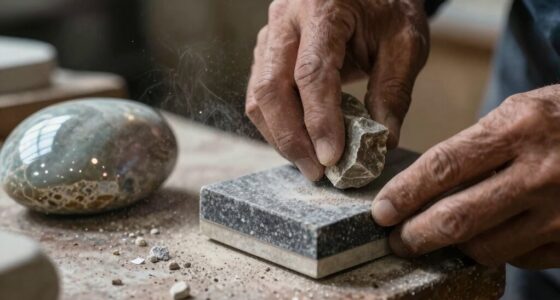
If you don’t sharpen your knife correctly, it can quickly become dull again. Proper technique is key to maintaining a sharp edge. One common mistake is neglecting blade alignment; if the angle isn’t consistent, your knife won’t cut effectively. Honing and sharpening serve different purposes—honning realigns the edge, while sharpening actually removes material to create a new edge. Rushing the process or using an inappropriate tool can lead to uneven or damaged edges. To avoid this, use a consistent angle and quality sharpening tools. Proper technique guarantees you don’t just temporarily sharpen the blade but create a durable, long-lasting edge. Skimping on the right method undermines your efforts, causing your knife to dull faster despite frequent sharpening attempts. Additionally, employing energy-efficient tools can help ensure your sharpening process is both effective and environmentally conscious.
As an affiliate, we earn on qualifying purchases.
Using the Wrong Type of Cutting Surface
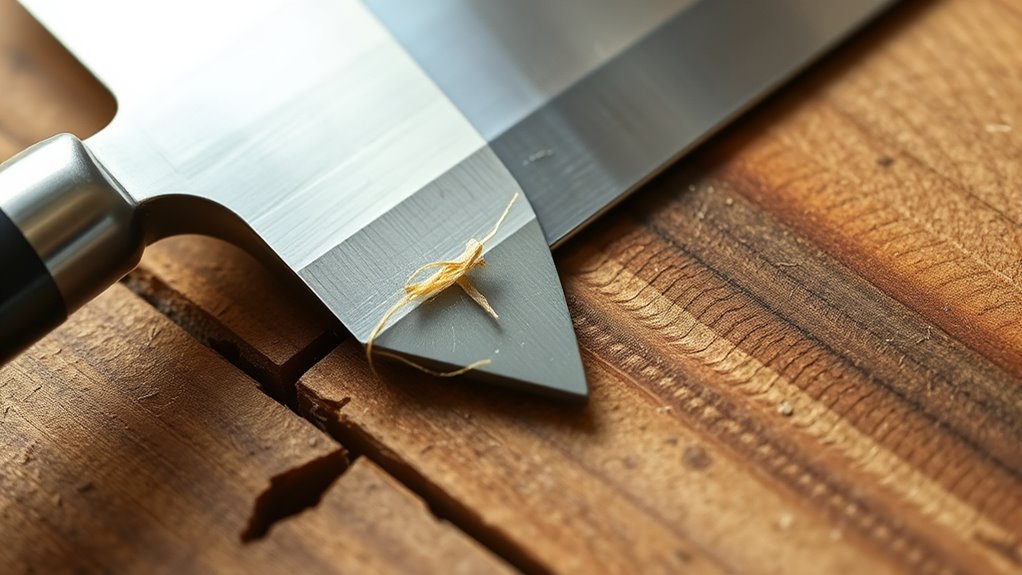
Using the wrong type of cutting surface can quickly dull your knife even when you sharpen it properly. Hard surfaces, like glass or ceramic, are especially damaging because they are too abrasive for most knives. Softer surfaces, such as wood or plastic, are gentler and help maintain your knife’s edge longer. To illustrate, consider this table:
| Surface Material | Effect on Knife | Recommended Use |
|---|---|---|
| Glass/Ceramic | Dulls quickly | Avoid for daily use |
| Wood | Gentle on edges | Ideal for regular use |
| Plastic | Moderately gentle | Suitable for light tasks |
Choosing the right surface material is key to preserving your knife’s sharpness and preventing unnecessary dulling. Additionally, understanding warranty considerations can help you select knives that are better suited for your specific cutting surfaces and usage habits.
As an affiliate, we earn on qualifying purchases.
Cutting at the Wrong Angle
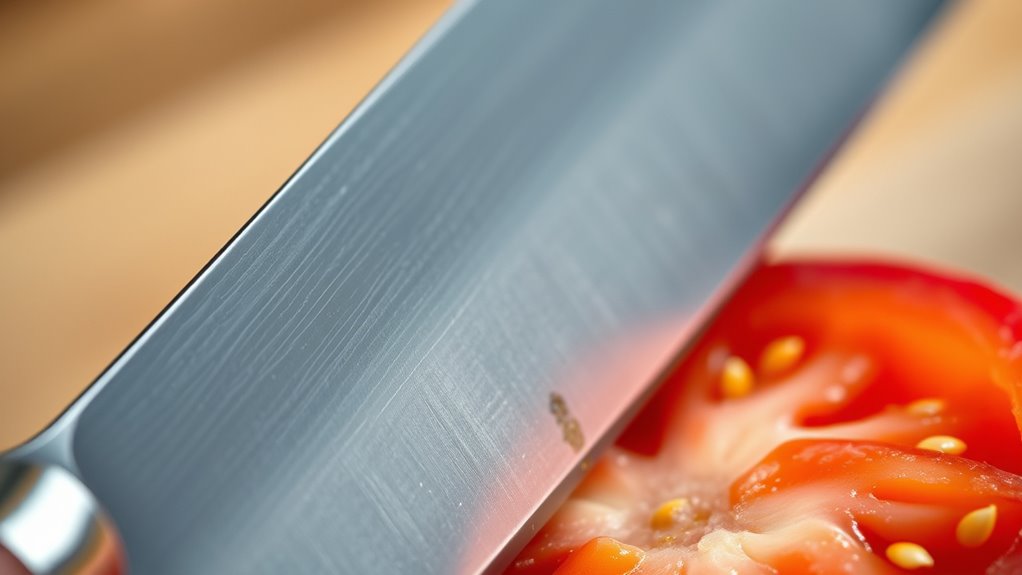
When you cut at the wrong angle, your blade wears down faster and loses its sharpness quickly. Using an incorrect blade angle, inconsistent technique, or improper sharpening causes this problem. Paying attention to your cutting angle can help your knife stay sharp longer. Additionally, proper sharpening techniques are essential to maintaining a sharp edge and preventing premature dulling. Ensuring your cutting angle is correct is a simple but crucial step in extending your blade’s lifespan.
Incorrect Blade Angle
Cutting at the wrong angle is a common mistake that can make your knife feel sharp initially but quickly become dull. When you don’t maintain proper blade alignment, the edge isn’t evenly distributed, causing uneven wear. This disrupts edge symmetry, leading to a blade that seems sharp but doesn’t cut efficiently. A misaligned angle can create micro-chips or dull spots, accelerating dullness. Consistently cutting at the correct angle guarantees the edge wears evenly, preserving sharpness longer. Pay attention to your technique, and adjust your hand position to keep the blade at the proper angle. Proper blade alignment and edge symmetry are key for maintaining a sharp, durable edge that stays effective through more cutting tasks. Ensuring your knife is properly sharpened and maintaining the correct blade angle can significantly extend its sharpness and lifespan.
Inconsistent Cutting Technique
If you don’t maintain a consistent cutting angle, your knife’s edge will wear unevenly and become dull more quickly. Using a proper precision grip helps you control the blade better, ensuring a steady cutting rhythm. When your grip is shaky or inconsistent, you might inadvertently change the angle, causing unnecessary stress on the edge. Developing a stable cutting rhythm keeps your movements smooth and predictable, reducing the likelihood of slipping into improper angles. This consistent technique prevents uneven wear and prolongs the sharpness of your blade. Remember, even small variations in angle during cutting can chip away at the edge over time. Focus on maintaining a steady, controlled motion, and your knife will stay sharper longer, making every cut cleaner and safer. Incorporating proper sharpening methods can also help maintain the edge between uses. Additionally, practicing consistent cutting techniques can significantly enhance your blade’s longevity and performance.
Improper Sharpening Method
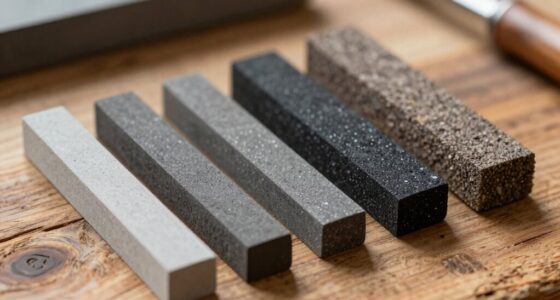
Using the correct sharpening angle is key to maintaining a sharp edge, but many people make the mistake of sharpening at the wrong angle. Different blade materials require specific angles for *ideal* sharpness and durability. For example, high-carbon steels need a different approach than softer stainless steels. If you use the wrong sharpening tools or set the angle incorrectly, you risk creating a dull, uneven edge that dulls quickly. Sharpening at too steep or shallow an angle damages the blade’s structure, making it more prone to dulling. Always choose the right sharpening tools—such as a whetstone or guided sharpener—that help maintain the proper angle. Proper technique ensures a longer-lasting edge, no matter the blade material, and prevents premature dulling. Being aware of the blade material’s properties can help you select the optimal sharpening angle for your knife.
As an affiliate, we earn on qualifying purchases.
Neglecting Regular Maintenance
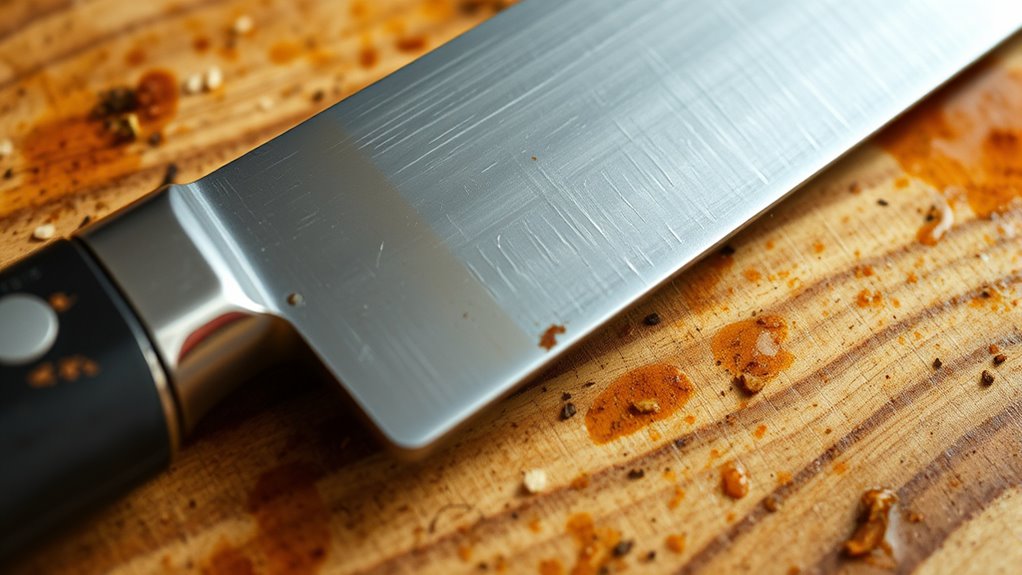
Neglecting regular maintenance is a common mistake that quickly dulls your knife’s edge. When you don’t clean and dry your knife after use, moisture can lead to blade corrosion, weakening the metal. Over time, this corrosion causes tiny pits and rough spots that contribute to dulling from moisture exposure. If you ignore routine upkeep, rust can develop unnoticed, further compromising the blade’s sharpness and structural integrity. Additionally, a neglected knife becomes more prone to buildup of residue, which hampers its cutting performance. To keep your knife sharp and long-lasting, you need to wipe it clean and dry thoroughly after each use, and occasionally oil the blade. Proper storage is also essential to prevent moisture buildup and protect your knife from environmental damage. Incorporating smart cleaning techniques and understanding material properties can further enhance your knife’s longevity and performance, especially when combined with appropriate storage methods.
Storing Your Knife Incorrectly
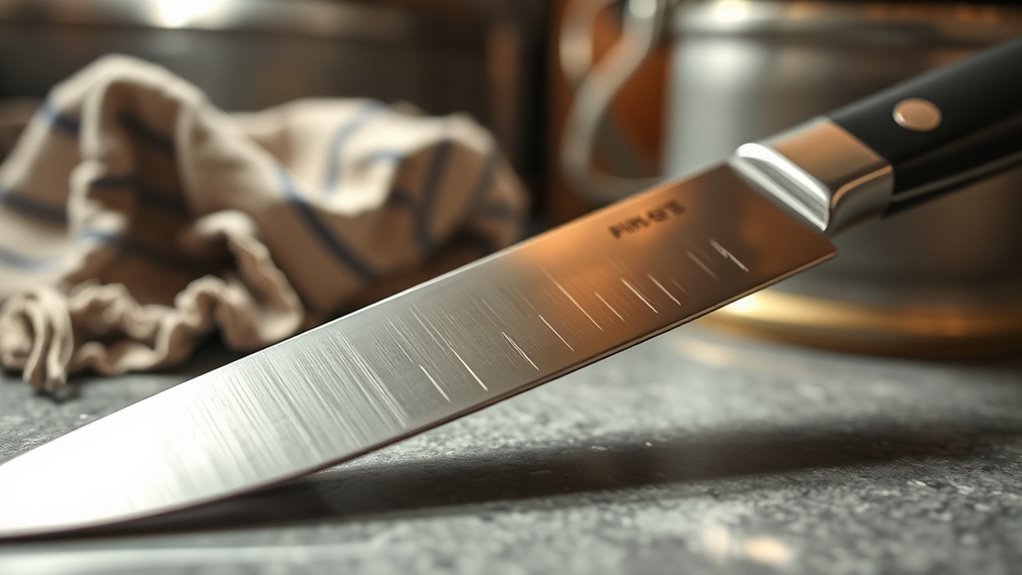
Storing your knife improperly can cause it to dull much faster than necessary. Poor knife storage or disorganized knife organization exposes blades to unnecessary impacts and friction, which dulls the edge quickly. Avoid tossing knives into drawers without protection—use knife blocks, magnetic strips, or blade guards instead. These options keep your knives separated and secure, preventing contact with other utensils that can chip or dull the blade. Improper storage also increases the risk of accidents, which can damage the edge. Proper knife organization not only prolongs the sharpness but also keeps your knives safer and more accessible. Additionally, understanding the importance of knife maintenance techniques can help maintain optimal blade longevity and prevent damage from improper handling. Using appropriate storage methods can significantly reduce the risk of accidental damage and preserve the integrity of your knife’s edge over time. Regularly inspecting and cleaning your knives can further prevent corrosion and ensure they stay in top condition. Make it a habit to store your knives correctly, ensuring they stay sharp longer and perform at their best every time you use them.
Choosing Low-Quality or Damaged Blades
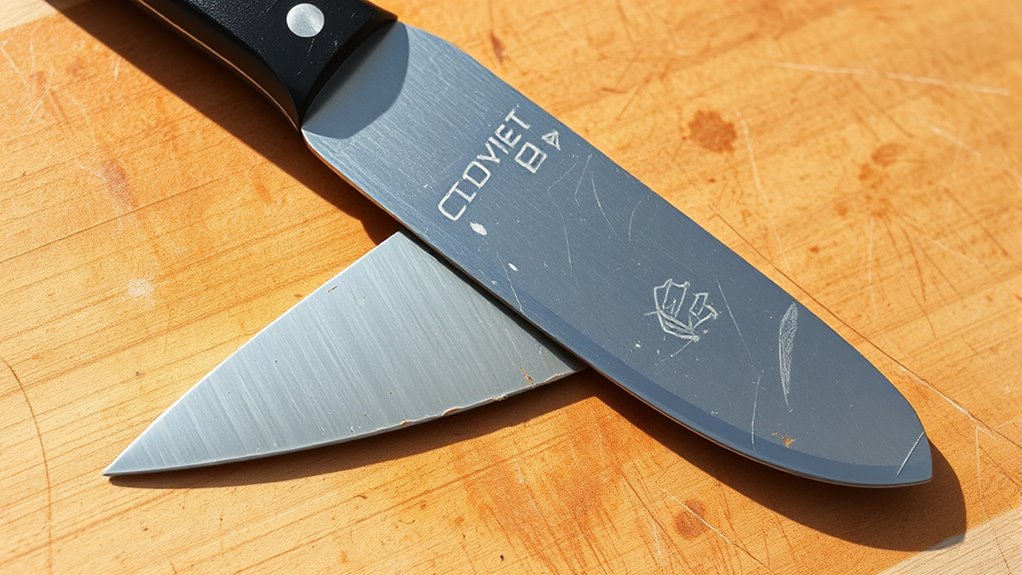
Choosing low-quality or damaged blades can considerably reduce your knife’s ability to stay sharp. The blade material plays an essential role; inexpensive metals often dull faster and are prone to chipping or rust. Poor manufacturing quality can result in uneven edges, weak points, or even microscopic cracks that weaken the blade over time. When you buy a knife with subpar materials or craftsmanship, you’re more likely to experience rapid dulling and diminished cutting performance. Damaged blades from mishandling or corrosion further compromise sharpness. Investing in high-quality blades made from durable, well-crafted materials ensures your knife maintains its edge longer and performs reliably. Skimping on blade quality might save money upfront, but it ultimately costs you more in frequent sharpening and replacements.
Overusing or Misusing Your Knife
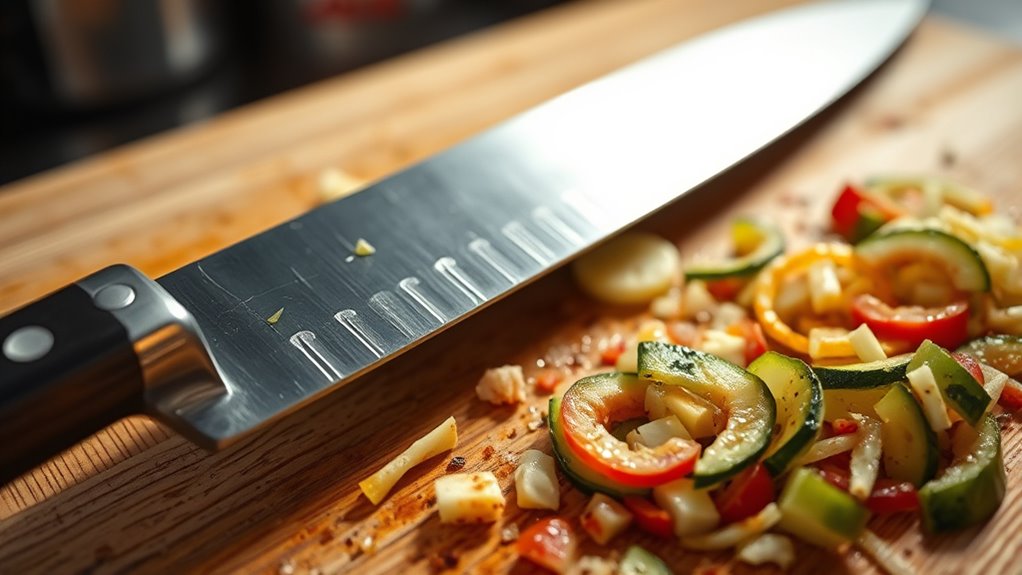
Using your knife beyond its intended purpose or applying excessive force can quickly dull the blade. When you push too hard or use it for tasks like prying or cutting hard materials, you strain the blade’s durability and increase wear. Poor user technique, such as chopping with a chopping board instead of slicing properly, also accelerates dulling. Rushing through tasks or not maintaining a proper grip can cause uneven pressure, damaging the edge over time. Sharp blades rely on correct handling; misuse wears down the edge faster, making it seem dull even if it’s still sharp in theory. To preserve blade durability, focus on controlled, deliberate cuts and use appropriate techniques. Your careful user technique ensures your knife stays sharp longer and performs reliably.
Frequently Asked Questions
How Often Should I Sharpen My Knife for Optimal Performance?
You should sharpen your knife every 1 to 3 months for ideal performance, depending on how often you use it. Regular knife maintenance helps keep the edge sharp and prevents dullness. If you notice it slipping or requiring more effort, increase your sharpening frequency. Using a honing steel between sharpenings can also maintain the edge longer. Adjust your knife maintenance routine based on your cutting habits to keep your blade in top shape.
Can Dishwasher Cleaning Damage My Knife’s Sharpness?
Like a delicate sculpture, your knife needs careful handling. Dishwasher cleaning can damage your knife’s sharpness if it’s not dishwasher safe, as high heat and harsh detergents cause corrosion and dulling. To protect your blades, follow proper dishwasher safety guidelines and incorporate knife maintenance tips, like hand washing and drying immediately. This prevents unnecessary dulling and keeps your knives sharp longer, ensuring they perform like new every time.
What’s the Best Way to Test if My Knife Is Still Sharp?
To test if your knife is still sharp, try slicing through a piece of paper; if it cuts cleanly without tearing, your edge maintenance is good. You can also gently check the blade’s edge with your fingernail—if it catches, it needs sharpening. Use proper sharpening techniques, like honing or stone sharpening, regularly to keep your knife sharp. Preserving the edge ensures better performance and longer-lasting sharpness.
Are Ceramic Knives More Resistant to Dulling Than Metal Ones?
Ceramic knives are generally more resistant to dulling than metal ones due to their exceptional ceramic durability. They maintain their sharpness longer because the ceramic edge retains its sharpness better than metal edge retention. However, while ceramic blades stay sharp for extended periods, they can be more brittle and prone to chipping or breaking if used on hard surfaces. So, if you want longevity, ceramic might be the better choice.
How Do I Prevent Rust and Corrosion on My Blades?
To prevent rust and corrosion on your blades, you should keep them dry and clean after each use. Use rust prevention techniques like wiping with a dry cloth and storing them in a dry place. Applying a thin layer of mineral oil can boost corrosion resistance. Avoid dishwasher cleaning, as water and harsh chemicals accelerate rust. Regular maintenance helps preserve your knife’s sharpness and overall condition.
Conclusion
To keep your knife sharp, you need to sharpen correctly, cut on proper surfaces, and store it safely. To maintain sharpness, you must choose quality blades, use them properly, and neglect none of the regular maintenance. To enjoy precision, prevent dullness, and extend your knife’s life, you must pay attention to technique, care, and storage. Stay mindful, stay sharp, and keep your knife performing at its best every time you use it.
Halloween Picks
halloween
As an affiliate, we earn on qualifying purchases.