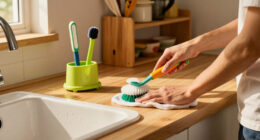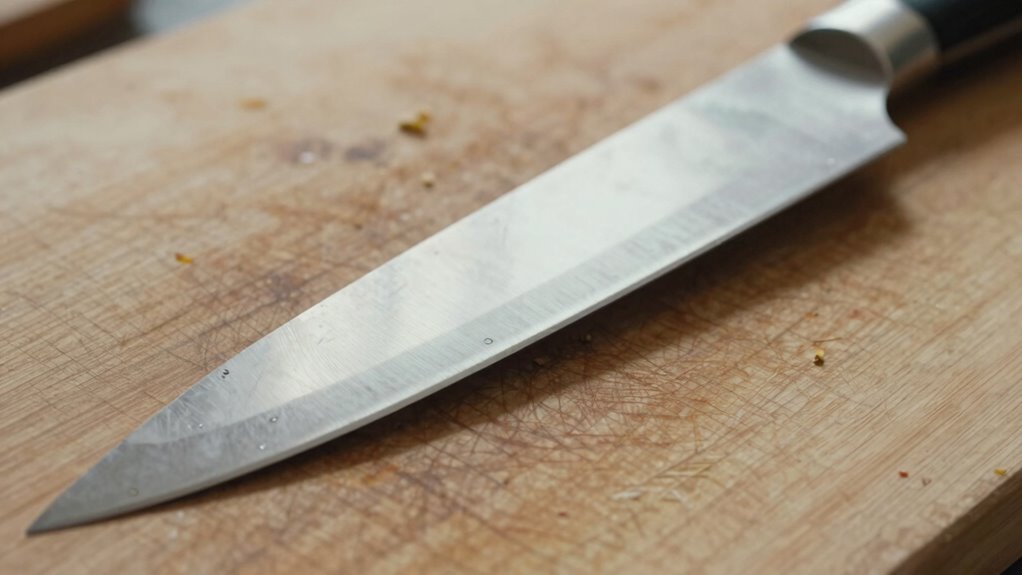

If your knife suddenly feels worse on the board, it’s likely dull or damaged. Over time, even high-quality blades lose their sharpness, making cutting more difficult and dangerous. Using improper technique or a rough surface can also speed up dulling. Regular maintenance like honing and sharpening can restore its edge. Keep your knife well cared for, and you’ll cut more easily. Stay with us to discover how to keep your blades in top shape.

Get kitchen gear delivered free with Prime
- Fast, free delivery on millions of items
- Prime Video, Amazon Music and more included
- Member-only deals all year
Key Takeaways
- A dull or damaged blade increases resistance, making cutting feel worse on the board.
- Improper or worn cutting surfaces can cause uneven cuts and reduce cutting efficiency.
- Using incorrect techniques or applying excessive force accelerates blade dullness.
- Lack of regular sharpening or maintenance results in a less effective, frustrating cutting experience.
- Cutting with a blade at the wrong angle or on unsuitable surfaces damages the edge over time.
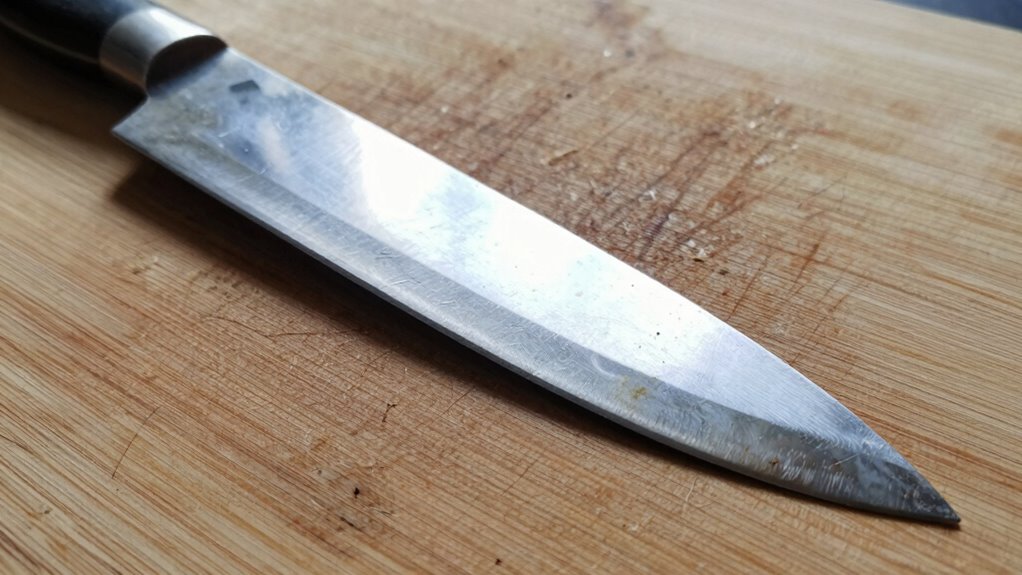
If your knife suddenly feels dull or uneven on the cutting board, it’s likely not just your technique—your knife’s edge might be dull or damaged. Over time, even the best blades lose their sharpness, and this dullness can make cutting feel more difficult and frustrating. Proper knife maintenance is essential to keep your blade in top shape. Regular honing realigns the edge, but it doesn’t sharpen it; for that, you need periodic sharpening with a stone or other tools. Neglecting this step leaves you with a dull blade that struggles to cut smoothly, making even simple tasks feel like battles. When your knife isn’t properly maintained, you may notice increased resistance, uneven cuts, or slipping, all of which diminish your confidence and effectiveness in the kitchen. Additionally, using the right cutting surface can help preserve your blade’s sharpness and overall condition. Your cutting technique also plays an integral role. Even a sharp knife can feel awkward if you’re not using the right approach. For example, pressing too hard, using a chopping motion instead of a slicing one, or not maintaining proper grip and angle can cause uneven wear on the blade or make it feel dull. If you’re pushing down too aggressively or trying to cut through tough ingredients without proper technique, you can damage the edge faster. Conversely, if your technique involves a gentle, controlled motion with a consistent angle, your knife will perform better and last longer. It’s important to learn and practice proper cutting techniques, like the “claw grip” to protect your fingers and maintaining a steady, smooth motion that minimizes undue stress on the blade. Paying attention to blade maintenance routines can significantly extend the lifespan of your knife and improve your overall cutting experience. Incorporating proper sharpening methods periodically can also ensure your blades stay in optimal condition and make your prep work more efficient. Also, understanding material composition can help you select the most suitable maintenance tools for your specific blades. Remember, understanding the materials of your knives can help you choose the best maintenance tools and techniques for your specific blades.
As an affiliate, we earn on qualifying purchases.
Frequently Asked Questions
Can Knife Dulling Happen Without Visible Damage?
Yes, knife dulling can happen without visible damage. Over time, blade corrosion can weaken the metal, making it less sharp, even if there’s no obvious rust or discoloration. Edge chipping might not always be noticeable but can still occur from contact with hard surfaces or improper use, leading to a duller blade. Regular honing and proper storage help prevent these issues, keeping your knife sharp and effective.
How Often Should I Sharpen My Knife?
You should sharpen your knife every few weeks if you use it regularly, or when you notice it’s less effective. Always store your knives properly, as poor knife storage can dull blades faster. Also, make certain your cutting surface is suitable; a hard surface like glass can dull your knife quickly. Regular sharpening maintains your knife’s edge, making chopping safer and easier, and prolongs its lifespan.
Does Cutting Technique Affect Knife Sharpness?
Yes, your cutting technique affects knife sharpness. Using the right cutting angle guarantees a cleaner cut, which helps maintain the blade’s edge longer. Applying excessive cutting pressure can dull your knife quickly, making it feel worse on the board. Instead, use a gentle, consistent pressure and focus on a proper cutting angle to preserve sharpness. This approach reduces wear and keeps your knife performing at its best.
Are Certain Knife Materials More Prone to Dulling?
Think of knife material as your culinary soulmate—some are more prone to dulling than others. High-carbon steels, while sharp, can be more susceptible to dulling due to their softer nature, whereas ceramic knives resist dulling longer but can chip easily. Your choice of knife material directly impacts dulling susceptibility, so pick wisely based on how often you cut and what you cut. Proper care extends your knife’s life and keeps it slicing smoothly.
What Are the Signs of a Poorly Maintained Knife?
You’ll notice a poorly maintained knife by its difficulty cutting, increased effort needed, and uneven edges. Dull blades can result from improper knife storage or using cutting surfaces that damage the edge, like hard or rough surfaces. Over time, these habits reduce your knife’s cutting surface durability, making it less effective. Regular honing, proper storage, and gentle cutting surfaces keep your knife sharp, safe, and efficient in the kitchen.
As an affiliate, we earn on qualifying purchases.
Conclusion
If your knife suddenly feels worse on the board, it’s likely due to dulling or improper technique. Regularly honing your blade can restore sharpness, making chopping safer and more efficient. Did you know that a dull knife can require up to 60% more force to cut, increasing the risk of slips and injuries? Keeping your knife sharp not only improves performance but also guarantees safer, more enjoyable cooking. So, don’t forget to maintain your tools—it makes all the difference!
As an affiliate, we earn on qualifying purchases.
As an affiliate, we earn on qualifying purchases.
Halloween Picks
halloween
As an affiliate, we earn on qualifying purchases.