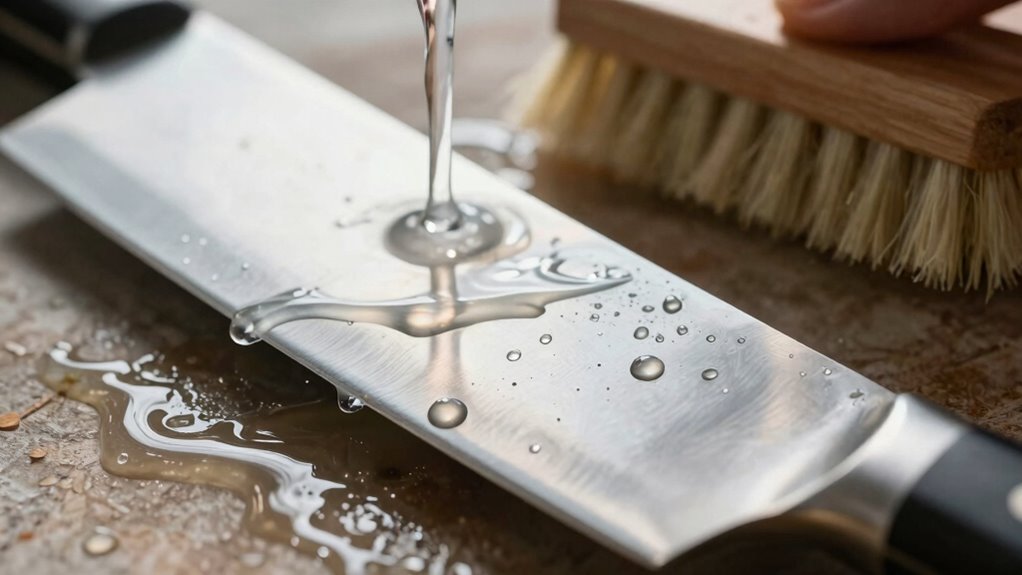
To clean sticky residue off your blades, start by rinsing them under warm water to loosen the buildup. Use a soft sponge or brush with mild dish soap, and for stubborn spots, make a paste with baking soda and water to scrub gently. Soaking the blades in vinegar and water for 10-15 minutes helps break down residue further. Dry thoroughly to prevent rust. If you want more tips on maintaining your blades, keep exploring these techniques.
Key Takeaways
- Rinse blades with warm water to loosen the sticky residue before cleaning.
- Use a soft sponge or non-abrasive brush with mild dish soap for gentle scrubbing.
- Apply a baking soda paste to stubborn spots, let sit, then scrub and rinse thoroughly.
- Soak blades in vinegar and water for 10-15 minutes to break down residue, then scrub gently.
- Dry blades completely with a clean towel to prevent rust and maintain cleanliness.
Have you ever noticed sticky residue on your blades that just won’t go away? It’s a common issue after preparing certain foods, especially sticky or oily ingredients. When this happens, it’s essential to focus on proper blade maintenance to keep your knives and other blades clean and safe. Not only does this preserve the sharpness and effectiveness of your tools, but it also plays a crucial role in kitchen safety. Dirty blades can harbor bacteria and cause accidents if residues cause slipping or improper handling.
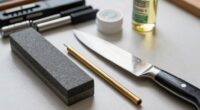
First, gather your cleaning supplies. Warm water, mild dish soap, a soft sponge or brush, and a towel are usually enough. For stubborn residues, you might need a bit of baking soda or vinegar. Before you start cleaning, put on your protective gloves to prevent any cuts or irritation from the residues or cleaning agents. Always remember that a clean workspace reduces the risk of cross-contamination and potential injuries.
Gather basic supplies and wear gloves to safely clean and maintain your blades effectively.
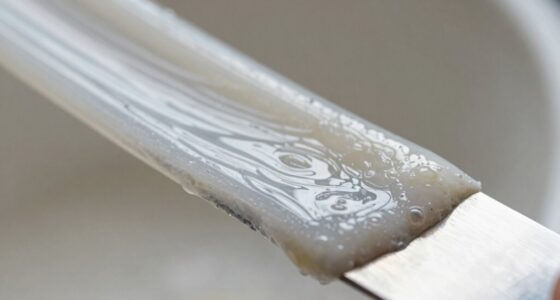
Begin by rinsing the blades under warm running water to loosen the sticky residue. Use a soft sponge or a non-abrasive brush to gently scrub the surface, focusing on areas where the residue is most stubborn. If the sticky film persists, create a paste with baking soda and a small amount of water. Apply this paste to the blades and let it sit for a few minutes. The mild abrasive action helps lift the residue without scratching the metal. After that, scrub gently again, then rinse thoroughly. Proper blade maintenance is essential for ensuring your knives stay sharp and hygienic, which directly impacts kitchen safety. Dull or dirty blades can slip during use, leading to potential injuries, so regular cleaning is vital.
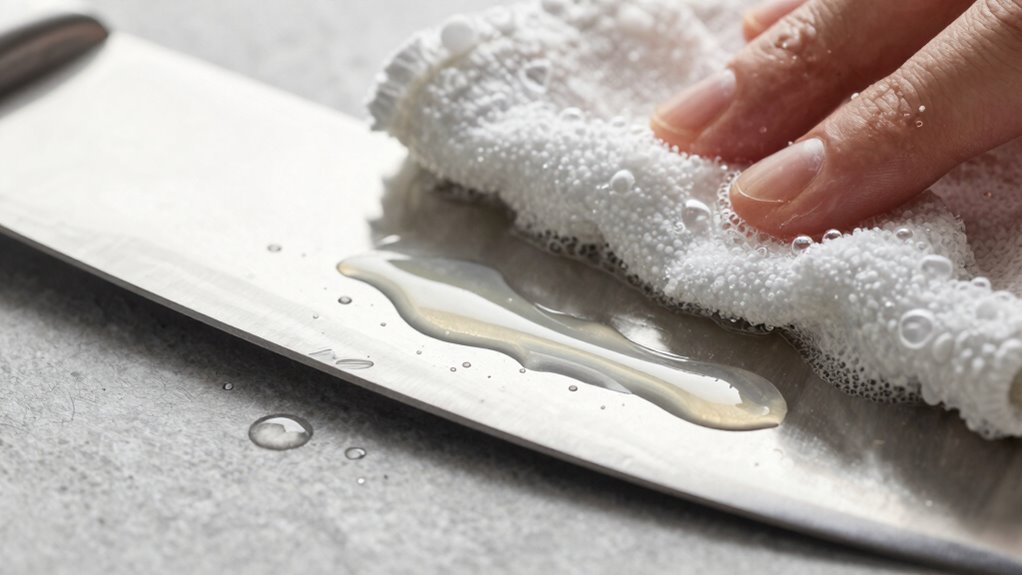
For a natural cleaning boost, you can also soak the blades in a mixture of vinegar and water for about 10-15 minutes. Vinegar’s acidity breaks down grease and sticky buildup effectively. After soaking, scrub lightly to remove any remaining residue, then rinse and dry completely with a clean towel. Proper blade maintenance is essential for ensuring your knives stay sharp and hygienic, which directly impacts kitchen safety. Dull or dirty blades can slip during use, leading to potential injuries, so regular cleaning is vital. Additionally, maintaining the blades in a clean and dry condition helps prevent corrosion and prolongs their lifespan. Keeping blades dry and free from moisture is a fundamental part of preventing rust, which can compromise both safety and the effectiveness of your knives. Proper storage techniques are also crucial, as they help protect blades from moisture and accidental damage. Finally, dry your blades thoroughly before storing them. Moisture can cause rust or corrosion over time, compromising both safety and blade longevity. Store your blades in a safe, dry place, preferably in a knife block or on a magnetic strip, to prevent accidents. Keeping your blades clean and well-maintained isn’t just about prolonging their life — it’s about ensuring your safety and the safety of everyone in your kitchen. Regularly inspecting and cleaning your blades after prep helps prevent sticky residues from building up and keeps your cooking environment hygienic and secure.

Non-Slip Blade Brush, Knife Cleaner, ABS Cutlery Cleaner, Green Double Sided Bristle Scrubber for Kitchen Chopsticks Fork Spoon Knives Washing by Doxishruky (Green, 1pc)
Made of good plastic ABS, which is hard enough to be used for a long time.
As an affiliate, we earn on qualifying purchases.
As an affiliate, we earn on qualifying purchases.
Frequently Asked Questions
Can I Use Vinegar to Remove Sticky Residue From Blades?
Yes, you can use vinegar to remove sticky residue from blades. Vinegar acts as a natural cleaner and helps break down the residue effectively. For better results, consider alternative solvents like rubbing alcohol or acetone if vinegar doesn’t work. After cleaning, make sure you dry and store the blades properly to prevent future residue buildup, which aids in residue prevention and keeps your blades in prime condition.
How Often Should I Clean My Blades After Prep?
You should clean your blades after each prep to maintain proper blade maintenance and prevent residue buildup. Regular cleaning helps guarantee the blades stay sharp and sanitary, reducing the risk of cross-contamination. After use, wipe down the blades with warm, soapy water or a suitable disinfectant. This routine keeps residue prevention effective and extends the lifespan of your blades, making your prep process safer and more efficient.
Are There Any Safety Precautions When Cleaning Blades?
When cleaning blades, always prioritize safety by wearing cut-resistant gloves to prevent injuries. Be mindful of the blade material—stainless steel blades are sturdy, but ceramic blades are more brittle. Use appropriate cleaning tools, like a soft brush or cloth, and avoid harsh chemicals that could damage the blade or compromise your safety. Handling blades carefully and following cleaning safety guidelines helps prevent accidents and keeps your blades in top condition.
What Household Items Work Best for Removing Residue?
Removing sticky residue from blades is like peeling away stubborn glue; baking soda and vinegar are your best household allies. Mix a paste of baking soda with water or soak the blade in vinegar for a few minutes. These simple cooking tips guarantee effective blade maintenance. Use a soft brush or cloth to scrub away residue gently, and rinse thoroughly. This keeps your blades sharp, clean, and ready for your next culinary adventure.
Can I Sharpen Blades After Cleaning Sticky Residue?
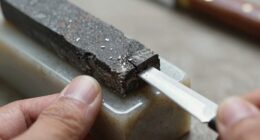
Yes, you can sharpen blades after cleaning sticky residue, but make certain you thoroughly remove all residue first to prevent dulling the sharpening tools. Proper blade maintenance involves residue removal, which keeps blades sharp and effective. Use a gentle abrasive or sharpening stone, and avoid harsh chemicals that could damage the blade. Clean the blades well after residue removal before sharpening, and always handle with care for safety and ideal results.

MRS. MEYER'S CLEAN DAY Baking Soda Cream Cleaner, Cuts Grease, Scratch-Free Polish, Lemon Verbena, 16 Fl Oz, Pack of 1
Mrs. Meyer’s Baking Soda Cream Cleaner removes soap scum and grease build-up to make your kitchen sparkle
As an affiliate, we earn on qualifying purchases.
As an affiliate, we earn on qualifying purchases.
Conclusion
Now that you know how to remove sticky residue from blades, you’re all set for a cleaner, safer prep process. Regular cleaning can cut down your prep time by up to 30%, so you can spend less time scrubbing and more time creating. Keep your blades in top shape, and you’ll notice a smoother, more efficient kitchen experience. Remember, a little maintenance goes a long way—making your culinary adventures both easier and more enjoyable.

SYOKAMI 2026 Upgrade Knife Set 14 Japanese Style Kitchen Knife Set with Torii-Style Magnetic Block, Razor-Sharp High Carbon Stainless Steel Knives Set for Kitchen with Anti-Slip Handle, Ideal for Gift
Powerful Magnetic Knife Block: Built with a strong magnetic force, this knife block keeps knives securely in place…
As an affiliate, we earn on qualifying purchases.
As an affiliate, we earn on qualifying purchases.

Waisul Bamboo Dish Brush Set, 4 Pack, Plastic-Free (2 Medium Sisal, 2 Firm Coconut Coir), Dish Scrubber & Vegetable Brush for Cast Iron, Nonstick
Plastic-Free, Plant-Based Materials:Bamboo handle + natural sisal & coconut coir bristles; a low-waste alternative to plastic dish scrubbers.
As an affiliate, we earn on qualifying purchases.
As an affiliate, we earn on qualifying purchases.