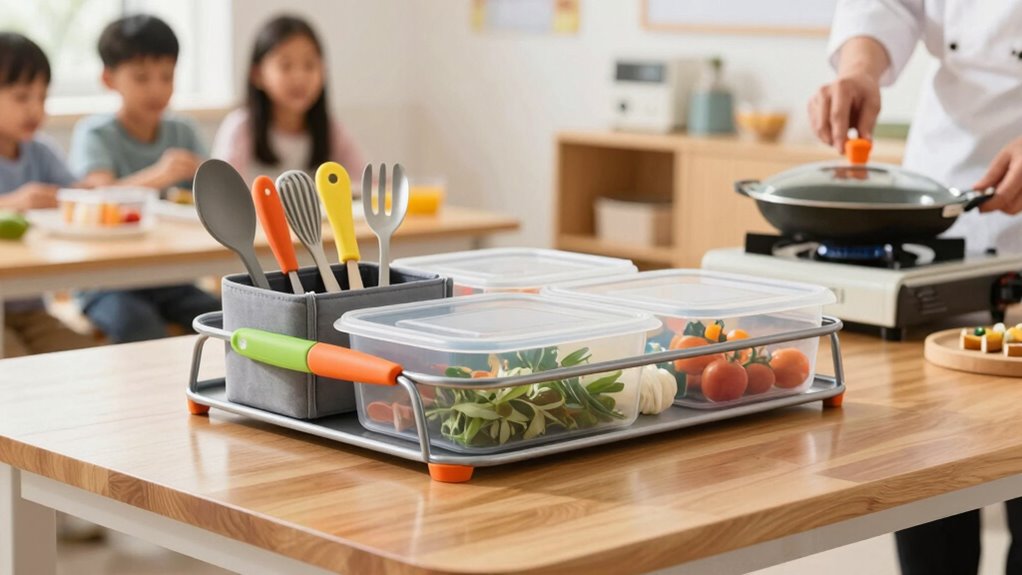

To build a safer mobile kit for classes and catering, gather essential first aid items like bandages, antiseptic wipes, gloves, and pain relievers, and keep fire safety tools such as a fire extinguisher and blanket accessible. Organize everything clearly in labeled containers and regularly check for expiration or damage. Tailor your supplies to your environment, including child-specific items if needed, and develop safety procedures and drills. Continue exploring to discover how to keep your kit optimized and ready for any situation.

Get kitchen gear delivered free with Prime
- Fast, free delivery on millions of items
- Prime Video, Amazon Music and more included
- Member-only deals all year
Key Takeaways
- Customize the kit with age-appropriate first aid supplies, including child-specific items if needed.
- Ensure fire safety tools are suitable for the environment, such as small extinguishers and fire blankets.
- Use clear, labeled containers for easy access and organized storage of all safety supplies.
- Regularly inspect, replace expired items, and conduct safety drills to maintain readiness.
- Include hygiene and food safety supplies to prevent contamination during food handling and health emergencies.
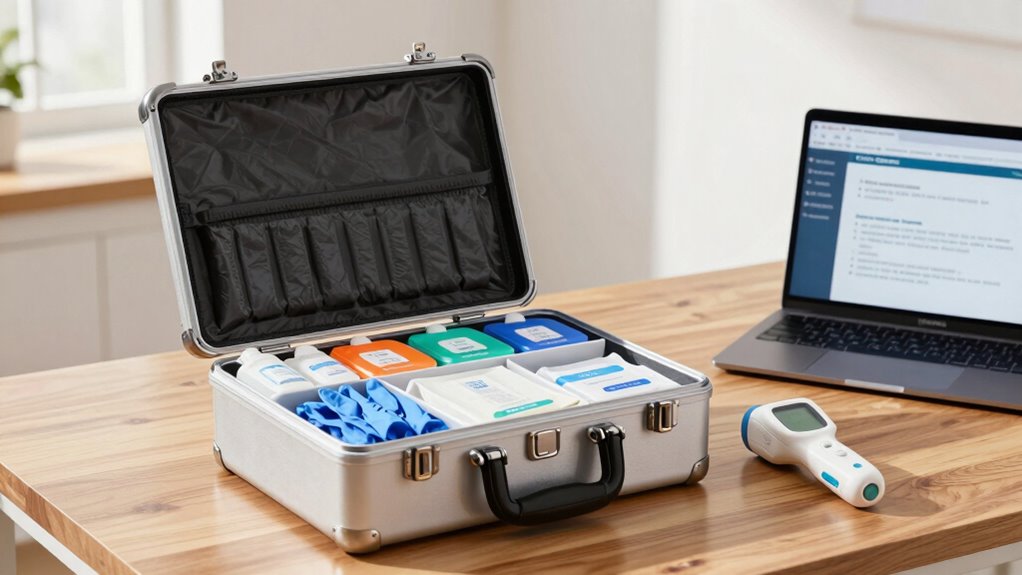
Creating a safe and efficient mobile kit for classes and catering is crucial for smooth operations and the well-being of everyone involved. When you’re on the move, having the right supplies readily available can make all the difference during emergencies. Start by including first aid essentials like bandages, antiseptic wipes, adhesive tape, gloves, and pain relievers. These items address minor injuries quickly and prevent infections from worsening. Consider adding a CPR mask and an emergency blanket for more serious situations, making sure you’re prepared to assist until professional help arrives.
Next, focus on fire safety tools. Your mobile kit should have a compact fire extinguisher suitable for small fires, along with a fire blanket that can smother flames on a person or in the kitchen. A smoke detector or portable alarm might not be feasible in all mobile setups, but having a designated fire safety plan and easy access to fire safety tools is crucial. Place these items in clearly labeled, easily accessible compartments to guarantee swift response during a fire emergency. Remember, fire safety tools are essential in both classroom and catering environments where open flames, heating devices, or electrical equipment are in use. Additionally, regularly practicing fire drills can help ensure everyone knows how to respond quickly and safely.
Beyond safety tools, include general supplies such as cleaning wipes, hand sanitizer, and disposable gloves to maintain hygiene, especially in food handling or health-related situations. Having a set of disposable masks can also help prevent the spread of germs. For catering-specific needs, pack food-grade thermometers, spill kits, and disposable serving utensils to uphold safety standards and cleanliness. Regularly inspecting your kit for safety compliance ensures all items are up to date and ready for use when needed. Incorporating safety protocols into your routine helps reinforce proper procedures and preparedness. Staying informed about latest safety devices and innovations can also help you select the most reliable safety tools for your kit.
Organization plays a key role in keeping your mobile kit effective. Use clear, labeled containers or compartments to separate first aid essentials, fire safety tools, and other supplies. Regularly check expiration dates on medications and replace used or outdated items to maintain everything in working order. Training your team on the location and proper use of these tools is equally important—knowing how to respond calmly and efficiently during an emergency minimizes panic and delays. Additionally, integrating gadget reviews and tech tips can help you select the most reliable safety devices to include in your kit.
Finally, tailor your kit to the specific needs of your environment. For example, if you’re working with children, include child-specific first aid supplies. If your setup involves cooking or heat sources, double-check that your fire safety tools are suitable for those hazards. Building a thorough and organized mobile kit isn’t just about compliance; it’s about empowering yourself and your team to handle emergencies confidently, keeping everyone safe and secure during every class or catering event.
As an affiliate, we earn on qualifying purchases.
Frequently Asked Questions
What Are the Best Materials for Mobile Kit Durability?
For durability, choose tough materials like high-density polyethylene or ballistic nylon, which withstand wear and tear. Conduct durability testing on these options to guarantee they hold up under frequent use. During material selection, prioritize lightweight yet sturdy materials that resist tearing, punctures, and moisture. This way, your mobile kit remains reliable, protecting contents during transportation and handling, and ultimately extends its lifespan for consistent performance.
How Often Should the Kit Be Inspected and Maintained?
Think of your mobile kit as a garden that needs regular tending. You should inspect and maintain it at least once a month to guarantee emergency preparedness. Regular checks help identify worn-out supplies and allow kit customization for changing needs. Staying diligent keeps your kit reliable, so it’s ready when you need it most, preventing small issues from growing into bigger problems during critical moments.
Are There Legal Regulations for Mobile Safety Kits?
Yes, there are legal regulations for mobile safety kits you need to follow. You must guarantee legal compliance with local, state, and federal safety standards, which vary depending on your location and industry. Failing to meet these regulations can increase liability concerns, risking fines or legal action. Regularly review and update your kit to stay compliant, and keep documentation to prove your commitment to safety standards.
How to Train Staff on Using the Mobile Safety Kit?
You should conduct thorough staff training on using the mobile safety kit to guarantee emergency preparedness. Start by demonstrating each item’s purpose and proper usage, then have staff practice scenarios. Regularly refresh their knowledge and update training as needed. Emphasize the importance of quick, calm responses during emergencies, and encourage questions. Effective staff training ensures everyone knows how to access and utilize the kit swiftly, enhancing overall safety.
What Are Cost-Effective Options for Expanding the Kit?
Did you know that over 60% of organizations boost safety with affordable upgrades? To expand your mobile kit cost-effectively, consider budget-friendly supplies like versatile bandages, antiseptic wipes, and compact first aid tools. You can also repurpose everyday items, such as using a sturdy tote as an emergency storage container. These affordable upgrades guarantee you’re prepared without overspending, making safety accessible and sustainable for your classes and catering needs.
compact fire extinguisher for classes
As an affiliate, we earn on qualifying purchases.
As an affiliate, we earn on qualifying purchases.
Conclusion
By assembling a safer mobile kit, you’re not just preparing for emergencies—you’re creating a shield that stands strong against chaos. Think of it as your own safety net, ready to catch you when things fall apart. With a few thoughtful choices and ongoing updates, you’ll turn your kit into a trusted companion, ensuring everyone’s safety flows as smoothly as a well-rehearsed melody. Stay prepared, stay confident, and let safety be your guiding star.
As an affiliate, we earn on qualifying purchases.
food safety thermometers for catering
As an affiliate, we earn on qualifying purchases.
As an affiliate, we earn on qualifying purchases.
Columbus Day / Indigenous Peoples' Day Picks
long weekend sales
As an affiliate, we earn on qualifying purchases.