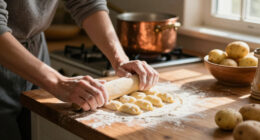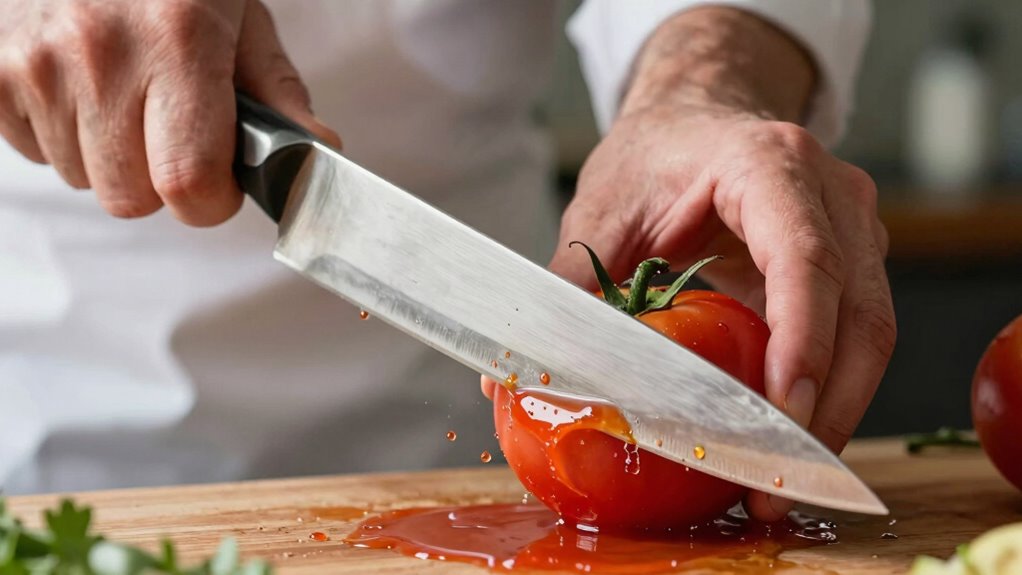
If your knife slips mid-cut, immediately stop and carefully set the knife down on a stable surface. Assess the situation without forcing the blade back into the cut, and focus on controlling both the knife and your hand. Use a secure grip and keep your fingers curled inward to prevent slips. Regularly sharpening your knives and maintaining focus helps prevent future accidents. For additional safety tips, you’ll find helpful advice if you keep exploring further.
Get ready for Prime Big Deal Days — try Prime free
Exclusive member deals on October 6–7, plus fast free delivery. Cancel anytime.
As an affiliate, we earn on qualifying purchases.
Key Takeaways
- Immediately stop cutting and set the knife down safely on a stable surface.
- Assess the situation and avoid forcing the blade back into the cut.
- Focus on controlling the knife and hand to prevent further injury.
- Inspect for injuries, wash wounds, and apply pressure to stop bleeding.
- Practice proper technique and maintain focus to prevent future slips.
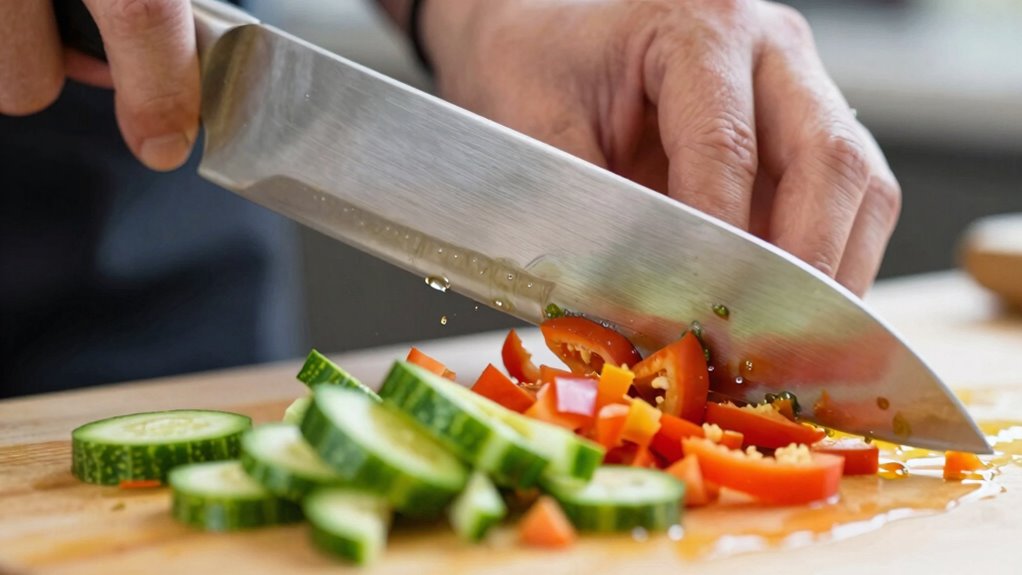
Have you ever had a knife slip while you’re cutting? It’s a sudden, jarring experience that can leave you startled and unsure of what to do next. The key to handling this situation safely is to stay calm and remember some basic knife safety principles. Your first priority should be to prevent further injury, so don’t panic. If the knife slips, immediately stop cutting and take a moment to assess the situation. Don’t try to force the blade back into the cut or continue chopping recklessly, as that could cause more accidents. Instead, focus on controlling the knife and your hand to avoid a deeper cut.
Stay calm and control your knife to prevent injury if it slips.
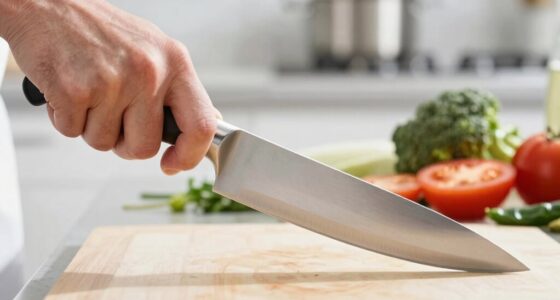
One of the most important factors in preventing injury when a knife slips is maintaining a proper grip. A secure, controlled grip on your knife helps you wield it with precision and reduces the likelihood of accidental slips. Your grip should be firm but not overly tight, allowing for good control without causing hand fatigue. Keep your fingers curled inward on the hand holding the food, away from the blade’s path, to create a natural barrier against slips. When you have a proper grip, you can better respond to unexpected movements and regain control quickly. Proper knife safety also involves positioning your hand correctly and paying close attention to your cutting technique. Additionally, understanding the importance of cutting technique can help prevent slips and improve overall safety.
If the knife slips, immediately release the pressure and lift the blade away from your hand and the food. Do not try to catch the blade or force it back onto the food mid-slice. Instead, set the knife down carefully on a stable surface. If you’re using a cutting board, make sure it’s secure and not slipping around—using a damp towel underneath can help stabilize it. Once the knife is safely set aside, inspect any injuries. If you’ve cut yourself, wash the wound thoroughly with clean water, apply pressure to stop bleeding, and cover it with a sterile bandage. Seek medical attention if the cut is deep or bleeding doesn’t stop. Additionally, regularly sharpen your knives to ensure they cut smoothly and reduce the risk of slips. Sharpening knives not only makes cutting easier but also enhances safety by preventing slips caused by dull blades. Preventing future slips starts with sharpening your knives regularly. Dull blades are more likely to slip because they don’t cut smoothly, increasing the risk of accidents. Also, always cut on a stable, non-slip surface, and avoid rushing through your prep work. By practicing proper knife safety and maintaining a proper grip, you’ll reduce the chances of a slip happening in the first place. Remember, staying attentive, controlling your movements, and handling your knives responsibly are the best ways to keep yourself safe in the kitchen.
As an affiliate, we earn on qualifying purchases.
Frequently Asked Questions
How Can I Prevent a Knife From Slipping During Cutting?
To prevent a knife from slipping during cutting, make sure you have a secure knife grip, holding the handle firmly without tension. Use a stable cutting surface, like a cutting board with a non-slip base, to keep the item steady. Keep your fingers curled inward and away from the blade, applying even pressure. Maintaining focus and practicing proper technique helps you stay safe and prevents slips during every cut.
What Type of Knife Is Safest for Beginners?
Did you know that 85% of kitchen injuries involve improper knife handling? For beginners, a santoku knife is safest because of its rounded tip and lightweight design. When using it, maintain a secure knife grip and cut on a stable, non-slip surface. This combination helps prevent slips and accidents, making your cooking safer and more enjoyable. Always focus on your grip and cutting surface to build confidence and skill.
Should I Use a Cutting Glove for Safety?
Yes, using a cutting glove enhances your safety by providing protective gear that minimizes the risk of hand injuries. It’s especially helpful if you’re new to knife handling or working with sharp blades. Wearing gloves improves hand safety, giving you more confidence and control during your cutting tasks. Always choose a glove made specifically for kitchen use, and remember to keep your focus sharp to prevent accidents.
How Often Should I Sharpen My Kitchen Knives?
Think of your knives as trusted companions on your culinary journey. You should sharpen them every 1 to 3 months, depending on how often you cook and the knife’s usage. Regular knife maintenance keeps your blades sharp and safe, preventing slips and accidents. Following a consistent sharpening schedule guarantees your knives perform their best, making prep work smoother and more enjoyable. Keep up with this routine to maintain your kitchen’s harmony.
What Are the Best Techniques for Controlling a Slipping Knife?
To control a slipping knife, maintain a firm grip, preferably using a pinch grip on the blade’s bolster for better control. Keep your fingers curled inward on the cutting surface to avoid injury, and press down with steady, controlled pressure. Make sure your cutting surface is stable and non-slip. Focus on smooth, deliberate motions, and if the knife slips, release pressure immediately to prevent accidents.
As an affiliate, we earn on qualifying purchases.
Conclusion
If your knife slips, stay calm and focus on controlling the situation, like steering a ship through choppy waters. Remember, accidents happen, but they don’t have to define your cooking experience. Keep your fingers tucked, use a firm grip, and pay close attention as you work. With patience and caution, you’ll navigate through mishaps smoothly, turning a slip-up into a lesson learned. After all, even the best chefs hit a few rough waves along the way.
As an affiliate, we earn on qualifying purchases.
As an affiliate, we earn on qualifying purchases.
Fall yard work Picks
leaf blowers
As an affiliate, we earn on qualifying purchases.