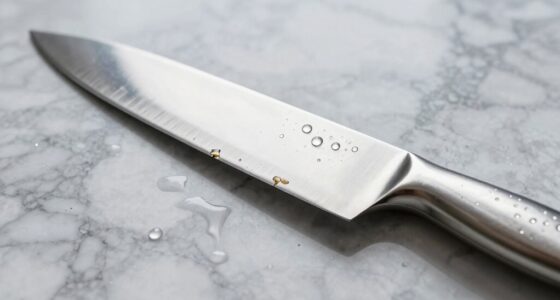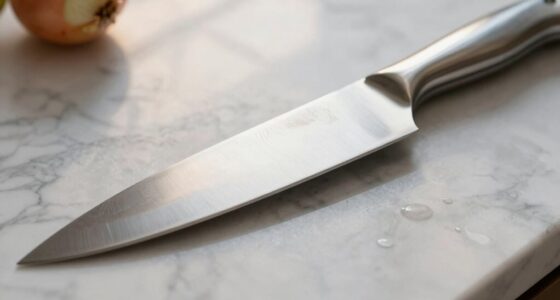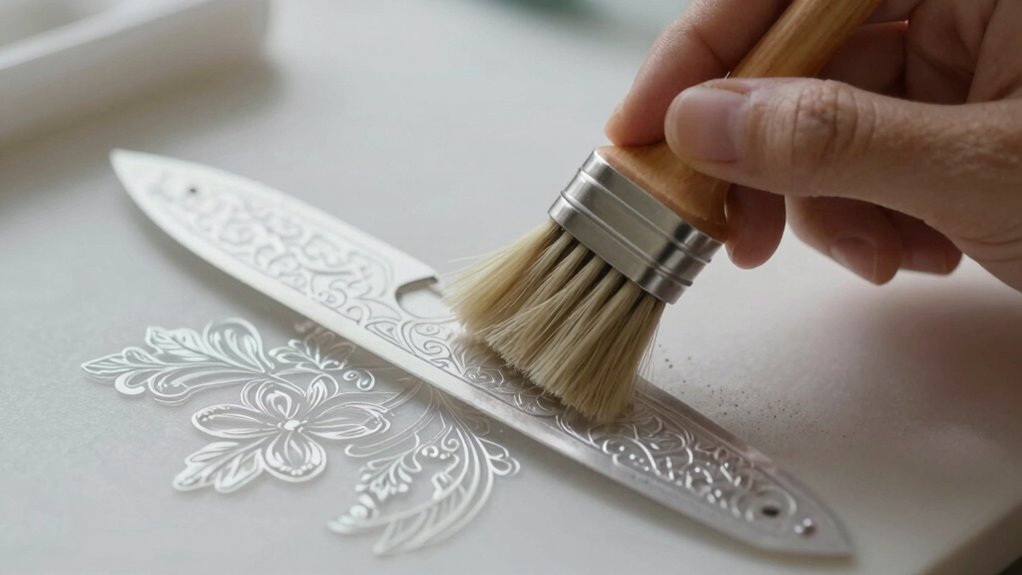
To safeguard etched or patterned blades while cleaning, use soft brushes like fine-bristled toothbrushes and mild cleaning solutions suitable for your blade’s material. Work gently, avoiding excessive pressure or harsh chemicals, especially in detailed areas. Rinse thoroughly and dry immediately to prevent moisture buildup. Applying a light coat of oil adds extra protection. By following these careful techniques, you guarantee your blade’s delicate designs stay intact—more tips to maintain your blade’s beauty await you.
Key Takeaways
- Use soft brushes and gentle, circular motions to clean etched areas without damaging delicate patterns.
- Avoid harsh chemicals and abrasive materials that could scratch or tarnish the intricate designs.
- Focus on thoroughly drying etched grooves to prevent moisture buildup and corrosion.
- Apply a light coat of suitable oil after cleaning to protect against moisture and environmental damage.
- Store the blade in a dry, ventilated space to minimize exposure to humidity and prevent rust formation.
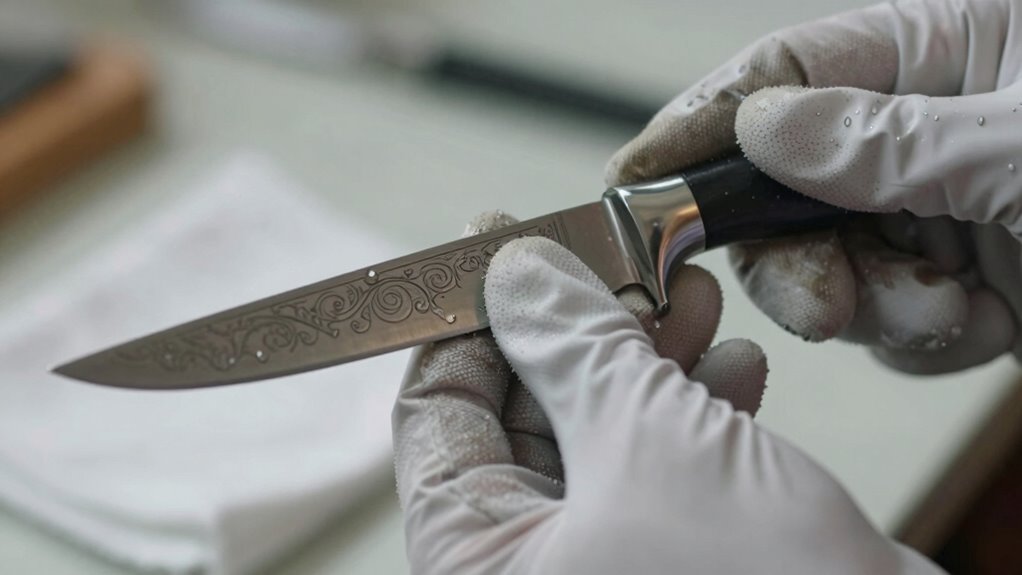
Cleaning etched or patterned blades requires careful attention because their intricate designs can trap dirt and debris, making them more vulnerable to damage. When it comes to blade maintenance, your goal is to preserve the delicate patterns while assuring the blade stays clean and functional. Using improper cleaning techniques can cause scratches, wear down the etched details, or even compromise the blade’s structural integrity. To avoid these issues, you need to adopt gentle yet effective cleaning methods tailored to the specific design of your blade.
Start by choosing the right tools. Soft-bristled brushes, like a toothbrush with fine bristles, are ideal for cleaning etched or patterned blades. They can reach into the grooves and crevices without causing abrasion. Avoid metal brushes or abrasive pads, which can scratch or damage the intricate surface. For cleaning solutions, opt for mild soaps or specialized blade cleaners that won’t corrode or tarnish the metal. Never use harsh chemicals or ammonia-based cleaners, as they can weaken the blade’s surface or cause discoloration. Dipping or applying cleaning solutions with a soft cloth or brush allows for better control and minimizes the risk of applying too much pressure. Being mindful of blade material, you can select cleaning methods that are safe and effective for your specific blade type. Additionally, choosing the right cleaning techniques can prevent corrosion, ensuring the longevity of your blade. Applying a light coat of oil after cleaning can also help to protect the blade’s surface from moisture and environmental damage.
Use soft brushes and mild cleaners to gently preserve delicate etched blade details.
When cleaning, work slowly and methodically. Gently scrub the blade along its surface, focusing on the etched areas to dislodge dirt trapped within the grooves. Use light, circular motions, and avoid pressing hard against the surface. After cleaning, rinse the blade with clean, warm water to remove any residual soap or debris. Pat the blade dry immediately with a soft, lint-free cloth to prevent water spots or rust. Pay special attention to drying the etched or patterned areas, as moisture can accumulate and cause corrosion over time. Additionally, understanding the material composition of your blade can help determine the safest cleaning methods and prevent potential damage. Proper storage in a dry, ventilated area, such as in a sheath or protective cover, further protects the blade from environmental elements that can harm its finish. Regular maintenance, including inspecting the blade for signs of rust or wear, will extend its lifespan and keep it in optimal condition.
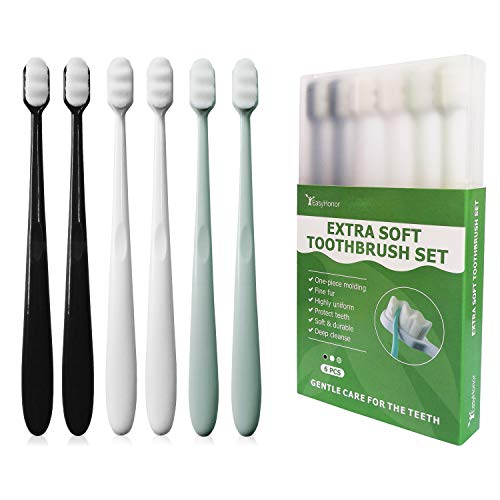
EasyHonor Extra Toothbrush for Sensitive Gums, Micro Fur Manual Toothbrush with 20000 Soft Floss Bristle for Pregnant Women, Elderly, Braces and Gum Recessions, Protect Fragile Gums (6 Pack)
【ULTRA SOFT】Using Japanese soft toothbrush technology, more than 20,000 micro fine bristles are much thinner than other soft…
As an affiliate, we earn on qualifying purchases.
As an affiliate, we earn on qualifying purchases.
Frequently Asked Questions
Can I Use Commercial Cleaners on Etched Blades?
You shouldn’t use commercial cleaners on etched blades because they can cause unwanted chemical reactions that damage the delicate patterns. Many commercial cleaners contain harsh chemicals that may erode or dull the etched surface. Follow proper cleaning protocols by choosing gentle, non-abrasive solutions specifically designed for etched or patterned blades. Always test a small area first to avoid damage, and never use aggressive scrubbing, which can harm the intricate designs.
How Often Should I Clean Patterned Blades?
You should clean patterned blades regularly, ideally after each use, to maintain ideal blade maintenance and prevent buildup. The cleaning frequency depends on the material and usage, but generally, cleaning after every few uses is recommended. This helps preserve the intricate patterns and prevents corrosion. Be gentle during cleaning to avoid damaging the etched or patterned surface, and always ensure blades are thoroughly dried afterward to prolong their lifespan.
Are There Specific Tools for Cleaning Delicate Blades?
Yes, there are tools designed specifically for cleaning delicate blades. You’ll want to use gentle brushing tools that seem almost too soft to work—like tiny, fine brushes—and soft cloths that caress the surface without scratching. These tools help you avoid damage while removing debris. With delicate care, you protect the intricate etching and patterns, keeping your blades pristine and beautiful, as if they’re brand new every time.
What Signs Indicate Damage to Etched Patterns?
You’ll notice damage indicators like dull or chipped etched patterns, scratches, or areas where the design appears faded or uneven. These signs threaten pattern preservation, signaling that the blade has sustained wear or accidental harm. To keep the pattern intact, regularly inspect your blade for such damage indicators, and handle it gently during cleaning. Addressing issues early helps maintain the intricate design and prolongs your blade’s lifespan.
Can Protective Coatings Be Applied to Etched Blades?
Yes, protective coatings can be applied to etched blades to enhance etched blade preservation. These coatings create a barrier that shields delicate patterns from corrosion, dirt, and wear during cleaning. Make sure to choose a coating compatible with the blade material and follow application instructions carefully. Properly applied protective coatings help maintain the integrity and appearance of etched or patterned blades, extending their lifespan and preserving intricate designs.

MIGOGIB Shaver & Razor Blade Cleaner Concentrate – Mix with 70% IPA – Deep Cleans, Cleaning Solution Green Citrus, Compatible with Philips (5 fl. oz.)
Made for All Shavers and Razors: This powerful blade cleaner concentrate is designed to help remove stubborn hair,…
As an affiliate, we earn on qualifying purchases.
As an affiliate, we earn on qualifying purchases.
Conclusion
Think of your etched or patterned blades as delicate works of art, like intricate stained glass windows. Just as you’d gently clean and avoid harsh scrapers to preserve their beauty, treat your blades with care and patience. Use soft tools and gentle strokes, shielding the patterns from damage. By doing so, you guarantee your blades stay vibrant and sharp, much like a stained glass window that gleams brightly through careful preservation. Your craftsmanship deserves that same gentle touch.

Wahl Premium Hair Clipper Blade Lubricating Oil for Clippers, Trimmers, & Blade Corrosion for Rust Prevention – 4 Fluid Ounces – Model 3310-300A
Rust Prevention – Prevents rust from forming & helps extend the life of the clipper & blades; can…
As an affiliate, we earn on qualifying purchases.
As an affiliate, we earn on qualifying purchases.
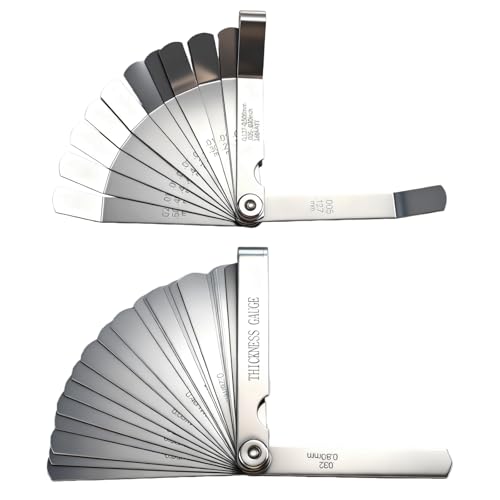
2PCS Feeler Gauges Set, Stainless Steel Feeler Gauges, 32 Straight & 16 Angled Blades, Laser-Etched SAE/Metric Dual Scale, Universal Spark Plug Gap Tool for Valves, Automotive, Piston, Guitar
Precision Measurement: The straight feeler gauge measures 0.04–0.88 mm / 0.0015–0.035 inch, and the offset gauge covers 0.127–0.508…
As an affiliate, we earn on qualifying purchases.
As an affiliate, we earn on qualifying purchases.