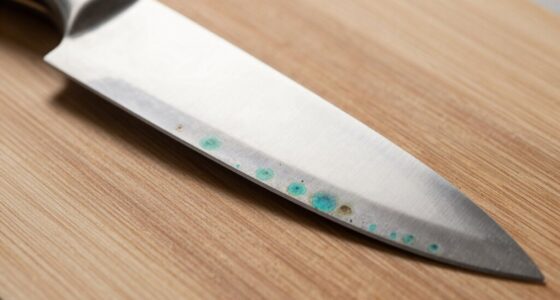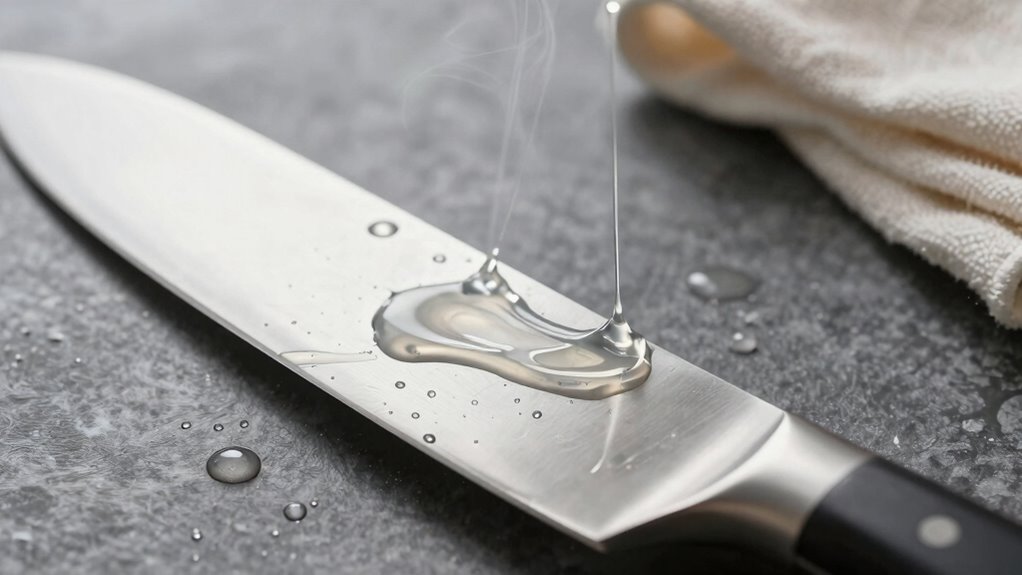

To clean sticky residue off blades, start by soaking them in warm, soapy water with a bit of vinegar or lemon juice to loosen stubborn buildup. Use a plastic scraper or wooden toothpick to gently remove residue, avoiding scratches. Then, scrub the blades with a soft brush or microfiber cloth, and apply a small amount of isopropyl alcohol if needed. Rinse thoroughly and dry completely to guarantee safety and performance. Keep going to discover more tips for perfect blade maintenance.
Key Takeaways
- Soak blades in warm, soapy water with vinegar or lemon juice to loosen sticky residues.
- Gently scrape off residue with a plastic scraper or wooden toothpick without damaging the blade.
- Use a soft-bristled brush or microfiber cloth with isopropyl alcohol for effective cleaning.
- Rinse thoroughly with clean water and dry completely with a lint-free cloth to prevent rust.
- Regularly clean blades to prevent buildup and maintain safety and sharpness.
Have you ever struggled to remove sticky residue from your blades? It’s a common problem, especially after prepping ingredients or working with sticky substances. The key to tackling this issue lies in understanding residue removal techniques that are effective without compromising blade safety. You want to ensure your blades stay sharp and safe to use, so approaching this task carefully is essential.
First, prioritize blade safety by handling your blades with care. Always wear cut-resistant gloves if possible and work on a stable, clean surface. Before attempting any cleaning, unplug or deactivate your blades if they’re electric, and make sure they are completely cool. This minimizes the risk of injury and prevents accidental cuts. When it comes to residue removal techniques, the goal is to loosen and lift sticky debris without damaging the blade edge.
Start by scraping off as much residue as you can with a plastic scraper or a wooden toothpick. These tools are gentle enough not to scratch or dull your blades but effective in removing the bulk of the sticky material. Next, soak the blades in warm, soapy water for a few minutes. The soap helps break down the sticky substances, making them easier to wipe away. For stubborn residues, you can add a small amount of vinegar or lemon juice to the soak water, as their acidity helps dissolve glues or sugary residues. Using appropriate soaking techniques can improve overall cleaning results. Additionally, understanding the importance of proper maintenance can help you keep your blades in optimal condition and prevent future buildup.
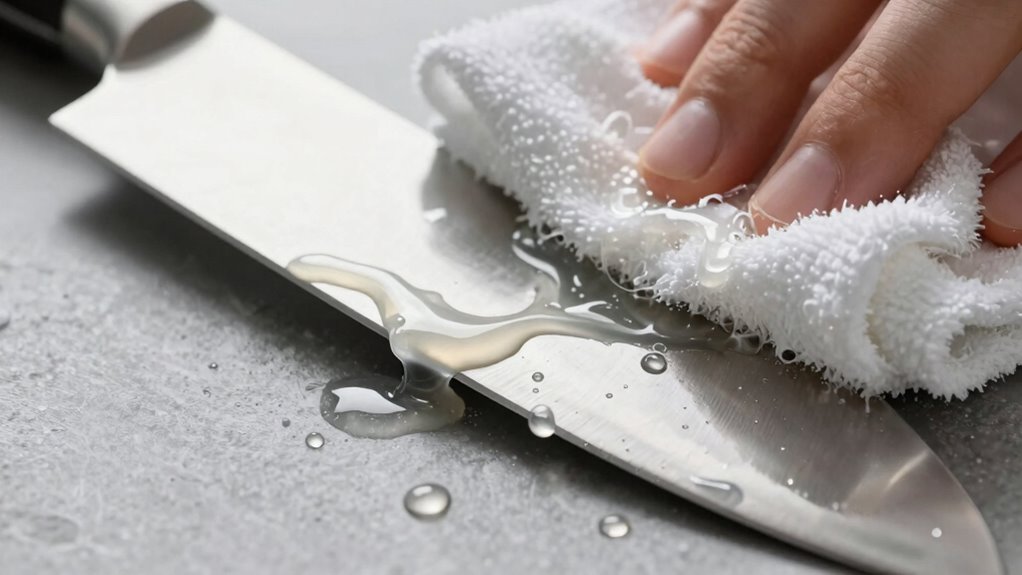
After soaking, gently scrub the blades using a soft-bristled brush or a microfiber cloth. Avoid steel wool or abrasive scrubbers that might scratch the blade surface. Focus on the areas with the most buildup, applying light pressure to avoid dulling the edge or risking injury. For additional effective cleaning, understanding the importance of air quality and proper ventilation during cleaning can help prevent the buildup of fumes from cleaning agents. If residue persists, apply a small amount of isopropyl alcohol or specialized blade cleaner to a cloth and wipe down the blades. These solvents effectively dissolve sticky residues without harming the metal. Additionally, proper cleaning techniques help maintain the longevity and safety of your blades. Regular cleaning using appropriate methods also prevents buildup and prolongs blade life.
Once the residue is gone, rinse the blades thoroughly with clean water to remove any leftover cleaning agents. Dry them completely with a lint-free cloth to prevent rusting and to keep the blades in top shape. Always inspect your blades after cleaning to ensure no sticky remnants remain, which could interfere with future cuts or food safety.
As an affiliate, we earn on qualifying purchases.
Frequently Asked Questions
Can I Use Vinegar to Remove Sticky Residue From Blades?
Yes, vinegar is effective for removing sticky residue from blades because its acidity breaks down the adhesive. You can soak a cloth in vinegar and wipe the blades or use it as a spray. If vinegar doesn’t do the trick, explore alternative cleaning methods like rubbing alcohol or warm soapy water. These options can also help dissolve stubborn residue and keep your blades clean and ready for use.
How Often Should I Clean My Blades After Prep?
You should clean your blades after every prep session to maintain ideal blade maintenance and guarantee residue removal. Regular cleaning prevents sticky residue buildup, which can affect cutting performance. Use warm water and a gentle brush or cloth to remove debris, and consider disinfecting with vinegar or alcohol if needed. Consistent cleaning after each use keeps your blades sharp, hygienic, and ready for the next task.
Are There Any Safety Precautions When Cleaning Blades?
When cleaning blades, always prioritize safety by wearing appropriate safety gear like cut-resistant gloves to prevent injuries. Handle blades carefully during maintenance to avoid cuts, and make sure they’re unplugged or turned off if electric. Use proper cleaning tools and solutions to remove sticky residue, and store blades safely afterward. Regular blade maintenance with safety precautions keeps your equipment in top shape while preventing accidents.
What Tools Are Best for Scraping off Residue?
Did you know that using the right tools can make blade maintenance 50% easier? For residue removal, opt for a plastic scraper or a soft-bristled brush to avoid damaging the blades. A plastic putty knife works well for stubborn residue, while a toothbrush can reach tight corners. Always choose tools that are gentle yet effective, ensuring your blades stay sharp and clean without risking scratches or damage.
Will Cleaning Affect the Blade’s Sharpness or Performance?
Cleaning your blades for residue removal won’t harm their sharpness if you use gentle methods. Proper blade maintenance involves careful cleaning, avoiding harsh abrasives that can dull the edge. When you remove sticky residue carefully, you guarantee the blades stay sharp and perform well. Regular cleaning helps maintain both the cleanliness and longevity of your blades, so you can work efficiently without worrying about compromised performance.
As an affiliate, we earn on qualifying purchases.
Conclusion
Now that you’ve wiped away that stubborn sticky residue, your blades are as clean as a whistle and ready for your next culinary masterpiece. Remember, a little effort goes a long way—think of your clean blades as the sword of a knight, sharp and ready to conquer any recipe! Keep up with regular cleaning to prevent future buildup, and you’ll be slicing through ingredients like a pro in no time. Your kitchen skills just got a whole lot sharper!
microfiber cleaning cloth for knives
As an affiliate, we earn on qualifying purchases.
As an affiliate, we earn on qualifying purchases.
As an affiliate, we earn on qualifying purchases.