
To protect your knife during long-term storage, clean and thoroughly dry it to prevent rust. Sharpen the blade beforehand to reduce damage and make future cleaning easier. Store the knife in a protective case, magnetic strip, or knife block away from humidity and impacts. Applying a light coating of oil or corrosion inhibitor adds extra protection. Regularly check your knife’s condition and update your storage methods if needed. Keep going to discover more tips for maintaining your knife’s longevity.
Key Takeaways
- Clean and thoroughly dry the knife to prevent rust and corrosion before storage.
- Use protective storage methods like knife blocks, magnetic strips, or sheaths to avoid damage.
- Apply a light coat of oil or corrosion inhibitor to create a moisture barrier.
- Store in a dry, cool environment, utilizing silica gel or dehumidifiers in humid climates.
- Regularly inspect and maintain the knife, reapplying coatings and checking for rust or damage.
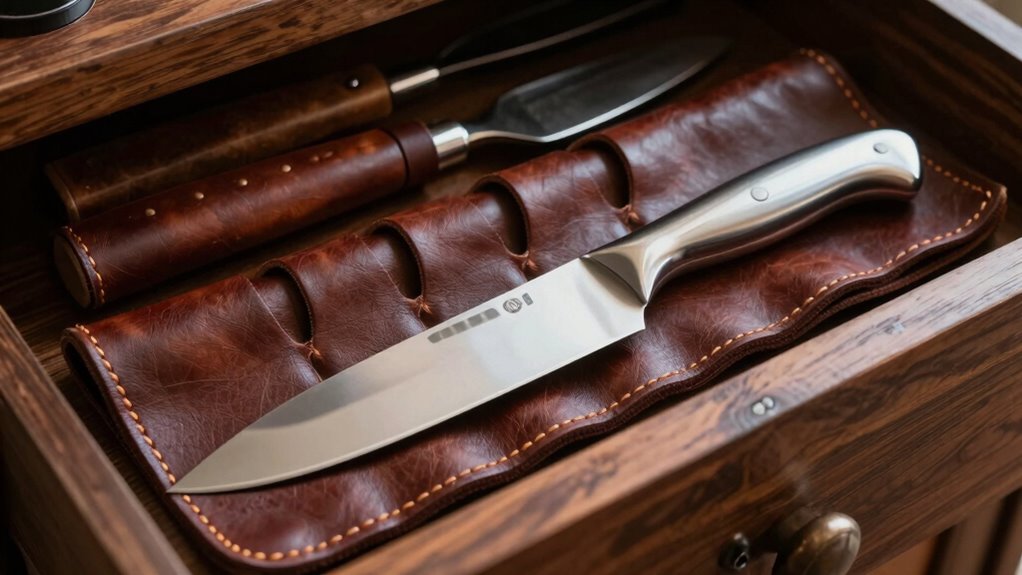
Storing a knife properly for the long term is essential to keep it in top condition and prevent damage. When you’re not using your knife for extended periods, it’s easy for the blade to become dull or develop corrosion, especially if it’s exposed to moisture or air. To avoid these issues, you need a strategy that protects the blade’s sharpness and prevents corrosion. One of the first steps is to ensure the knife is thoroughly cleaned and dried before storage. Residual moisture can lead to rust and blade corrosion, so wipe it down with a soft cloth, paying close attention to the edge and handle junctures.
Properly cleaning and drying your knife prevents rust and damage during long-term storage.
Next, consider sharpening your knife before storing it away. Knife sharpening isn’t just about keeping your knife sharp for immediate use; it also helps maintain the integrity of the blade over time. A sharp, well-maintained edge is less prone to damage and easier to clean if any corrosion begins to form. If your knife has a dull edge, it’s more likely to sustain chips or bends, which could compromise its safety and longevity. Using a honing steel or a professional sharpening service can restore the blade’s sharpness, making sure it’s in prime condition when you take it out of storage.
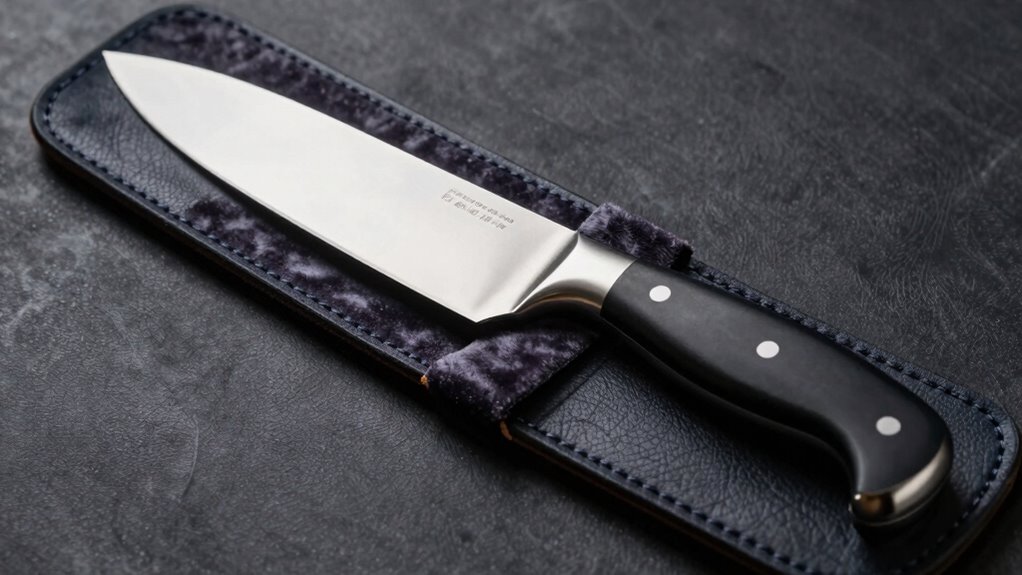
Choosing the right storage method is equally important. Avoid tossing your knife into drawers where it can get nicked or damaged. Instead, use a knife block, a magnetic strip, or a protective sheath to keep the blade straight and protected from accidental impacts. These methods also minimize exposure to air and moisture, reducing the chances of blade corrosion. Additionally, storing your knife in a dry, cool environment helps prevent rust. If you live in a humid climate, consider placing silica gel packets or a dehumidifier nearby to absorb moisture and keep the air dry. Proper storage also involves understanding the effects of humidity on metal blades to better protect your investment.
Furthermore, using protective coatings such as oil or corrosion inhibitors can provide an additional barrier against moisture and oxidation, extending the life of your blades. Finally, periodically check on your stored knives, especially if you’re planning to keep them stored for an extended period. Reassess the condition of the blade and reapply light oil or corrosion inhibitor if necessary. This extra step provides an added layer of protection against rust and corrosion. Regular maintenance, such as oiling, can significantly extend the lifespan of your blades and help prevent metal deterioration. By combining proper cleaning, sharpening, careful storage, and regular checks, you’ll preserve the sharpness and integrity of your knife, ensuring it remains in excellent condition for years to come.
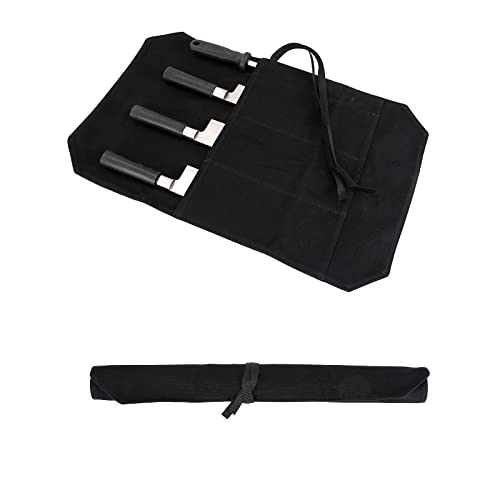
HERSENT Chef's Knife Roll Bag,Portable Travel Chef Knife Case Knife Bag Carrier Storage Bag with 4 Slots Best Gift for Pro Chef or Culinary Enthusiasts Men Women
- Number of Knife Slots: Holds 4 knives and accessories
- Knife Compatibility: Fits knives up to 14 inches
- Additional Storage: Includes space for sharpener and tools
As an affiliate, we earn on qualifying purchases.
As an affiliate, we earn on qualifying purchases.
Frequently Asked Questions
Can I Store Knives in the Freezer for Long-Term Preservation?
You can store knives in the freezer for long-term preservation, but it’s not ideal. Freezer storage can cause moisture buildup, leading to rust if not properly protected. To prevent this, wrap your knives in plastic or vacuum-sealed bags to keep moisture out. Always dry the knives thoroughly before freezing, and consider applying a light coat of oil to prevent rust, ensuring your blades stay sharp and rust-free over time.
How Often Should I Check My Stored Knives for Rust or Damage?
Think of your knives as silent guardians, always in need of care. You should check your stored knives for rust or damage at least once every 3 to 6 months. This guarantees your knife maintenance and storage techniques remain effective. Regular inspections help catch issues early, preventing corrosion and preserving sharpness. Keep your knives in a dry, protected environment, and always handle them with care during these checks to maintain their longevity.
Is It Safe to Store Knives With Other Metal Tools?
Storing knives with other metal tools can be safe if you use proper protective measures. Place your knives in knife sheathes or padded storage containers to prevent blades from scratching or corroding. Avoid direct contact with other metal tools, as this can cause damage or rust. Regularly check your storage setup to make certain blades stay protected and dry, maintaining their sharpness and preventing rust over time.
What Is the Best Way to Prevent Corrosion in Humid Environments?
To prevent corrosion in humid environments, you should focus on humidity control and use corrosion inhibitors. Store your knife in a dry, sealed container with silica gel packs to absorb excess moisture. Applying a thin layer of mineral oil or specialized corrosion inhibitors creates a protective barrier against moisture. Regularly check the storage area and reapply inhibitors as needed to guarantee your knife stays rust-free over time.
Should I Oil My Knives Before Long-Term Storage?
Yes, you should oil your knives before long-term storage. Proper blade maintenance involves applying a thin layer of oil to prevent rust and corrosion, especially in humid environments. Use a food-safe oil and guarantee even coverage on the blade’s surface. This oil application creates a protective barrier, keeping your knives in good condition and ready for use when you need them again. Remember to wipe off excess oil before storing.

Modern Innovations 16 Inch Stainless Steel Magnetic Knife Bar with Multi-Purpose Functionality as a Knife Holder, Knife Strip, Magnetic Tool Organizer, Art Supply Organizer & Home Organizer
- Magnetic Knife Bar Material: High-grade stainless steel with strong magnets
- Design & Finish: Elegant satin finish for modern decor
- Magnetic Strength: Fully magnetic surface securely holds knives
As an affiliate, we earn on qualifying purchases.
As an affiliate, we earn on qualifying purchases.
Conclusion
By following these simple steps, you’ll turn your knife into a silent guardian, patiently waiting for its next adventure. Proper storage is like a gentle lullaby that keeps its edge sharp and its spirit intact, preventing rust from creeping in like an unwelcome shadow. With care and attention, your knife will remain a trusted companion, ready to slice through the days ahead. Think of it as planting a seed—nurture it well, and it’ll serve you faithfully for years to come.

Intelitopia Complete Knife Sharpening Stone Set – Dual Grit Whetstone 400/1000 3000/8000 Knife Sharpener with Leather Strop, Flattening Stone, Bamboo Base, 3 Non-slip Rubber Bases & Angle Guide
- Complete Knife Sharpening Kit: Includes all essential sharpening tools
- Dual Grit Whetstone: 400/1000 and 3000/8000 grit for versatile sharpening
- Durable Corundum Material: High-quality aluminum oxide for longevity
As an affiliate, we earn on qualifying purchases.
As an affiliate, we earn on qualifying purchases.
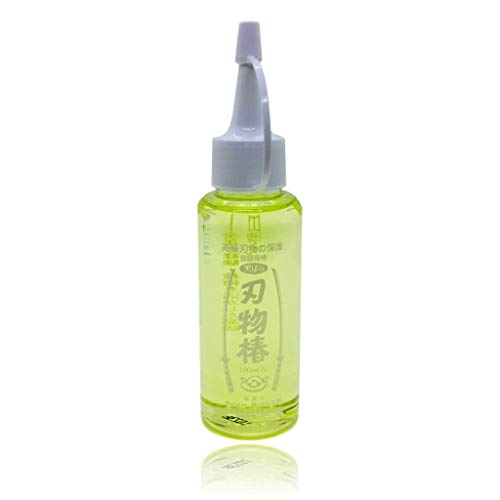
KUROBARA 100% Pure Tsubaki Japanese Knife Maintenance Camellia Oil (3.4 oz)
- Rust Prevention: Protects carbon steel tools and knives
- Easy Application: Clean, dry, and apply with cloth
- Multi-Purpose Use: Lubricates machinery and tools
As an affiliate, we earn on qualifying purchases.
As an affiliate, we earn on qualifying purchases.