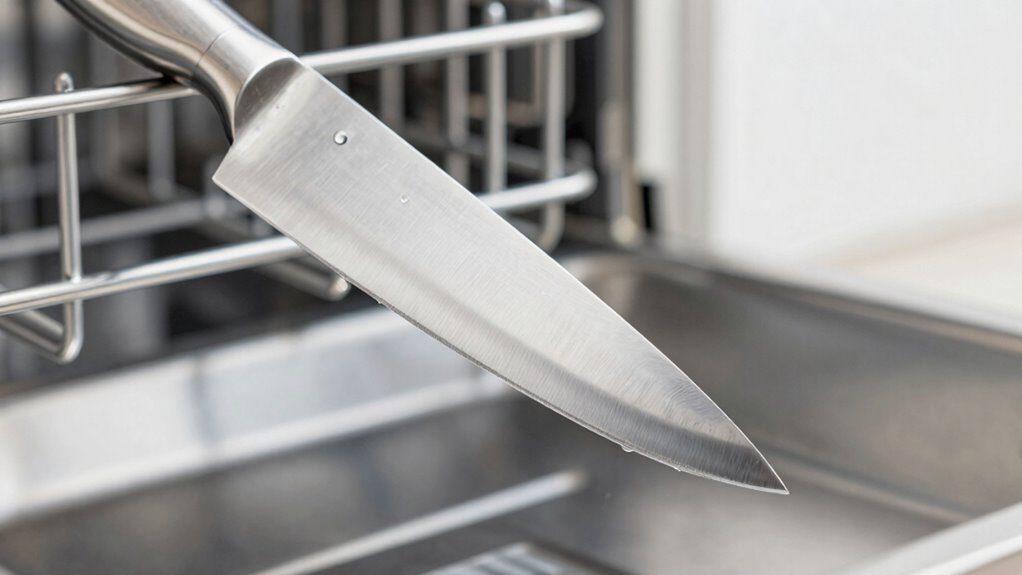

Dishwashers are tougher on knives than you might think because the high temperatures, powerful water jets, and harsh detergents can cause chips, bent edges, and dull blades. These features can also force knives to knock against other utensils or the dishwasher walls, risking damage and safety issues. Over time, this damage makes knives less effective and more dangerous to use. Stay with us to discover how proper care can keep your knives safer and sharper longer.
Listen free for 30 days with Audible
Thousands of audiobooks and originals — cancel anytime.
As an affiliate, we earn on qualifying purchases.
Key Takeaways
- High temperatures and vigorous water jets can cause blades to chip, bend, or dull quickly.
- Forceful spray and collision with other utensils may damage delicate knife edges.
- Harsh detergents and high heat accelerate corrosion and weaken handle attachments.
- Dishwashers are not designed to protect knife blades, increasing risk of structural damage.
- Improper storage and handling in dishwashers can lead to long-term safety and efficiency issues.
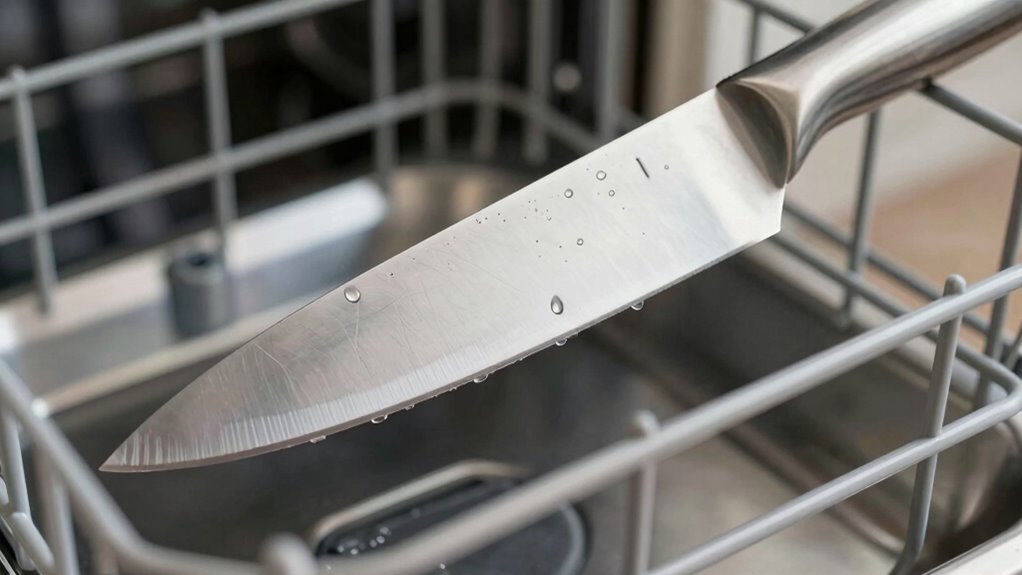
Many people assume that dishwashers are safe for all types of cutlery, but knives require special care to prevent damage and maintain safety. While tossing your knives into the dishwasher might seem convenient, it can actually compromise their sharpness, safety, and longevity. Understanding how dishwashers impact knives helps you practice better knife safety and guarantee proper dishwasher maintenance.
Dishwasher cycles are designed to clean efficiently, but the high temperatures and vigorous water jets can dull or chip your knives over time. The forceful spray can cause blades to knock against other utensils or the dishwasher’s interior, leading to tiny chips or bent edges. Over time, these damages diminish the knife’s cutting ability, making it less effective and potentially dangerous to use. Sharp knives are safer because they require less force during cutting, but if they become dull or damaged, you might exert more pressure, increasing the risk of slips and injuries. That’s why maintaining the sharpness of your knives is key to knife safety.
Dishwasher cycles can dull or chip knives, increasing safety risks and reducing their effectiveness over time.
In addition to dulling, dishwasher maintenance plays an essential role in preserving your knives. Many dishwashers have racks and compartments that aren’t designed for delicate blades, which can cause unnecessary wear. Also, the harsh detergents used in dishwashers are abrasive and can erode the metal finish or weaken the handle attachments. Proper dishwasher maintenance not only extends the life of your knives but also guarantees they stay safe to use. Regularly inspecting and cleaning dishwasher components can help prevent corrosion and damage caused by harsh chemicals and high temperatures. Using the correct cleaning methods can help prevent corrosion and damage caused by harsh chemicals and high temperatures. Additionally, some dishwashers have rough interior surfaces that can scratch or damage blades if not cleaned carefully. To keep your knives in top shape, it’s best to hand wash them with warm, soapy water immediately after use. Dry them thoroughly to prevent rust and corrosion, especially if they have high-carbon steel blades. Proper maintenance not only extends the life of your knives but also guarantees they stay safe to use. Incorporating proper knife care practices, such as storage and handling, further helps preserve their integrity and safety.
Furthermore, storing your knives properly is just as important as how you clean them. Avoid placing them loose in a silverware drawer where they can bump into other utensils and become damaged. Invest in a knife block or a magnetic strip to keep blades protected and easily accessible. This practice promotes knife safety by reducing the risk of accidental cuts when grabbing a knife and helps keep blades sharp longer.
As an affiliate, we earn on qualifying purchases.
Frequently Asked Questions
Can Dishwasher Detergent Damage Knife Blades Over Time?
Yes, dishwasher detergent can damage knife blades over time. The harsh chemicals can lead to blade corrosion and dull your knife’s edge, making it harder to sharpen later. Regular exposure to these detergents accelerates wear and tear, so you should hand wash your knives carefully. Proper maintenance guarantees your knives stay sharp longer and avoids costly knife sharpening or replacement down the line.
Do Certain Knife Materials Withstand Dishwasher Cleaning Better?
Surprisingly, some knife materials withstand dishwasher cleaning better, especially those with high blade corrosion resistance like stainless steel. While a stainless steel blade might seem tough, its handle durability varies; some plastics can crack under heat and detergent. So, if you want your knives to survive the dishwasher’s harsh environment, opt for high-quality stainless steel blades paired with durable handles. Irony? Even tough materials need care to last.
How Does Water Temperature Affect Knife Longevity in Dishwashers?
High water temperature in dishwashers can substantially decrease your knife’s durability. Hot water causes metal to expand and contract, which weakens the blade over time. It can also damage the handle, especially if it’s made from materials sensitive to heat. To protect your knives, opt for cooler wash cycles whenever possible. This helps maintain their sharpness, prevents warping, and extends their overall lifespan.
Are There Specific Dishwasher Settings That Are Safer for Knives?
Think of dishwasher settings as gentle guardians. Use the “china” or “delicate” cycle, which acts like a soft hand, protecting your knives. However, manual cleaning is still best for maintaining sharpness. After washing, store your knives properly, like keeping precious jewels safe, to prevent dulling or damage. Choosing the right setting and proper storage keeps your knives sharp and your kitchen safer.
Can Knives With Special Coatings Be Safely Washed in Dishwashers?
Knives with special coatings aren’t always dishwasher safe because the high heat and strong detergents can damage coating durability. You risk coating removal, which can dull the blade and compromise its appearance. To protect your coated knives, wash them by hand with gentle soap and water, avoiding harsh abrasives. This helps preserve the coating’s integrity and keeps your knives sharp and looking new longer.
As an affiliate, we earn on qualifying purchases.
Conclusion
So, next time you toss your knives into the dishwasher, remember they’re not just delicate blades but silent warriors bearing the brunt of your convenience. Like a ship battered in a storm, their edges can suffer hidden damage that weakens them over time. Treat your knives with care, hand-wash when you can, and give them the respect they deserve. After all, a sharp knife isn’t just a tool—it’s the heart of your culinary art.
As an affiliate, we earn on qualifying purchases.
high-carbon steel kitchen knives
As an affiliate, we earn on qualifying purchases.
As an affiliate, we earn on qualifying purchases.
Flea & tick season Picks
flea and tick prevention
As an affiliate, we earn on qualifying purchases.