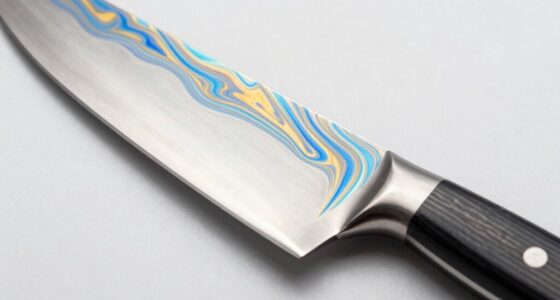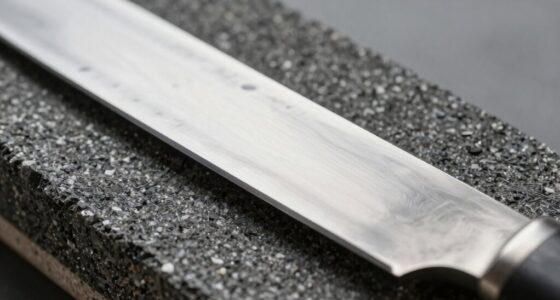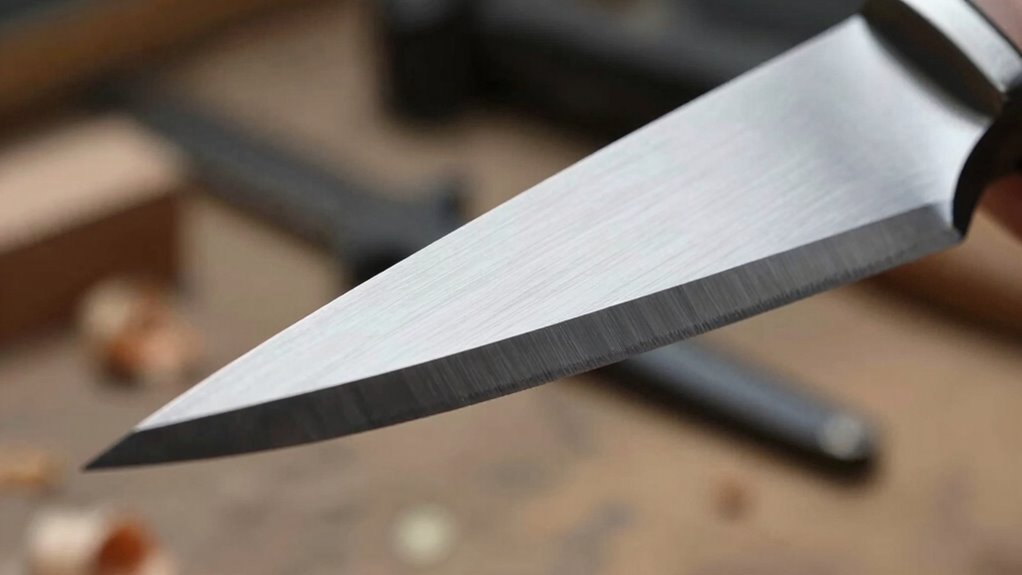

Bevels change your cutting feel by requiring controlled, steady motion and matching tool tilt, which results in smoother edges and better surface finish. They also impact maintenance—sharp, well-kept tools produce cleaner cuts and reduce roughness, while dull tools cause rough edges. Different bevel types create varying visual effects and structural strength, making your work look professional. Learning how bevels influence technique, maintenance, and results can help you optimize your projects—they’re worth exploring further.
Key Takeaways
- Bevels alter cutting angles, requiring precise tool control and tilt to achieve smooth, consistent edges.
- Proper maintenance and sharp tools ensure clean cuts, affecting surface finish and overall quality.
- Different bevel types influence cutting feel, with steeper angles needing steadier, controlled motions.
- Regular tool checks and cleaning prevent rough edges and improve safety during cutting.
- Bevel design enhances aesthetic appeal, joint strength, and safety, impacting final results and material handling.

JORGENSEN Chamfer Plane, Edge Corner Plane, 4 Cutter Heads Built-In Storage
- Professional Blade Material: O1 tool steel for durability and efficiency
- Multiple Cutter Tips: Four different shaped tips for versatile trimming
- Integrated Storage: Blade storage compartment prevents loss and chaos
As an affiliate, we earn on qualifying purchases.
As an affiliate, we earn on qualifying purchases.
Understanding the Basics of Bevels
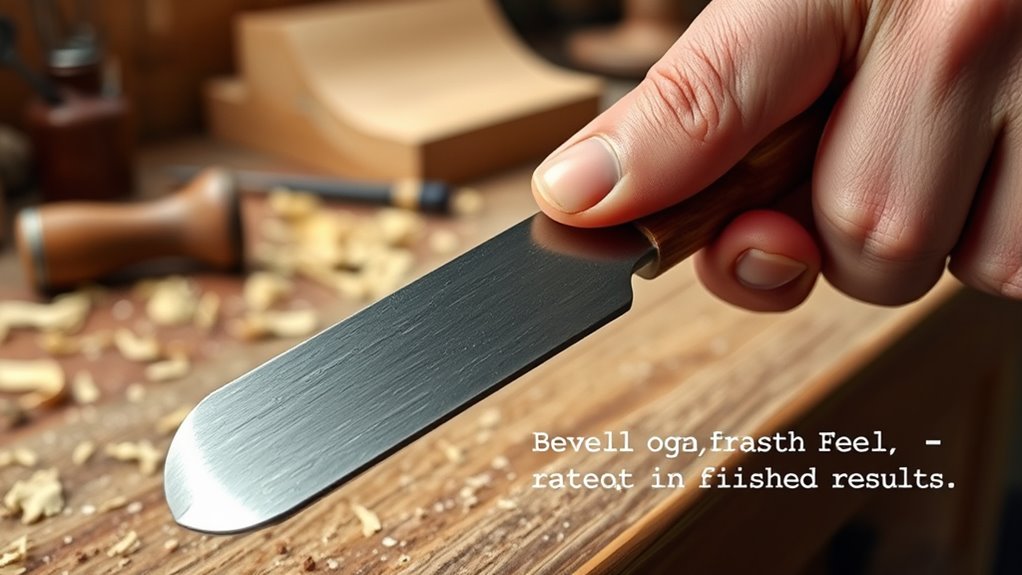
Have you ever wondered what exactly a bevel is? It’s an angled cut made on the edge or end of a material, deviating from a straight 90-degree cut. Imagine grinding or cutting a surface so it slopes instead of being perfectly perpendicular. This inclined edge can be on wood, metal, or other materials, used to create smoother gradations or prepare for joining pieces. Bevels are useful for removing sharp corners, improving safety, and enhancing aesthetics. They can be simple, with a fixed angle, or more complex, combining different cuts. The key purpose is to shape the edge for specific functions, whether for strength, appearance, or fit. Understanding these basics helps you decide when and how to use bevels effectively in your projects. Recognizing how bevels influence cutting feel and maintenance can help you choose the right technique for your needs. Additionally, knowing the types of bevels can guide you in selecting the best approach for different materials and applications. Proper bevel angles are essential for achieving the desired results and ensuring the durability of your work. For instance, material characteristics such as hardness and grain direction can significantly affect how a bevel is cut and maintained. Moreover, considering the tools used for creating bevels can improve your efficiency and the quality of your work.
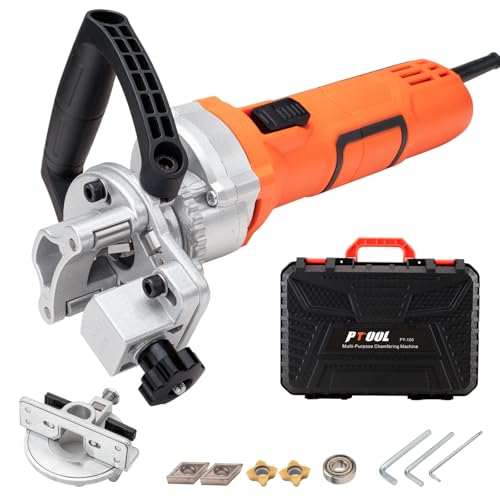
Handheld Chamfer Tool, Metal Chamfering Tool, for Trimming, Beveling, Deburring, 45 Degree Arc and Bevel, 850W 120V 60Hz, Model PT-100 (Machine)
- Powerful Motor: 850W AC motor for heavy-duty tasks
- Versatile Use: Suitable for various materials and applications
- Adjustable Angle: 45-degree arc for precise chamfering
As an affiliate, we earn on qualifying purchases.
As an affiliate, we earn on qualifying purchases.
Types of Bevels and Their Characteristics

There are several common types of bevels, each designed for specific applications and aesthetic effects. The plain bevel features a straight, inclined surface at fixed angles like 30, 45, or 60 degrees, offering a clean, simple look. The V bevel forms an inverted “V” shape, often used in welding to create strong joints. The X bevel combines two V bevels, meeting in the middle of the plate for added strength. The Y bevel has a partial penetration, ideal for specific welding needs. The K bevel merges top and bottom Y angles with a vertical land, requiring three passes. Each type serves different purposes, from decorative edges in woodworking to preparing metal for welding, emphasizing functionality and visual appeal.

RONGPRO 4Pcs Woodworking Tools -7''Aluminum Rafter Square,12''Adjustable Protractor Angle Finder,10'Woodworking Square Ruler and T-Bevel Gauge-1/16 Precision…
- Multi-Tool Set: Includes rafter square, protractor, square ruler, T-bevel
- Premium Materials: CNC-machined aluminum and stainless steel
- Durable and Corrosion Resistant: Built for long-lasting use
As an affiliate, we earn on qualifying purchases.
As an affiliate, we earn on qualifying purchases.
How Bevels Affect Cutting Techniques and Feel
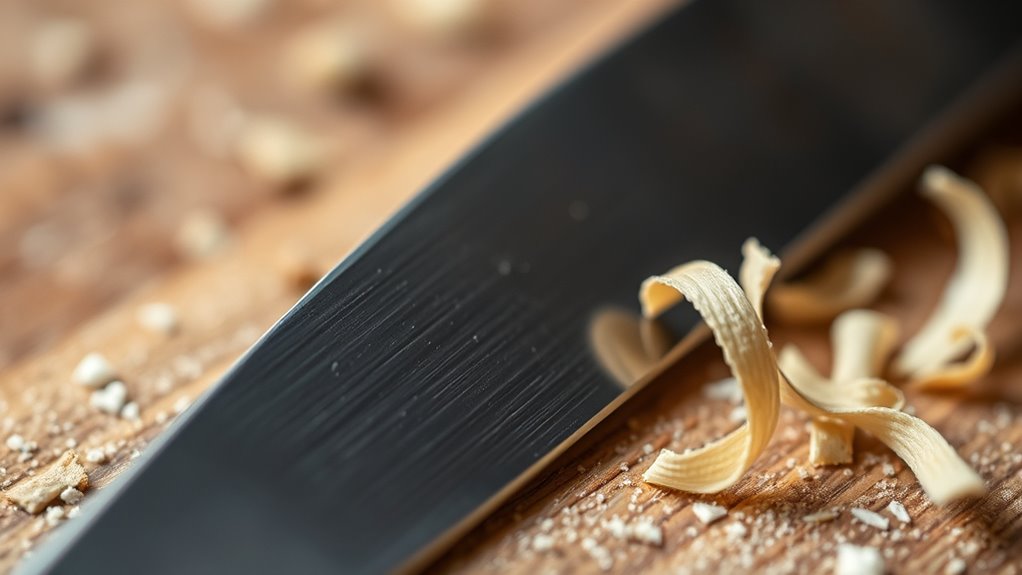
When working with beveled edges, your cutting techniques must adapt to the angle and type of bevel to guarantee clean, accurate results. You’ll need to apply different pressures and blade angles depending on the bevel’s slope. For steeper angles like 45 or 60 degrees, you should use a more controlled, steady motion to prevent tearing or uneven cuts. Sloped bevels often require you to tilt your tool slightly to match the angle, ensuring a smooth, consistent cut along the surface. In woodworking or metalworking, you might need to adjust your approach with lighter passes or multiple shallow cuts for precision. The feel of the cut changes; beveled edges often feel smoother, but require more attention to maintain alignment and avoid jagged edges.

Metabo HPT 10-Inch Single Bevel Compound Miter Saw, 15-Amp Power Saw with Xact Cut Shadow Line, Precision Miter Angles, Single Bevel 0-45°, 40T TCT Miter Saw Blade, Lightweight Design, C10FCG2
- Powerful 15-Amp Motor: Delivers high power for effortless cuts
- High No-Load Speed: Up to 5,000 RPM for precision
- User-Friendly Miter Scale: Includes improved controls for accurate adjustments
As an affiliate, we earn on qualifying purchases.
As an affiliate, we earn on qualifying purchases.
Maintenance and Precision in Bevel Cutting Tools

Maintaining the accuracy of your bevel cutting tools is key to achieving precise, clean cuts. Regularly check the angles and sharpness of blades or bits to guarantee they haven’t dulled or shifted. Use a protractor or angle gauge to verify the bevel angle and make adjustments as needed. Keep tools clean, removing debris, dust, and resin that can affect performance. Proper lubrication prevents rust and ensures smooth operation. For power tools, inspect and replace worn parts—bearings, blades, or guides—to maintain consistency. Store tools in a dry, organized space to prevent damage. Consistent maintenance ensures your bevels stay accurate, reducing errors and improving the quality of your cuts. Proper maintenance practices are essential for preserving tool precision over time. Precision tools combined with diligent upkeep make all the difference in professional results.
Practical Applications and Visual Differences
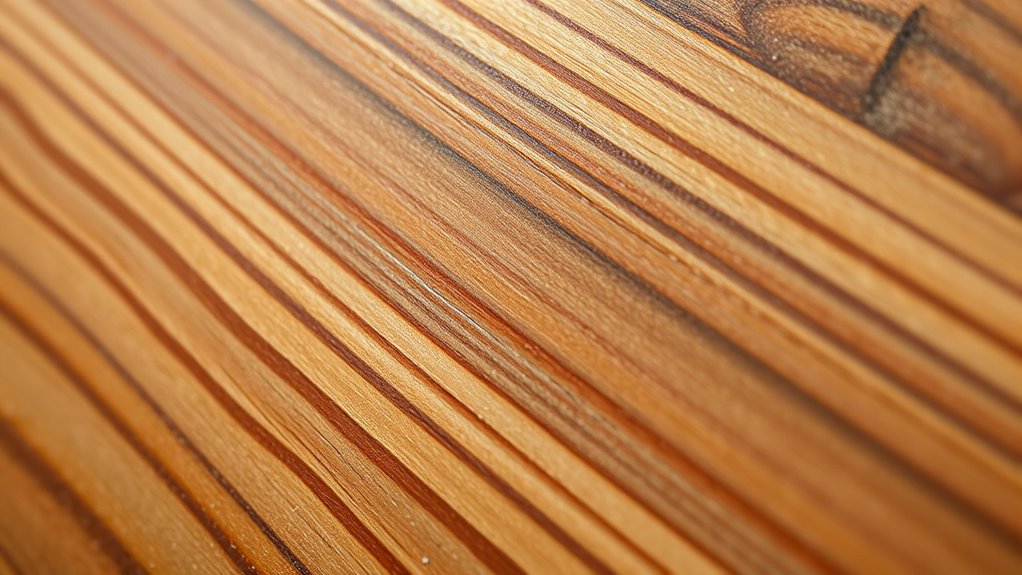
You’ll notice that different bevels create distinct visual edge variations that affect the overall look of your project. These differences are vital when applying bevels in woodworking, metalworking, or construction, as each application demands specific angles and finishes. Material type and the tools you use also influence the final appearance, ensuring precision and suitability for your intended purpose.
Visual Edge Variations
Visual edge variations are crucial for understanding how different bevels impact the appearance and function of a finished piece. When examining your work, you’ll notice that the angle and shape of the beveled edge influence both aesthetic appeal and structural integrity. A straight, uniform bevel creates a clean, modern look, perfect for contemporary furniture or trim. Conversely, a chamfer with a softer slope offers a subtle, rounded transition, enhancing safety and visual flow. V and X bevels add complexity, showcasing craftsmanship and providing specific welding or joining advantages. The visual differences become especially noticeable on thicker materials, where the bevel’s depth and profile define the overall design. Recognizing these variations helps you select the right bevel type to achieve your desired style and functional outcome. Additionally, understanding how visual edge variations can influence the overall perception of your project allows for better design decisions.
Application Differences Clearly
Understanding how different bevels are applied in real-world projects helps you choose the right type for your needs. For example, a 45-degree bevel is common in framing and furniture joints, creating smooth, seamless connections. V bevels are often used in welding prep, where the protruding edge helps secure welds. X and Y bevels are more specialized, combining multiple angles for precise metal fabrication or complex joints. In woodworking, bevels add decorative flair or help with assembly, such as chamfered edges on moldings. Visually, bevels create sloped surfaces that soften edges or enhance aesthetics, while application specifics determine the angle and type used. Your choice depends on the material, project purpose, and desired finish, ensuring structural integrity and visual appeal. Additionally, understanding bevel tool maintenance requirements for different bevel tools can prolong their lifespan and improve your results. Proper cutting techniques are essential to achieve accurate bevels and prevent material damage. Recognizing the importance of backing materials can also influence the quality of your bevels and overall project durability. Incorporating visual cues from training or tutorials can further improve your precision and consistency in creating bevels.
Material and Tool Impact
The choice of materials and tools considerably influences the effectiveness and appearance of bevels in practical applications. The right combination determines the precision, surface finish, and visual impact. Consider these key points:
- Material hardness affects tool wear and cut quality; harder materials like steel require specialized, durable tools.
- Tool type—such as angle grinders, bevel cutters, or CNC machines—impacts the accuracy and consistency of the bevel.
- Blade or bit geometry influences the bevel angle and surface finish; sharper, well-maintained tools create cleaner edges.
- Surface finish depends on tool sharpness and material compatibility, affecting aesthetics and welding readiness.
Selecting appropriate materials and tools ensures clean cuts, minimal distortion, and the desired visual results in your projects.
Benefits of Using Bevels in Various Projects
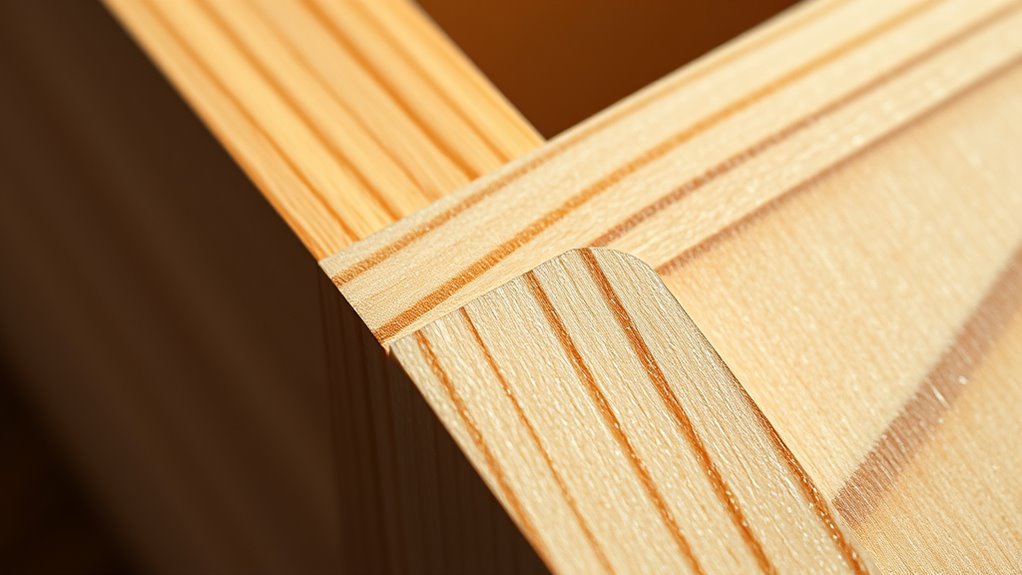
Using bevels in your projects boosts structural strength and guarantees better fit and alignment. They also add a polished look and create smooth continuations that enhance overall appearance. Plus, bevels help make edges safer by removing sharp corners, reducing risk during handling and use. Incorporating interior design tips can further optimize the aesthetic and functional benefits of bevels in your projects. Understanding ergonomics ensures that bevels contribute to a more comfortable workspace and safer handling. Additionally, considering at-home beauty tech can inspire innovative ways to incorporate bevels into personal care devices for improved safety and usability. Exploring AI-powered tools can assist in designing precise bevels, ensuring consistency and quality in your projects. Being familiar with smartphone accessories can help you choose tools that complement the use of beveled edges for enhanced safety and efficiency.
Enhanced Structural Integrity
Incorporating bevels into your projects substantially boosts their structural integrity by ensuring more secure and reliable joins. Bevels distribute stress more evenly across joints, reducing weak points. Here’s how they improve strength:
- Enhanced Load Distribution: Angled cuts allow forces to spread smoothly, preventing stress concentration. This is especially important in structural stability and load-bearing applications.
- Better Fitting Joints: Precise bevels create tighter, more stable connections that resist separation.
- Reduced Material Weakness: Removing unnecessary material near joints minimizes vulnerabilities and enhances overall durability.
- Increased Resistance to Shear: Beveled edges improve the joint’s capacity to withstand lateral forces.
- Proper measurements and materials are crucial to ensure the effectiveness and durability of beveled joints. Employing correct tools and techniques can further enhance the quality of the connections and overall project longevity.
Improved Aesthetic Appeal
Bevels markedly enhance the visual appeal of your projects by creating clean, smooth edges and attractive progressions. They add depth and dimension, making furniture, moldings, or decorative elements look more refined. By angling edges intentionally, you can highlight craftsmanship and give your work a professional finish. Bevels also help achieve seamless joints and smoother connections, reducing roughness that can detract from the overall look. The subtle slopes or chamfers can emphasize design features or create interesting visual contrasts. Whether you’re working with wood, metal, or other materials, adding bevels elevates your project’s aesthetic, making it appear more polished and thoughtfully crafted. This attention to detail can considerably boost the overall appeal and perceived quality of your work.
Safer, Smoother Edges
When you add bevels to edges, you considerably reduce the risk of cuts and injuries caused by sharp corners. Beveled edges create a more gradual shift, making surfaces safer to handle. Here’s why they matter:
- Minimize Sharpness – Bevels soften edges, reducing accidental nicks and cuts.
- Prevent Damage – Smoother edges are less prone to chipping or splintering.
- Improve Safety – Safer edges protect workers and users from potential injuries.
- Enhance Durability – Rounded edges resist weathering and wear better over time.
Frequently Asked Questions
What Materials Are Best Suited for Bevel Cutting?
You’ll find that materials like soft woods, aluminum, and plastics are easiest to bevel because they cut cleanly without much effort. For harder materials like steel or dense hardwoods, you need specialized tools and slower cutting speeds to achieve smooth, accurate bevels. Always match your tool type and cutting technique to the material’s hardness and properties, ensuring safety and precision in your work.
How Do Different Bevel Angles Impact Joint Strength?
Think of bevel angles as the gears in a machine—each one influences how smoothly your joint works. A steeper angle, like 60°, boosts joint strength by creating more surface area for bonding, making it ideal for heavy loads. Conversely, a shallower angle, like 30°, offers quicker assembly but less strength. Choosing the right angle depends on balancing strength, aesthetics, and ease of assembly for your project.
Can Bevels Be Customized for Unique Project Designs?
Yes, you can customize bevels for unique project designs by adjusting the angle and type to fit your specific needs. Use specialized tools like bevel cutters or grinders to create precise, custom angles. Experiment with different slopes and profiles to achieve the desired aesthetic or functional effect. Just make certain you maintain consistent angles throughout the project for a professional, seamless finish that meets your design goals.
What Safety Precautions Are Essential When Cutting Bevels?
When cutting bevels, you’ll want to avoid turning your workspace into a danger zone—think of safety gear as your new best friends. Always wear eye protection, gloves, and hearing safeguards. Keep your tools sharp and secure, stay alert, and don’t rush. Make sure your workpiece is clamped firmly, and double-check your angles. Remember, a reckless cut is a quick ticket to hospital-ville! Safety first, precision second.
How Do Bevel Cuts Influence Overall Project Durability?
Bevel cuts substantially boost your project’s durability by creating stronger, better-fitting joints that resist stress and movement. When you cut at precise angles, you guarantee tighter connections, reducing gaps that can weaken the structure. Plus, beveled edges help distribute loads evenly, preventing cracks and splitting over time. Accurate bevels also improve the overall integrity of your work, making it more resistant to wear, weather, and heavy use.
Conclusion
Now that you understand how bevels influence your cutting experience, imagine what mastering different types could open in your projects. Will you experiment with subtle angles or bold edges? The possibilities are endless, and the results could surprise you. Don’t wait—dive in and see how mastering bevels transforms your work, revealing a level of precision and creativity you never knew was possible. The next cut could change everything. Are you ready to take that step?