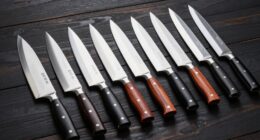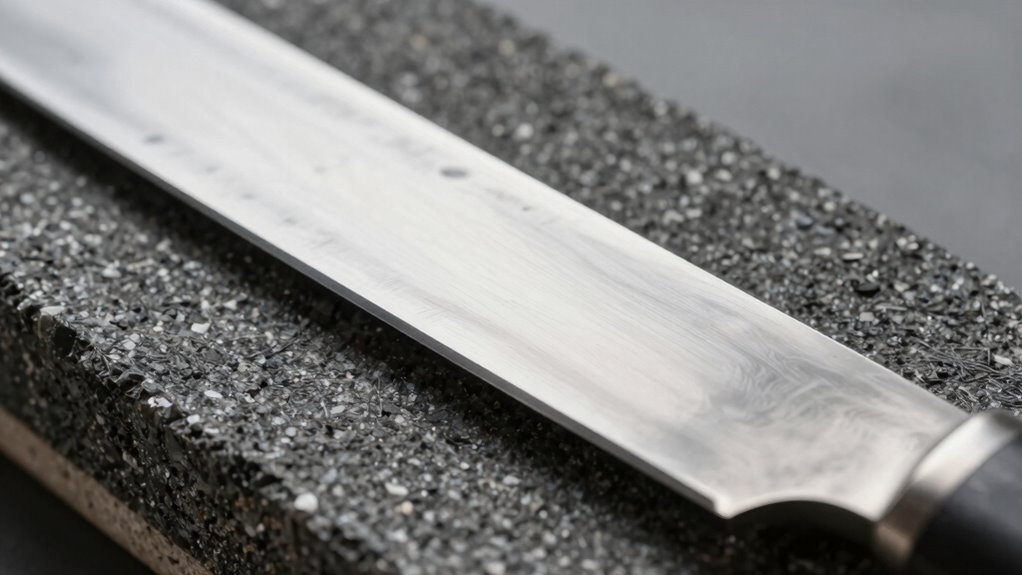
Some steels feel harder to sharpen because of their microstructure and alloying elements like carbon, chromium, and vanadium, which increase hardness and wear resistance. These qualities make the steel tougher to reshape and hone, requiring more effort and time. Additionally, harder steels resist sharpening abrasives, making the process more labor-intensive. Understanding how alloy content and heat treatment influence these properties can help you sharpen more effectively, and you’ll discover more tips along the way.

Get kitchen gear delivered free — and shop member deals
- Fast, free delivery on millions of items
- Access to Prime Big Deal Days deals on October 6–7
- Prime Video, Amazon Music and more included
Key Takeaways
- Higher hardness from heat treatment makes steels more resistant to deformation but harder to reshape during sharpening.
- Increased alloying elements like chromium and vanadium enhance wear resistance, complicating sharpening efforts.
- Microstructural changes, such as grain size and phase distribution, influence how easily the steel can be honed.
- Steels with higher carbon content are harder but require more effort to sharpen due to increased hardness.
- Excessive hardness can lead to brittleness, making sharpening more difficult and increasing risk of chipping.
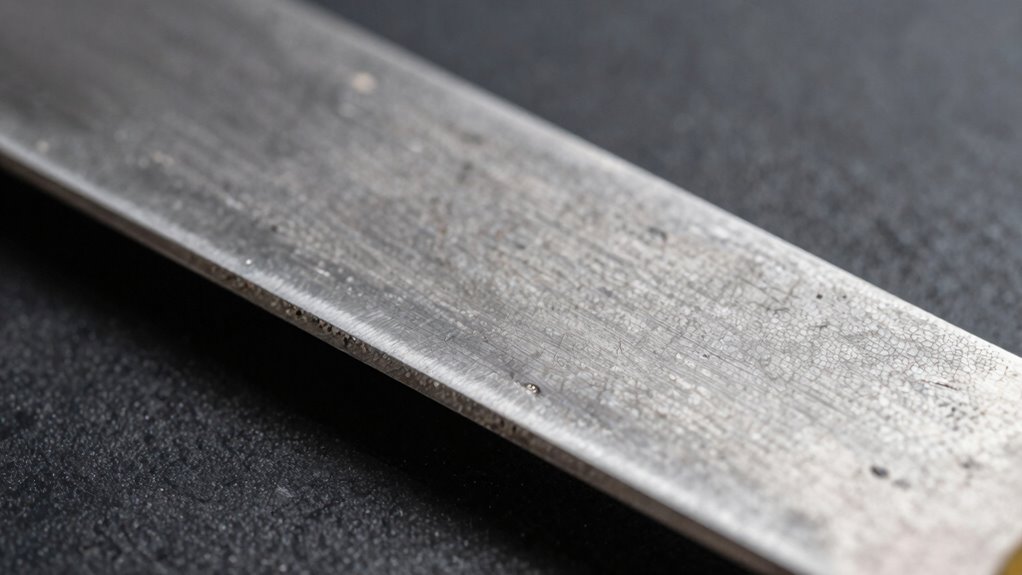
Have you ever noticed that some steels are noticeably harder to sharpen than others? It’s a common observation, and the reason often comes down to how the steel has been made and its internal structure. Two key factors influence this: heat treatment and blade composition. These elements determine the steel’s hardness, toughness, and how easily it can be sharpened.
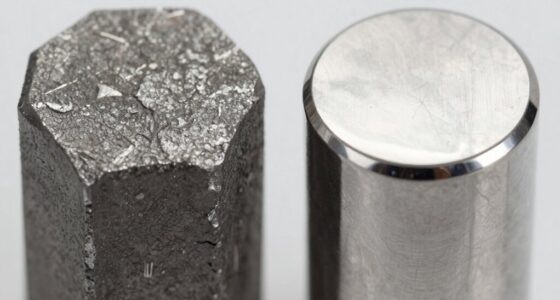
Heat treatment plays an essential role. When steel is heat-treated, it undergoes processes like quenching and tempering, which alter its microstructure. Proper heat treatment can make a blade harder and more durable, but it can also make it more resistant to sharpening. This is because a harder steel resists deformation and wears down slower, but that same hardness makes it more challenging to bring to a sharp edge. If a steel is over-heat-treated, it can become excessively hard and brittle, increasing the difficulty of sharpening and raising the risk of chipping or cracking. Conversely, insufficient heat treatment can result in a softer blade that dulls quickly but is easier to hone. Additionally, understanding how heat treatment methods influence the steel’s properties can help you select the right blade for your needs. Recognizing the microstructural changes caused by different heat treatments can provide further insight into its sharpenability. The specific heat treatment process can also affect the grain structure, which directly impacts sharpening ease.
Proper heat treatment enhances durability but can also increase sharpening difficulty due to increased hardness.
Blade composition is another critical factor. Different alloying elements, such as carbon, chromium, vanadium, and molybdenum, influence the steel’s properties. High-carbon steels tend to be harder and hold an edge longer, but that also makes them more difficult to sharpen. Steels with high levels of certain alloying elements are often more wear-resistant, which means they resist the abrasives used in sharpening. As a result, you might find that some blades require more effort or a more aggressive sharpening technique simply because their composition makes them inherently more resistant to the sharpening process. Additionally, the microstructure of the steel, which results from its alloying and heat treatment, plays a crucial role in its sharpening characteristics.
Furthermore, the combination of heat treatment and blade composition determines the steel’s final hardness and toughness. For example, a blade made from high-carbon, alloyed steel that’s been properly heat-treated will be quite hard, which is great for edge retention but challenging to sharpen. On the other hand, softer steels or those with different compositions may be easier to hone but won’t last as long before needing another sharpen.
In essence, the steels that feel hardest to sharpen do so because of their carefully engineered microstructure and alloying, which influence the balance between hardness, toughness, and wear resistance. Understanding these factors helps you appreciate why some blades demand more effort during sharpening and guides you in choosing the right tools and techniques for each steel type.
As an affiliate, we earn on qualifying purchases.
Frequently Asked Questions
How Does Heat Treatment Affect Steel Hardness?
Heat treatment markedly influences steel hardness by altering its internal structure. When you heat and then rapidly cool the steel, it becomes harder due to the formation of martensite. Tempering effects, however, reduce brittleness and improve toughness, making the steel slightly softer but more durable. This process allows you to customize hardness levels, balancing sharpness and toughness based on your specific needs, and explains why some steels feel tougher or easier to sharpen.
Can Different Sharpening Tools Impact Perceived Difficulty?
You know what they say: “A chain is only as strong as its weakest link.” Different sharpening tools can definitely impact how hard it feels to sharpen a blade. Using abrasive grit that’s too coarse or too fine, or setting sharpening angles incorrectly, can make the process seem tougher. Choosing the right tool and angles helps reduce effort, making sharpening feel easier and more effective.
Does Steel Age Influence Its Sharpening Hardness?
Steel aging can influence its sharpening hardness, as over time, aging causes hardness variation due to changes in the metal’s structure. You might notice that aged steel becomes harder, making it tougher to sharpen because the crystalline structure tightens. Conversely, younger steel tends to be softer, so it’s easier to sharpen. Understanding steel aging helps you choose the right sharpening tools and techniques for different types of steel.
Are Ceramic Stones Better for Harder Steels?
Oh, absolutely, ceramic stones are the superheroes for sharpening harder steels! Their durability makes them ideal, offering unmatched sharpening precision without wearing down quickly. You won’t have to wrestle with grit loss or uneven edges, making your task almost too easy. If you want a tool that matches the toughness of your steel, ceramic stones are your best bet—they’re practically the gold standard in the domain of sharpening.
How Does Steel Composition Alter Sharpening Effort?
Steel composition affects sharpening effort primarily through its microstructure and surface roughness. Harder steels, with finer microstructures and higher carbide content, resist cutting edges more, making sharpening tougher. Surface roughness also plays a role; smoother surfaces require less effort, but steels with increased alloying elements can increase surface roughness, making sharpening more challenging. Understanding these factors helps you choose the right tools and techniques for efficient sharpening.
vanadium alloy steel sharpening stone
As an affiliate, we earn on qualifying purchases.
As an affiliate, we earn on qualifying purchases.
Conclusion
So, next time you find yourself struggling to sharpen a particular steel, ask yourself—are you really using the right technique or steel type? Different steels have unique properties that affect how easy or hard they are to sharpen. Understanding these differences can make your sharpening experience smoother and more enjoyable. After all, isn’t the goal to keep your blades sharp and ready for action? Embrace the challenge and sharpen with confidence!
As an affiliate, we earn on qualifying purchases.
molybdenum steel knife sharpener
As an affiliate, we earn on qualifying purchases.
As an affiliate, we earn on qualifying purchases.
Evergreen bestsellers Picks
bestsellers
As an affiliate, we earn on qualifying purchases.