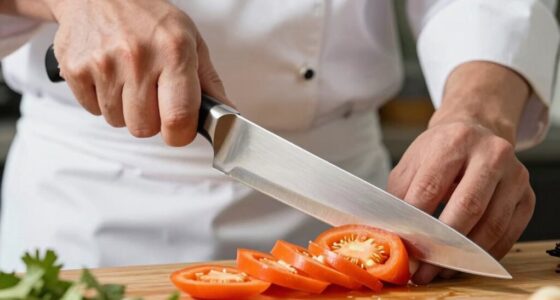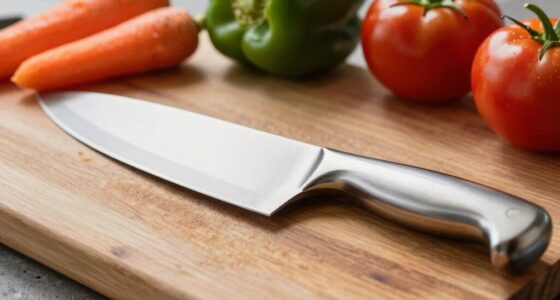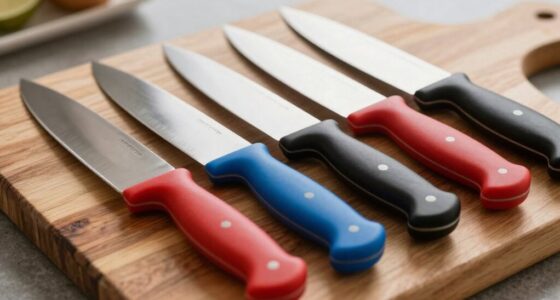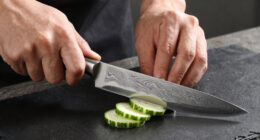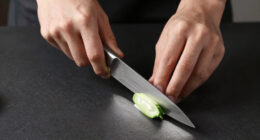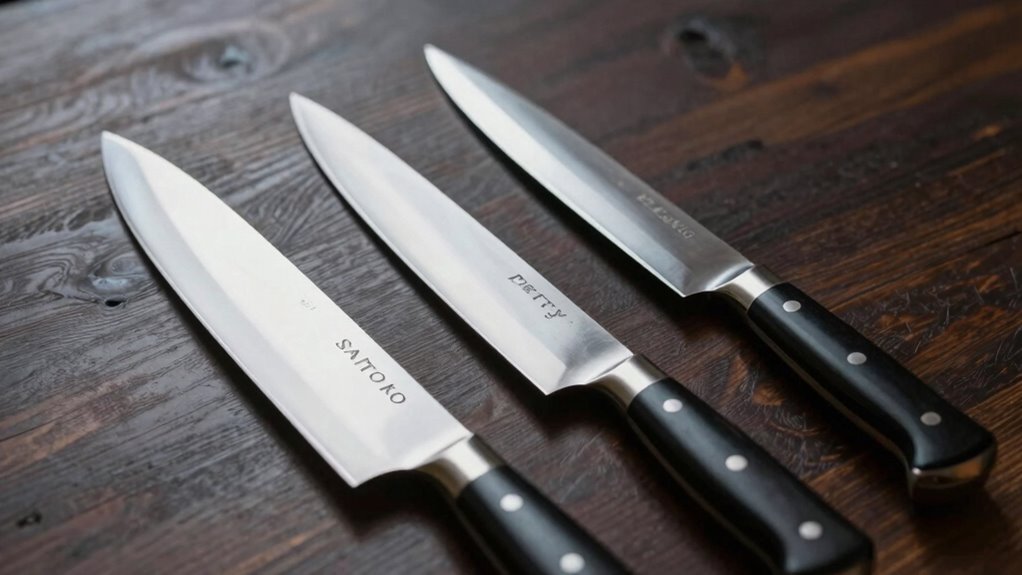

To understand Japanese knife names like Gyuto, Santoku, and Petty, focus on their meanings and traditional patterns. Gyuto means “beef sword,” indicating versatility, while Santoku translates to “three virtues,” highlighting multifunctionality. Petty refers to its small size for detailed work. The names often combine purpose or size with suffixes like “-to,” emphasizing their role. If you explore further, you’ll discover how these names reflect culture and help you choose the right knife with confidence.
Key Takeaways
- Recognize that “to” means “sword” or “knife”, indicating the item’s purpose or function.
- Understand that Gyuto is a versatile “beef sword”, suitable for meat and vegetables; Santoku means “three virtues” or uses; Petty signifies a small, detailed knife.
- Names often combine material, size, or purpose with traditional suffixes like “to”, helping identify their roles.
- Use the name’s meaning to select the right knife for specific tasks like slicing, peeling, or trimming.
- Appreciating the cultural context behind each name enhances understanding and prevents confusion when choosing Japanese knives.
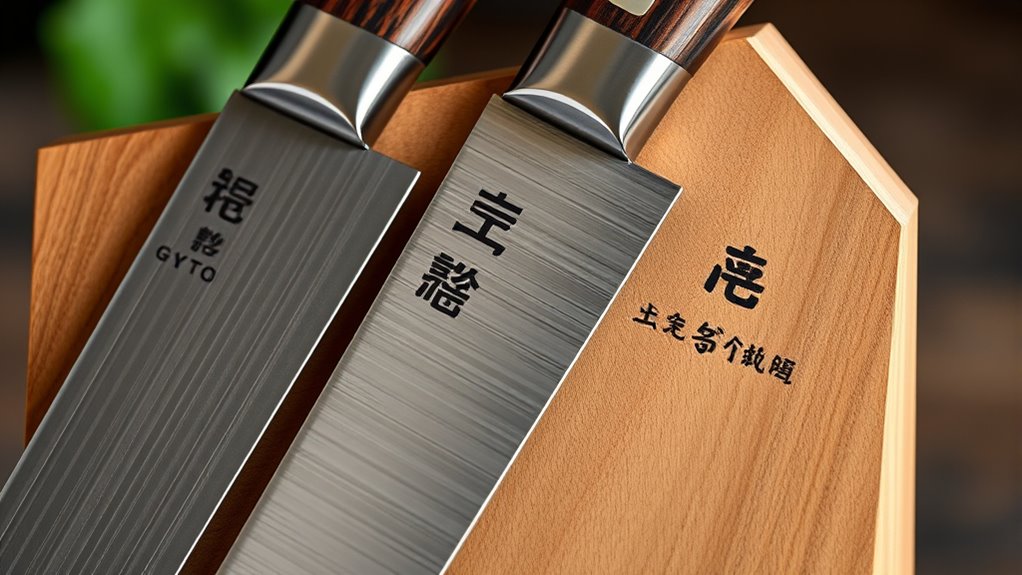
Have you ever wondered what those intricate Japanese knife names mean? Understanding the names isn’t just about identifying the tools; it’s about appreciating the cultural significance and the traditions behind them. Japanese knife naming conventions are rooted in history, craftsmanship, and regional pride, so each name carries a story. For instance, terms like Gyuto, Santoku, and Petty aren’t randomly assigned—they reflect the knife’s purpose, size, and the cultural context from which they originate. Recognizing these conventions helps you choose the right knife and enhances your overall culinary experience.
In Japanese, “Gyuto” translates to “beef sword,” highlighting its versatility for slicing larger cuts of meat, but it’s also suitable for vegetables and other ingredients. The name follows a straightforward convention: combining a material or purpose with a traditional suffix like “to,” meaning sword or knife. This naming pattern emphasizes the knife’s intended use while honoring the craftsmanship that goes into making it. Similarly, “Santoku” means “three virtues” or “three uses,” referring to its ability to handle meat, fish, and vegetables with equal efficiency. The name reveals a cultural emphasis on balance and multifunctionality, which is reflected in the knife’s design and purpose.
The Petty knife, on the other hand, gets its name from its small size, as “petty” in English refers to something minor or small. Its Japanese equivalent is often called a “bōchō” or “kosaku,” but in Western contexts, “Petty” signifies a utility knife used for detail work. The naming conventions here focus on size and function, making it easier for cooks to select the right tool for delicate tasks like peeling or trimming. These conventions serve as a practical guide, rooted in centuries of culinary tradition, helping both professional and home chefs understand the specific role each knife plays.

MITSUMOTO SAKARI 8-Inch Japanese Gyuto Chef Knife, 3-Layer 9Cr18MoV
- Blade Type: 8-inch Japanese Gyuto blade
- Versatile Use: Slices meat, fish, vegetables, herbs
- Blade Design: Supports pull and rocking cuts
As an affiliate, we earn on qualifying purchases.
As an affiliate, we earn on qualifying purchases.
Frequently Asked Questions
Are Japanese Knife Names Consistent Across Brands?
Japanese knife names aren’t entirely consistent across brands due to brand-specific naming patterns and historical influences on terminology. You’ll notice some brands use traditional terms like Gyuto or Santoku, while others might adapt names to appeal internationally. This variation can cause confusion, but understanding the origins and common patterns helps you recognize the differences. By familiarizing yourself with these nuances, you’ll navigate Japanese knife names more confidently regardless of the brand.
Do Regional Dialects Affect Knife Name Pronunciation?
Regional dialects definitely influence knife name pronunciation, with over 75% of Japanese regions having unique accents. These dialects cause pronunciation variations, so a Gyuto in Tokyo might sound different in Osaka. This regional diversity adds charm but can confuse non-native speakers. When learning or discussing Japanese knives, be aware of these dialect differences to better understand and communicate about your favorite kitchen tools across Japan.
How Do I Identify the Blade Length From the Name?
You identify the blade length from the name by looking for knife length indicators, usually in centimeters, at the beginning or end of the name. For example, a “210mm Gyuto” means a 21cm blade. Japanese knives follow specific naming conventions, so paying attention to these measurements helps you choose the right size. Remember, the number directly relates to the blade length, making it easy to select the perfect knife for your needs.
Can Knife Names Indicate the Steel Type Used?
Think of Japanese knife names like a secret code, revealing more than just the blade type. While steel types aren’t always explicitly in the name, some manufacturers include steel indications or specific naming conventions that hint at the material used. For example, certain suffixes or prefixes can indicate high-carbon steel or stainless steel. Pay attention to these subtle clues, as they help you understand the knife’s durability and performance.
Are There Differences in Naming Conventions for Traditional vs. Modern Knives?
Yes, there are differences in naming conventions between traditional and modern Japanese knives. Traditional names often reflect cultural influences and historical evolution of terminology, emphasizing craftsmanship and regional styles. Modern knives sometimes adopt Western terms or simplified names for clarity and market appeal. You’ll notice that traditional names preserve historical roots, while contemporary names tend to focus on function and design, making it easier for you to identify the right knife for your needs.
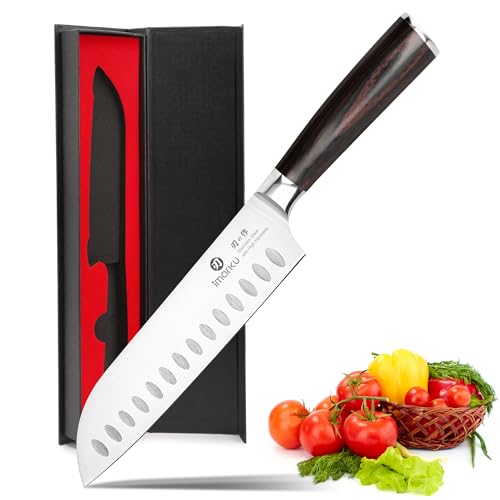
imarku Santoku Knife 7 Inch with Sharp Japanese High Carbon Stainless Steel
- Material: Japanese high carbon stainless steel
- Blade Sharpness: Ultra-sharp, 15-18° edge angle
- Blade Thickness: 2.5mm thick
As an affiliate, we earn on qualifying purchases.
As an affiliate, we earn on qualifying purchases.
Conclusion
Now that you’ve learned to decode Japanese knife names, you’re like a skilled chef in a bustling kitchen, confidently steering each label with ease. Remember, understanding these names is your secret ingredient—turning confusion into clarity. As you master these terms, you’ll chop, slice, and carve with the precision of a seasoned artisan. Just like a well-tuned instrument, your newfound knowledge will make every cut harmonious, transforming your cooking journey into a seamless symphony.
As an affiliate, we earn on qualifying purchases.
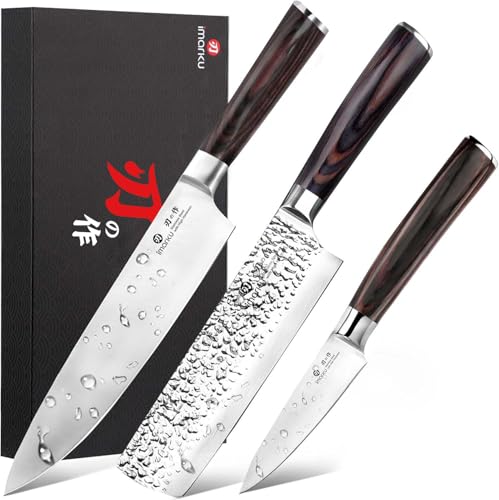
imarku 3 Pieces Knife set, Japanese HC Stainless Steel Kitchen Knife Set, Professional Chef Knife Set With Ergonomic Pakkawood Handle, Ultra Sharp Knives Set for Kitchen & Home Cooking, Best Gifts
- Ultra Sharp Double Bevel Edge: 15° angle for precise cuts
- 3-Piece Essential Kitchen Set: Includes chef, nakiri, and paring knives
- Versatile for Daily Cooking: Suitable for chopping, slicing, peeling
As an affiliate, we earn on qualifying purchases.
As an affiliate, we earn on qualifying purchases.