
To sharpen effectively as a left-hander, focus on maintaining a steady 15-20° angle and work from left to right with smooth, consistent strokes. Visualize the edge clearly and adapt your stance for better control, especially when using right-handed stones. Keep your workspace stable and regularly check your angle to prevent frustration. With these tips, you’ll sharpen with confidence—continue exploring more ways to perfect your technique and get lasting results.

Get kitchen gear delivered free — and shop member deals
- Fast, free delivery on millions of items
- Access to Prime Big Deal Days deals on October 6–7
- Prime Video, Amazon Music and more included
Key Takeaways
- Visualize and maintain a consistent 15-20° angle, working from left to right for smoother, more natural strokes.
- Position your sharpening stone and workspace to accommodate your left-handed grip, ensuring stability and control.
- Adapt right-handed stones by angling or adjusting your stance to keep the blade at the correct sharpening angle.
- Use steady, smooth strokes from heel to tip, focusing on consistent pressure and angle throughout each pass.
- Regularly inspect the edge for uneven spots and recheck the angle to prevent frustration and achieve a sharper, more durable edge.
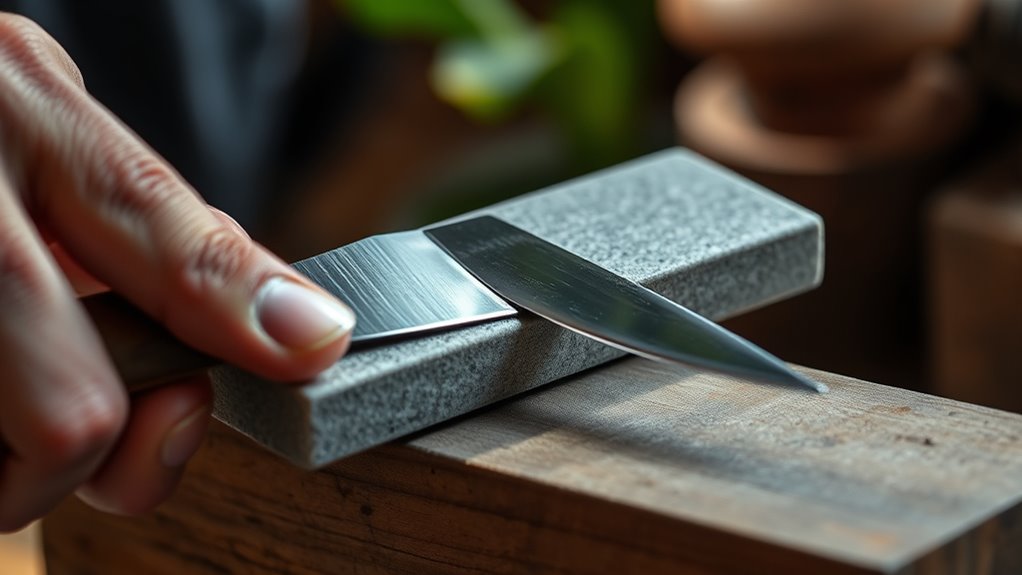
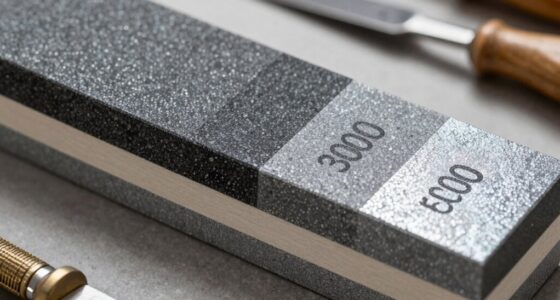
Ever wondered if sharpening your tools differently could make a difference? As a left-handed user, understanding how to properly maintain your blades can markedly improve your experience and reduce frustration. Blade maintenance isn’t just about keeping your tools sharp; it’s about applying the right techniques tailored to your dominant hand. One essential aspect is how you use sharpening stones. These stones are indispensable for honing your blades, but their effectiveness depends on your approach. When sharpening, it’s critical to set the correct angle from your perspective, which often differs from right-handed users. You might find that adjusting your stance or grip helps you maintain a consistent angle, leading to a sharper edge and better blade performance.
Left-handed sharpening tips: Adjust stance and grip for a sharper, more consistent edge.
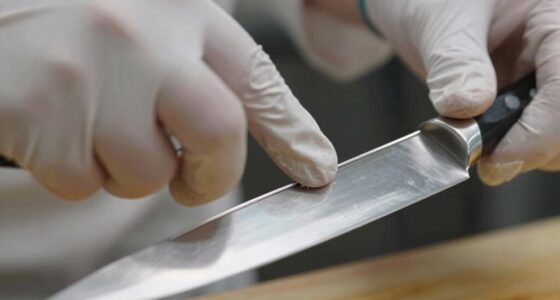
Since most sharpening stones are designed with right-handed users in mind, you may need to adapt your technique. Practice maintaining a steady angle—typically between 15 to 20 degrees for most blades—by visualizing the edge as you work. As you sharpen, keep your strokes smooth and consistent, moving from the heel to the tip of the blade. For lefties, it often feels more natural to work from left to right, but the key is to keep the same angle throughout the process. This consistency guarantees a uniform edge and reduces the chances of creating dull spots or uneven sharpness. Remember, blade maintenance isn’t a quick task; it requires patience and attention to detail, especially when adapting tools designed for right-handed use.
Using sharpening stones effectively also involves understanding how to set up your workspace. Place your stone on a stable surface, and position yourself so that your dominant hand comfortably controls the blade’s movement. If you find it awkward to use a standard stone, consider an adjustable or angled stone that better suits a left-handed grip. This setup minimizes strain and allows for more precise control. Regularly inspect the edge during sharpening—if you notice uneven spots, pause to recheck your angle and stroke consistency. Over time, this practice will make blade maintenance feel more intuitive, and your tools will stay sharper longer. Additionally, investing in specialized equipment designed for left-handed users can greatly improve your sharpening experience.
Ultimately, sharpening for lefties requires a slight shift in technique but offers a rewarding payoff: tools that perform better and last longer. By paying close attention to your angle, stroke, and how you use sharpening stones, you can turn a frustrating task into a straightforward routine. Proper blade maintenance isn’t just about the tool’s longevity; it’s about empowering you to work more efficiently and with confidence. With a little practice, you’ll find that sharpening your blades becomes a quick, satisfying part of your woodworking or culinary routine—tailored perfectly to your handedness.
As an affiliate, we earn on qualifying purchases.
Frequently Asked Questions
Can Lefties Use Standard Sharpening Tools Effectively?
Yes, you can use standard sharpening tools effectively as a leftie. Focus on adjusting your grip and angle to match your left-handed ergonomics, which helps you maintain control. Check sharpening tool compatibility to guarantee they suit your needs, and practice with consistent strokes. With proper technique, you’ll find sharpening becomes smoother and more comfortable, reducing frustration and allowing you to keep your tools in top condition.
Are There Specific Sharpening Angles Recommended for Left-Handed Players?
Like a master sculptor shaping their masterpiece, you should maintain a consistent angle when mirror sharpening. For left-handed players, a recommended sharpening angle ranges between 17-22 degrees, just like the right-handed approach, but focus on angle consistency to avoid frustration. Use a sharpening guide or jig to guarantee precision, helping you achieve smooth strokes and a razor-sharp edge, making your equipment feel as natural as your own hand.
How Often Should Lefties Sharpen Their Equipment for Optimal Performance?
You should sharpen your equipment every 8 to 12 hours of play, depending on usage and conditions. Maintaining a consistent sharpening frequency as part of your routine guarantees your gear remains sharp and performs at its best. Regular maintenance routines help prevent dullness that can hinder your game. Keep an eye on your equipment’s performance, and don’t wait too long between sharpenings to maintain the best control and accuracy on the court.
Do Left-Handed Players Need Different Stroking Techniques When Sharpening?
You don’t need entirely different stroking techniques when sharpening as a lefty, but using ambidextrous techniques can help you uphold consistency. Coincidentally, handedness adjustments — like changing your grip or angle slightly — allow you to sharpen more effectively without overcomplicating the process. Focus on maintaining a steady angle and stroke, regardless of handedness, to ensure your equipment stays sharp and performs well, no matter which side you favor.
What Common Sharpening Mistakes Should Lefties Avoid?
You should avoid misaligned edges and inconsistent grinding, which are common sharpening mistakes for lefties. Make certain your angle stays steady throughout the process to prevent uneven edges. Keep your strokes smooth and controlled, focusing on maintaining consistent pressure. Rushing or twisting your wrist can lead to misaligned edges, so take your time. Practicing proper technique helps you achieve a sharper, more reliable edge, reducing frustration during sharpening.
adjustable sharpening stone for lefties
As an affiliate, we earn on qualifying purchases.
As an affiliate, we earn on qualifying purchases.
Conclusion
Think of your sharpening skills as your trusty compass, guiding you through the twists and turns of your artistic journey. With the right angle and stroke tips, you’ll carve out a smoother path, turning frustration into flow. Remember, every swipe is like planting a seed for improvement—soon, you’ll see your confidence blossom like a well-tended garden. Keep practicing, stay patient, and watch your skills sharpen and shine brighter with each stroke.
angle guide for knife sharpening
As an affiliate, we earn on qualifying purchases.
As an affiliate, we earn on qualifying purchases.
As an affiliate, we earn on qualifying purchases.
Fall Picks
fall essentials
As an affiliate, we earn on qualifying purchases.