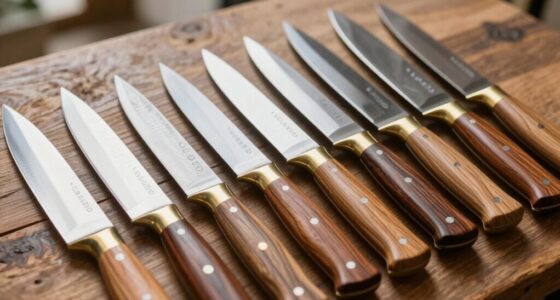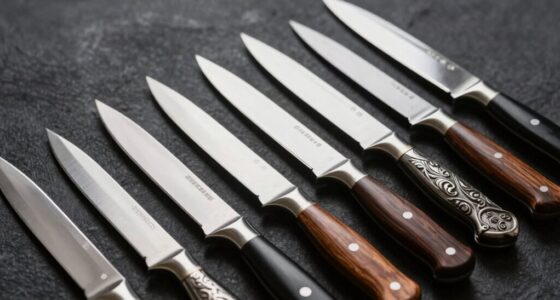
Finding the best nakiri knife for precise prep means choosing a blade that offers exceptional control, sharpness, and balance. The HexClad Nakiri stands out for its durability and beautiful Damascus pattern, making it a versatile choice for precise vegetable cuts. The Shun Classic Nakiri delivers premium craftsmanship for those willing to invest in a long-lasting, razor-sharp edge. Meanwhile, the Sunnecko Nakiri offers a high-performance, ergonomic design at a more accessible price point. Every option involves tradeoffs between price, durability, and ease of sharpening, so continue reading for a detailed breakdown of each.
Key Takeaways
- The top-performing knives combine high-carbon stainless steel with excellent edge retention for precise cuts.
- Comfortable, ergonomic handles make a significant difference in controlling thin, delicate vegetable slices.
- Price correlates strongly with blade quality; premium options tend to offer better long-term performance.
- Japanese-made knives typically deliver sharper edges and finer craftsmanship compared to most budget options.
- Tradeoffs often involve balancing initial cost against durability and ease of sharpening over time.


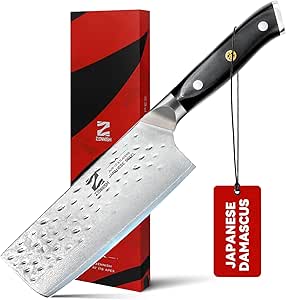


More Details on Our Top Picks
HexClad Nakiri Knife, 6.5-Inch Japanese Damascus Stainless Steel Blade with Pakkawood Handle
This HexClad Nakiri stands out for its exceptional combination of craftsmanship and practicality, making it the top choice for those seeking precise vegetable prep. Its 67-layer Damascus steel blade offers razor-sharp edges that maintain their keen edge longer than many traditional options, comparable to the durability of the Shun Classic but with a more modern look. The ergonomic Pakkawood handle provides comfortable control, though it requires careful hand washing and regular honing to keep the edge optimal. Compared to the 6-inch G10-handled option, this knife offers a more refined aesthetic but demands more maintenance. Its balanced weight and sharpness make it a reliable tool for detailed prep work, especially for home chefs prioritizing longevity and craftsmanship.
Pros:- Sharp, durable Damascus steel blade with 67 layers
- Ergonomic Pakkawood handle for comfort and control
- Expertly crafted with a 3-step Honbazuke process
- Lifetime warranty against defects
Cons:- Requires hand washing; not dishwasher safe
- Needs regular honing to maintain sharpness
- Avoid cutting on hard surfaces to prevent damage
Best for: Home cooks who value a beautifully crafted, durable knife for daily vegetable prep
Not ideal for: Dishwasher users or those seeking an ultra-lightweight or budget-friendly option
- Blade Length:6.5 inches
- Total Length:12.3 inches
- Blade Material:Japanese Damascus stainless steel
- Handle Material:Pakkawood
- Number of Layers:67 layers
- Edge Angle:12 degrees
Bottom line: This knife is ideal for those seeking a high-quality, aesthetically pleasing nakiri that excels in vegetable prep but requires attentive maintenance.
SHAN ZU 7 Inch Nakiri Knife – Japanese High Carbon Stainless Steel Vegetable Cleaver with Pakkawood Handle
The SHAN ZU 7-inch Nakiri shines with its high carbon stainless steel blade, offering a sharper edge than many standard stainless options, making it ideal for precise vegetable chopping. Its 62 HRC hardness strikes a good balance between edge retention and ease of sharpening, outperforming softer blades like some in the 60 HRC range, but not quite matching the hardness of the premium VG-MAX steel. The ergonomic Pakkawood handle provides comfort, although it may need occasional maintenance to prevent drying or cracking. Compared to the HOSHANHO, this knife has a slightly longer blade, making it better suited for larger vegetables but perhaps less maneuverable for intricate cuts. Overall, it delivers excellent cutting performance for semi-professional use and serious home cooks.
Pros:- Highly sharp and precise edge thanks to high carbon stainless steel
- Ergonomic, comfortable handle
- Corrosion-resistant and easy to maintain
- Longer blade for larger vegetables
Cons:- Requires careful sharpening to maintain optimal edge
- Handle may need upkeep to prevent drying
Best for: Experienced home chefs or small restaurant kitchens needing reliable vegetable prep
Not ideal for: Beginners or those preferring a lightweight or lower-cost knife
- Blade Length:7 inches
- Material:10Cr15MoV High Carbon Stainless Steel
- Hardness:62 HRC
- Handle Material:Pakkawood
- Blade Finish:Matte
- Blade Edge:Sharpened to 12°
Bottom line: This Nakiri offers a good balance of sharpness, durability, and comfort, making it suitable for those who demand precision and versatility in vegetable prep.
HOSHANHO 7 Inch Nakiri Knife, Japanese High Carbon Stainless Steel Chef Knife with Pakkawood Handle
The HOSHANHO 7-inch Nakiri emphasizes versatility, with a hand-polished, ultra-sharp blade made from Japanese 10Cr15CoMoV high carbon stainless steel. Its 60 HRC hardness offers a good balance between edge retention and ease of sharpening, slightly softer than the SHAN ZU but easier to maintain. The forged construction and ergonomic Pakkawood handle provide excellent control and reduced fatigue during extended use. Unlike the more specialized edge of the SHAN ZU, the scalloped blade design helps prevent food sticking, which benefits continuous prep work. Compared to the Shun Classic, this knife provides a slightly more affordable option with comparable performance and a stylish look, but it may require more frequent sharpening to keep its edge.
Pros:- Sharp, hand-polished 15° edge for effortless slicing
- Ergonomic handle reduces fatigue
- Versatile for multiple prep tasks
- Stylish, non-stick scalloped blade design
Cons:- Requires careful handling to maintain sharpness
- Handle can become slippery when wet
Best for: Cooks who want a versatile nakiri that handles vegetables, meat, and fruits with equal finesse
Not ideal for: Those seeking a highly specialized vegetable-only knife or minimal maintenance
- Blade Length:7 inches
- Material:Japanese 10Cr15CoMoV stainless steel
- Blade Hardness:60 HRC
- Handle Material:Pakkawood
- Blade Edge:15-degree, hand-polished
- Construction:Forged
Bottom line: A balanced, versatile nakiri that suits cooks needing an all-rounder for various prep tasks, though it demands attentive sharpening.
6 Inch Nakiri Knife – Razor Sharp Japanese Damascus AUS-10 Steel Vegetable Cleaver with G10 Handle and Gift Box
This 6-inch Nakiri combines high-performance steel with a sleek G10 handle, making it ideal for those prioritizing sharpness and durability in a compact size. Its 67-layer Damascus AUS-10 steel blade offers exceptional edge retention, rivaling the HexClad’s craftsmanship but with a more aggressive look. The full tang G10 handle provides a secure, slip-resistant grip, especially useful for extended chopping sessions. Compared to the 6.5-inch Shun Classic, this knife’s shorter blade offers more control in tight spaces but might be less versatile for larger vegetables. It’s a premium option for professionals and dedicated home cooks who appreciate a gift-ready presentation and top-tier materials.
Pros:- Exceptional sharpness with long-lasting edge due to AUS-10 Damascus steel
- Slip-resistant G10 handle for control
- Full tang construction for durability
- Elegant gift box presentation
Cons:- Higher price point than standard knives
- Limited to 6 inches, less suited for large vegetables or multi-purpose use
Best for: Professional chefs or serious home cooks seeking a compact, high-end vegetable knife with a gift box
Not ideal for: Users preferring a larger, more versatile nakiri or those on a tighter budget
- Blade Length:6 inches
- Steel Type:AUS-10 Damascus steel
- Layer Count:67 layers
- Handle Material:G10 carbon fiber composite
- Full Tang:Yes
- Blade Edge:Hand-sharpened to 12°-14°
Bottom line: This Nakiri excels for precision tasks and presentation, making it perfect for connoisseurs and professional kitchens, with a tradeoff in size flexibility.
Shun Classic 6.5-inch Nakiri Knife
The Shun Classic 6.5-inch Nakiri is a standout for traditional craftsmanship, with its VG-MAX steel core and Damascus cladding delivering exceptional sharpness and durability. Its 16-degree edge angle provides refined slicing, especially suited for delicate vegetable work. The D-shaped Pakkawood handle offers a secure, comfortable grip, enhancing control during precise cuts. Compared with other options like the SHAN ZU, this knife emphasizes artisanal quality, but it comes with a higher price and requires careful maintenance to preserve its edge. Its handcrafted nature makes it a favorite for purists who appreciate Japanese tradition and fine materials for vegetable prep, though it’s somewhat limited for multi-purpose tasks.
Pros:- Exceptional sharpness from VG-MAX steel with Damascus cladding
- Comfortable, secure D-shaped Pakkawood handle
- Handcrafted in Japan with traditional techniques
- Supports easy honing and sharpening
Cons:- Premium price point
- Limited versatility beyond vegetables
- High maintenance to keep sharpness
Best for: Enthusiasts seeking a beautifully handcrafted, high-performance vegetable knife for dedicated vegetable prep
Not ideal for: Casual cooks seeking a more versatile or low-maintenance option or those on a tighter budget
- Blade Length:6.5 inches
- Material:VG-MAX steel with Damascus cladding
- Edge Angle:16 degrees
- Handle:Pakkawood, D-shaped
- Layers:68 layers
Bottom line: Ideal for traditionalists and craftsmen who want a high-quality, handcrafted nakiri for precise, delicate vegetable slicing, accepting its maintenance needs.
Sunnecko 7” Nakiri Knife Razor Sharp 15° Edge – Vegetable & Meat Cleaver Kitchen Knife, High Carbon Stainless Steel, Ergonomic Handle, Sheath & Gift Box
The Sunnecko 7-inch Nakiri stands out for its razor-sharp 15° edge, making it ideal for achieving clean, precise slices of vegetables and meats. It compares favorably to the iMarku Nakiri due to its traditional design and ergonomic handle, offering excellent control for detailed prep. While its high-carbon stainless steel ensures durability, it requires careful maintenance to prevent rust, unlike the stainless steel options that are more forgiving. The Pakkawood handle provides a comfortable grip, but can become slippery when wet. This knife makes the most sense for home cooks who prioritize edge sharpness and traditional craftsmanship, but those needing a low-maintenance or heavy-duty tool might find it less suitable.
Pros:- Razor-sharp 15° edge for effortless, precise slicing
- Ergonomic handle reduces hand fatigue during extended prep
- Made from durable, rust-resistant high-carbon steel
- Traditional Japanese-inspired blade design
Cons:- Requires careful maintenance to prevent rust
- Handle may become slippery when wet
- Not suitable for heavy-duty tasks like splitting hard squash
Best for: Home cooks who want a sharp, stylish knife for precise vegetable and meat prep
Not ideal for: People who prefer low-maintenance tools or do heavy-duty chopping frequently
- Blade Length:7 inches
- Material:High Carbon Stainless Steel
- Edge Angle:15°
- Handle Material:Pakkawood
- Includes:Sheath, Gift Box
Bottom line: This pick suits enthusiasts seeking a sharp, traditional-style knife for detailed prep, accepting some maintenance tradeoffs.
iMarku Nakiri Knife, 7 Inch High Carbon Stainless Steel Japanese Chef Knife
The iMarku Nakiri offers an ultra-sharp 15° edge combined with an anti-stick hammered finish, reducing food sticking and making it well-suited for consistent, clean cuts. Its stylish hammered design and mirror-polished spine make it stand out visually compared to the Sunnecko, which has a more traditional look. The ergonomic, non-slip handle ensures comfort during extended use, but the hand wash-only requirement adds a maintenance step that might deter some users. Compared with the other options, this knife balances sharpness and style but is less forgiving in terms of care. It’s best for home cooks who value precise, beautiful prep work and are willing to handle some extra maintenance.
Pros:- Ultra-sharp 15° edge for precise cuts
- Anti-stick hammered finish reduces food sticking
- Ergonomic, non-slip handle for comfort and control
- High-quality, rust-resistant stainless steel blade
Cons:- Requires hand washing, less convenient
- Handle may need maintenance to prevent drying
- Limited for kitchen use only, not for heavy-duty tasks
Best for: Cooks who want a stylish, razor-sharp knife for precise vegetable and meat prep
Not ideal for: People seeking a low-maintenance, heavy-duty kitchen knife
- Blade Length:7 inches
- Material:High-carbon stainless steel
- Edge Angle:15°
- Handle Material:FSC-Certified Pakkawood
- Design Features:Hammered finish, hollow-edge, mirror-polished spine
- Care Instructions:Hand wash only
Bottom line: This knife is ideal for those who prioritize precise, attractive cuts and are comfortable with careful maintenance.
imarku Nakiri Knife, 7 Inch Japanese Chef Knife with Ergonomic Handle
The imarku Nakiri combines versatility with precision through its high-quality SUS440A stainless steel, offering a durable and sharp blade suited for chopping vegetables, fish, and meat. Its hammered textured blade and seamless transition between blade and handle promote food release and control, making it a strong choice for detailed prep. Unlike the Sunnecko, which emphasizes traditional craftsmanship, or the iMarku for style, this model focuses on practicality and consistency. The handle’s ergonomic design enhances comfort during long prep sessions, but it isn’t built for heavy-duty chopping of very hard items. This makes it well-suited for home cooks and professionals who need a reliable, versatile tool for precision work across multiple ingredients.
Pros:- Versatile for multiple kitchen tasks
- Razor-sharp, durable stainless steel blade
- Ergonomic, non-slip handle for extended use
- Hammered textured blade reduces food sticking
Cons:- Handle may need maintenance to prevent drying
- Not suitable for chopping very hard items
- Requires careful handling due to sharpness
Best for: Home cooks and chefs seeking a versatile, durable knife for detailed vegetable and fish prep
Not ideal for: Those needing a heavy-duty knife for splitting or hard-duty chopping
- Blade Length:7 inches
- Material:SUS440A stainless steel
- Hardness:HRC 58+
- Handle Material:FSC-Certified Pakkawood
- Design Features:Hammered textured blade, seamless transition
Bottom line: This knife offers a balanced mix of durability, versatility, and precision for everyday detailed prep.

How We Picked
The knives in this roundup were selected based on a combination of performance, build quality, ease of maintenance, and user feedback. Priority was given to blades that excel in sharpness and edge retention—key factors for precise prep—while also considering handle comfort and overall balance. We prioritized traditional Japanese steel types and craftsmanship for their reputation in producing sharp, durable blades. Price was a secondary factor, ensuring options for different budgets while maintaining core performance standards. The ranking reflects how well each knife balances these factors for both professional chefs and home cooks seeking precision.Factors to Consider When Choosing Best Nakiri Knife For Precise Prep
Choosing the right nakiri knife for precise prep involves evaluating several key factors. While blade sharpness is paramount, other considerations like handle comfort, blade material, and maintenance also influence overall performance. Understanding these aspects helps prevent common pitfalls, such as selecting a blade that dulls quickly or feels unwieldy during detailed cuts. A well-chosen nakiri can transform vegetable prep from a chore into a precise, enjoyable task, but the right fit depends on your specific needs and cooking style.Blade Material and Sharpness
The core of any nakiri knife’s precision lies in its blade material. High-carbon stainless steels like AUS-10 or VG-MAX are popular for their ability to hold a sharp edge longer and resist rust. Cheaper steels may require frequent honing or sharpening, which can be frustrating during detailed prep. Look for blades with a fine edge geometry designed for slicing thin vegetables—this ensures clean, precise cuts without crushing or tearing delicate produce. Investing in a high-quality steel often pays off in longevity and performance, especially if you aim to use the knife frequently.
Handle Comfort and Balance
An ergonomic handle that feels secure and comfortable reduces fatigue during extended prep sessions. Materials like pakkawood or G10 provide a good grip and durability, but their shape and size matter just as much as the material. A well-balanced knife with a handle that aligns naturally with the blade allows for more controlled, precise cuts. Avoid overly bulky handles if you prefer delicate slicing, and consider your grip style—pinch grips benefit from slimmer, more contoured handles for finer control.
Blade Size and Shape
Most nakiri knives fall between 6 and 7 inches in length, with 7 inches offering more surface area for larger vegetables. Smaller blades can be more maneuverable for intricate cuts, but may limit your chopping speed. The blade’s width and flat profile are designed to make vertical chopping efficient, so choose a size that matches your typical prep volume and style. Ensuring the blade’s thickness and weight distribution suit your comfort level will enhance precision and reduce hand fatigue.
Maintenance and Longevity
Proper maintenance involves regular honing and occasional sharpening, especially for blades used for precise cuts. Some steels are more forgiving and easier to sharpen at home, while others may require professional sharpening for optimal edge retention. Consider knives with a blade finish that resists rust and stains if you prefer low-maintenance options. A knife that dulls quickly or is difficult to sharpen can undermine accuracy, so balancing ease of maintenance with performance is key.
Price and Value
While premium knives often deliver superior sharpness and durability, they can also come with a steep price tag. Budget-friendly options might suffice for occasional use but may need frequent sharpening to maintain precision. High-end models tend to feature finer steels and craftsmanship, translating into better performance over time. Assess your budget against your prep frequency and desire for longevity—sometimes paying more upfront results in lower long-term costs and better slicing control.
Frequently Asked Questions
How often should I sharpen my nakiri knife for precise prep?
For maintaining optimal precision, sharpening frequency depends on usage. Generally, honing the blade every few uses helps keep the edge aligned, while actual sharpening might be needed every 6-12 months with regular use. If you notice a decline in cutting performance or difficulty slicing thin vegetables, that’s a sign it’s time for a more thorough sharpening. Using a whetstone or professional service ensures your blade remains finely honed for accurate, clean cuts. Proper maintenance not only preserves sharpness but also extends the life of your knife.
Is a longer nakiri better for precise prep?
Longer blades, such as 7 inches, provide more surface area, which can be advantageous for slicing large vegetables in one stroke. They also help with balance and leverage, making precise cuts easier once you’re accustomed to the length. However, longer blades may be less maneuverable in tight spaces or for detailed, delicate work. If precision is your priority, consider how comfortable you are handling a longer blade—smaller or more contoured options might offer better control for intricate prep tasks.
Should I choose a stainless steel or carbon steel nakiri?
Stainless steel blades are generally easier to maintain because they resist rust and stains, making them suitable for busy kitchens or less frequent sharpening. Carbon steel blades, on the other hand, offer a finer, sharper edge that can significantly improve slicing precision. They do require more careful maintenance to prevent rust, but many chefs prefer them for their edge-holding ability and responsiveness. Your choice depends on your willingness to care for the blade and how often you need maximum sharpness for precise prep.
What handle material is best for precise, controlled cuts?
Handles made from pakkawood or G10 are popular because they offer a firm, slip-resistant grip, which is essential for controlled cuts. The shape and contour of the handle are just as important as the material; a handle that fits naturally into your grip reduces fatigue and enhances accuracy. Avoid overly bulky or slick handles if you want fine control, especially when working with thin vegetables. Test the handle feel in your hand—comfort and balance directly influence your ability to make precise, consistent cuts.
Is it worth investing in a premium nakiri for precise prep?
Investing in a premium nakiri often results in better edge retention, finer craftsmanship, and more consistent performance, all of which contribute to precise prep. These blades are typically made from high-quality steels that sharpen to a razor edge and hold it longer, reducing the frequency of sharpening. While the upfront cost is higher, the improved control, durability, and overall experience can justify the investment, especially for serious cooks or professionals who rely on precision daily. For casual use, a mid-range option might suffice, but for dedicated prep work, premium models deliver noticeable benefits.
Conclusion
For those seeking the best overall, the HexClad Nakiri combines durability with a beautiful design, suitable for versatile kitchen tasks. Budget-conscious cooks will find the Sunnecko Nakiri offers excellent performance at a more accessible price, making it ideal for everyday use. Serious chefs or prep enthusiasts aiming for maximum precision should consider the Shun Classic Nakiri for its craftsmanship and sharpness. Beginners or casual home cooks will benefit from lighter, easier-to-handle options like the imarku Nakiri. Ultimately, the right choice depends on your skill level, frequency of use, and maintenance willingness, but each of these knives can elevate your vegetable prep with the right fit.