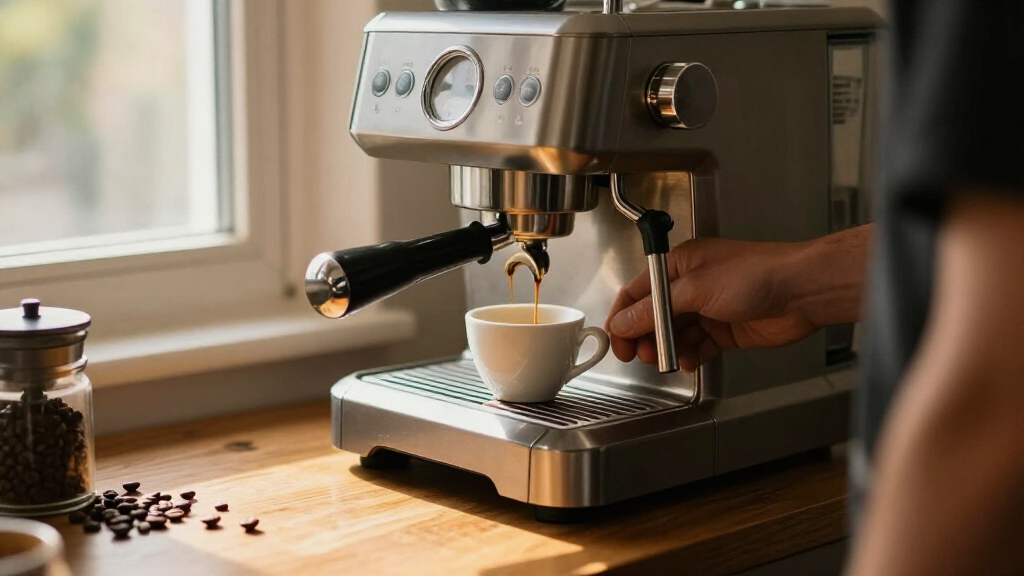

The right espresso machine for your home depends on one question: how much of the craft do you want to own? If you want café-quality shots with a built-in grinder and room to grow, the Breville Barista Express (BES870XL) is the strongest all-around pick, pairing precise extraction with hands-on control. If counter space or budget leads your decision, the Breville Bambino delivers shockingly good espresso in a tiny footprint, while the De’Longhi Stilosa proves you can pull real shots without a real investment. The main tradeoff in this category is convenience versus control — super-automatic machines like the De’Longhi Magnifica Duo trade adjustability for push-button consistency, while budget semi-automatics demand better technique and fresher beans. Below, I break down all 15 machines, who each one is for, and which ones I’d skip entirely.

Get kitchen gear delivered free — and shop member deals
- Fast, free delivery on millions of items
- Access to Prime Big Deal Days deals on October 6–7
- Prime Video, Amazon Music and more included
Complete the kit


Key Takeaways
- A built-in grinder was the single biggest differentiator in this lineup — the Barista Express and Spacekey pulled noticeably more consistent shots than grinder-less machines paired with pre-ground coffee.
- Two machines on this list (BES870BTR and BES870XL) are the same Barista Express in different finishes, so your choice between them comes down to aesthetics, not performance.
- Cold brew capability is emerging as a differentiator in 2026 — the Ninja Luxe Café, XIXUBX Cold Brew, and Canoly 2-in-1 cover it, but only the Ninja does it without compromising espresso quality.
- Under-$150 machines like the De’Longhi Stilosa and CASABREWS 3700 can produce legitimate espresso, but they demand a separate grinder, which is where most beginners overspend on the machine and underspend on the grind.
- Super-automatic convenience costs real money: the De’Longhi Magnifica Duo is the only true one-touch option here, and it makes the most sense for households where multiple people make drinks daily.


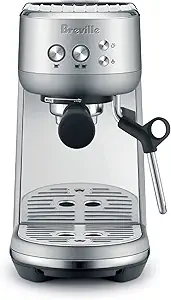


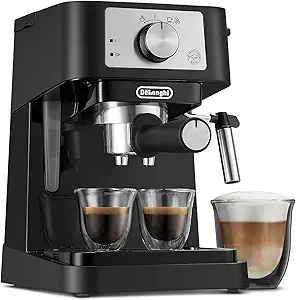


| espresso machines for home | Power |
|---|---|
| Breville BES870BTR Barista Exp | 1600 watts |
| XIXUBX Espresso Machine with M | — |
| CASABREWS CM5418 Compact Espre | 1350 watts |
| Spacekey Espresso Machine with | 1350 watts |
| Aromaster 1400W Espresso Machi | 1400 watts |
| Ninja Luxe Café Premier 3-in-1 | — |
| Breville Bambino Espresso Mach | 1560 Watts, 110-120V |
| De’Longhi Magnifica Duo Automa | — |
| XIXUBX Cold Brew Semi-Automati | 1350W |
| Canoly 2-in-1 Espresso Machine | 1350W |
| De’Longhi Stilosa Compact Manu | — |
| AMZCHEF Espresso Machine with | 1350 W |
| Arecovas Espresso Machine with | 1300 W |
| Breville BES870XL Barista Expr | 1600 W, 120 V |
| CASABREWS 3700 Essential Stain | 1350 W, 120 V |
More Details on Our Top Picks
Breville BES870BTR Barista Express Espresso Machine, Black Truffle
The Barista Express earns the top spot because it solves the problem that trips up most home espresso setups: stale, inconsistently ground coffee. Its integrated conical burr grinder doses fresh grounds straight into the 54mm portafilter, so a full beans-to-espresso workflow takes under a minute. Compared with the Spacekey, which also bundles a grinder, Breville’s grind adjustment and PID temperature control feel more refined and better documented, with a longer track record of reliability. The manual steam wand produces real microfoam for latte art, something the entry-level De’Longhi Stilosa struggles to match. The tradeoff is real: it demands practice with dosing and tamping, and its footprint eats counter space that a compact unit like the CASABREWS CM5418 wouldn’t.
Pros:- Built-in conical burr grinder delivers fresh grounds on demand
- PID temperature control and low-pressure pre-infusion produce balanced extraction
- Powerful steam wand textures true microfoam for latte art
- Beans to espresso in under a minute with extensive included accessories
Cons:- Manual operation requires practice and skill to master
- Large footprint takes up significant counter space
Best for: Coffee drinkers ready to learn genuine barista technique with a one-machine setup that replaces a separate grinder
Not ideal for: Buyers wanting push-button simplicity or tiny kitchens — it’s manual, wide, and unforgiving of sloppy technique
- Grinder:Integrated conical burr grinder
- Portafilter:54mm stainless steel
- Bean Hopper Capacity:1/2 lb
- Water Tank Capacity:67 oz
- Power:1600 watts
- Temperature Control:Digital PID
- Color:Black Truffle
- Warranty:1 year limited
Our verdict“The pick for anyone serious about learning espresso properly who wants a proven all-in-one machine rather than a starter unit they’ll outgrow.”
XIXUBX Espresso Machine with Milk Frother for Cappuccino & Latte, Silver
Where the Barista Express assumes you want to grind, dose, and tamp, the XIXUBX assumes you just want good drinks with minimal fuss — and its 42 oz water tank, the largest in this batch alongside the Spacekey’s, means fewer refills when serving several people. The 360° rotating steam wand and included frothing pitcher give it a leg up over the Aromaster for households that make mostly milk drinks. Its fast heating lets you move from shot to steam without the cooldown pause the CASABREWS CM5418 demands after frothing. The honest catch is brand trust: compared with Breville or De’Longhi, XIXUBX has a thin track record, so long-term durability and parts support are a gamble you accept for the features.
Pros:- 20-bar pressure system pulls shots with rich crema
- Fast heating supports back-to-back brewing and frothing without cooling intervals
- Large 42 oz tank handles 10+ cups per refill
- Detachable steam wand and simple controls ease the learning curve
Cons:- Unknown brand with limited track record compared with established espresso makers
- Promotional claims about ground-coffee savings may not hold up in real use
Best for: Families or roommates making multiple milk drinks daily who want a big tank and continuous brewing on a budget
Not ideal for: Buyers who prioritize brand reputation and long-term serviceability — this is an unproven name next to Breville and De’Longhi
- Pressure:20 bar
- Steam Wand:360° rotating, detachable
- Water Tank Capacity:42 oz
- Body Material:Stainless steel
- Included Accessories:Stainless steel milk frothing pitcher
- Warranty:1 year
Our verdict“A sensible value pick for multi-drinker households, provided you’re comfortable betting on a lesser-known brand.”
CASABREWS CM5418 Compact Espresso Machine with Milk Frothing Steam Wand
The CASABREWS CM5418 is the machine I’d point to for small kitchens where the Barista Express simply won’t fit. Its stainless steel body with a 34 oz removable tank slips into apartments and office nooks, yet the 20-bar Italian pump and built-in pressure gauge let you diagnose and adjust extraction — a tool the even more bare-bones De’Longhi Stilosa lacks. That gauge matters: it turns dialing in grind and tamp from guesswork into feedback. The compromise is workflow. Unlike the Aromaster’s dual-circuit system, the CM5418 must cool down after steaming milk before it will pull another shot, and semi-automatic operation means you’ll need a separate grinder and some tamping skill to actually reach proper pressure.
Pros:- Compact footprint fits kitchens and offices of any size
- 20-bar pump with built-in pressure gauge for customized extraction
- Steam wand produces creamy microfoam suitable for latte art
- Detachable 34 oz tank refills easily and supports multiple brews
Cons:- Must cool down after milk frothing or it enters over-heating protection
- Semi-automatic operation requires grinder and tamping skill to hit proper pressure
Best for: Apartment dwellers or office users with limited counter space who already own (or will buy) a grinder and want visible extraction feedback
Not ideal for: Anyone making back-to-back milk drinks — the mandatory cooldown after frothing slows down multi-drink mornings
- Model:CM5418
- Pressure:20 bar Italian pump
- Power:1350 watts
- Water Tank Capacity:34 oz removable
- Material:Stainless steel
- Operation Mode:Semi-automatic
- Included Accessories:One- and two-cup filters, portafilter, tamper with spoon
Our verdict“The best small-footprint option for hands-on brewers who value a pressure gauge over speed and convenience features.”
Spacekey Espresso Machine with Built-in Grinder and Milk Frother, 30 Grind Settings, 20-Bar Pump
The Spacekey competes directly with the Barista Express as an all-in-one grinder-plus-machine package, and its 30 grind settings out-spec Breville’s adjustment range on paper — useful for fine-tuning across different beans. Its differentiator is the dedicated cold brew function, which neither the Barista Express nor any machine in this batch besides the Ninja Luxe Café offers, making it the natural pick for iced-coffee-first households. PID control and smart pre-infusion round out a spec sheet that reads like a machine twice its compact size. Realistically, the 51mm portafilter is smaller than Breville’s 54mm and less standard for aftermarket accessories, the anti-clog grinder will need regular cleaning, and the one-year warranty (lifetime support aside) is shorter than what established brands back their flagships with.
Pros:- All-in-one design combines grinding, extraction, and milk frothing
- 30 grind settings with anti-clog system enable precise dialing in
- PID temperature control and smart pre-infusion for consistent shots
- Dedicated cold brew function plus compact footprint and 61 oz removable tank
Cons:- Built-in grinder requires regular cleaning to prevent clogging over time
- One-year warranty is short compared with some competitors
Best for: Iced-coffee drinkers who want fresh-ground espresso and cold brew from one compact countertop machine
Not ideal for: Upgraders who want a proven platform — the smaller portafilter, new-brand grinder, and short warranty limit expandability and peace of mind
- Grind Settings:30 adjustable
- Pump Pressure:20 bar
- Power:1350 watts
- Temperature Control:PID technology
- Portafilter Size:51mm
- Water Tank Capacity:61 oz removable
- Special Functions:Cold brew, milk frother, LED display
- Dimensions:11.6 x 9 x 14 inches
- Warranty:1-year limited, lifetime customer support
Our verdict“A feature-dense grinder combo for iced-drink fans, as long as you accept a shorter warranty and less-proven build than Breville.”
Aromaster 1400W Espresso Machine with Milk Frother, Stainless Steel
The Aromaster leans hard into low-friction ownership: touch-screen controls, one-touch descaling, and auto shut-off remove most of the chores that scare off first-time buyers. Its dual-circuit system is the standout here — unlike the CASABREWS CM5418, which forces a cooldown between steaming and brewing, the Aromaster switches straight from hot espresso to iced coffee, a genuine advantage on busy mornings. PID plus NTC temperature control with low-pressure pre-infusion gives it more shot consistency than a basic unit like the De’Longhi Stilosa. The flip side: there’s no grinder, so you’re dependent on pre-ground coffee or a separate purchase like you would be with the CASABREWS, and the 37 oz tank is modest next to the XIXUBX’s 42 oz. Brand support networks also trail Breville and De’Longhi.
Pros:- Dual-circuit system switches between hot and iced drinks without waiting
- Touch screen, one-touch descaling, and auto shut-off simplify daily use
- PID + NTC temperature control with pre-infusion for balanced flavor
- Compact 13 x 7 x 14 inch footprint with removable 37 oz tank
Cons:- No built-in grinder, so fresh-ground espresso requires a separate purchase
- Smaller and lesser-known brand with a thinner service track record
Best for: First-time espresso owners who want guided, low-maintenance operation with hot-and-iced versatility and no grinder to learn
Not ideal for: Enthusiasts chasing peak shot quality — no built-in grinder means pre-ground or separate equipment, capping freshness
- Power:1400 watts
- Pump Pressure:20 bar
- Temperature Control:PID + NTC
- Water Tank Capacity:37 oz removable
- Controls:Touch screen
- Special Features:Dual-circuit hot/iced brewing, pre-infusion, one-touch descaling, auto shut-off, cup warmer
- Dimensions:13 x 7 x 14 inches (D x W x H)
- Material:Stainless steel
Our verdict“The friendliest on-ramp to home espresso for beginners who value convenience and iced options over grinding their own beans.”
Ninja Luxe Café Premier 3-in-1 Espresso Machine with Drip Coffee and Cold Brew
If replacing three appliances with one box sounds appealing, this is the machine for that job. The Ninja Luxe Café Premier stands out for covering espresso, drip coffee, and cold brew while including a 25-setting conical burr grinder and Barista Assist guidance that walks you through dose, tamp, and froth. Compared with the Breville Barista Express, which is purely an espresso machine, the Ninja trades some single-purpose refinement for sheer range — one counter footprint that makes pour-over, iced coffee, and cappuccino. The 70 oz removable reservoir means fewer refills than most rivals, and the dual froth system handles both hot microfoam and cold foam hands-free. The tradeoff is complexity: expect a learning curve before drinks taste consistent, and this is one of the largest machines on this list, so measure your counter first.
Pros:- True three-in-one versatility: espresso, drip, and cold brew in a single machine
- Barista Assist technology coaches beginners through grinding, dosing, tamping, and frothing
- 25-setting conical burr grinder delivers fresh grounds without a separate appliance
- 70 oz removable water reservoir minimizes daily refill hassle
Cons:- Large footprint demands serious counter space
- Deep feature set creates a real learning curve before drinks become consistent
Best for: Households that drink a mix of espresso, drip coffee, and cold brew and want to consolidate appliances into one guided system
Not ideal for: Espresso purists and small kitchens — it’s bulky, and its guided workflow limits the manual control serious hobbyists want
- Water Reservoir Capacity:70 oz
- Grinder Type:Conical burr, 25 settings
- Espresso Shot Options:Double shot, quad shot
- Drip Coffee Styles:Classic, Rich, Over Ice
- Cold Brew Styles:Cold-pressed espresso, cold brew coffee
- Froth System:Dual: magnetic whisk + automatic steamer with 4 preset programs
- Included Accessories:Portafilter, milk jug, baskets, assisted tamper, cleaning kit, descaling powder
Our verdict“Buy this if you want one machine to replace your espresso maker, drip brewer, and cold brew setup — skip it if espresso alone is your passion.”
Breville Bambino Espresso Machine, Brushed Stainless Steel (BES450BSS)
For buyers who want genuine espresso without surrendering counter space, the Bambino is the strongest argument here. Its ThermoJet heater reaches extraction temperature in about 3 seconds — faster than the XIXUBX Cold Brew machine’s 30-second heat-up — which changes how realistic a morning espresso routine actually feels. The automatic steam wand pulls microfoam good enough for latte art without much skill, and PID temperature control keeps shots consistent, something budget machines like the De’Longhi Stilosa can’t match at this level of precision. What you give up versus the Ninja Luxe Café Premier is versatility: no grinder, no drip mode, no cold brew — just espresso and steamed milk done very well in a small package. Dual-wall baskets ease the beginner phase, though pulling genuinely great shots still takes practice. The one-year warranty is thinner than I’d like at this tier.
Pros:- 3-second ThermoJet heat-up makes spontaneous espresso sessions painless
- Compact footprint suits small countertops and tight cabinets
- Automatic steam wand produces genuine microfoam for latte art
- PID temperature control delivers consistent, even extraction
Cons:- No built-in grinder, so you’ll need a separate one for fresh grounds
- Manual workflow still demands practice before shots improve
- Only a 1-year limited warranty
Best for: Apartment dwellers and first-time semi-automatic buyers who want café-quality milk drinks from a machine that fits under a cabinet
Not ideal for: Anyone wanting a built-in grinder or one-touch convenience — you’ll need a separate grinder and full manual effort here
- Model:BES450BSS
- Heating System:ThermoJet, 3-second heat-up
- Portafilter Size:54mm
- Power:1560 Watts, 110-120V
- Steam System:Automatic steam wand with microfoam texturing
- Warranty:1 year limited
- Included Accessories:Single & dual wall baskets, milk jug, portafilter, tamper, cleaning tool, descaling powder
Our verdict“The Bambino is the pick for small-space buyers who prioritize shot and milk quality over all-in-one convenience.”
De’Longhi Magnifica Duo Automatic Espresso Machine with Milk Frother, Silver
The Magnifica Duo makes the most sense for buyers who want a push-button drink, not a hobby. With 20 preset hot and iced recipes, an integrated conical burr grinder, and a dishwasher-safe LatteCrema frother that handles dairy and plant-based milk, it removes nearly every manual step that the Breville Bambino requires. Unlike the Ninja Luxe Café Premier, which coaches you through the process, the De’Longhi just executes — bean to iced latte in a few button presses, with cold brew ready in under three minutes. The cleaning story is unusually good for an automatic with a milk circuit: the frothing components pop off and go straight in the dishwasher. The tradeoffs are real, though. A grinder-equipped automatic demands regular maintenance to stay in shape, and this sits at the premium end of the price spectrum compared with simpler semi-automatics like the Canoly 2-in-1.
Pros:- 20 one-touch hot and iced recipes cover espresso through cold brew
- Cold brew in under 3 minutes without overnight steeping
- LatteCrema system froths both dairy and plant-based milks, hot or cold
- Removable, dishwasher-safe frother parts simplify daily cleanup
Cons:- Grinder and milk circuit require consistent maintenance and descaling
- Premium pricing compared with basic semi-automatic machines
Best for: Busy households that want bean-to-cup drinks, including iced lattes and cold brew, with zero barista skills required
Not ideal for: Tinkerers who want to dial in grind, dose, and pressure manually — or buyers on a tight budget
- Model:Magnifica Duo
- Color:Silver
- Preset Recipes:20 hot and iced
- Milk Frother:LatteCrema Hot and Cool, dishwasher-safe
- Grinder:Integrated conical burr
- Cold Brew Time:Under 3 minutes
Our verdict“Choose this if maximum drink variety with minimal effort is the goal; choose a semi-automatic if control matters more than convenience.”
XIXUBX Cold Brew Semi-Automatic Espresso Machine with Milk Frother, Grey
This XIXUBX model plays a simple hand well: hot espresso in about 30 seconds and one-touch cold brew, all through push-button controls that leave almost no room for error. Where the Breville Bambino rewards skill development, this machine rewards speed and simplicity — no tamping technique or dialing-in required, which makes it a sensible entry point for anyone intimidated by semi-automatics. NTC temperature control keeps extraction steadier than you’d expect at this tier, and the bundled frothing pitcher means you can attempt latte art on day one. The catch is the ceiling. There are no pressure gauges or temperature adjustments, so advanced users will hit its limits quickly, and the brand lacks the track record and service network of Breville or De’Longhi, which matters if something goes wrong. Compared with the similar Canoly 2-in-1, it leans slightly more beginner-friendly and less finish-focused.
Pros:- 30-second heat-up fits rushed weekday mornings
- One-touch cold brew adds iced coffee versatility at a low price
- Genuinely simple push-button operation with no technique required
- Includes a frothing pitcher for practicing latte art
Cons:- No pressure gauge or temperature dial limits customization as skills grow
- Lesser-known brand with a shorter track record than Breville or De’Longhi
Best for: First-time espresso buyers on a budget who want fast hot shots plus cold brew without any learning curve
Not ideal for: Hobbyists who want to adjust pressure, temperature, or shot variables — and anyone who prefers an established brand with a service history
- Power:1350W
- Pump Pressure:20 bar
- Heat-Up Time:30 seconds
- Controls:Push-button panel, one-touch cold brew
- Temperature Control:NTC sensor
- Steam Wand:Adjustable, with rust-resistant frothing pitcher
- Warranty:1 year
Our verdict“A low-risk starter machine for casual drinkers who value speed and simplicity over refinement and long-term support.”
Canoly 2-in-1 Espresso Machine with Cold Brew & Milk Frother
The Canoly earns its slot by pairing a dedicated cold brew function with legitimately capable hot espresso in a slim 6.5-inch-wide body — narrower than most machines here, including the Breville Bambino. The 20-bar pump produces a thick, golden crema that holds up in iced drinks, and the steam wand generates microfoam fine enough for latte art, helped by the included cup warmer. Touch controls and 30-second flash preheating keep the morning workflow brisk. Compared with the XIXUBX Cold Brew machine, it’s the tidier, more finished package for iced-coffee-first households. Two things hold it back: it’s ground coffee only, so there’s no pod shortcut and you’ll need a separate grinder, and while slim in width, it runs nearly 13 inches deep — a real constraint on shallow apartment counters where depth, not width, is the limiting dimension.
Pros:- Dedicated cold brew function makes low-acid iced coffee fast
- 20-bar Italian pump pulls rich shots with thick golden crema
- Steam wand produces latte-art-grade microfoam
- Slim 6.5-inch width and 30-second preheat suit tight morning routines
Cons:- Ground coffee only — no pod or capsule compatibility
- Nearly 13 inches of depth may not fit shallow countertops
Best for: Iced-coffee lovers in narrow kitchens who want fast cold brew and latte-art-capable microfoam without a wide machine
Not ideal for: Pod drinkers and anyone with shallow counters — it’s ground-coffee-only and nearly 13 inches deep
- Capacity:1.3 liters
- Pressure:20 bar Italian pump
- Power:1350W
- Preheat Time:30 seconds
- Dimensions:12.99D x 12.13W x 6.5H inches
- Weight:8.7 pounds
- Material:Stainless steel
- Special Features:Cold brew, milk frother, cup warmer, touchscreen
Our verdict“A smart narrow-format choice for iced-coffee-first households, provided you already own a grinder and have counter depth to spare.”
De’Longhi Stilosa Compact Manual Espresso Machine with Milk Frother
For buyers who want to try real espresso without a serious financial commitment, the De’Longhi Stilosa is the most sensible starting line in this lineup. Its stainless steel boiler and manual steam wand give you the same fundamental toolkit as pricier machines — a portafilter, real pressure, and milk texturing — just with fewer refinements. Compared with the CASABREWS 3700, the Stilosa trades raw 20-bar punch for a lighter footprint and simpler operation, which matters if you’re still deciding whether espresso is a habit worth funding. The tradeoff is real, though: the manual frother demands technique and patience, and there’s no PID or pre-infusion to rescue an uneven grind. Expect a learning curve rather than café results on day one.
Pros:- Genuine stainless steel boiler at a budget-friendly tier
- Compact design slips into tight counters and small apartments
- Single and double filters plus two-level cup holder add flexibility
- Simple construction makes cleaning and maintenance quick
Cons:- Manual milk frothing produces inconsistent results without practice
- No temperature control or pre-infusion to compensate for uneven grinds
Best for: Curious first-timers who want to learn manual espresso skills cheaply before upgrading
Not ideal for: Milk-drink lovers who want effortless lattes — the manual frother rewards skill, not convenience
- Brand:De’Longhi
- Type:Manual Espresso Machine
- Boiler:Stainless Steel
- Milk Frothing:Manual steam wand
- Included Accessories:Portafilter, single and double filters
- Design:Compact with two-level cup holder
Our verdict“A low-risk way to learn hands-on espresso at home, as long as you accept its manual limitations.”
AMZCHEF Espresso Machine with Grinder and Temp Control
The AMZCHEF earns its spot by solving the problem most budget machines ignore: freshness. With a built-in grinder offering 44 grind settings and temperature control from 190°F to 201°F, it delivers the bean-to-cup workflow that the Breville Barista Express made famous — dial in grind, dial in heat, extract — at a more accessible tier. The one-touch cold brew mode is a genuine differentiator here, since none of the other grinder-equipped picks in this roundup offer it. That said, this machine asks for counter space in return: its footprint is noticeably larger than the slim Arecovas, and the touchscreen controls mean more menus to learn. Compared with the Barista Express, the AMZCHEF trades Breville’s proven grinder refinement for raw versatility.
Pros:- Built-in grinder with 44 settings eliminates a separate grinder purchase
- Precise 190°F–201°F temperature control for repeatable extraction
- One-touch cold brew mode adds year-round versatility
- 60 oz water tank supports multiple drinks without refilling
Cons:- Large footprint crowds smaller countertops
- Touchscreen interface adds a learning curve versus simple dials
Best for: Home baristas who want fresh-ground espresso and cold brew from a single machine
Not ideal for: Small-kitchen owners — the combined grinder-and-brewer footprint is substantial
- Temperature Control:190°F–201°F
- Grind Settings:44
- Water Tank:60 oz
- Power:1350 W
- Steam Wand:8 mm stainless steel
- Cold Brew:One-touch mode
- Display:HD smart touch screen
Our verdict“A strong all-in-one choice if you want grinding, brewing, and cold brew in one box and have the counter space for it.”
Arecovas Espresso Machine with 20-Bar Pressure, Touch Screen, and Milk Frother
At just 5.2 inches wide, the Arecovas is the narrowest serious espresso machine in this roundup — a striking contrast to the hulking Breville Barista Express, which needs nearly three times the width. Despite the slim chassis, it packs PID temperature control and pre-infusion, features that directly translate to more consistent shots than the simpler De’Longhi Stilosa can manage. The dedicated Americano button is a thoughtful touch for drinkers who prefer long blacks over milk drinks. The catch is the usual one for compact machines: with no built-in grinder, you’ll need to budget for a separate one or accept pre-ground coffee, which undercuts the freshness advantage that grinder-equipped rivals like the AMZCHEF provide out of the box.
Pros:- Extremely slim 5.2-inch width fits where no other espresso machine can
- PID temperature control and pre-infusion improve shot consistency
- Dedicated Americano button simplifies long-black preparation
- Includes tamper, portafilter, and filter baskets for a complete start
Cons:- No built-in grinder requires a separate purchase for fresh grounds
- Semi-automatic controls demand a learning curve beginners may find frustrating
Best for: Espresso enthusiasts with limited counter space who already own or plan to buy a grinder
Not ideal for: Complete beginners who want everything included — no grinder means an extra purchase and extra skill
- Pressure:20 Bar
- Power:1300 W
- Water Tank:1.2 L (41 oz)
- Dimensions:12″D x 5.2″W x 11.9″H
- Weight:2.6 lbs
- Material:Stainless Steel
- Control:Touchscreen, semi-automatic
Our verdict“The narrowest path to temperature-controlled espresso at home — ideal if counter space, not budget, is your constraint.”
Breville BES870XL Barista Express Espresso Machine, Brushed Stainless Steel
The Breville Barista Express remains the benchmark home espresso machine because it closes every gap the cheaper options leave open. Where the De’Longhi Stilosa asks you to buy a grinder and learn by trial, the Barista Express integrates a conical burr grinder with a grind-size dial, so you go from whole beans to espresso in under a minute. Its PID temperature regulation and low-pressure pre-infusion deliver the kind of balanced, repeatable extraction the Arecovas and CASABREWS approximate but can’t fully match without separate equipment. The powerful steam wand produces genuine microfoam suitable for latte art. The tradeoffs are physical and procedural: at 22 pounds and roughly 13.8 by 12.5 inches, it dominates a counter, and mastering grind-to-dose balance takes weeks of practice. This is a machine you grow into, not one you outgrow.
Pros:- Integrated conical burr grinder with intuitive grind-size dial grinds fresh on demand
- PID temperature control plus low-pressure pre-infusion for balanced extraction
- Powerful steam wand creates true microfoam for latte art
- Complete accessory kit including 54mm portafilter, milk jug, and cleaning tools
Cons:- Large 22-pound footprint demands serious counter space
- Steep learning curve to balance grind size, dose, and extraction
Best for: Committed home baristas who want café-quality bean-to-cup workflow in a single durable machine
Not ideal for: Casual or occasional drinkers — the size, cost, and skill requirement exceed what a latte-now-and-then user needs
- Type:Manual espresso machine with built-in grinder
- Power:1600 W, 120 V
- Bean Hopper:1/2 lb
- Water Tank:67 oz
- Portafilter:54 mm stainless steel
- Temperature Control:PID digital regulation
- Dimensions:13.8″D x 12.5″W x 15.9″H
- Weight:22.1 lbs
- Warranty:1 year limited
Our verdict“If you’re serious about espresso as a craft and want one machine that does it all, this is the pick that justifies its price.”
CASABREWS 3700 Essential Stainless Steel Espresso Machine with Steam Wand
The CASABREWS 3700 occupies the sweet spot between the De’Longhi Stilosa’s budget basics and the Breville Barista Express’s premium completeness. Its 20-bar pump and 1350 W heater produce genuinely rich shots, and the powerful steam wand textures milk well enough for latte art — something the Stilosa’s manual frother makes a chore. The removable 43.9 oz tank handles several drinks before refilling, making it practical for couples or small households. What holds it back from a higher rank is feedback: with no pressure gauge, you’re dialing in by taste alone, whereas the Arecovas at least gives you PID-assisted temperature stability. It also lacks any grinder, so pre-ground or a separate grinder is mandatory. Still, for milk-drink-focused buyers, few machines at this tier balance power, build, and size this well.
Pros:- Professional 20-bar pump delivers strong, rich extraction
- Powerful steam wand creates microfoam suitable for latte art
- Compact brushed stainless steel build suits small kitchens
- Removable 43.9 oz tank supports multiple brews between refills
Cons:- No pressure gauge for monitoring or tuning brewing pressure
- No built-in grinder, so fresh grounds require a separate purchase
Best for: Latte and cappuccino drinkers who want strong extraction and creamy microfoam on a mid-range budget
Not ideal for: Data-driven tinkerers — without a pressure gauge or temperature readout, tuning shots is guesswork
- Pressure:20 bar
- Power:1350 W, 120 V
- Water Tank:43.9 oz removable
- Material:Brushed stainless steel
- Filters:One-cup and two-cup stainless steel
- Steam Wand:Powerful milk frothing system
Our verdict“The best mid-tier pick for milk-based drinks if you value steam power over diagnostic feedback.”

How We Picked
I evaluated these 15 machines against the factors that actually determine whether a home setup succeeds or gathers dust: espresso quality potential (pressure system, temperature stability, grind control), milk texturing capability (steam wand power versus panarello-style frothers), ease of use and learning curve, build quality relative to price, and daily maintenance burden. Machines were compared within their price tier — a $130 manual machine isn’t judged against a $1,000 super-automatic, but it is judged against whether that money is better spent differently.
The ranking logic favors machines that solve the two most common failure points in home espresso: inconsistent grind and unstable brew temperature. That’s why the Breville Barista Express leads despite strong competition — it removes the grinder question entirely. Compact machines like the Bambino and CASABREWS CM5418 rank high for buyers with space limits, while budget models are ranked on whether they can genuinely produce espresso or merely strong coffee. Machines that add gimmicks (excessive bar-pressure marketing, novelty features) without improving extraction were ranked accordingly.
Factors to Consider When Choosing Espresso Machines For Home
Before choosing a machine, it helps to understand the decisions that shape the whole category. These are the factors that separate a satisfying purchase from an expensive paperweight.Semi-Automatic vs. Automatic vs. Manual: The Control Tradeoff
This is the decision everything else hangs on. Semi-automatic machines (the Breville Barista Express, Bambino, Stilosa) put you in charge of grinding, dosing, and milk steaming — more work, but more control and a lower price. Super-automatics like the De’Longhi Magnifica Duo grind, tamp, brew, and clean themselves at the push of a button, which matters if two or more people in the house make drinks daily. The common mistake is assuming automatic always means better; many enthusiasts eventually find one-touch machines limiting because you can’t dial in variables. My advice: buy semi-automatic if you enjoy the ritual, automatic only if speed and consistency outrank curiosity for you.
The Grinder Matters More Than the Machine
The most expensive mistake in home espresso is buying a great machine and feeding it pre-ground coffee. Espresso extraction requires a grind far finer and fresher than anything sold in supermarket cans — ground coffee goes stale within hours, and stale grounds produce sour, watery shots no machine can fix. Machines with built-in grinders like the Barista Express, Spacekey, and AMZCHEF solve this in one purchase, though integrated grinders are usually adequate rather than exceptional. If you buy a grinder-less machine like the Bambino or Stilosa, budget for a dedicated burr grinder — a rough guideline is to spend at least as much on the grinder as you did on the machine. Skipping the grinder entirely is the number-one reason home espresso disappoints.
Ignore the Bar-Pressure Marketing
Nearly every budget machine advertises ’20-bar pressure’ as if more bars mean better espresso. In reality, espresso is extracted at roughly 9 bars; extra pump pressure is bled off through the machine’s over-pressure valve. What actually matters is whether the machine can hold that pressure and temperature steadily across the shot — which is where thermoblock design, PID temperature control, and build quality come in. A well-engineered 15-bar machine like the Bambino outperforms cheap 20-bar units because of thermal stability, not peak pressure numbers. Treat bar-count claims as noise and look instead for temperature control features and quality of the portafilter and group head.
Steam Wand Quality Determines Your Milk Drinks
If lattes and cappuccinos are your goal, the steam wand deserves as much scrutiny as the espresso side. A real steam wand (found on the Breville and De’Longhi machines here) lets you texture milk into microfoam suitable for latte art. Budget machines often include frothers that work but produce coarse, soapy bubbles rather than silky foam. Steam power also varies dramatically — compact machines like the Bambino heat and steam fast but with less oomph, meaning you’ll frother smaller milk quantities in batches. Households making multiple milk drinks a day should prioritize steam recovery time, or seriously consider the Magnifica Duo’s automatic milk system instead.
Counter Space, Water Tank, and Daily Reality
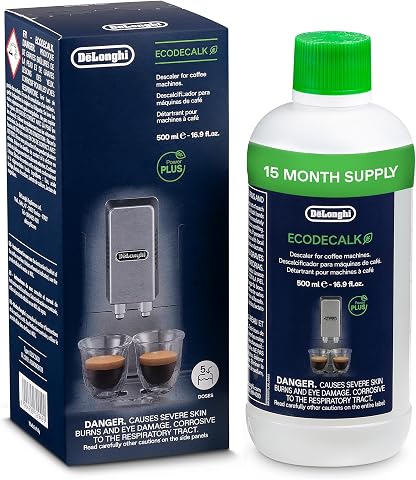
Measure your counter before buying — espresso machines are deeper and taller than they look in photos, and you need clearance above for filling the water tank and bean hopper. Compact picks like the CASABREWS CM5418 and Breville Bambino fit apartments and small kitchens, but smaller machines mean smaller water tanks and more frequent refills. Also weigh descaling requirements: machines with hard-to-run cleaning cycles tend to get neglected, and neglected machines make bad coffee regardless of price. If your water is hard, factor a filtration or descaling routine into your decision from day one.
When to Pay More — and When Not To
The honest price-performance curve in home espresso rises steeply up to about the mid-range and then flattens. Moving from a $100 steam-toy to a proper $300 semi-automatic is transformative; moving from $600 to $1,000 yields smaller, subtler gains. Pay more when you need better thermal stability, a quality integrated grinder, or super-automatic convenience — all genuine quality-of-life upgrades. Don’t pay more for touchscreens, cold-brew gimmicks, or chrome trim that doesn’t touch the extraction path. A disciplined buyer with a Stilosa and a good grinder will out-brew a careless buyer with a premium machine every time.
Frequently Asked Questions
Is the Breville Barista Express worth it if I already own a good grinder?
If you already own a quality espresso-capable burr grinder, the Barista Express becomes a much weaker value, because a large share of what you’re paying for is the integrated grinder. In that case, the Breville Bambino is the smarter buy — it shares the same excellent extraction system and fast heat-up but skips the grinder, costing meaningfully less and taking up half the counter space. The Barista Express makes the most sense for buyers starting from zero who want a single-box solution. Just know that its built-in grinder, while convenient, is entry-level and can’t match a dedicated $200-plus grinder for adjustability.
What’s the difference between the Breville BES870BTR and BES870XL?
Functionally, nothing — these are the same Barista Express machine in different finishes. The BES870XL comes in brushed stainless steel, while the BES870BTR wears the Black Truffle colorway, a darker matte aesthetic that suits modern kitchens. Grind settings, pressure system, steam wand, and internals are identical, so this is purely a styling and sometimes availability decision. Whichever finish you find easier to buy or better matched to your kitchen is the right one; there is no performance argument between them.
Can a cheap espresso machine under $150 actually make good espresso?
Yes, but with two big caveats. Machines like the De’Longhi Stilosa and CASABREWS 3700 have legitimate pump-driven extraction capable of real espresso — the obstacle is that neither includes a grinder, and pre-ground supermarket coffee will never produce good results in any machine. So the true cost of a budget setup is the machine plus a decent burr grinder, which pushes the realistic total higher. The second caveat is technique: budget machines have less temperature stability, so you’ll need to compensate with fresh beans, careful dosing, and patience. If you’re willing to learn, they’re a legitimate entry point; if you want push-button consistency, save up for a Breville or De’Longhi instead.
Are espresso machines with built-in cold brew worth it?
It depends entirely on how often you’d actually use the cold brew function. Among the machines here, the Ninja Luxe Café Premier is the only one where cold brew feels like a genuine, well-engineered feature alongside strong espresso — it also covers drip coffee, making it a true multi-drink station. The XIXUBX Cold Brew and Canoly 2-in-1 treat cold brew more as a headline feature, and buyers should scrutinize whether their espresso performance matches dedicated machines at the same price. A practical alternative: cold brew is one of the cheapest, easiest coffee methods to make manually with a simple jar and filter. Paying extra for a machine to do it only makes sense if counter space is extremely limited and you want one device for everything.
Should I get a semi-automatic or a super-automatic for a multi-person household?
For households where two or more people make milk drinks daily, a super-automatic like the De’Longhi Magnifica Duo usually wins on practicality — one-touch drinks mean no technique barrier, faster mornings, and no arguments about who left the portafilter dirty. The tradeoffs are real, though: super-automatics cost more, give you less control over shot quality, and their automated brew groups need regular cleaning to stay hygienic. If at least one person in the house enjoys the hands-on ritual and wants to chase better shots, a semi-automatic like the Barista Express delivers higher quality ceilings for less money. A useful rule of thumb: buy super-automatic for convenience across many users, semi-automatic when quality and craft matter most to the primary user.
Conclusion
Mapping these 15 machines to buyer types, the decision gets straightforward. For best overall, the Breville Barista Express (BES870XL or BES870BTR — same machine, different finish) wins because it removes the grinder problem and grows with your skills. The Breville Bambino is my best value pick for anyone who already owns or plans to buy a grinder, and it doubles as the best compact option. For beginners on a budget, the De’Longhi Stilosa offers the cheapest legitimate path to real espresso, provided you pair it with a burr grinder. At the premium end, the De’Longhi Magnifica Duo is the pick for convenience-first households, while the Ninja Luxe Café Premier suits households that want espresso, drip, and cold brew in a single machine. For small-space buyers, the CASABREWS CM5418 covers the essentials without dominating the counter. Whatever you choose, remember that the grinder and fresh beans matter as much as the machine — spend accordingly, and you’ll be pulling shots you’re proud of.
Halloween Picks
halloween
As an affiliate, we earn on qualifying purchases.