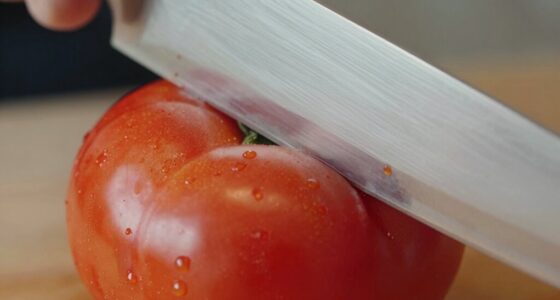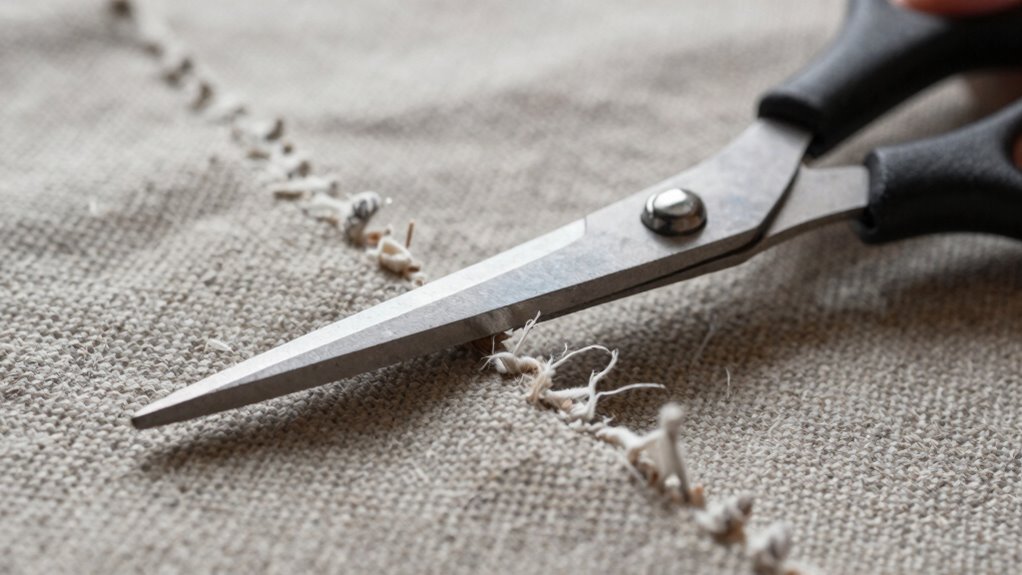

A rough or scratchy cutting feel often happens when your blade is misaligned, dull, or damaged. If the surface of the blade is worn or corroded, it won’t cut smoothly, causing roughness. Improper maintenance or using the wrong blade material can also create resistance, making cuts feel scratchy. Ensuring your blade is sharp, well-aligned, and properly maintained can considerably improve cut quality — continue to explore the factors behind these issues to achieve smoother results.

Get kitchen gear delivered free with Prime
- Fast, free delivery on millions of items
- Prime Video, Amazon Music and more included
- Member-only deals all year
Key Takeaways
- Misaligned blades create uneven contact, causing resistance and a scratchy cutting sensation.
- Worn or damaged blade surfaces lead to rough cuts and surface imperfections.
- Dull or improperly sharpened blades struggle to cut smoothly, resulting in scratches.
- Using blades made from incompatible or low-quality materials increases roughness during cutting.
- Lack of proper maintenance, such as infrequent sharpening, causes surface damage and rough cuts.
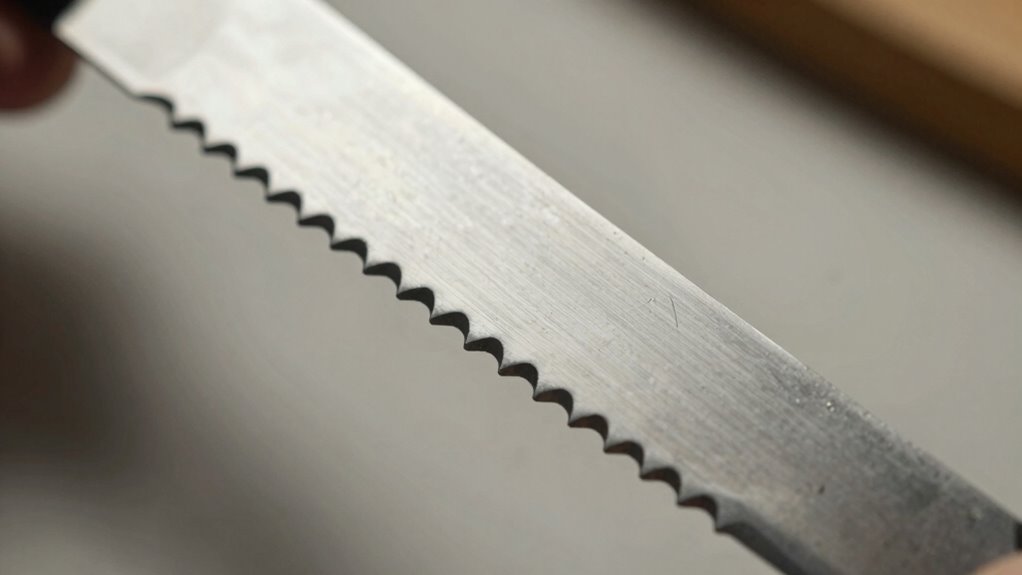
If your knife or tool feels rough or scratchy when cutting, it’s likely due to issues with the blade’s sharpness, alignment, or surface condition. One common culprit is blade alignment. When the blade isn’t properly aligned, it can cause uneven contact with the material, leading to resistance and a scratchy sensation. Misaligned blades often wobble slightly or aren’t perfectly centered, which prevents a smooth glide through the material. This misalignment increases friction and can cause the blade’s edge to catch or drag, making your cut feel rough and uneven. Confirming the blade is correctly aligned is vital for a cleaner, more precise cut and to reduce wear on the blade over time. Additionally, the surface condition of the blade can deteriorate from use, further impacting cutting performance. Material hardness plays a significant role in how a blade performs. Harder materials require a sharper, more resilient edge to cut smoothly. If the blade isn’t sharp enough or if it’s made from a softer material, it’ll struggle to penetrate the surface cleanly, resulting in a scratchy feeling. Conversely, if the blade is too hard and brittle, it may chip or develop micro-serrations that disturb smooth cutting. In either case, the interaction between the blade’s material hardness and the material’s hardness creates resistance. When you’re cutting through a hard or tough material, a dull or improperly hardened blade causes more friction, which translates into that scratchy, rough sensation. Using a blade suited for the specific material, with the right hardness and sharpness, helps guarantee a smooth cut. Proper maintenance and blade sharpening are essential to restore optimal performance and prevent rough cuts. Regularly inspecting and maintaining your blades also helps prevent issues caused by surface damage or corrosion that can contribute to rough cutting. Ensuring the correct blade material for your specific task can also significantly improve cutting smoothness and longevity. Additionally, selecting blades with appropriate cutting edge geometry can further enhance performance and reduce roughness during cutting.
As an affiliate, we earn on qualifying purchases.
Frequently Asked Questions
Can Dull Blades Cause a Rough Cutting Sensation?
Yes, dull blades can cause a rough cutting sensation. When your blade isn’t sharp enough, you tend to apply more cutting pressure, which leads to a jagged, scratchy feel. A dull blade struggles to cut smoothly, resulting in uneven edges and increased effort. To fix this, you should regularly sharpen or replace your blades, ensuring they stay sharp enough to cut effortlessly and provide a clean, smooth finish.
Does Improper Technique Influence the Scratchy Feeling?
Improper technique definitely influences that scratchy, rough cutting feeling. When you ignore ergonomic grip principles or misjudge the cutting angle, your blade doesn’t glide smoothly. You might exert too much pressure or hold the tool awkwardly, causing resistance and roughness. Mastering a proper ergonomic grip and maintaining the correct cutting angle helps your blade cut cleanly, reducing that scratchy sensation and ensuring a smoother, safer slicing experience.
How Does Blade Material Affect Cutting Smoothness?
Blade material greatly influences cutting smoothness because tougher, high-quality materials like ceramic or high-carbon steel hold a sharper edge longer, reducing roughness. Proper blade sharpening guarantees the edge stays refined, preventing a scratchy feel. Additionally, maintaining correct cutting angles allows the blade to glide smoothly through material. Using the right blade material combined with regular sharpening and ideal angles results in a much smoother, more comfortable cut every time.
Can Residue Buildup Impact Cutting Performance?
Imagine your blade as a smooth river, flowing effortlessly through material—residue buildup is like floating debris disrupting that flow. When residue accumulates, it hampers cutting efficiency, making your blade drag and catch, resulting in a rough, scratchy feel. Regular cleaning clears away residue, restoring your blade’s glide, and ensuring each cut remains smooth and precise. Keep your blade debris-free for peak performance and effortless cuts every time.
Are Certain Materials More Prone to Rough Cuts?
Yes, certain materials are more prone to rough cuts. Fabrics with uneven tension or delicate fibers can cause a rough or scratchy feel during cutting. Adjusting your fabric tension helps create a smoother cut, while maintaining the correct cutting angle ensures clean, precise edges. Thicker or textured fabrics often require sharper blades and careful handling to prevent snagging or rough cuts, making attention to these factors vital for a better cutting experience.
professional knife sharpening kit
As an affiliate, we earn on qualifying purchases.
As an affiliate, we earn on qualifying purchases.
Conclusion
So, next time your blade feels a bit less than smooth, remember it’s just whispering that it’s craving a little tender loving care. Regular maintenance, proper sharpening, and gentle handling can turn that roughness into a silky glide. Think of it as giving your tool a well-deserved spa day, ensuring every cut feels effortless and precise. With a little attention, you’ll keep your cutting experience as satisfying as a perfectly brewed cup of coffee.
As an affiliate, we earn on qualifying purchases.
As an affiliate, we earn on qualifying purchases.
Halloween Picks
halloween
As an affiliate, we earn on qualifying purchases.