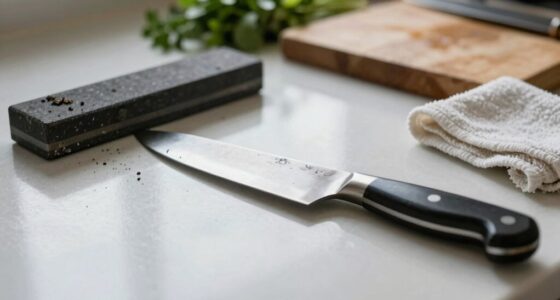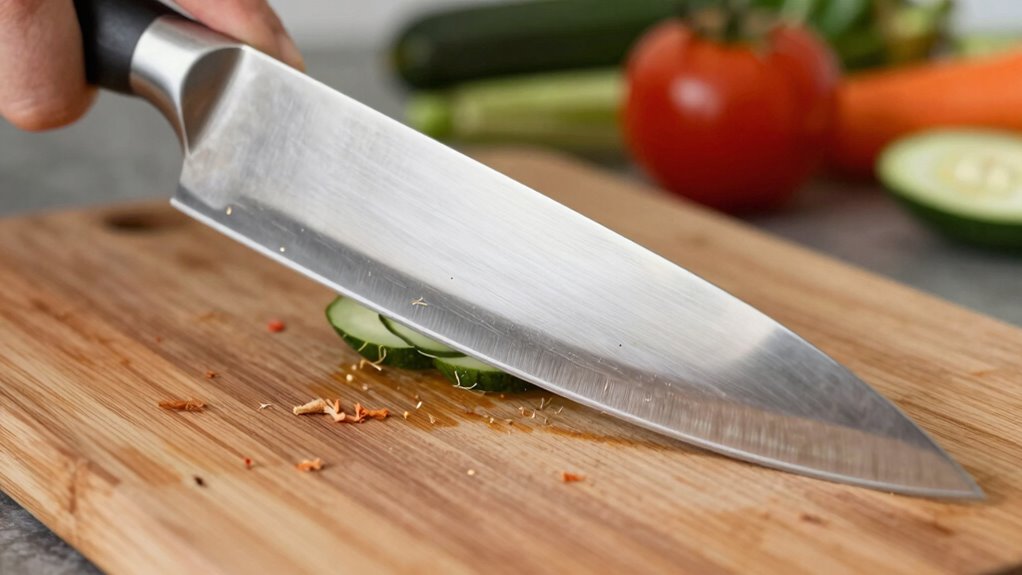

If your knife feels grabby on the board, it’s likely dull, the surface isn’t ideal, or your technique needs adjustments. Dull blades increase friction and cause snagging, while rough or hard surfaces like glass make cutting tougher. Proper sharpening, choosing a smoother cutting surface, and using controlled, steady motions can help. Pay attention to your grip and pressure. Keep exploring to discover more tips to make your cuts smooth and effortless.
Key Takeaways
- Dull or chipped blades increase resistance, causing the knife to feel grabby during cutting.
- Rough or coarse cutting surfaces create more friction, making cuts feel sticky and less smooth.
- Improper cutting technique, such as excessive pressure or poor grip, can lead to snagging and rough cuts.
- Using the wrong cutting surface material (like glass or marble) dulls blades faster and worsens sticking.
- Regular sharpening, proper technique, and choosing smooth, suitable cutting boards help ensure smoother, cleaner cuts.
Understanding Knife Sharpness and Its Impact
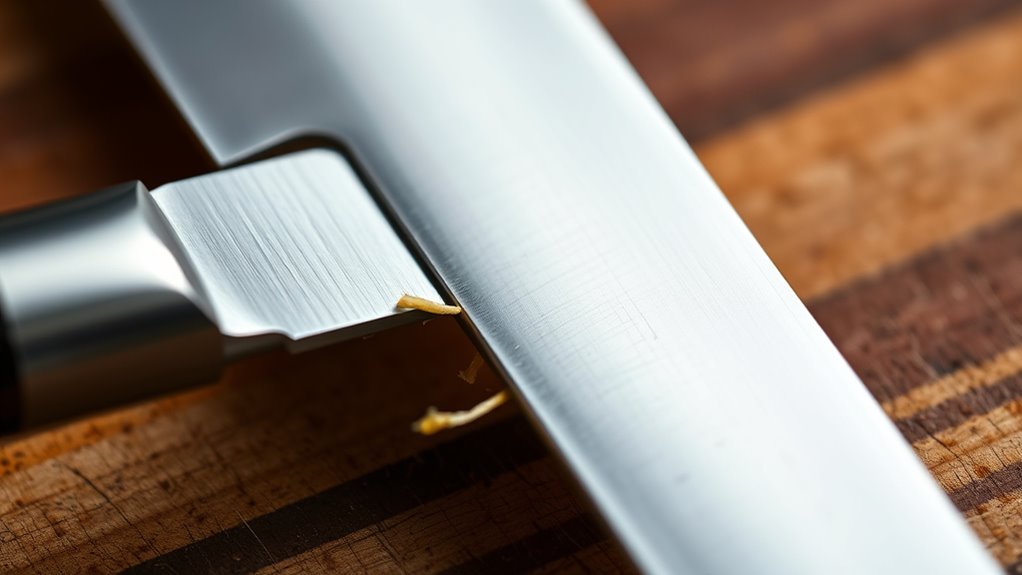
A sharp knife makes all the difference in your cooking, impacting both safety and efficiency. The key is a finely honed knife edge, which allows you to cut smoothly without exerting extra force. The sharpening angle plays a vital role here; a proper angle—usually around 15 to 20 degrees—creates a durable, sharp edge. If the angle is too wide, the edge becomes dull faster; too narrow, and it may chip easily. Regular sharpening maintains the essential angle, keeping your knife performing at its best. A well-maintained edge reduces sticking and drag, making slicing effortless. Understanding how the knife edge works and maintaining the correct sharpening angle guarantees your knife remains sharp, precise, and safe to use every time you cook. Proper knife maintenance is essential for preserving the quality and longevity of your blades.
Common Reasons for a Knife Sticking or Dragging

When your knife starts sticking or dragging during cutting, it often indicates an issue with the blade or technique. Common reasons include:
- Poor knife ergonomics, making it harder to control the blade smoothly. Improving knife ergonomics can significantly enhance control and comfort.
- Cutting at too high a speed, causing the knife to catch or skip.
- An uneven or worn edge, increasing friction against the board.
- Inconsistent pressure, leading to uneven contact with the surface. Practicing proper cutting technique can help maintain consistent pressure and improve overall safety.
- Maintaining your equipment can prevent many common cutting issues and improve overall safety. Regularly checking your knife’s condition and ensuring it is sharp can also help avoid blade dullness that causes sticking. Additionally, using the correct cutting surface can reduce unnecessary wear and improve cutting performance.
These issues can cause your knife to feel grabby, making cuts less precise and more tiring. Adjusting your cutting speed, ensuring your knife fits comfortably in your hand, and maintaining a sharp edge can help reduce sticking. Proper technique and the right ergonomics make slicing smoother and safer.
The Role of Cutting Board Material and Surface Texture

The material and surface texture of your cutting board play a big role in how your knife feels. A board with a fine grain and smooth texture can make cutting easier, while a rough surface might cause sticking or dragging. Additionally, the density and hardness of the material affect how the blade interacts with the surface, influencing your overall cutting experience. Using the right cutting board maintenance practices can also help preserve its surface quality and prevent damage over time. Regularly cleaning and conditioning your board can maintain its surface integrity and reduce surface damage that causes roughness. Being mindful of the material properties can further improve your cutting efficiency and safety. Understanding how different materials impact knife glide can help you choose the best surface for your needs. Moreover, selecting a surface with appropriate abrasion resistance can prolong the lifespan of both your knife and the cutting board.
Surface Grain and Texture
Surface grain and texture considerably influence how a cutting board feels beneath your knife. The grain texture affects how smoothly your blade glides and how much resistance you encounter. A rough surface finish can cause your knife to snag or feel grabby, while a polished finish offers a smoother cut. To visualize, consider these examples:
- Coarse grain texture: feels gritty, often causing resistance.
- Fine grain texture: smoother, reducing blade grab.
- Matte surface finish: provides grip but may slow your cut.
- Satin or polished finish: allows for effortless sliding and slicing.
Choosing a surface with a fine grain texture and a smooth surface finish can make your cutting experience more comfortable and help your knife move effortlessly through ingredients. Additionally, understanding the surface texture helps you select the right cutting board material for optimal performance.
Material Density and Hardness
Have you ever wondered how the density and hardness of a cutting board material impact your knife’s performance? Higher material density means a more solid surface that resists denting and retains its shape, providing consistent cutting results. Hardness refers to how resistant the surface is to scratches and gouges; a harder surface can make your knife feel “grabby” because it offers more resistance against the blade. Softer materials, like wood, absorb some of the impact, leading to smoother cuts and less wear on your knife’s edge. Additionally, material density influences how well the surface withstands repeated use without developing indentations or grooves. Recognizing the auditory feedback from your knife against different surfaces can also help you determine the best material for your cutting needs, ensuring a comfortable and efficient cutting experience. Conversely, very hard surfaces like glass or stone can dull your knife faster and cause more friction, making your cuts feel rougher. Understanding these properties helps you choose a surface that balances durability with a comfortable, smooth cutting experience.
How Proper Knife Maintenance Enhances Cutting Performance
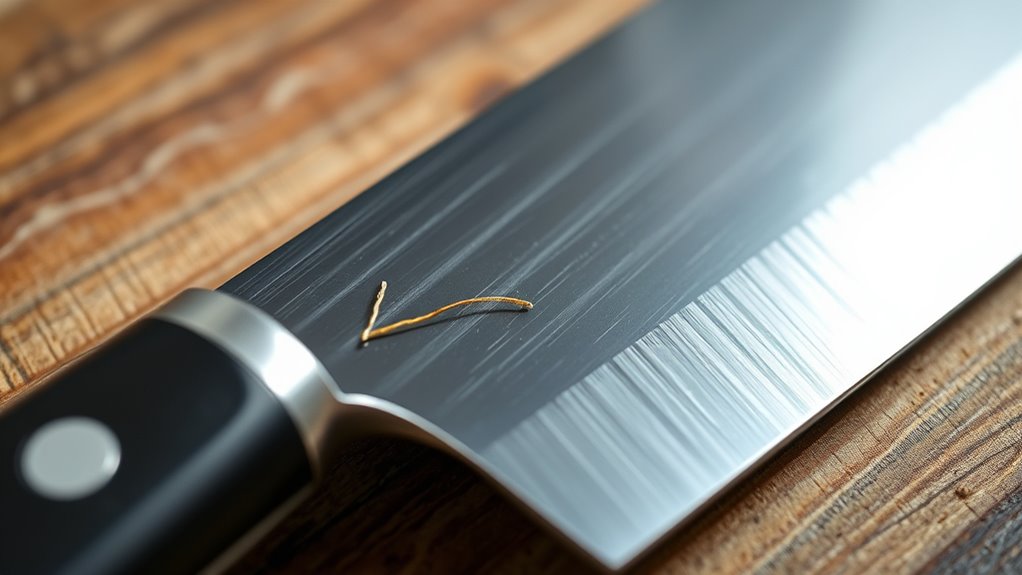
Maintaining your knife properly is essential for ensuring it cuts smoothly and efficiently. Good knife care prevents dullness and uneven edges that cause grabby cuts. Regular sharpening techniques keep your blade at its peak edge. To do this effectively, consider these steps:
- Clean and dry your knife after each use to prevent corrosion.
- Hone your blade regularly with a honing steel to realign the edge.
- Use proper sharpening techniques with a whetstone or sharpener to restore a fine edge.
- Store your knife correctly, in a knife block or on a magnetic strip, to avoid damaging the edge.
- Incorporate Free Floating techniques to ensure your knife remains balanced and performs optimally during cutting tasks.
- Be mindful of cutting angle to maintain a consistent edge and prolong sharpness over time.
- Understanding Rebel Burst can also help you appreciate the importance of proper knife maintenance in achieving a clean, smooth cut.
Techniques for Correctly Holding and Using Your Knife
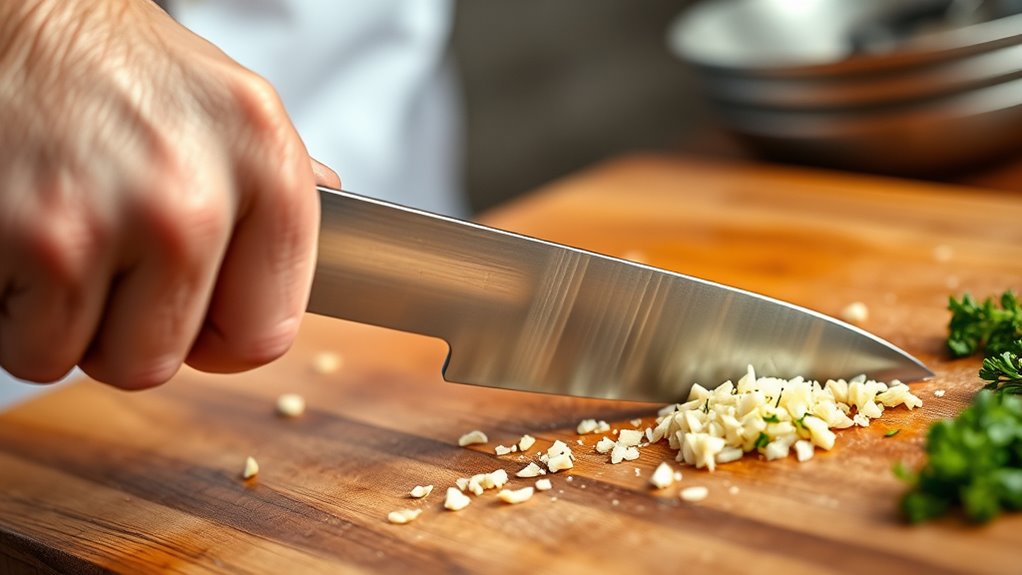
Your grip and hand position are key to safe, efficient cutting. Keep your hold firm but relaxed, ensuring control without strain. Use smooth, controlled motions to cut accurately and reduce fatigue.
Proper Grip and Hand Position
Mastering the proper grip and hand position is essential for safe and efficient knife use. Your grip technique and hand positioning directly impact control and safety. To achieve this:
- Hold the handle firmly but not too tight, maintaining a relaxed grip.
- Position your dominant hand so your fingers wrap around the handle comfortably.
- Keep your guiding hand’s fingers curled inward, using your knuckles to guide the blade.
- Maintain a steady, balanced stance, with your wrist aligned for smooth motion.
This approach ensures your grip technique is secure without tension, and your hand positioning allows for precise, controlled cuts. Proper grip and hand position help prevent slips and improve overall cutting efficiency.
Controlled Cutting Motion Techniques
To cut effectively and safely, focus on controlled, smooth motions rather than forcing the blade through ingredients. Proper knife ergonomics helps you maintain a comfortable grip and reduces fatigue, allowing for better control. Develop a steady cutting rhythm by making consistent, deliberate slices rather than rushing or applying excessive pressure. This rhythm ensures your knife moves fluidly, minimizing grabby feelings and uneven cuts. Keep your wrist relaxed and use your entire arm to guide the blade, not just your hand. As you practice controlled motions, you’ll notice your cuts become cleaner and more precise. Maintaining a steady, deliberate cutting rhythm helps prevent slipping and improves safety while making your prep work more efficient.
The Importance of Cutting Technique and Pressure Control
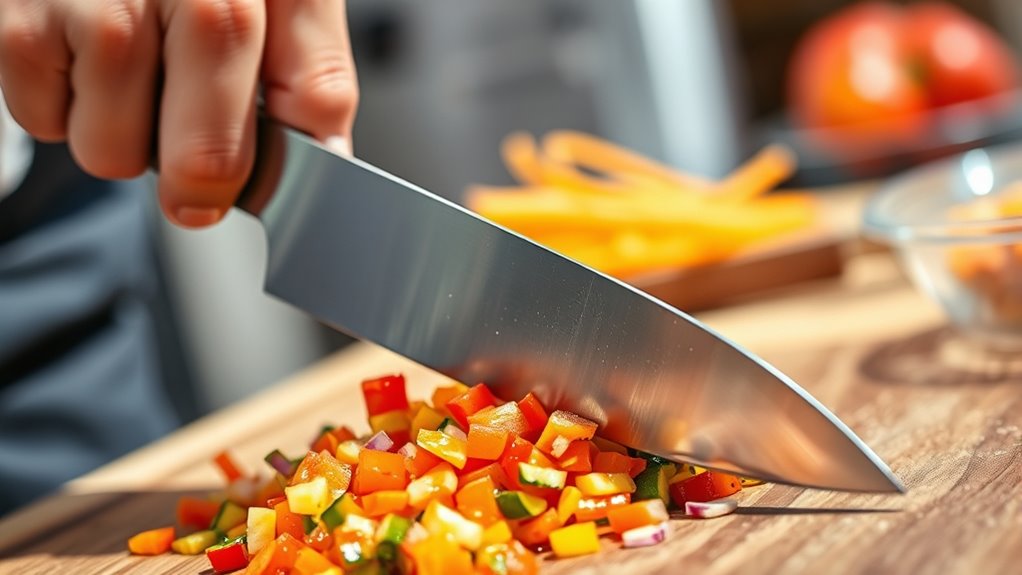
Effective cutting technique and precise pressure control are essential for safe and efficient kitchen work. Proper knife ergonomics ensure your hand maintains comfort and stability, reducing fatigue. When you regulate pressure, you avoid forcing the blade, which can cause grabbing or slipping. Focus on maintaining a steady cutting rhythm to keep your cuts smooth and consistent. Consider these points:
- Use your whole hand, not just your fingers, to keep control.
- Apply even, gentle pressure rather than pressing down hard.
- Maintain a consistent cutting rhythm for smoother slices.
- Adjust pressure based on ingredient density and knife ergonomics.
Being mindful of cutting technique and pressure control helps prevent the blade from catching or grabbing, leading to cleaner and safer cuts every time.
Identifying and Fixing Dull or Damaged Blades
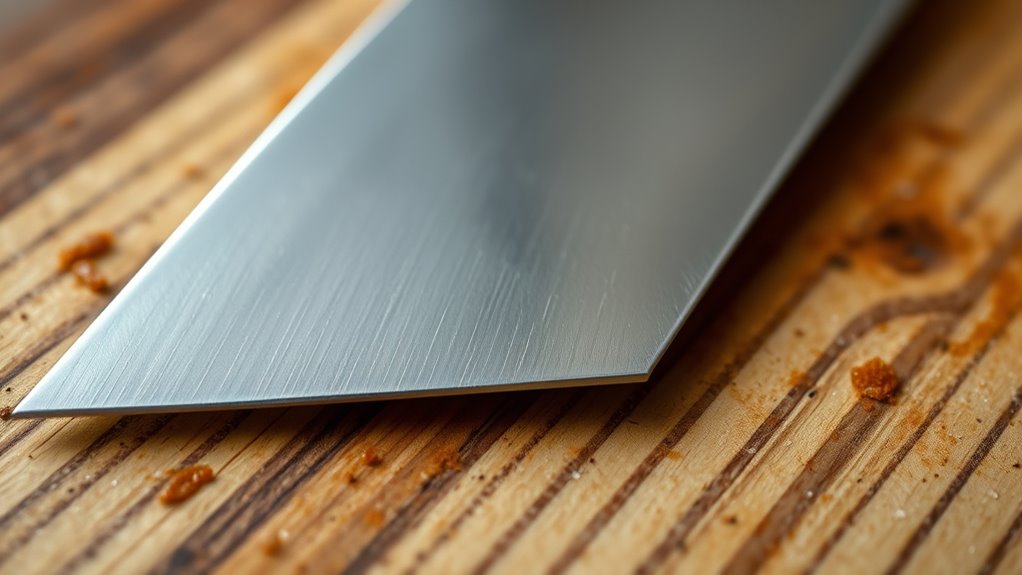
A dull or damaged knife can compromise your safety and make prep work frustrating. To prevent this, regularly practice proper knife care and perform blade inspections before use. Look for signs of dullness, such as difficulty slicing or slipping off the surface, and check for chips, nicks, or bends. If your blade feels dull or shows damage, sharpening or honing it can restore its cutting ability. Use a whetstone, honing rod, or professional sharpening service for best results. Addressing dullness promptly not only improves performance but also reduces the risk of accidents caused by applying excessive force. Remember, a well-maintained blade is safer and more efficient, so make blade inspection and care a routine part of your kitchen practices. Incorporating knife safety techniques into your routine can further enhance your kitchen safety and efficiency. Regularly maintaining your blades also supports metal quality standards, ensuring longevity and optimal performance. Additionally, inspecting your blade for damaged or bent edges helps prevent further deterioration and maintains cutting precision.
Tips for Preparing and Choosing the Right Cutting Surface
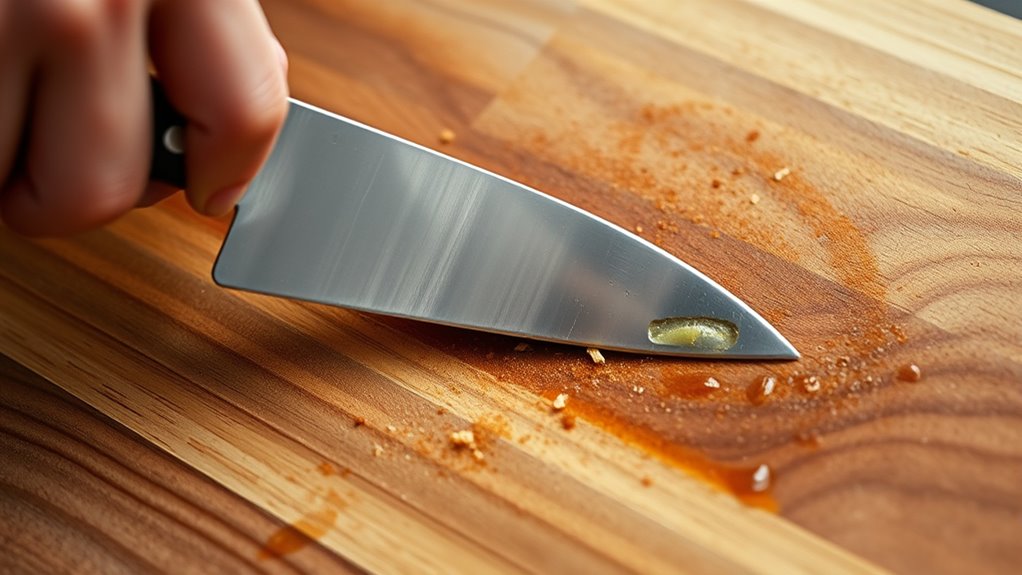
Choosing the right cutting surface can make a big difference in how your knives perform. You want a material that’s gentle on blades but sturdy enough for your prep work. Remember to regularly maintain and clean your boards to keep them in top shape and protect your knives.
Selecting the Ideal Surface
Selecting the right cutting surface is essential for maintaining your knives’ sharpness and ensuring safe, efficient food prep. A good surface supports knife ergonomics, reducing the effort needed and preventing undue wear. Consider these options:
- Durable wood with smooth, tight grain for aesthetics and gentle cutting.
- Plastic boards that are easy to sanitize and maintain hygiene.
- Bamboo, offering eco-friendliness and resistance to knife scoring.
- Glass or marble surfaces, which look sleek but can dull blades faster.
Choose a surface that balances aesthetics with practicality, ensuring it’s sturdy and comfortable to work on. A well-chosen cutting surface not only preserves your knives but also enhances your overall prep experience. Prioritize surfaces that support your technique and keep your kitchen visually appealing.
Maintaining Cutting Boards
To keep your cutting boards in top condition, regular cleaning and proper maintenance are essential. Clean your board thoroughly after each use with hot, soapy water or a vinegar solution to prevent bacteria buildup. Regularly inspect for deep cuts or grooves, which can trap debris and compromise knife safety. Sand or replace boards as needed to maintain a smooth surface, promoting better cutting ergonomics and reducing the risk of slips. Avoid using overly hard materials like glass or stone, which can dull your knives and cause uneven cuts. Properly maintained boards help your knives stay sharp longer and make slicing easier. By choosing the right surface and caring for it diligently, you guarantee safer, more efficient cutting with less effort and less damage to your knives.
Using Fats, Oils, or Other Lubricants to Ease Cutting
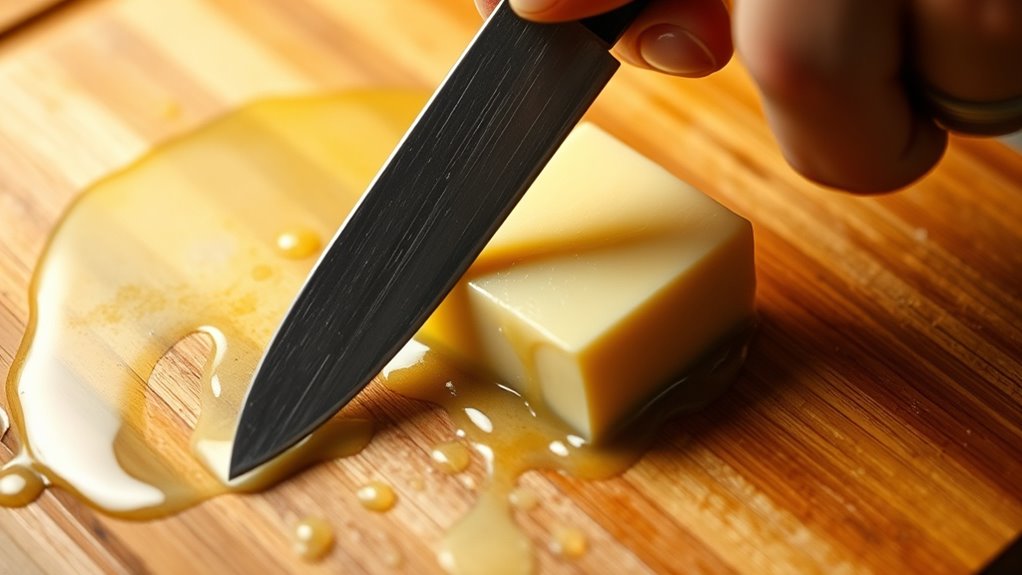
Applying fats, oils, or other lubricants to your cutting surface can markedly improve your knife’s performance. Using oil lubrication reduces friction, making cuts smoother and easier. Here’s how to do it:
- Choose a light cooking fat or oil, like vegetable oil or olive oil.
- Lightly drizzle the oil over the cutting board’s surface.
- Spread it evenly with a paper towel or brush.
- Proceed with your chopping or slicing, enjoying less grab and more glide.
This method creates a slick layer that minimizes resistance, especially when cutting sticky or dense ingredients. It’s a simple way to enhance your cutting experience, reduce wear on your knife, and keep your cuts precise. Just remember to wipe excess oil afterward to avoid slipping.
When to Seek Professional Sharpening and Maintenance
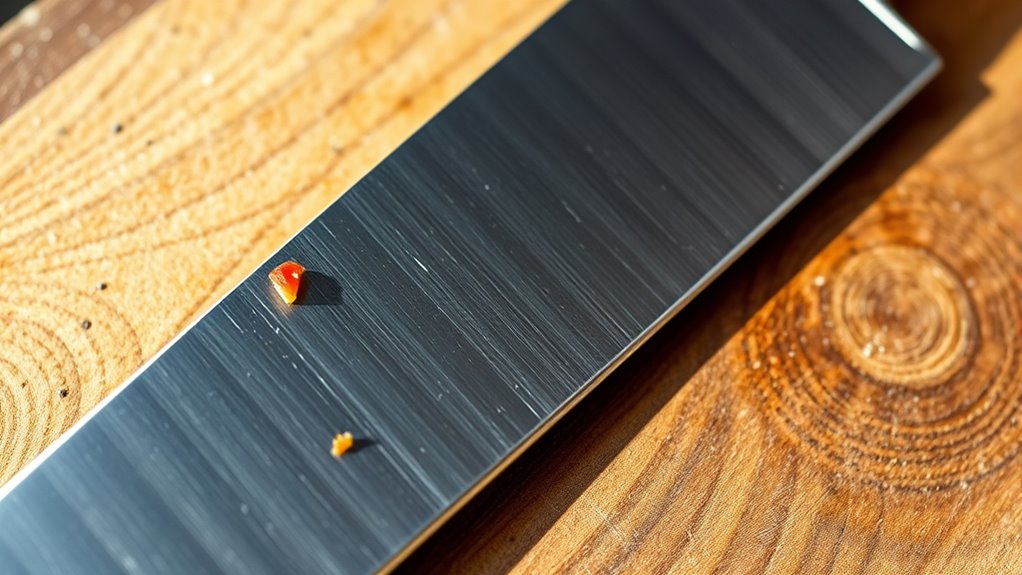
While lubricating your cutting surface can make slicing easier and protect your knife, even the best-maintained blades will eventually need professional attention. If your knife feels “grabby” despite proper technique and sharpening with at-home tools, it’s time to consult a professional. Signs include uneven edges, persistent dullness, or difficulty maintaining proper knife ergonomics. Professional sharpening restores the blade’s precision and ensures ideal performance. Using high-quality sharpening tools and honing techniques, experts can remove micro-chips and restore a fine, smooth edge. Don’t delay if your knife no longer slices effortlessly or causes discomfort during use. Regular maintenance by skilled professionals prolongs your knife’s lifespan and keeps it performing at its best, making every cut safer and more efficient.
Frequently Asked Questions
How Often Should I Sharpen My Kitchen Knives?
You should sharpen your kitchen knives every 1 to 3 months, depending on how often you cook and the type of knives you use. Regular sharpening is essential for good knife maintenance, keeping your blades sharp and safe. For daily use, hone your knives with a honing steel to maintain their edge, but don’t forget to schedule proper sharpening sessions when you notice cutting becomes difficult or uneven.
Can the Type of Vegetable or Food Affect Knife Glide?
You bet, the type of vegetable or food can definitely affect how smoothly your knife glides. Vegetables with high moisture content, like cucumbers or tomatoes, tend to be slippery, making cutting feel like trying to split a hair. Food texture also matters—firm, dense items cut more easily than soft or sticky ones. To keep things running smoothly, adjust your technique or sharpen your knife regularly so it’s always cutting like butter.
What Are Signs My Knife Needs Professional Sharpening?
You’ll notice your knife needs professional sharpening when its blade dullness causes more effort and less control. An uneven edge often indicates it’s time for a sharpening service. If your cuts are jagged or uneven, and the knife feels less sharp despite honing, it’s a sign that your blade has dulled considerably. Regular professional sharpening restores the edge, ensuring smoother, safer cuts every time you cook.
Does Stainless Steel or Carbon Steel Hold an Edge Longer?
Think of your knife’s edge as a racehorse—stainless steel tends to stay sharp longer, thanks to its superior metal retention, making it ideal for daily tasks. Carbon steel, however, offers sharper edges initially and boasts greater edge durability, but it dulls faster if not cared for properly. So, if you want longevity, stainless steel is your reliable steed; for quick, precise cuts, go carbon steel.
How Does Humidity Impact Knife and Cutting Board Maintenance?
Humidity effects can cause your knives and cutting boards to expand or contract, impacting maintenance. High humidity may lead to warping or mold growth, so you should regularly dry your tools and store them in a cool, dry place. For maintenance tips, apply food-safe mineral oil to wooden boards to prevent cracking, and keep knives dry to avoid rust. Proper care guarantees your tools stay sharp and in great shape longer.
Conclusion
Did you know that a dull knife can require up to 40% more force to cut, increasing the risk of slips and injuries? By maintaining your blade, choosing the right cutting surface, and using proper techniques, you can turn that grabby feeling into smooth, effortless slices. Regular sharpening and careful prep are key. Keep your knives in top shape, and cooking will become safer and more enjoyable every time.