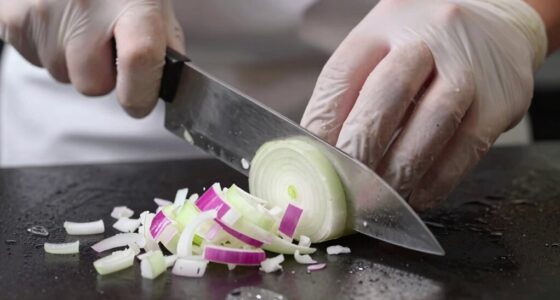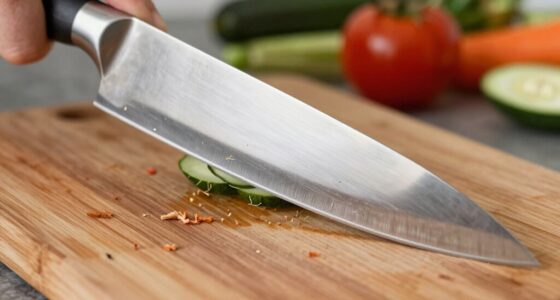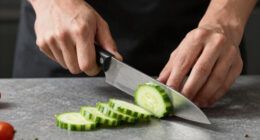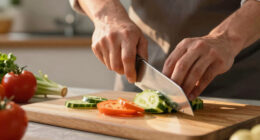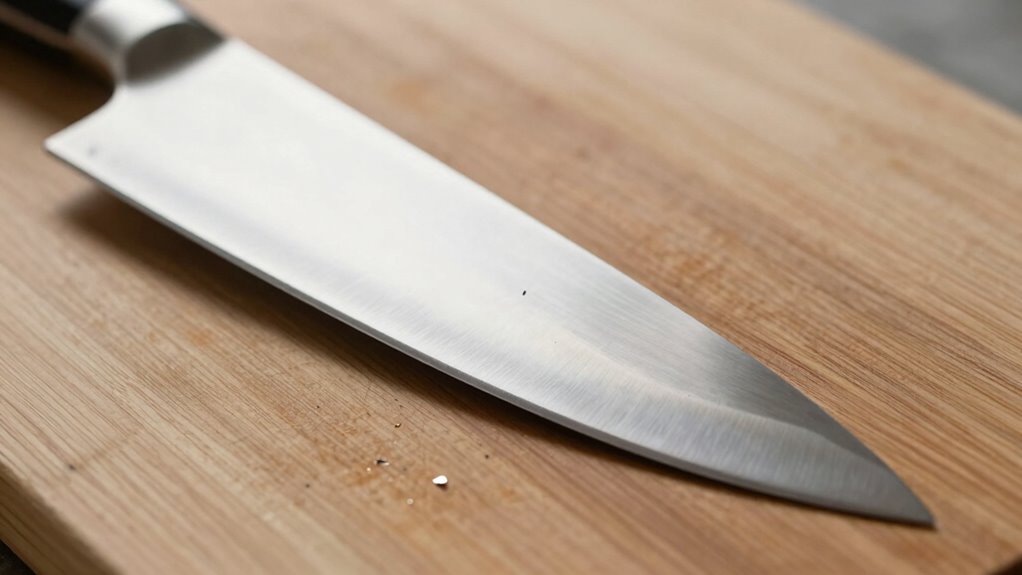
If your knife keeps catching on the board, it’s probably because the blade is dull or poorly maintained, making slicing difficult and frustrating. Using a dull edge causes more resistance, while rough or deep-cut grooves on your cutting surface increase snagging. Proper technique, sharpening, and maintaining a smooth, clean board can markedly improve your cutting experience. Want to find out how to fix this problem efficiently? Keep going to discover more helpful tips.
Key Takeaways
- Dull knives have rough edges that catch on the cutting board surface.
- Using a worn or grooved cutting board increases the likelihood of catching.
- Applying excessive pressure or improper technique causes the blade to snag.
- Surfaces that are rough, uneven, or damaged can hinder smooth cutting.
- Failing to regularly hone or sharpen the knife reduces edge sharpness and increases catching.
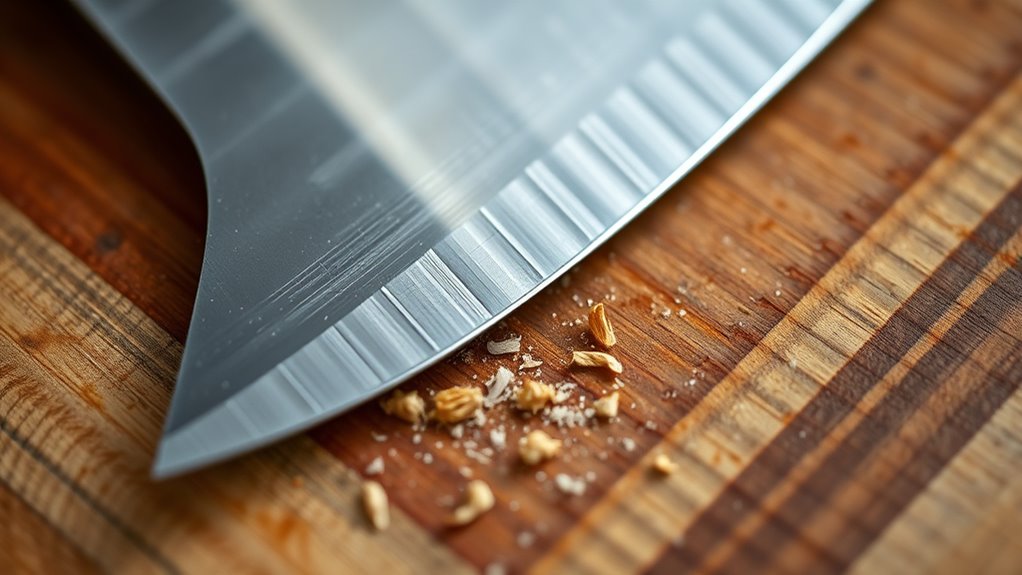
Knife edge catching on board is a precise maneuver that requires skill, timing, and focus. If your knife keeps catching on the cutting board, it’s often because of issues with sharpness maintenance or ineffective cutting techniques. Maintaining a sharp edge is essential because dull knives tend to drag or catch, rather than glide smoothly through food. When a blade dulls, it loses its ability to slice cleanly, causing it to snag or bounce off the surface instead of slicing effortlessly. Regularly honing your knife helps keep the edge sharp, but you also need to guarantee you’re sharpening it properly with the right techniques. Using the correct sharpening tools and angles restores the edge’s precision, reducing the chances of catching. Remember, a consistently sharp knife is safer and more efficient, as it requires less force and reduces slip-ups. Proper blade maintenance is crucial for preventing these issues over time and prolonging the life of your knives.
Your cutting techniques also play a significant role in preventing the edge from catching. If you’re applying too much pressure or pushing down aggressively, the blade can deflect or stick, especially if the board surface isn’t ideal. Instead, use a smooth, controlled slicing motion, letting the sharpness of the knife do the work. Keep your fingers tucked in and use the heel of the blade for stability. When you cut, focus on maintaining a steady, even pressure; jerky or uneven movements increase the likelihood of catching or damaging the edge. Additionally, how you position your knife matters. Keeping the blade at a proper angle relative to the board—usually around 15 to 20 degrees—ensures cleaner cuts and less resistance.
The surface of your cutting board can also influence whether your knife catches. A well-maintained, smooth cutting surface allows for easier slicing. If your board has deep grooves or rough patches, the knife edge is more likely to catch or get nicked. Consider using a plastic or wooden board that’s in good condition. Regularly cleaning and sanitizing your board prevents buildup of debris that can impede smooth cutting. When you combine sharpness maintenance with effective cutting techniques, you’ll notice a significant decrease in catching issues. Over time, as you develop better control and keep your tools in top shape, these issues become less frequent, enabling you to work more efficiently and safely. Ultimately, understanding the importance of sharpness and technique will help you master the art of knife handling and keep your edges clean and smooth during every cut.
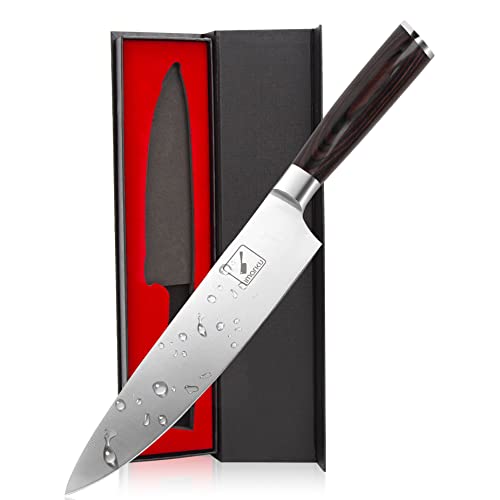
imarku Japanese Chef Knife – Sharp Kitchen Knife 8 Inch Chef's Knives HC Steel Paring Knife, Unique Gifts for Men and Women, Gifts for Mom or Dad, Kitchen Gadgets with Gift Box, Gyutou Knives
High-Carbon Stainless Steel Blade: It is manufactured from high-quality stainless steel that maintains its functionality for a long…
As an affiliate, we earn on qualifying purchases.
As an affiliate, we earn on qualifying purchases.
Frequently Asked Questions
Can the Type of Wood Affect Knife Edge Catching?
Yes, the type of wood can affect your knife edge catching. Denser woods with higher wood density tend to be tougher and can cause more friction, making your knife catch more often. Additionally, grain orientation plays a role; cutting against the grain increases resistance, leading to catching. Choosing softer woods with a consistent grain and proper orientation can help reduce this issue and keep your knife sharper longer.
How Does Humidity Influence Knife and Board Interaction?
Think of humidity as a dance partner, subtly influencing your knife and board. When moisture absorption increases with higher humidity, the wood swells slightly, creating uneven surfaces. Surface tension of water then causes your knife to catch, like an unsteady dance step. To keep the rhythm smooth, maintain balanced humidity levels, ensuring minimal moisture absorption, and keep your cutting surface and knife gliding effortlessly without catching or snagging.
Are Certain Knife Blades More Prone to Catching?
Certain knife blades are more prone to catching, especially those with softer or less durable blade materials like high-carbon steel or softer stainless steel. Your cutting technique also plays a role; if you press too hard or use a dull blade, it’s more likely to catch on the board. To prevent this, choose a high-quality, harder blade and use a smooth, controlled cutting motion for better glide and less catching.
Does the Angle of the Blade Impact Catching Frequency?
Yes, the angle of your blade impacts catching frequency. When you hold the knife at a too steep or shallow angle, it can cause the edge to catch on the cutting surface. To improve your blade technique, keep a consistent, slightly angled position that glides smoothly across the cutting surface. This helps reduce catching, makes cutting safer, and guarantees cleaner slices every time.
How Often Should I Sharpen My Knife to Prevent Catching?
You should sharpen your knife every 1-2 weeks to prevent catching, especially if you use it frequently. Regular knife maintenance keeps the edge sharp and minimizes issues during cutting. Focus on proper cutting techniques, like using a smooth sawing motion and avoiding excessive pressure, which also helps reduce catching. Keep your blade honed consistently, and you’ll enjoy cleaner cuts and safer, more efficient food prep.
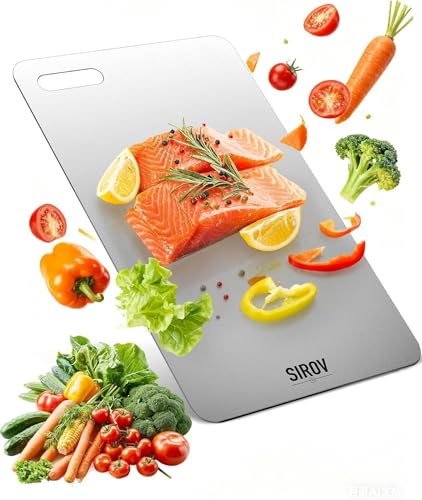
Titanium Cutting Board, 100% Pure Titanium Cutting Boards For Kitchen, Best Non Toxic chopping board, Dishwasher safe, Hygiene and Durability for Meat, Fruit, and Vegetables (12.6L*8.1W)
『100% Pure Titanium Cutting Board』 Includes : 12.6"L x 8"W . Our titanium cutting board don't have pores…
As an affiliate, we earn on qualifying purchases.
As an affiliate, we earn on qualifying purchases.
Conclusion
Now that you understand why your knife edge keeps catching, you can make the necessary adjustments and cut smoothly again. Remember, sometimes it’s just a small tweak that makes a big difference. Don’t let frustration get the better of you—stay patient and keep trying. After all, every master was once a beginner. With a little practice, you’ll be slicing through tasks effortlessly, proving that persistence truly pays off in the end.

Intelitopia Complete Knife Sharpening Stone Set – Dual Grit Whetstone 400/1000 3000/8000 Knife Sharpener with Leather Strop, Flattening Stone, Bamboo Base, 3 Non-slip Rubber Bases & Angle Guide
【Complete Knife Sharpening Stone Kit】You don't need to be a Pro to sharpen your blades, all you need…
As an affiliate, we earn on qualifying purchases.
As an affiliate, we earn on qualifying purchases.

Freshware Bamboo Cutting Board Set of 3, Wooden Cutting Boards for Kitchen, Knife Friendly Food Grade Chopping Board, Lightweight with Hanging Hole for Easy Storage
The Ultimate Cutting Board Set for All: If you are looking for a top notch quality cutting board…
As an affiliate, we earn on qualifying purchases.
As an affiliate, we earn on qualifying purchases.