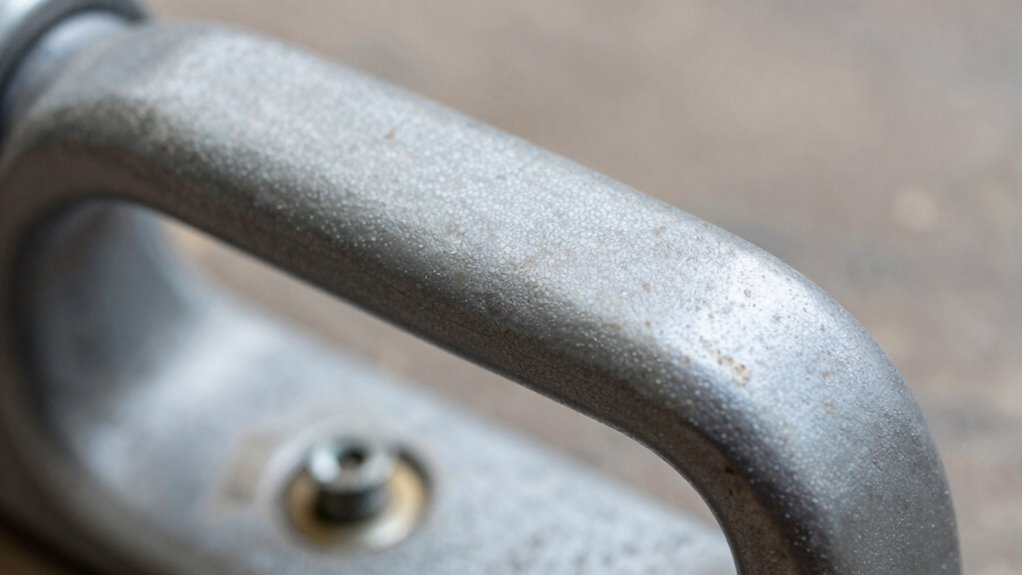

To spot early handle problems, regularly check for looseness or wobbling despite tightening screws, as this can indicate worn fasteners or stripped threads. Look closely for cracks, splits, or rough patches in the material, which weaken the handle’s structure. Also, watch for rust, corrosion, or warping that signal deterioration. Addressing these signs early helps prevent failure and injury. Keep an eye out for these warning signs to maintain safety and extend your tool’s lifespan.

Get kitchen gear delivered free with Prime
- Fast, free delivery on millions of items
- Prime Video, Amazon Music and more included
- Member-only deals all year
Key Takeaways
- Regularly check for looseness or wobbling handles during use.
- Inspect handles for tiny cracks or splits that may develop over time.
- Look for rust, corrosion, or signs of material deterioration.
- Feel for unusual softness, warping, or difficulty gripping the handle.
- Address issues promptly by tightening, repairing, or replacing to prevent further damage.
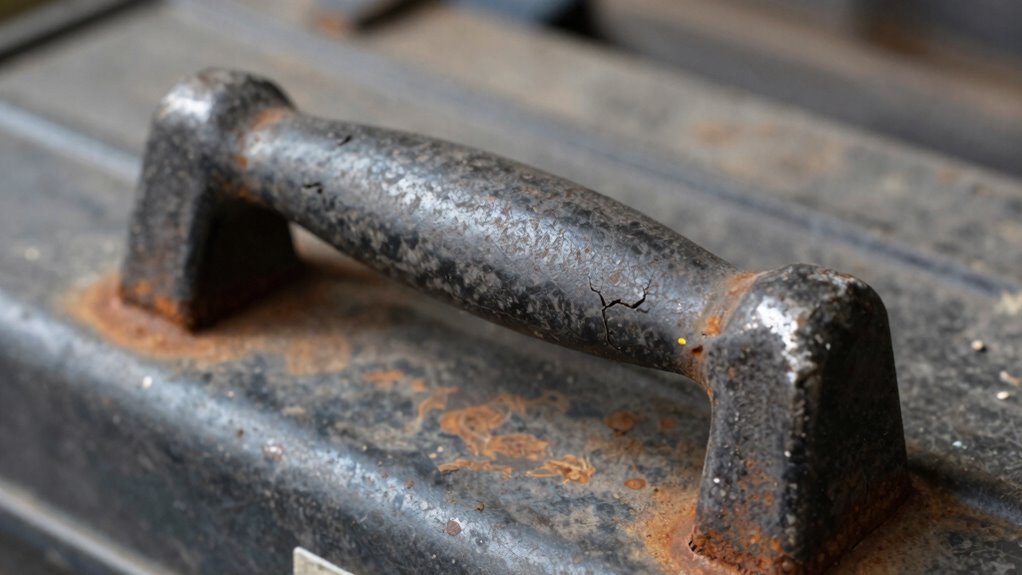
Handles play a crucial role in the functionality and safety of various tools and appliances, so catching problems early can save you time and money. When it comes to handle maintenance, recognizing the early signs of handle problems is essential to prevent further damage and avoid potential accidents. If you notice any issues with a handle, addressing them promptly can extend the lifespan of your tools and keep your workspace safe.
One of the most common handle issues involves looseness or wobbling. Over time, frequent use can cause screws or bolts holding the handle in place to loosen. You might notice the handle feels less secure or shifts when you apply pressure. This instability not only hampers your work but also increases the risk of sudden failure. Checking your handles regularly and tightening any loose screws can prevent this problem from worsening. If the handle continues to wobble despite tightening, it could indicate worn-out fasteners or stripped threads, signaling that you may need to replace the handle or repair the connection.
Loose or wobbly handles can compromise safety—regularly tighten screws or consider replacing worn fasteners to prevent failure.
Another frequent problem relates to cracks or splits in the handle material. Handles made from wood, plastic, or composite materials can develop cracks over time due to stress, exposure to elements, or accidental impacts. These cracks are often subtle at first but tend to grow gradually, weakening the handle’s structural integrity. If you feel any roughness or see visible lines running across the handle, it’s a sign that the handle is compromised. Ignoring these early signs can lead to handle failure at critical moments, possibly causing injury or damaging the tool. Regular inspection and handling replacement or repair when cracks are detected can save you from more costly repairs later.
Furthermore, you should stay alert for signs of corrosion or rust, especially on metal handles or fasteners. Corrosion weakens the material, leading to potential breakage. If you notice rust spots or pitting, it’s time to clean and treat the handle with protective coatings or replace it altogether. Maintaining a clean, dry environment and applying lubricant or rust-proofing treatments can help prevent these issues from developing.
Finally, persistent difficulty in gripping or operating the handle might indicate underlying problems such as warping or material degradation. When a handle no longer offers a firm grip or feels unusually loose, it’s a clear sign that it’s time for a replacement. Addressing these issues early, through routine handle maintenance and careful observation, ensures your tools remain safe to use and function effectively. Recognizing these common handle issues and acting swiftly can prevent accidents and prolong the life of your equipment. Regular inspection and maintenance are essential for catching early signs of handle problems before they become serious.
As an affiliate, we earn on qualifying purchases.
Frequently Asked Questions
Can Handle Problems Occur Suddenly Without Warning?
Handle problems can sometimes occur suddenly, but often, you’ll notice signs like handle wear or handle corrosion beforehand. These issues weaken the handle, making it more susceptible to sudden failure. Regularly inspecting your handles helps detect early signs of deterioration, so you can address problems before they worsen. Don’t ignore minor corrosion or wear, as these small issues can lead to unexpected handle failures without warning.
Are Handle Issues Always Related to Material Defects?
Handle issues aren’t always linked to material flaws or manufacturing defects. Sometimes, damage results from wear and tear, improper use, or environmental factors. While material flaws and manufacturing defects can cause early problems, you might also notice handle issues developing gradually over time due to stress or misuse. Keep an eye on how your handles perform, and don’t assume defects are always the culprit—other factors could be at play.
How Often Should Handles Be Inspected for Early Signs?
You should perform handle maintenance and inspection frequency checks at least every three to six months, depending on usage and environment. Regular inspections help you catch early signs of wear or damage before they worsen. Look for loose fittings, cracks, or corrosion. Consistently monitoring handles guarantees safety and longevity. Adjust inspection frequency if handles experience heavy use or are exposed to harsh conditions, so you stay ahead of potential issues.
Do Handle Problems Vary Between Different Handle Types?
Back in the day, handle problems did vary by handle types. You’ll notice that handle maintenance depends heavily on the handle material—wood, metal, or plastic each reacts differently over time. Metal handles might develop rust, while plastic ones crack, and wooden handles can splinter. Being aware of these differences helps you identify early signs of issues, allowing you to address problems before they worsen and extend the lifespan of your handles.
Can Improper Installation Cause Early Handle Failure?
Yes, improper installation can cause early handle failure. Installation errors, like incorrect fastening or poor alignment, create stress points that weaken the handle over time. Alignment issues prevent smooth operation and put extra strain on components, accelerating wear and tear. To avoid this, guarantee handles are installed correctly, with proper alignment and secure fittings. Proper installation helps extend the lifespan of your handles and prevents early failures.
As an affiliate, we earn on qualifying purchases.
Conclusion
By paying close attention to subtle changes and trusting your instincts, you can catch handle problems long before they escalate. Remember, early detection is your best weapon—ignoring even minor signs could lead to a disaster of epic proportions. Stay vigilant, keep a keen eye, and don’t dismiss those tiny warning bells; they’re often the first whispers of a looming catastrophe. Mastering this skill can save you from chaos and keep everything running smoothly—like a finely tuned machine.
As an affiliate, we earn on qualifying purchases.
As an affiliate, we earn on qualifying purchases.
Halloween Picks
halloween
As an affiliate, we earn on qualifying purchases.