
Dark stains on your knife are usually superficial and don’t mean it’s ruined. They often come from mineral deposits, oxidation, or residue from acidic foods, but can be cleaned easily with gentle scrubbing, baking soda paste, or a vinegar soak. Proper maintenance and quick cleaning help prevent stains and keep your knife in good shape. To find out more about restoring and caring for your blade, keep exploring the options below.
Key Takeaways
- Dark stains are typically superficial and don’t damage the knife’s functionality.
- Common stains result from mineral deposits or oxidation, which are removable with proper cleaning.
- Gentle cleaning methods, like baking soda or vinegar treatments, effectively restore the blade’s appearance.
- Regular maintenance and proper storage prevent future stains and prolong knife life.
- Stains usually indicate surface discoloration, not corrosion or structural damage.
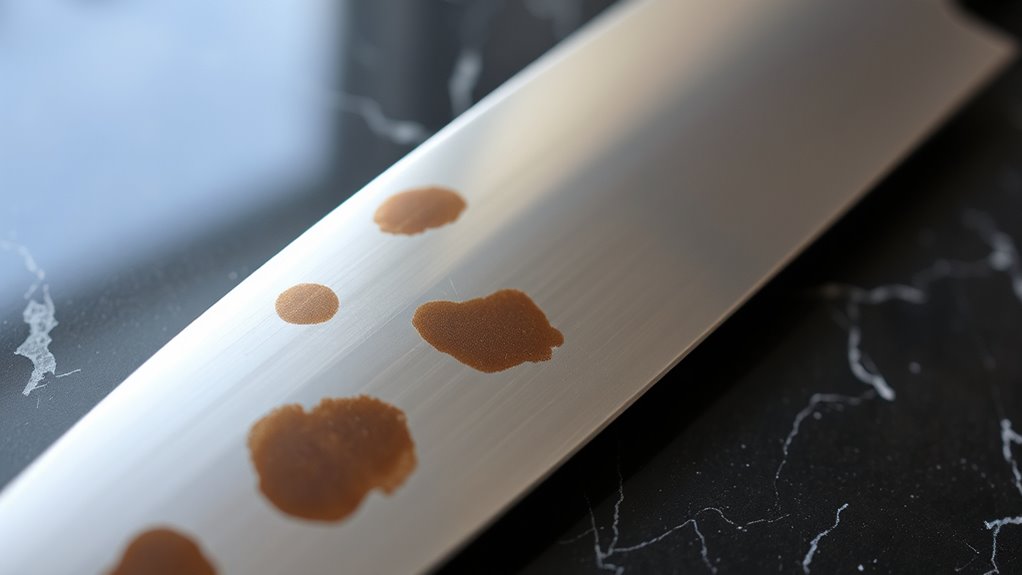
Are those stubborn stains on your knife ruining its appearance? Don’t worry—most dark stains aren’t permanent and don’t mean your knife is ruined. These marks are often caused by a combination of food residue, mineral deposits, or oxidation that happens over time. The good news is that with proper stain removal techniques, you can restore your knife’s shine and keep it in top shape. Regular knife maintenance is key to preventing future stains and ensuring your blade stays sharp and visually appealing.
First, it’s helpful to understand what causes these stains. Sometimes, mineral deposits from hard water or acidic foods can leave behind dark spots. Other times, oxidation occurs when the metal reacts with air or moisture, especially if your knife isn’t dried thoroughly after washing. These stains are usually superficial and don’t affect the blade’s functionality but can be unsightly if not addressed promptly. To tackle them, start by gently scrubbing the stained areas with a soft sponge or cloth soaked in warm, soapy water. For tougher stains, you can make a paste of baking soda and water and gently rub it onto the affected spots. Baking soda acts as a mild abrasive and helps lift stains without damaging the blade.
If stains persist, consider using a mixture of vinegar and water—vinegar’s acidity helps dissolve mineral deposits. Soak a cloth in this solution and lay it over the stained area for a few minutes before scrubbing gently. Always rinse the knife thoroughly afterward and dry it completely to prevent further oxidation. Additionally, understanding the role of corrosion can help you implement better maintenance practices. Maintaining your knife regularly by hand washing, drying immediately, and storing it properly can considerably reduce staining and corrosion over time. Avoid leaving your knife soaking in water or using harsh abrasives that can scratch the surface and make stains worse.

HOPLON Blade Premium Knife Cleaning, Care & Polishing Kit — Synthetic Ester Knife Oil & Pivot Lube, Industry-First Dauber + Needle, 3oz, EDC Pocket Knife Maintenance, Folding & Fixed Blade
Industry-First Sponge-Top Dauber + Needle — 3oz total of premium synthetic knife oil. Competitors charge $51/oz for a…
As an affiliate, we earn on qualifying purchases.
As an affiliate, we earn on qualifying purchases.
Frequently Asked Questions
Can I Remove Dark Stains From My Knife Easily?
Yes, you can remove dark stains from your knife easily with proper stain removal techniques. Start by cleaning the blade with warm water and mild dish soap, then use a baking soda paste or a stainless steel cleaner for stubborn stains. Gently scrub with a soft cloth or sponge, rinse thoroughly, and dry. Regular cleaning methods help prevent future stains and keep your knife in good condition.
What Causes Dark Stains on Different Types of Knives?
Dark stains on your knives are caused by oxidation, rust, or food residue, depending on the material. Proper stain removal involves regular knife maintenance, such as cleaning and drying immediately after use. You can use gentle abrasives or specialized cleaners to remove stains without damaging the blade. Keep up with routine maintenance to prevent further staining and guarantee your knives stay sharp and in great condition.
Are Dark Stains Dangerous to Food Safety?
Dark stains on your knife aren’t typically dangerous to food safety, as they’re often just stain corrosion from minerals or rust. In fact, studies show that most stains don’t harbor bacteria or pathogens. However, it’s wise to clean and dry your knife thoroughly to prevent further stain corrosion. Proper knife safety includes regular maintenance to keep your blades clean and safe for food prep, ensuring no hidden risks from surface stains.
How Often Should I Clean My Stained Knives?
You should clean your stained knives regularly, ideally after each use, to prevent stains from setting further. Follow stain removal tips like soaking in warm, soapy water or using baking soda paste for stubborn spots. Maintain a consistent cleaning frequency—daily if you use the knife often, and weekly for less frequent use—to keep your knives in good condition and guarantee food safety. Proper care extends their lifespan and performance.
Can Professional Sharpening Fix Stained or Damaged Knives?
Yes, professional sharpening can fix stained or damaged knives. Imagine a skilled expert carefully wielding sharpening techniques, removing surface stains and restoring your blade’s sharpness. They use specialized tools to grind away discoloration and reshape dull edges, effectively revitalizing your knife’s appearance and performance. With their expertise, stain removal and sharpening go hand-in-hand, ensuring your knife looks and cuts like new again.
knife stain remover baking soda vinegar
As an affiliate, we earn on qualifying purchases.
As an affiliate, we earn on qualifying purchases.
Conclusion
So, don’t panic if your knife has dark stains—you’re probably fine. These stains are usually just surface blemishes from everyday use and don’t mean your knife is ruined. With a little cleaning and care, it’ll look and perform like new. Plus, even if some staining stays, it doesn’t affect your knife’s ability to cut or last. Just keep it clean, sharpen it when needed, and enjoy cooking without stress.

Intelitopia Complete Knife Sharpening Stone Set – Dual Grit Whetstone 400/1000 3000/8000 Knife Sharpener with Leather Strop, Flattening Stone, Bamboo Base, 3 Non-slip Rubber Bases & Angle Guide
【Complete Knife Sharpening Stone Kit】You don't need to be a Pro to sharpen your blades, all you need…
As an affiliate, we earn on qualifying purchases.
As an affiliate, we earn on qualifying purchases.
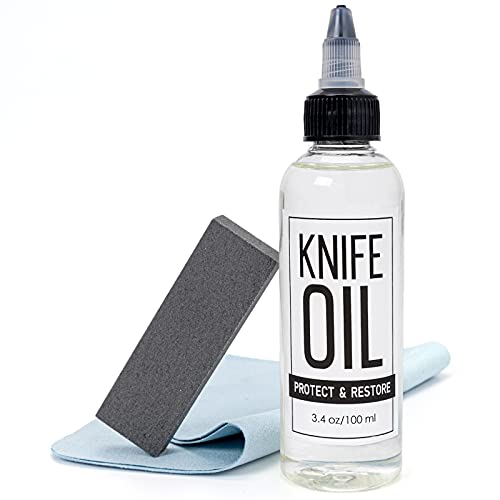
PuGez Knife Oil Rust Eraser Kit, Extra Large Rust Remover for Knives, Sword Maintenance Oil (3.4 oz) for Carbon Steel Blade, Cleaning, Protection And Lubricant Care Set
Professional Maintenance Oil: Specifically designed to maintain steel and carbon steel kitchen knives from rust and wear. Our…
As an affiliate, we earn on qualifying purchases.
As an affiliate, we earn on qualifying purchases.