To store knives long-term without losing their edge, choose storage options like magnetic strips, knife blocks with proper slots, or protective sheaths to prevent dulling and damage. Always clean and dry your blades thoroughly before storage, and apply protective coatings or use rust prevention tabs for high-carbon steels. Keep blades in a moisture-controlled environment with silica gel packets or desiccants, and regularly inspect your setup. For more detailed tips, you’ll find helpful techniques that ensure your knives stay sharp and protected over time.
Key Takeaways
- Store knives in knife blocks with horizontal slots or on magnetic strips to prevent dulling and ensure easy access.
- Hand wash, dry immediately, and apply protective coatings like Tuf-Glide to prevent corrosion and maintain edge quality.
- Use moisture absorbers such as silica gel packets or rust prevention tabs to control humidity and prevent rust.
- Keep knives in sheathes or guards, especially for high-carbon steels, to protect blades from damage and moisture exposure.
- Regularly inspect storage conditions, reapply protective coatings, and maintain a dry, well-ventilated environment for long-term preservation.
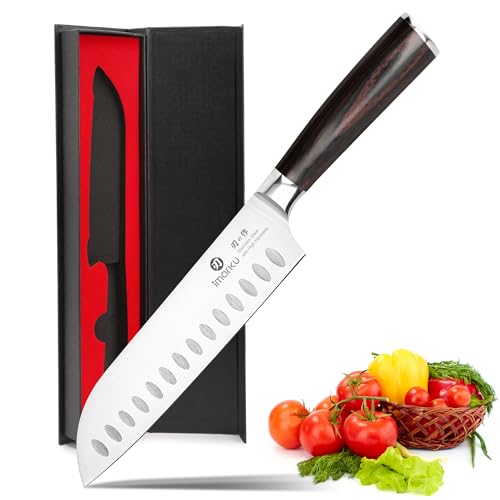
imarku Chef Knife 7 Inch Kitchen Knife Ultra Sharp Santoku Knife - High Carbon Japanese Chefs Knife, Kitchen Gadgets 2025, Apartment Essentials, Birthday Gifts for Him Her, Best Gifts for Women Men
Professional Santoku Knife: This imarku super sharp santoku knife is made of high carbon stainless steel that resists...
As an affiliate, we earn on qualifying purchases.
Choosing the Ideal Storage Solution for Longevity
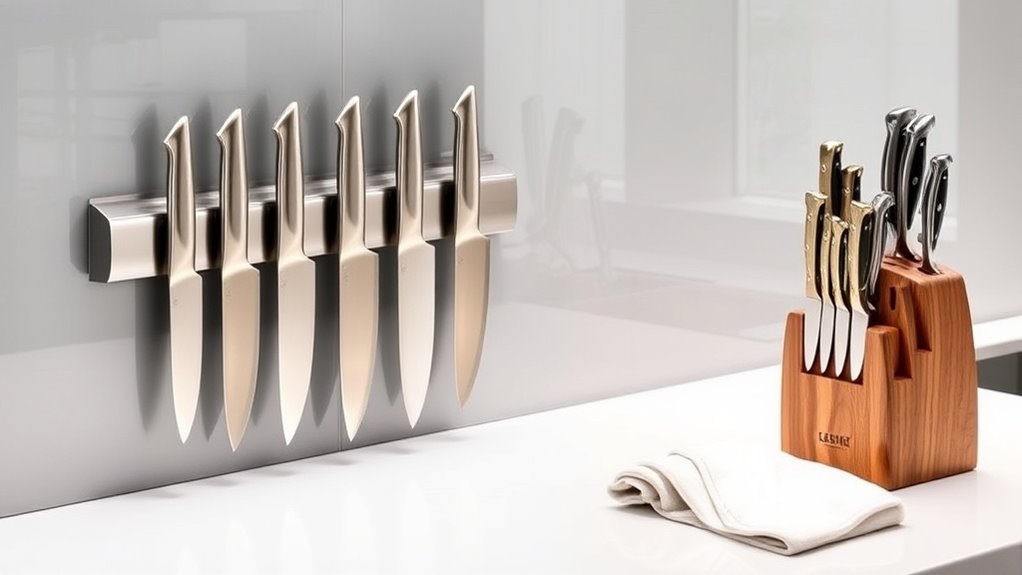
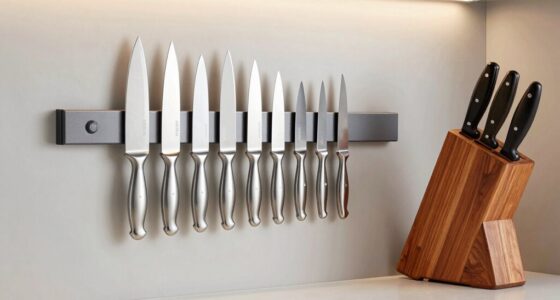
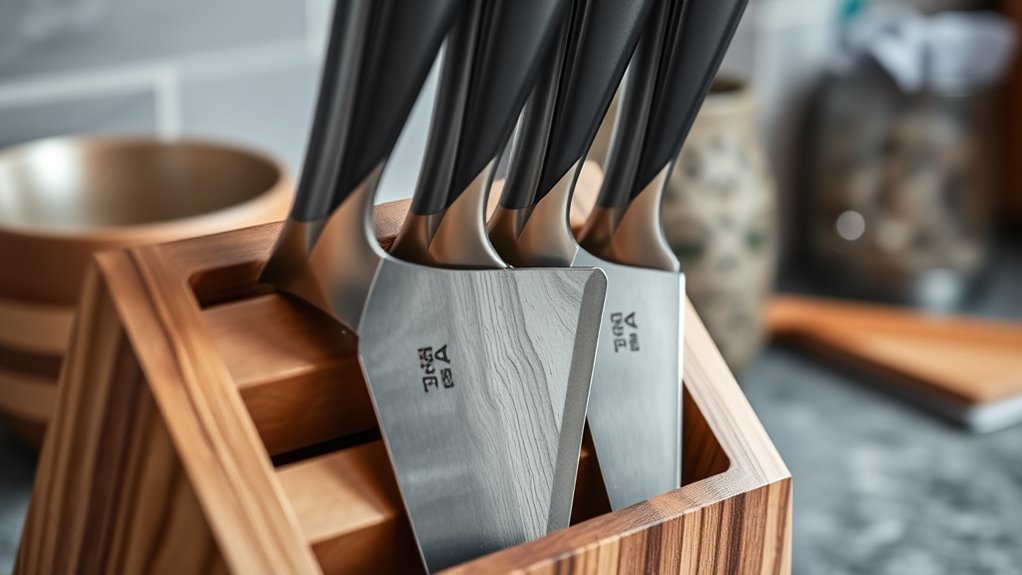
Choosing the right storage solution is essential for guaranteeing your knives stay sharp and rust-free over time. You want a method that protects the blades from dulling, corrosion, and damage. Knife blocks with horizontal slots are a good choice because they prevent dulling during insertion and removal. Bamboo models like the Shun 13-slot offer durability and are gentle on blades, but be sure to dry knives thoroughly before storing to avoid rust. Proper storage techniques can significantly extend the lifespan of your knives by minimizing exposure to damaging elements. Magnetic strips are space-efficient and keep knives accessible, reducing contact that dulls edges. Just ensure they’re securely mounted to prevent accidents. Sheaths and guards are useful for drawer storage, especially with high-carbon steels, but avoid moisture-trapping materials like leather. Pick a storage method that matches your space, knife types, and maintenance habits for ideal knife longevity. Proper blade protection techniques help maintain edge quality and prevent corrosion over years of use. Additionally, understanding the effects of moisture and air exposure on metal can help you choose storage options that extend the lifespan of your knives. Using appropriate storage materials like stainless steel or silicone can further enhance their durability and prevent damage.
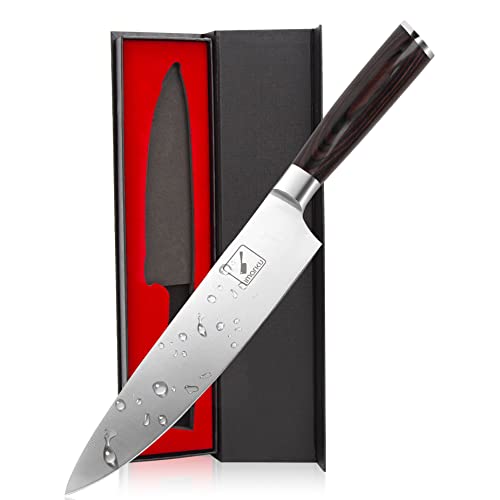
imarku Japanese Chef Knife - Sharp Kitchen Knife 8 Inch Chef's Knives HC Steel Paring Knife, Unique Gifts for Men and Women, Gifts for Mom or Dad, Kitchen Gadgets with Gift Box, Gyutou Knives
High-Carbon Stainless Steel Blade: It is manufactured from high-quality stainless steel that maintains its functionality for a long...
As an affiliate, we earn on qualifying purchases.
Proper Cleaning and Maintenance to Preserve Sharpness
Regular cleaning and proper maintenance are essential to keep your knives sharp and rust-free over time. Always wash your blades by hand with warm, mild soap and dry them thoroughly immediately afterward. Avoid dishwasher cleaning, which can cause dulling and corrosion. Use a soft cloth or a silicone-impregnated cloth to wipe the blades, removing any residue or fingerprints. Occasionally, clean the metal parts with acetone or TTE to eliminate stubborn oils or dirt, then lightly coat the blades with food-safe oil like Tuf-Glide to prevent moisture contact. Never leave knives wet or put them away dirty. Regularly inspect your blades for nicks or dull spots, and hone them with a sharpening steel or stone as needed. Proper care guarantees your knives stay sharp and in top condition for years.

HOSHANHO Kitchen Knife in Japanese High Carbon Steel, Professional High-Class Chef's Knife 8 inch, Non-slip Ultra Sharp Cooking Knives with Ergonomic Handle
【High-End Japanese Steel Chef's Knife】 HOSHANHO chef's knife is made of Japanese high carbon steel 10Cr15CoMoV, 2x of...
As an affiliate, we earn on qualifying purchases.
Moisture Control Techniques to Prevent Rust and Corrosion
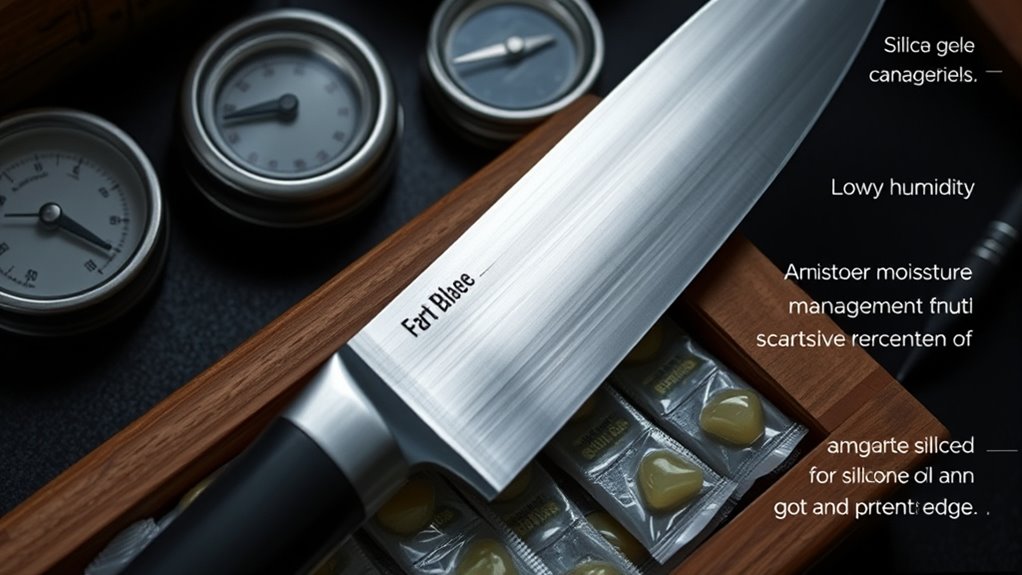
Moisture is the main enemy of long-term knife storage, as it can cause rust and corrosion even on stainless steel blades. To combat this, you should use moisture-absorbing materials and control your storage environment. Here are effective techniques:
- Place silica gel packets or Knife Box Moisture Removers inside your storage containers; they’re reusable for up to a year.
- Use activated charcoal or silicon beads in vacuum-sealed Food Saver bags to eliminate oxygen and moisture.
- Store high-carbon steel knives with Knife Box Rust Prevention Tabs, which emit vapor protection for two years.
- Avoid foam padding, as it can emit damaging gases; opt for cases with felt or no lining.
- Keep knives in a controlled, dry environment to prevent rust and corrosion, and consider moisture control methods to further protect your blades.
- Regularly inspect your storage setup to ensure no moisture buildup occurs that could compromise your blades.
- Proper humidity levels in your storage area can significantly reduce the risk of rust, making environmental humidity management an important aspect of long-term storage.
- Additionally, using desiccants tailored for metal preservation can provide extra protection against moisture-related damage.
- Incorporating airtight storage containers can help maintain a stable environment and prevent external moisture intrusion.

Japanese Chef Knife, 8 Inch Damascus Kitchen Knife with VG10 Steel, Handcrafted Sharp Knife with Ergonomic Handle, Cooking Knives for Home Chefs, Cooking Gifts for Men and Women
【Premium Damascus Chef Knife with VG-10 Steel Core】Our Japanese knives feature a VG-10 steel core (60 HRC) for...
As an affiliate, we earn on qualifying purchases.
Handling and Preparing Knives for Long-Term Storage
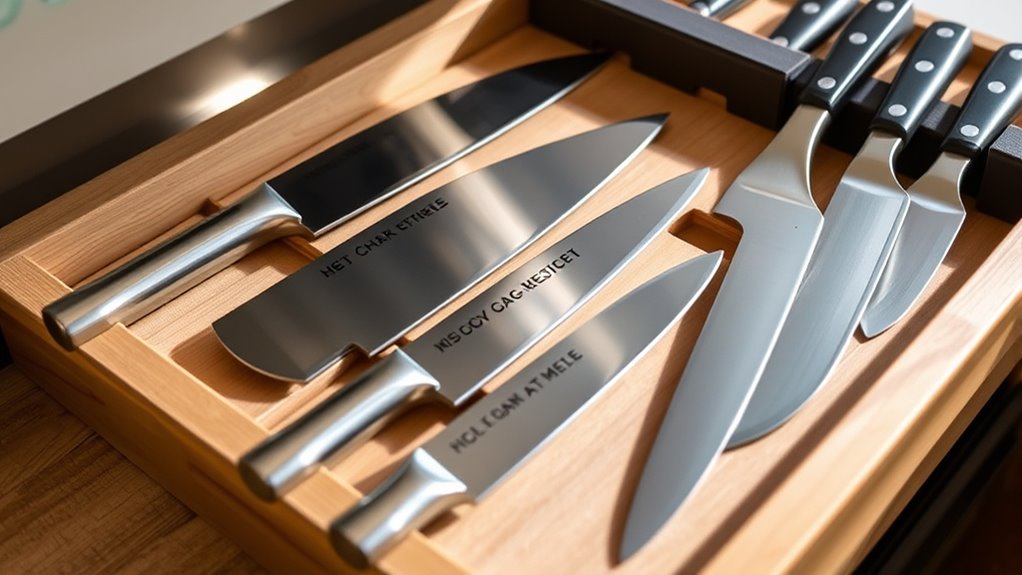
Before storing your knives long-term, make sure to clean and dry each blade thoroughly to prevent rust. Applying a thin layer of protective coating helps guard against corrosion over time. Taking these steps guarantees your knives stay in top shape even after long periods of storage. Additionally, storing knives properly can help maintain their edge quality for years to come. Using the right storage method can also prevent damage and ensure easy access when needed. Implementing proper storage practices can also contribute to maintaining knife sharpness over extended periods. Ensuring your storage environment is suitable, such as controlling humidity, can further protect your knives from potential corrosion. Paying attention to filtration systems in your storage area can help reduce airborne moisture and contaminants that might contribute to rust.
Thorough Cleaning and Drying
Proper cleaning and drying are essential steps to guarantee your knives stay in top condition during long-term storage. First, wipe blades with a silicone-impregnated cloth to remove food residues and prevent corrosion. Use acetone or TTE to clean metal parts, ensuring a thorough removal of oils and debris. Once cleaned, coat the blades lightly with a food-safe oil like Tuf-Glide to create a protective barrier. Then, dry each knife completely, paying special attention to joints and edges, to prevent rust formation.
- Wipe blades with silicone cloth for protection
- Clean metal parts with acetone or TTE
- Apply a light coat of food-safe oil
- Dry blades thoroughly, especially joints
- Store in a dry environment to avoid moisture buildup
Apply Protective Coatings
Applying protective coatings is a crucial step in preparing your knives for long-term storage, as it helps prevent rust and corrosion. After cleaning and drying, use a light oil like Tuf-Glide or a specialized knife oil to cover the blade evenly. This creates a barrier against moisture and environmental elements that cause rust. For leather sheaths, consider applying a product like KPL Knife Shield to protect the material and prevent moisture absorption. If you store high-carbon steel knives, using Hoppes Gun Grease adds extra protection. Be sure to coat all exposed metal surfaces thoroughly, especially in crevices or behind the edge. Additionally, choosing water-resistant storage options can further safeguard your knives from moisture damage. Proper coating considerably extends your knives’ edge quality and overall lifespan, keeping them ready for use whenever you need them. Regular maintenance and filtering techniques can help keep storage environments optimal and prevent potential corrosion.
Best Practices for Organizing and Accessing Stored Knives
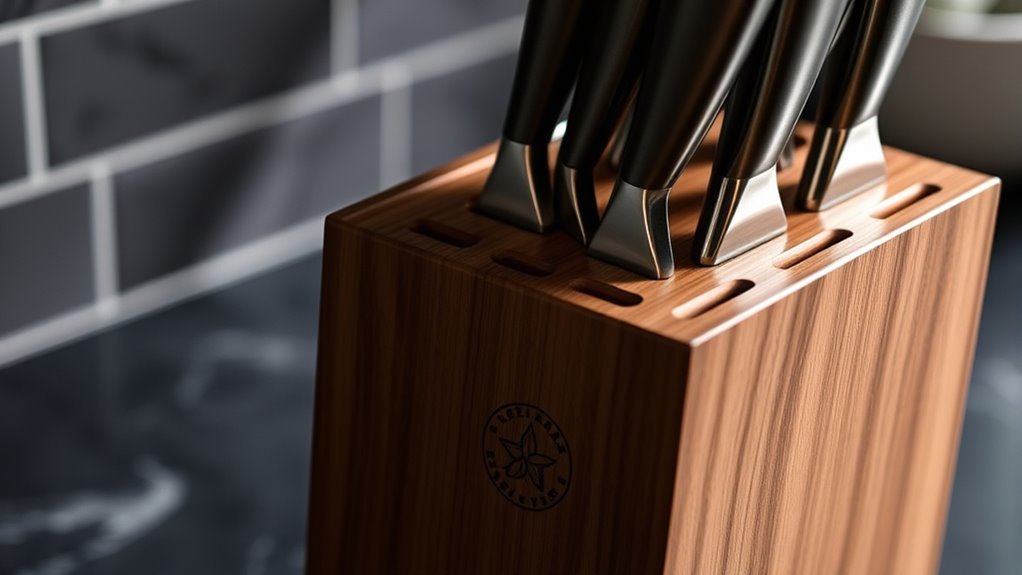
Organizing your knives for easy access starts with choosing the right storage method that suits your kitchen layout and usage habits. Proper organization helps prevent damage, accidents, and dulling. You should prioritize safety and quick access when selecting a system. Consider these best practices:
Choose the best storage method to keep your knives safe, sharp, and easily accessible.
- Use a knife block or magnetic strip for quick, safe retrieval.
- Keep frequently used knives within easy reach, and store specialty blades separately.
- Avoid stacking knives or tossing them loose in drawers to prevent chipping and injuries.
- Maintain a clean, dry environment to prevent rust and corrosion.
- Regularly check and clean storage spaces to ensure blades stay sharp and rust-free.
- Incorporate proper ventilation and moisture control considerations, such as dehumidifiers or silica gel packs, to further protect your knives from corrosion and deterioration. Effective moisture management is crucial for preserving blade quality over the long term. Additionally, choosing storage options with adequate airflow can significantly reduce humidity buildup around your knives. Proper ventilation systems help maintain a stable environment, reducing the risk of rust formation and other damage caused by excess moisture.
Choosing the right setup guarantees your knives stay sharp longer and are always ready when you need them.
Using Protective Sheaths and Coatings Effectively
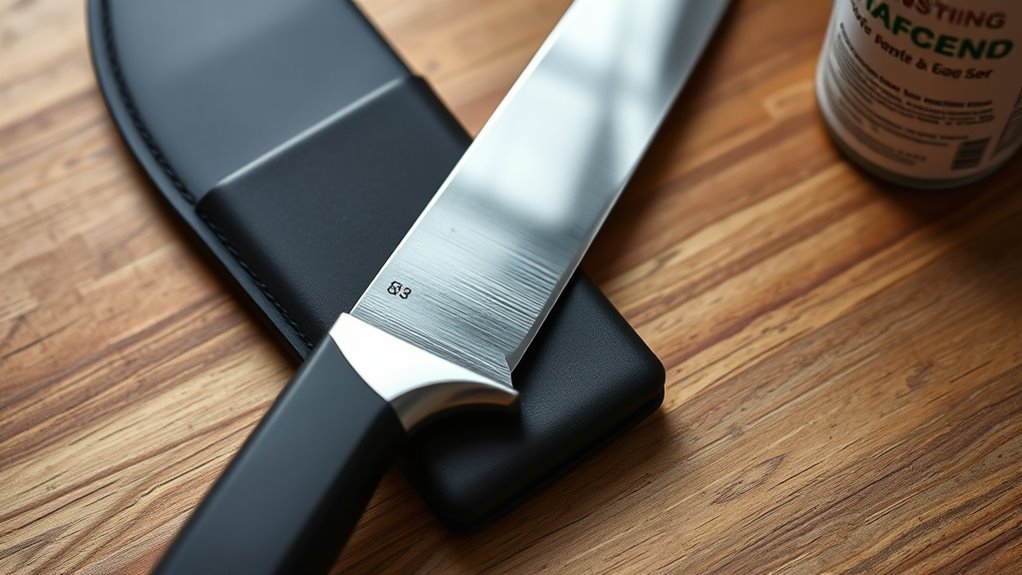
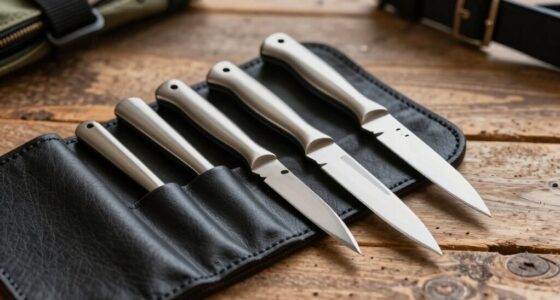
Using protective sheaths and coatings is essential for preserving your knives’ sharpness and preventing damage during long-term storage. Sheaths, like Kydex or plastic, shield blades from contact and moisture, reducing rust risk. Coatings such as light oil or specialized products like Tuf-Glide create a barrier against oxidation. Proper application guarantees blades stay dry and corrosion-free, especially for high-carbon steels. When selecting sheaths, consider ease of access and compatibility with your knife types. Additionally, understanding storage materials helps optimize protection and longevity for your knives. Selecting appropriate knife maintenance practices further enhances durability and edge retention over time. Regular inspections and reapplication of coatings can further prevent corrosion and maintain blade integrity during extended storage periods. Incorporating proper storage techniques ensures your knives remain in optimal condition for years to come.
Monitoring and Replenishing Storage Conditions Over Time
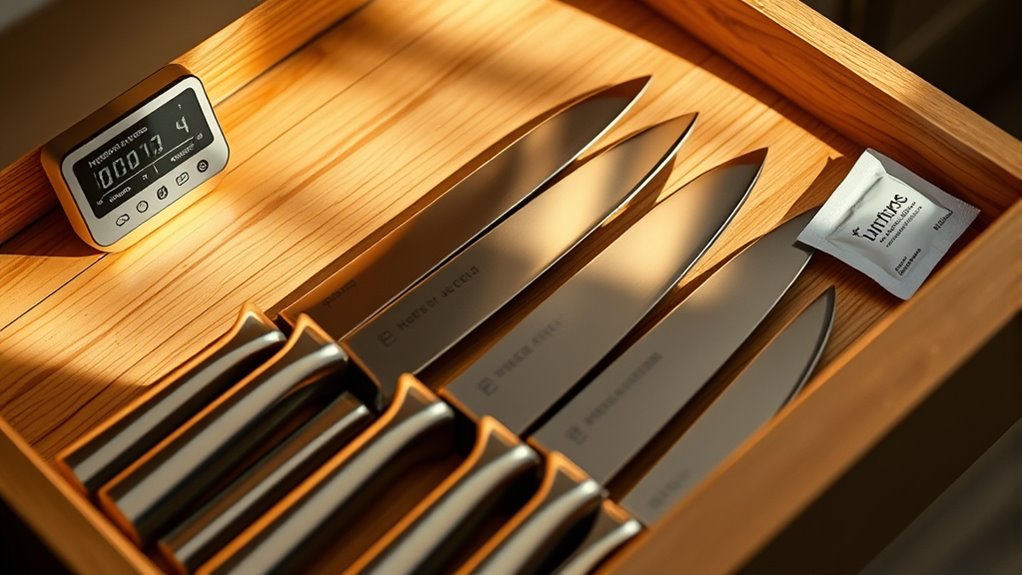
Regularly checking your knife storage conditions helps guarantee blades stay in top shape over time. You should inspect humidity levels, ensuring moisture isn’t building up, which can cause rust. Replenish silica gel packets or moisture absorbers when they become saturated. Keep an eye on the integrity of protective sheaths or coatings, replacing or reapplying as needed. Verify that magnetic strips, blocks, or cases remain secure and undamaged. Regularly clean storage areas to prevent dust or debris from settling on blades. Additionally, monitor for signs of corrosion, dullness, or rust spots, addressing issues promptly. Proper storage environment is essential to prolonging blade sharpness and preventing deterioration. Electric power generation with bike generators can provide additional energy for maintenance tools or lighting in your storage area. – Replace or recharge moisture absorbers regularly – Tighten or secure storage fixtures and mounts – Reapply protective coatings if they wear off – Clean storage surfaces to prevent buildup – Check for rust or corrosion and treat immediately. Ensuring good air circulation helps prevent moisture buildup and keeps blades dry.
Frequently Asked Questions
Can I Store Knives in the Freezer for Long-Term Preservation?
Storing knives in the freezer isn’t ideal for long-term preservation. Cold temperatures can cause moisture buildup and lead to rust, especially if blades aren’t properly dried or protected. Instead, consider using moisture control methods like silica gel packets or vacuum-sealed containers with desiccants. Keep knives in a dry, controlled environment, and store them in sheaths, magnetic strips, or knife blocks designed to prevent dulling and corrosion.
How Often Should I Check and Replace Desiccants or Moisture Absorbers?
You should check your desiccants or moisture absorbers every 3 to 6 months. If they feel damp, discolored, or swollen, replace or recharge them to maintain ideal moisture control. Regular checks prevent rust and corrosion, ensuring your knives stay in top condition. Keep a routine to monitor their effectiveness, especially if you store your knives in humid environments or for extended periods.
Is It Safe to Store Knives in a Drawer With Other Utensils?
Storing knives in a drawer with other utensils is like hiding a treasure chest—you risk dulling blades and accidents. To keep your knives sharp and safe, use protective sheaths, guards, or a dedicated knife tray. Make certain they’re dry and clean before storage. Installing a drawer insert or lining can prevent blades from rubbing against utensils, protecting both your knives and your fingers. Safety and sharpness go hand in hand when organized properly.
What Are the Risks of Using Leather Sheaths for Long-Term Storage?
Using leather sheaths for long-term storage poses risks because leather retains moisture, which can cause rust and corrosion on your blades. Leather also traps humidity and gases, potentially damaging high-carbon steel knives. Over time, this moisture buildup can dull edges and compromise blade integrity. To avoid these issues, opt for materials like Kydex or plastic sheaths, which provide better protection against moisture and help preserve your knives’ sharpness.
How Do Temperature Fluctuations Affect Stored Knives’ Edge Quality?
Temperature fluctuations can cause moisture buildup inside your knife storage, leading to rust and corrosion that dulls your blades. When temperatures rise and fall, metal expands and contracts, increasing the risk of micro-chipping or chipping edges. To prevent this, keep your knives in a temperature-controlled environment, avoid storing them near heat sources or in areas with high humidity, and guarantee thorough drying before storage. Consistent conditions help preserve your knives’ edge quality.
Conclusion
By following these tips, you’ll keep your knives sharp and ready for anything. Proper storage, cleaning, and moisture control are your best allies in avoiding unnecessary hassle. Remember, a stitch in time saves nine—taking small steps now prevents bigger problems later. Stay attentive to your knives’ needs, and they’ll serve you well for years to come. Keep at it, and your blades will stay as good as new, sharp and reliable every time.