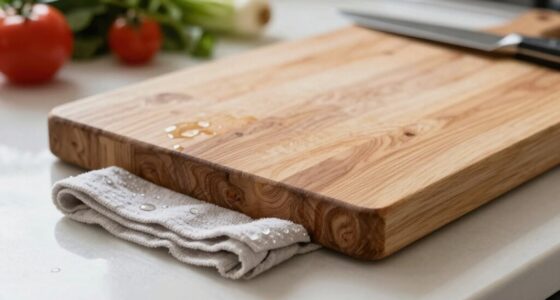
To position your cutting board for better mechanics, place it on a stable, non-slip surface like a damp towel or mat to keep it steady. Keep it close to your body and at a comfortable height to reduce reaching and strain. Adjust its orientation for large ingredients to prevent excessive hand movement, and guarantee it’s secure against slipping or wobbling. Proper placement improves control and safety—stick around to discover more tips for ideal cutting technique.
Open a free Amazon Business account
Business pricing, bulk buying and tax-exempt orders.
As an affiliate, we earn on qualifying purchases.
Key Takeaways
- Place the cutting board on a non-slip surface or use a damp towel underneath for stability.
- Position the board close to your body to minimize reaching and maintain control.
- Adjust the height of the board so your elbows rest comfortably, promoting ergonomic posture.
- Ensure the board is stable before starting to cut, preventing shifting or wobbling.
- Align the board for large ingredients to reduce excessive hand movement and improve efficiency.
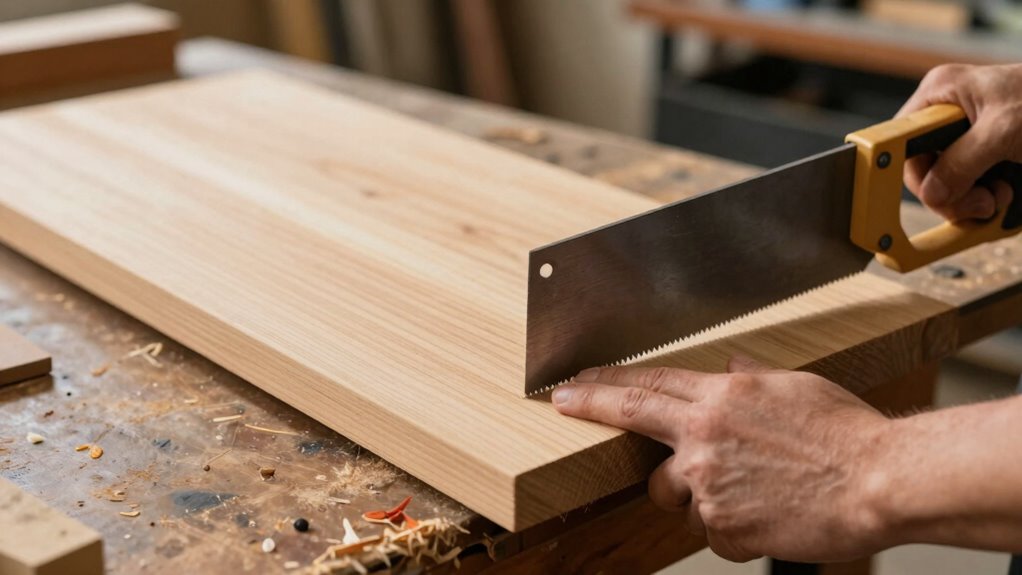
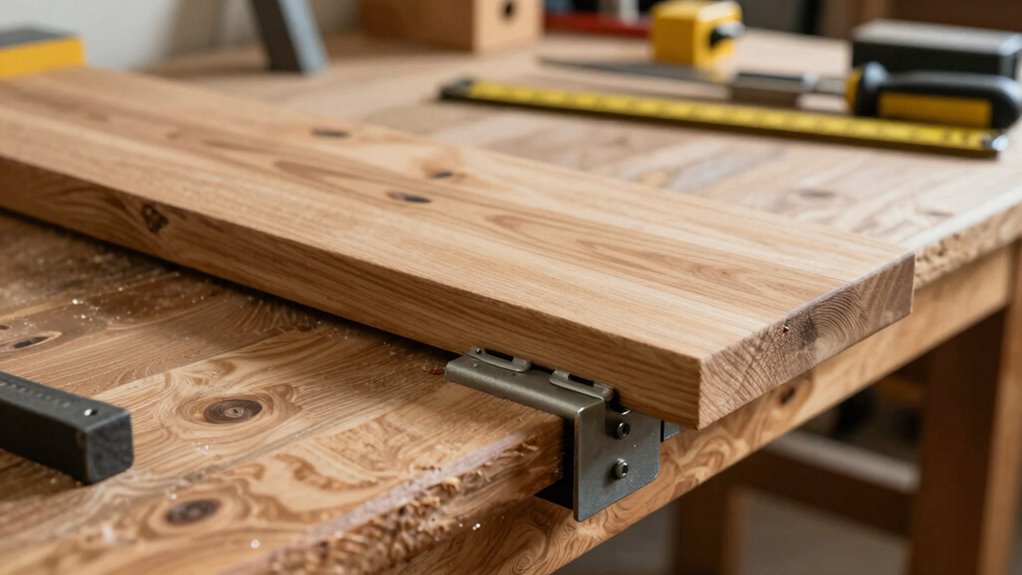
Positioning your board correctly is essential for achieving better cutting mechanics and ensuring safety. When your cutting surface is stable, you’ll find it easier to control your knife, which helps maintain its sharpness and prevents accidents. The way you set up your cutting area directly impacts the efficiency of your prep work and the longevity of your knives. For instance, the surface materials of your cutting board play a crucial role; some materials grip your knife better, allowing for cleaner cuts, while others might cause your blade to slip or dull faster. Choosing a sturdy, non-slip surface helps keep the board in place, giving you more confidence and precision with each cut.
Once you position your board, make sure it’s level and steady. If it shifts or wobbles, you risk uneven cuts and potential injuries. To prevent this, place a damp towel or non-slip mat underneath it. This simple step keeps the board firmly anchored to your countertop, giving you a stable platform for slicing, dicing, and chopping. When it comes to knife sharpness, a stable surface reduces unnecessary pressure and friction, which can dull your blade prematurely. The more secure your board, the less force you need to exert, helping preserve the edge of your knife longer. This is especially important when working with delicate cuts or fine julienne strips, where precision matters.
In addition to securing your board, consider its position relative to your body. Keep it close enough so you aren’t reaching or leaning awkwardly, which can cause fatigue and reduce control. Your cutting surface should be at a height that allows your elbows to rest comfortably at your sides. This positioning minimizes strain and enhances your overall cutting mechanics. Pay attention to the orientation of your board; if you’re working with large ingredients, position the board so that you don’t have to move your hand excessively or risk knocking items off the edge. Ensuring a stable, non-slip surface is also key for maintaining safety and precision during your prep work. Proper cutting board placement not only improves efficiency but also helps prevent accidents caused by instability. Additionally, understanding the importance of surface materials can help you select the best cutting board for your needs, further improving your technique and safety.
As an affiliate, we earn on qualifying purchases.
Frequently Asked Questions
What Materials Are Best for Cutting Boards?
You should choose cutting boards made from materials that are knife-compatible and durable. Hardwood options like maple, walnut, and cherry are excellent because they resist knife marks and are gentle on blades. Plastic boards are also good, especially for raw meats, as they’re easy to sanitize. Avoid softer woods or glass, which can dull knives quickly or cause damage. Prioritize materials that balance durability with knife-friendliness for the best cutting experience.
How Often Should I Replace My Cutting Board?
You should replace your cutting board when it shows deep cuts, excessive wear, or develops persistent odors, as these impact hygiene and cutting efficiency. Regularly sharpen your knives to prevent unnecessary damage, and always store your board properly to avoid warping or bacterial buildup. By maintaining a sharp knife and good board storage, you prolong your board’s lifespan, but don’t hesitate to replace it when it no longer provides a safe, effective surface for food prep.
Can a Cutting Board Affect Food Safety?
Yes, a cutting board can affect food safety. If you don’t clean and sanitize it properly, it can harbor bacteria, leading to food contamination. Using separate boards for raw meat and vegetables helps prevent cross contamination. Regularly replacing worn boards and cleaning them thoroughly reduces bacteria buildup. Properly positioned and maintained boards are essential for cross contamination prevention, ensuring you minimize health risks and keep your food safe.
Are There Specific Cleaning Techniques for Different Boards?
Think of cleaning your cutting boards like maintaining a fine knife—both need care. For different boards, use specific techniques: plastic boards can often go in the dishwasher for thorough sanitation, while wooden ones benefit from scrubbing with hot soapy water and occasional vinegar treatment. Never forget to regularly check knife maintenance to prevent cross-contamination. Proper board sanitation keeps your food safe, just like sharp knives ensure precise cuts every time.
How Does Board Thickness Influence Cutting Mechanics?
Thicker boards provide better stability, making your cuts more precise and reducing slipping. They also influence your cutting angle, allowing you to apply consistent pressure without wobbling. When a board is thinner, it may flex or shift, disrupting your technique. To improve cutting mechanics, choose a thickness that offers stability and supports your preferred cutting angle, ensuring safer and cleaner results.
adjustable height cutting board stand
As an affiliate, we earn on qualifying purchases.
As an affiliate, we earn on qualifying purchases.
Conclusion
By properly positioning your cutting board, you set yourself up for smoother, safer cuts. Remember, taking a few extra seconds to align your board can make all the difference in your technique and safety. Don’t let a poorly positioned board be the weak link in your cooking routine—get it right from the start. When you’re mindful of your setup, you’re truly playing with a full deck. Happy chopping!
large ingredient prep cutting board
As an affiliate, we earn on qualifying purchases.
As an affiliate, we earn on qualifying purchases.
As an affiliate, we earn on qualifying purchases.
Flea & tick season Picks
flea and tick prevention
As an affiliate, we earn on qualifying purchases.