To maximize safety and space in your tiny kitchen, choose wall-mounted magnetic strips or slim knife blocks that keep blades secure and accessible. Store sharp knives out of children’s reach in high cabinets or behind closed drawers, and use safety inserts to prevent accidents. Organize frequently used tools for quick access and less-used knives in hidden spots. If you keep safety in mind, your kitchen will stay organized, secure, and efficient—discover more tips to optimize your setup.
Key Takeaways
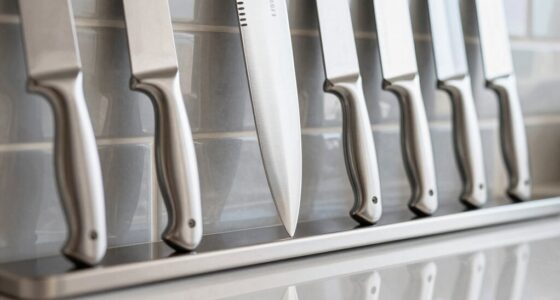
- Opt for wall-mounted magnetic strips placed at eye level for quick access and to keep knives out of children’s reach.
- Use narrow, dedicated knife racks or drawer inserts with individual slots to prevent blades contact and dulling.
- Store less-used knives in secure, out-of-the-way spots to reduce clutter and accidental injuries.
- Regularly clean and inspect storage areas and tools to prevent rust, damage, and ensure safety.
- Prioritize space-efficient solutions like magnetic holders or compact knife blocks suited for small kitchen layouts.

HOSHANHO Kitchen Knife in Japanese High Carbon Steel, Professional High-Class Chef's Knife 8 inch, Non-slip Ultra Sharp Cooking Knives with Ergonomic Handle
【High-End Japanese Steel Chef's Knife】 HOSHANHO chef's knife is made of Japanese high carbon steel 10Cr15CoMoV, 2x of...
As an affiliate, we earn on qualifying purchases.
Assessing Your Space and Needs
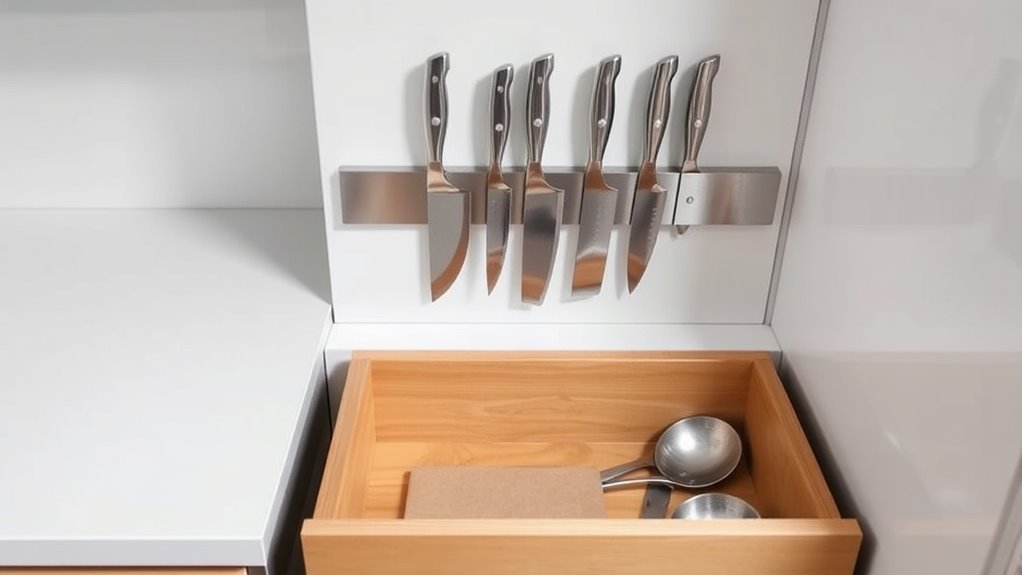
Before choosing a knife storage solution, you need to evaluate your available space and how you use your kitchen. Measure your countertop, drawer, or cabinet areas to understand what fits comfortably without cluttering. Consider how often you use your knives—frequently or occasionally—and whether you prefer quick access or discreet storage. Prioritize knife safety by selecting options that keep blades protected and secure, preventing accidents. Space optimization is key; choose storage that maximizes limited room without sacrificing safety or accessibility. For tiny kitchens, compact and efficient solutions like magnetic strips or small drawer inserts can help you stay organized. By assessing your space and needs, you set a foundation for safe, smart, and efficient knife storage tailored to your kitchen’s size.
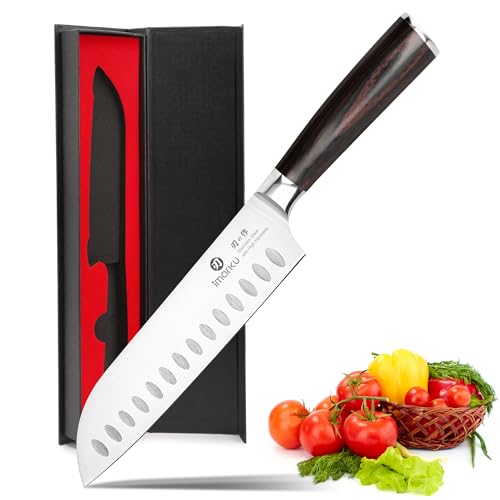
imarku Chef Knife 7 Inch Kitchen Knife Ultra Sharp Santoku Knife - High Carbon Japanese Chefs Knife, Kitchen Gadgets 2025, Apartment Essentials, Birthday Gifts for Him Her, Best Gifts for Women Men
Professional Santoku Knife: This imarku super sharp santoku knife is made of high carbon stainless steel that resists...
As an affiliate, we earn on qualifying purchases.
Choosing the Right Storage Solution
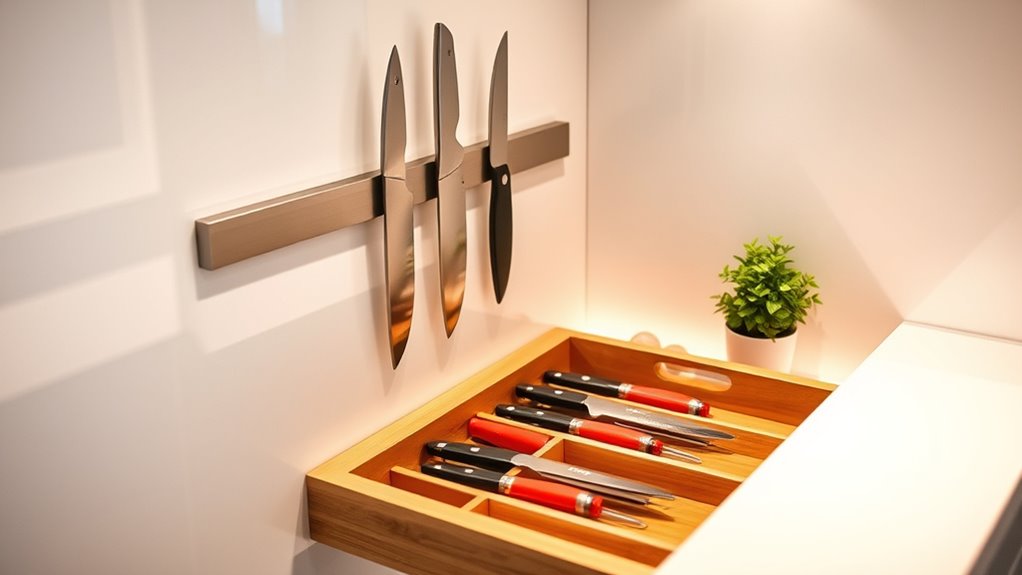
When selecting a storage option, think about what fits best in your limited space and keeps your knives safe. Secure magnetic holders save counter space and make quick access easy, while compact knife blocks can fit neatly on a small countertop. If you prefer storing knives in a drawer, safety inserts guarantee they stay protected and organized without taking up extra room.
Secure Magnetic Holders
Secure magnetic holders are an excellent choice for tiny kitchens because they keep knives accessible and safely stored without taking up valuable counter or drawer space. They enhance magnetic safety by securely holding blades in place, reducing the risk of accidents or damage. With proper installation, these holders help you organize your knives efficiently, making it easy to find the right tool quickly. They also prevent clutter, keeping your workspace neat and safe. When selecting a magnetic holder, guarantee it has a strong magnet to hold knives firmly and is mounted out of reach of children. This simple yet effective solution maximizes space while maintaining safety and knife organization, perfect for small kitchens with limited storage options.
Compact Knife Blocks
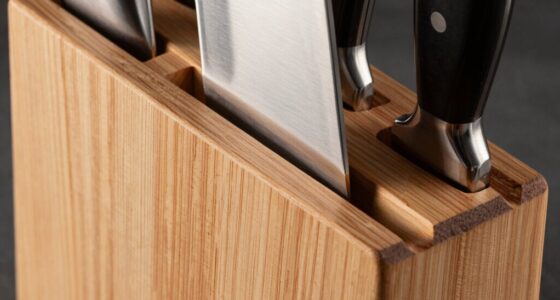
Choosing the right compact knife block can substantially improve organization and safety in your tiny kitchen. A well-designed block keeps your knives securely stored, reducing clutter and preventing accidental cuts. Look for a model with individual slots that support proper knife maintenance, helping you avoid dull blades that can be dangerous. Consider a block made from durable, easy-to-clean materials to maintain hygiene and longevity. Some blocks feature angled slots, making knife insertion safer and more comfortable. Remember, regularly sharpening your knives is essential—storing sharp blades in a suitable block minimizes the risk of slips during use. By selecting a compact knife block tailored to your space, you’ll enhance both safety and efficiency while ensuring your knives stay in top condition.
Drawer Safety Inserts
Have you considered how drawer safety inserts can transform your tiny kitchen? These inserts keep knives securely separated, reducing the risk of accidents and making drawer organization effortless. When choosing a safety insert, look for one that accommodates different knife handle designs comfortably, ensuring easy access without compromising safety. If you frequently sharpen your knives, opt for a solution that allows quick removal for sharpening or maintenance. A well-designed insert also protects delicate blades, maintaining their edge longer. By customizing the layout within your drawer, you can maximize space while keeping your knives safe and easily reachable. Drawer safety inserts are a smart, space-efficient choice that prioritizes safety without sacrificing functionality in your small kitchen.
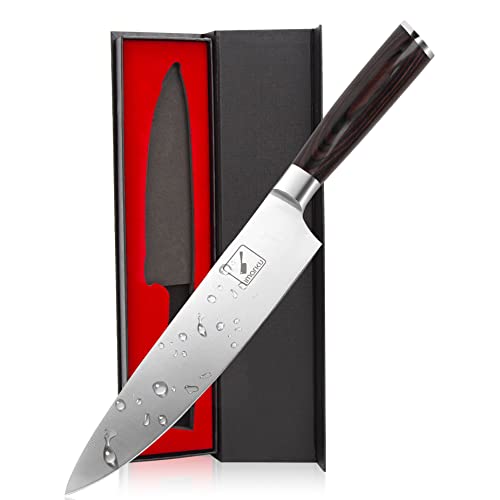
imarku Japanese Chef Knife - Sharp Kitchen Knife 8 Inch Chef's Knives HC Steel Paring Knife, Unique Gifts for Men and Women, Gifts for Mom or Dad, Kitchen Gadgets with Gift Box, Gyutou Knives
High-Carbon Stainless Steel Blade: It is manufactured from high-quality stainless steel that maintains its functionality for a long...
As an affiliate, we earn on qualifying purchases.
Implementing Safety-Oriented Placement Strategies
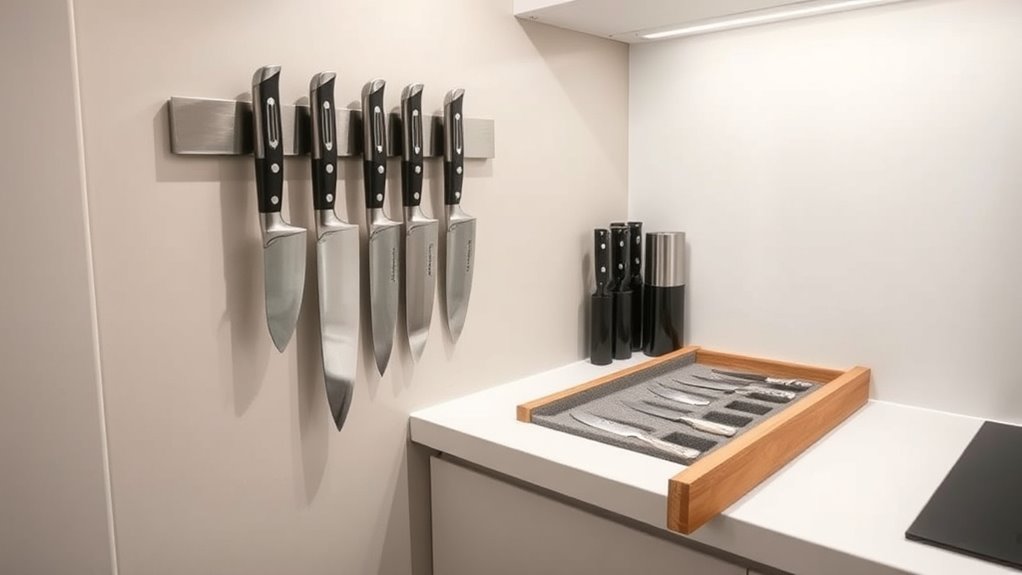
To guarantee safety in tiny kitchens, it’s essential to carefully consider where you store your knives. Implementing safety-oriented placement strategies minimizes accidents and promotes effective storage organization. Keep knives out of reach of children by choosing high or locked cabinets. Use magnetic strips mounted securely on walls to keep blades visible yet safely stored. Place knives with dull blades separately from sharp ones to prevent mishandling. Consider knife blocks with individual slots to prevent blades from touching each other, reducing dulling and safety risks. Here’s a quick guide:
| Placement Strategy | Benefits |
|---|---|
| High cabinets | Out of children’s reach |
| Magnetic strips | Easy access, safe storage |
| Drawer inserts | Organized, protected blades |
| Wall-mounted racks | Space-saving, safe handling |
| Separate dull/sharp storage | Minimized accidental cuts |

MOSFiATA 8" Super Sharp Professional Chef's Knife with Finger Guard and Knife Sharpener, German High Carbon Stainless Steel EN1.4116 with Micarta Handle and Gift Box
【High Carbon German Stainless Steel Laser-engraved Pattern(Not Damascus Pattern )】 MOSFiATA 8 inch pro chef's knife is made...
As an affiliate, we earn on qualifying purchases.
Maximizing Accessibility Without Compromising Safety
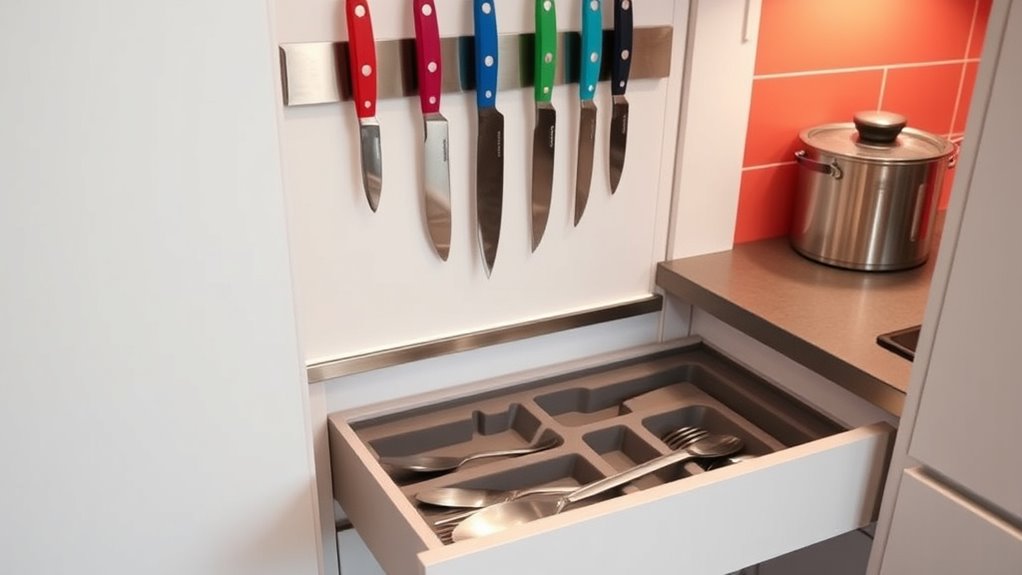
Maximizing accessibility in your tiny kitchen doesn’t mean you have to sacrifice safety. Focus on ergonomic placement to guarantee you can reach your knives easily without risking injury. Here are four ways to improve accessibility while maintaining knife safety:
- Use wall-mounted magnetic strips at eye level for quick, safe access.
- Install a narrow, dedicated knife rack to keep knives organized and within reach.
- Keep frequently used knives in a designated, open countertop holder for convenience.
- Store less-used knives in a secure, out-of-the-way spot to prevent accidental cuts.
Prioritize knife safety by choosing placements that allow you to grab knives effortlessly, reducing the risk of slips or injuries. This balance ensures safety and accessibility coexist seamlessly.
Tips for Securing Knives in Small Drawers and Cabinets
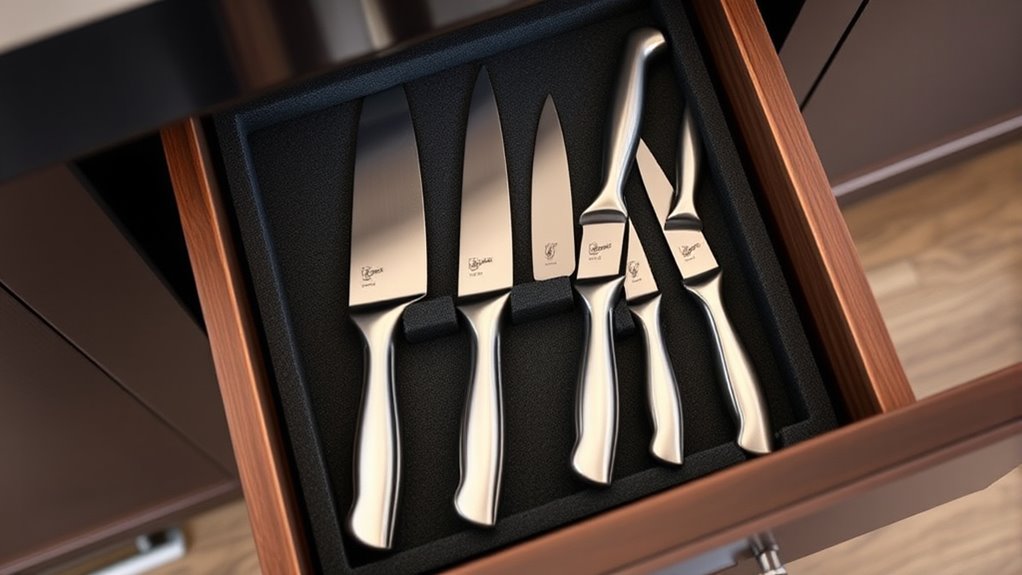
While keeping knives accessible is important, securing them in small drawers and cabinets helps prevent accidents and keeps your tiny kitchen organized. To enhance knife safety, consider installing a dedicated knife tray or a secure magnetic strip inside your cabinet. These options prevent blades from shifting and accidental cuts when opening or reaching in. Use drawer dividers or small containers to separate knives from other utensils, maintaining effective storage organization. Make sure all knives are stored with blades covered or facing downward to avoid injuries. Labeling sections or using clear storage solutions also helps quickly locate the right knife without rummaging. By implementing these tips, you guarantee your knives stay safe, accessible, and well-organized, reducing the risk of accidents in your compact kitchen.
Maintaining Your Knife Storage System for Longevity and Safety
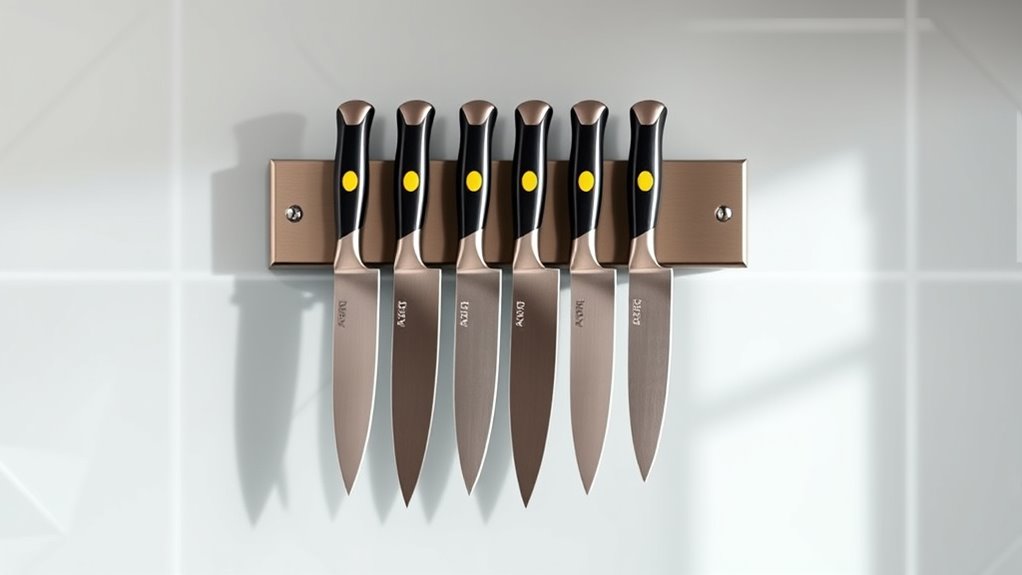
To keep your knife storage safe and lasting, you need to stay on top of regular cleaning and maintenance. Proper storage helps prevent damage and keeps knives sharp and secure. Make it a habit to check and clean your system frequently to guarantee safety and longevity.
Regular Cleaning Practices
Regular cleaning is essential to keep your knife storage system safe and in good condition. It prevents rust, preserves sharpness, and ensures safe knife handling. To maintain the best safety and performance, follow these practices:
- Regularly wipe down your knife storage to remove dust, moisture, and debris.
- Clean knives with a damp cloth, avoiding abrasive materials that can dull blades.
- Use sharp blade techniques when handling or cleaning knives to prevent accidents.
- Inspect for rust or damage and address issues immediately to maintain knife handling safety.
Proper Storage Maintenance
Maintaining your knife storage system properly is key to guaranteeing it stays safe and lasts longer. Regularly inspect your storage to confirm knife blade protection remains intact, preventing dulling or damage. Clean your storage material selection frequently to avoid buildup of debris or moisture that could cause rust or corrosion. Use gentle cleaning methods suited for the material—wood, plastic, or magnetic strips—to preserve their integrity. Replace worn or damaged storage components immediately to maintain a secure environment for your knives. Proper maintenance minimizes the risk of accidents caused by loose or unstable storage. By consistently caring for your system, you ensure your knives stay sharp, safe, and ready for use, while also extending the lifespan of your storage investment.
Frequently Asked Questions
What Materials Are Safest for Knife Storage in Tiny Kitchens?
You should choose knife rack materials that are durable and non-abrasive, like wood or silicone, to protect your blades. Magnetic strip options made of stainless steel or wood with embedded magnets are safe and convenient, keeping knives accessible while preventing accidents. Avoid materials that could chip or cause corrosion, ensuring your knives stay sharp and your tiny kitchen remains safe. Select sturdy, smooth surfaces for ideal safety and longevity.
How Can I Prevent Rust and Corrosion in Small Knife Storage Spaces?
Ever wonder how to keep your knives pristine in a tiny kitchen? To prevent rust and corrosion, guarantee your knives are thoroughly dry after each use, especially before storage. Use blade protection like magnetic strips or knife guards to minimize moisture contact. Regularly sharpen your blades to reduce rough spots where rust can settle. These simple steps safeguard your knives, prolong their life, and keep them safe and sharp for every cut.
Are There Child-Proof Options for Knife Storage in Tiny Kitchens?
Yes, you can choose child-proof knife storage options with locking mechanisms to guarantee safety. Look for storage containers or drawers with secure locks or safety latches that children can’t open. Installing a lockable knife drawer or wall-mounted magnetic strip with a child safety lock offers easy access for adults while keeping knives out of children’s reach. These solutions help protect your little ones without sacrificing convenience.
What Are the Best Practices for Cleaning and Maintaining Knife Storage Areas?
Imagine a sparkling, organized knife drawer where safety and cleanliness reign. You should regularly sanitize knives with appropriate solutions, ensuring no bacteria linger. Keep storage areas dry and free of debris to prevent rust. Use gentle, damp cloths for cleaning and avoid harsh chemicals. Consistently inspect for dull blades or damage, maintaining sharpness and safety. Proper knife sanitizing and diligent storage maintenance keep your tiny kitchen safe and efficient.
How Do I Organize Different Types of Knives Efficiently in Limited Space?
To organize different types of knives efficiently in limited space, use designated storage solutions like a magnetic strip for knives, a compact knife block, or a drawer insert. Categorize by knife types—paring, chef’s, serrated—and keep frequently used ones within easy reach. This approach saves space, promotes safety, and guarantees you quickly find the right knife when cooking, making your tiny kitchen more functional.
Conclusion
By designing your knife storage with safety as your guiding star, you create a secure haven within your tiny kitchen’s bustling landscape. Think of your space as a delicate garden—each tool thoughtfully placed to flourish without chaos. With these principles, you’ll turn clutter into clarity, where sharp edges are protected like precious gems. Embrace these strategies, and watch your kitchen become a harmonious symphony of safety and efficiency, even in the smallest of spaces.