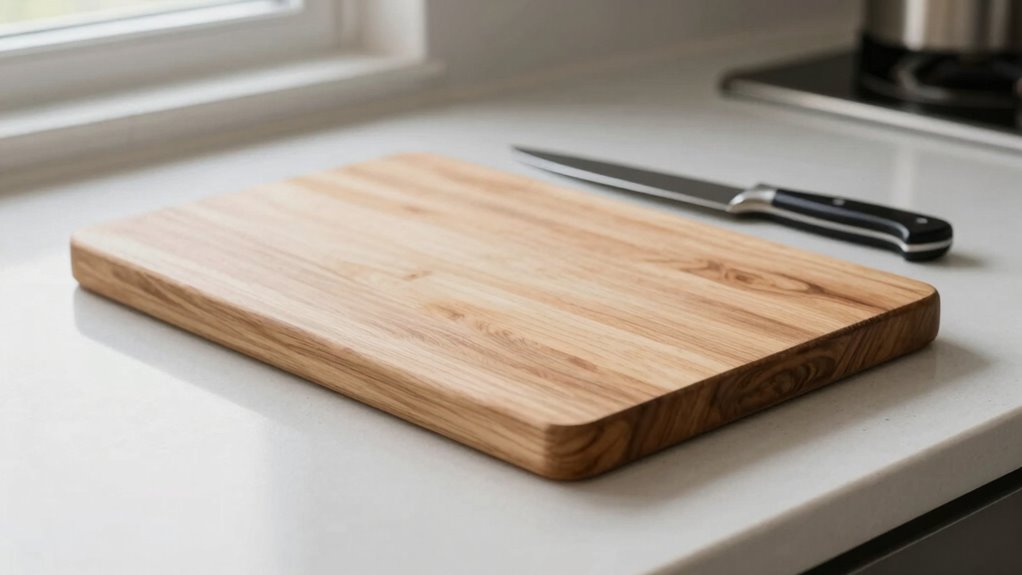
To prevent accidents, place your cutting board on a stable, non-slip surface, ensuring it’s positioned on a level, sturdy spot. Keep frequently used ingredients nearby for efficiency while organizing your workspace into zones for chopping, prep, and cleaning. Separate raw and cooked foods using different boards or sections to avoid cross-contamination. Proper lighting and regular workspace checks help maintain safety. Discover more tips to create an organized, accident-free kitchen setup.
Key Takeaways
- Place the cutting board on a sturdy, non-slip surface with adequate space for safe knife handling.
- Position the board away from edges and high-traffic areas to prevent accidental knocks.
- Use non-slip pads or mats under the board for added stability during use.
- Keep frequently used ingredients within easy reach to minimize unnecessary movement.
- Ensure proper lighting directly over the workspace to improve visibility and reduce accident risk.
Choosing the Optimal Location for Your Cutting Board
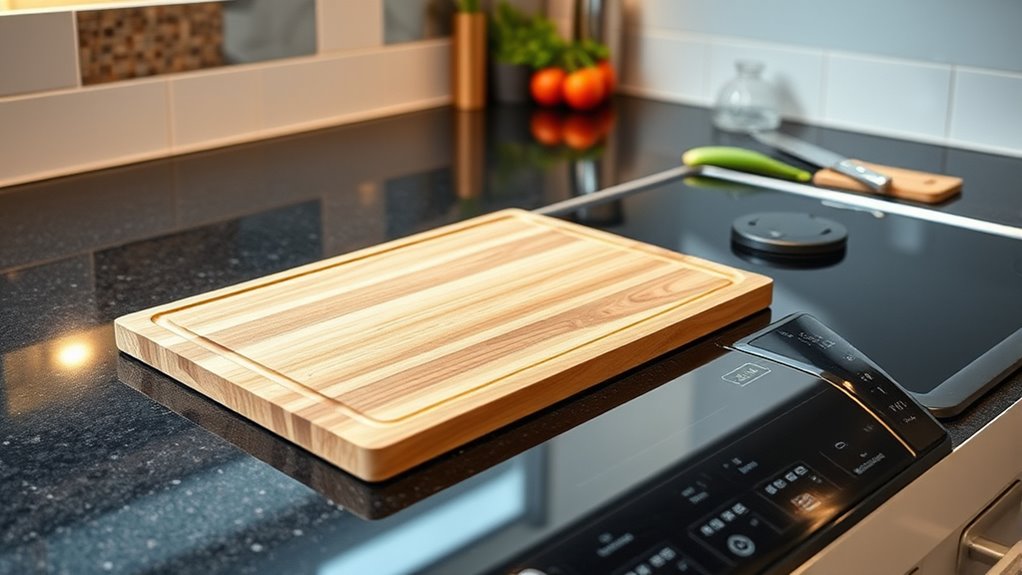
When selecting the best spot for your cutting board, you should prioritize safety and efficiency. Placing it on a sturdy, flat surface minimizes the risk of slipping and keeps your workspace organized. To practice knife safety, position your cutting board where you have ample room to work comfortably, reducing the chance of accidents. Consider your cutting techniques—align your board with your dominant hand and keep frequently used ingredients nearby to streamline your prep. Avoid crowded or cluttered areas that could cause spills or distractions. Ensuring your board is at a comfortable height helps maintain control during chopping and slicing. Additionally, choosing the right surface material can influence stability and safety during food prep. Selecting a surface with non-slip features can further enhance safety by preventing movement during use. Proper surface maintenance also ensures the longevity and safety of your cutting area. Being aware of market trends in kitchen tools can help you select innovative safety features that improve your food prep experience. By choosing a stable, accessible location, you’ll improve your safety and make your food prep more effective and enjoyable.
Ensuring Stability and Preventing Slips
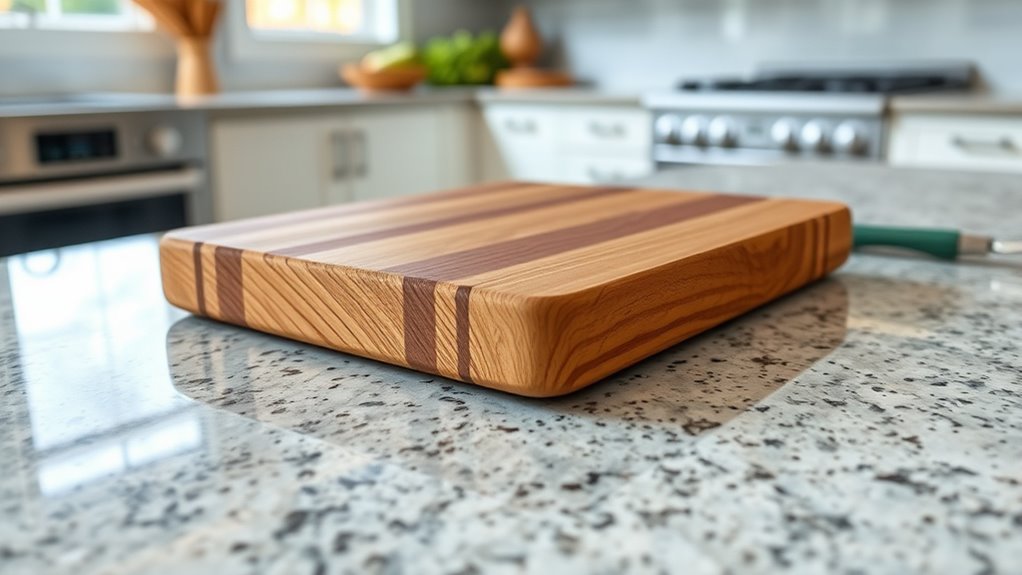
To keep your cutting board steady, make sure you secure the surface it’s on. Using non-slip mats can prevent accidental slips, especially when working quickly. Keeping your workspace clear also helps maintain stability and reduces the risk of accidents. Incorporating smart kitchen technology, such as connected surfaces with grip-enhancing features, can further improve safety during food preparation. Additionally, choosing appropriate placement for your cutting board can help distribute weight evenly and avoid wobbling. Properly maintaining your tools ensures they stay safe and effective for daily use. Employing free floating techniques in your workspace setup can also contribute to better stability and safety, especially when combined with air quality considerations that keep your environment comfortable and distraction-free.
Secure the Surface
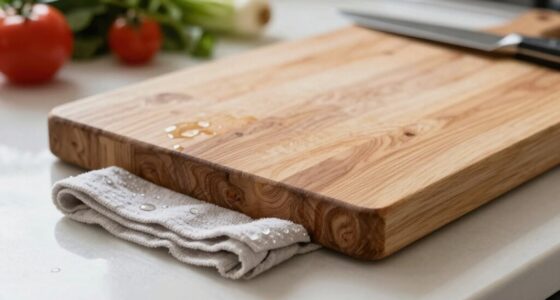
A stable cutting surface is essential for safe and efficient food preparation. When your surface is secure, you reduce the risk of slips that can cause accidents or injuries. To keep your cutting board steady, always check its stability before use. Use a damp towel or non-slip pad underneath to prevent movement. This not only supports knife safety but also makes cleaning routines easier, as a secure surface minimizes messes and accidents. Keep your workspace organized so items don’t slide around. Here’s a quick comparison:
| Method | Benefit | Best For |
|---|---|---|
| Damp cloth | Adds grip, easy to clean | Daily prep |
| Non-slip pad | Extra stability, reusable | Heavy chopping |
| Towel on counter | Simple, inexpensive | Light tasks |
| Rubber feet | Permanent grip, sturdy | Long-term setup |
| Adhesive pads | Secure, simple to install | Fixed placement |
Additionally, choosing appropriate materials for your surface can enhance overall stability and safety.
Use Non-Slip Mats
Using non-slip mats is an effective way to keep your cutting board stable during food prep. Placing your board on slip resistant surfaces prevents it from sliding or wobbling, reducing the risk of accidents. Non slip mats provide added grip, especially on smooth countertops that can be slippery when wet or oily. Make sure the mat covers enough area beneath the board to prevent any movement. Regularly check the mats for wear or dirt that could reduce their effectiveness. Additionally, material durability is crucial to ensure long-lasting safety and grip in your kitchen. Advanced nanotechnologies are being developed to create innovative materials that can further enhance grip and safety in culinary applications. Choosing mats made from high-quality, non-porous materials can further improve their longevity and effectiveness. Incorporating anti-slip technology into the design of these mats can provide even greater stability and peace of mind. By using these mats, you create a safer workspace, minimizing the chance of slips or accidental cuts.
Maintain Clear Workspace
Maintaining a clear workspace is essential for keeping your cutting board stable and preventing slips. A clutter-free area reduces the risk of accidents and enhances knife safety. To guarantee a safe environment, consider these steps:
- Keep your cutting area organized, removing unnecessary items.
- Regularly clean your workspace and cutting board during food prep to prevent buildup.
- Use a damp cloth to wipe away liquids or debris that could cause slipping.
- Follow proper cleaning routines to remove grease and residue, maintaining a secure surface.
- Incorporate non-slip mats or pads underneath your cutting board for added stability workspace safety.
- Be aware that proper pool hydraulics can also help in maintaining overall safety and stability in your environment.
- Ensuring the non-slip surface of your cutting area can further enhance safety and prevent accidental movements.
- Consistently inspecting your surfaces for wear or damage can help maintain optimal kitchen safety and prevent unexpected slips.
Separating Raw and Cooked Foods to Avoid Cross-Contamination
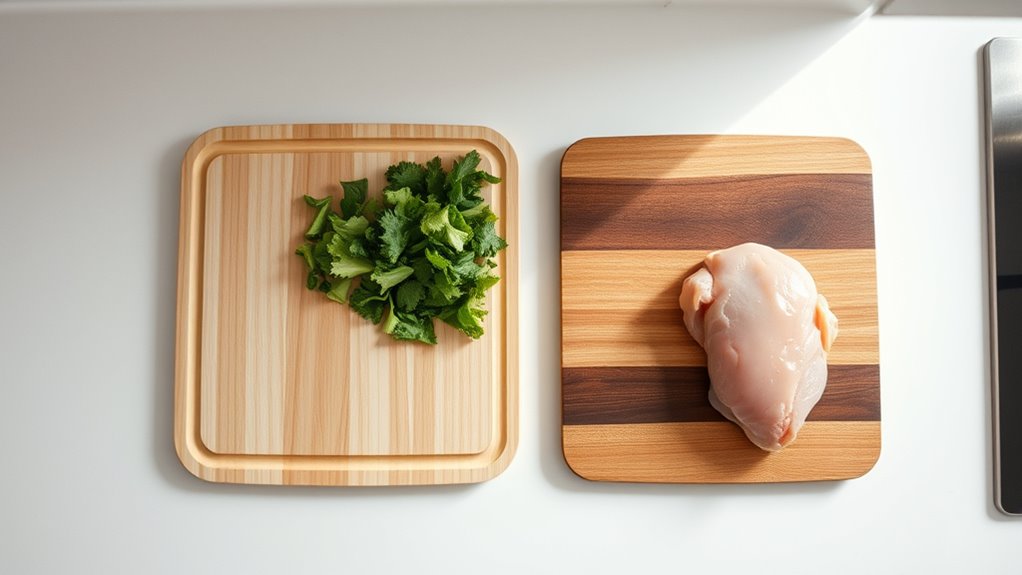
You should use separate cutting boards for raw and cooked foods to prevent cross-contamination. After each use, store the boards properly so bacteria don’t transfer to other surfaces. Keeping raw and cooked food areas distinct is key to safe food handling. Additionally, be aware of proper cutting board maintenance practices to further reduce risks. Employing attention to detail during cleaning helps identify overlooked bacteria and prevents spread. Incorporating proper sanitation methods ensures that the boards remain hygienic and safe for subsequent use. Moreover, understanding food safety principles can help reinforce best practices in the kitchen.
Designate Separate Boards
To prevent cross-contamination, it’s essential to assign separate cutting boards for raw and cooked foods. Proper material selection guarantees durability and hygiene, making cleaning easier and reducing bacteria buildup. Color coding helps you quickly identify the right board for each task, minimizing mistakes. When choosing boards, consider these key points:
- Use plastic or bamboo for raw meats, which are easy to sanitize.
- Reserve brightly colored boards for raw proteins.
- Select neutral or different shades for cooked foods.
- Regularly replace or sanitize boards to prevent bacteria transfer.
- Material choice plays a crucial role in maintaining hygienic food prep surfaces.
Store Properly After Use
Ever wondered how proper storage can prevent cross-contamination after using your cutting boards? Implementing good storage tips is essential. Always clean your boards thoroughly following your cleaning routines, ensuring no bacteria linger. Once cleaned, store raw and cooked food cutting boards separately—preferably in designated areas or containers—to prevent accidental contact. Keep boards upright or in a way that prevents them from touching other kitchen surfaces. If possible, use color-coded storage systems to easily identify raw versus cooked food boards. Regularly inspect and refresh storage spaces to maintain hygiene. Proper storage not only reduces cross-contamination risks but also extends your cutting boards’ lifespan. Additionally, understanding the vetted techniques for safe food handling can further enhance your kitchen safety. By following these simple storage tips and consistent cleaning routines, you keep your kitchen safer and more hygienic after each use.
Organizing Your Workspace for Efficiency and Safety
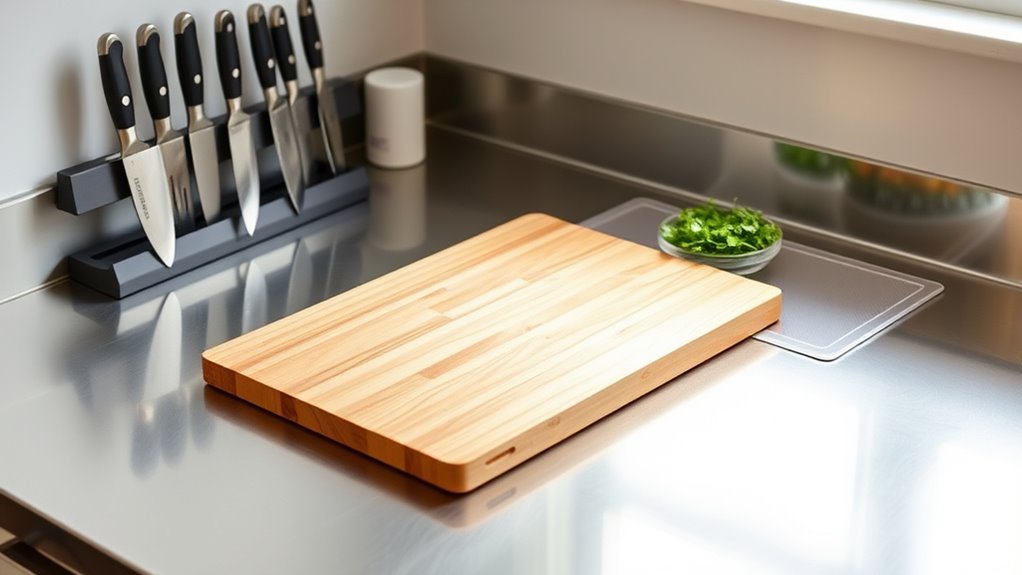
Organizing your workspace effectively is essential for both efficiency and safety when working with cutting boards. A well-structured setup streamlines ingredient prep and minimizes accidents. First, designate specific zones for different tasks—chopping, knife sharpening, and ingredient prep—so everything stays organized. Second, keep your knives sharp; dull blades increase risk and slow down prep. Third, arrange frequently used tools within easy reach to save time. Fourth, ensure your cutting board is positioned on a stable, flat surface to prevent slipping. Good organization reduces clutter and distraction, helping you focus on your tasks safely. By optimizing your workspace, you create a smoother workflow while considerably lowering the chance of accidents.
Incorporating Proper Lighting and Visibility
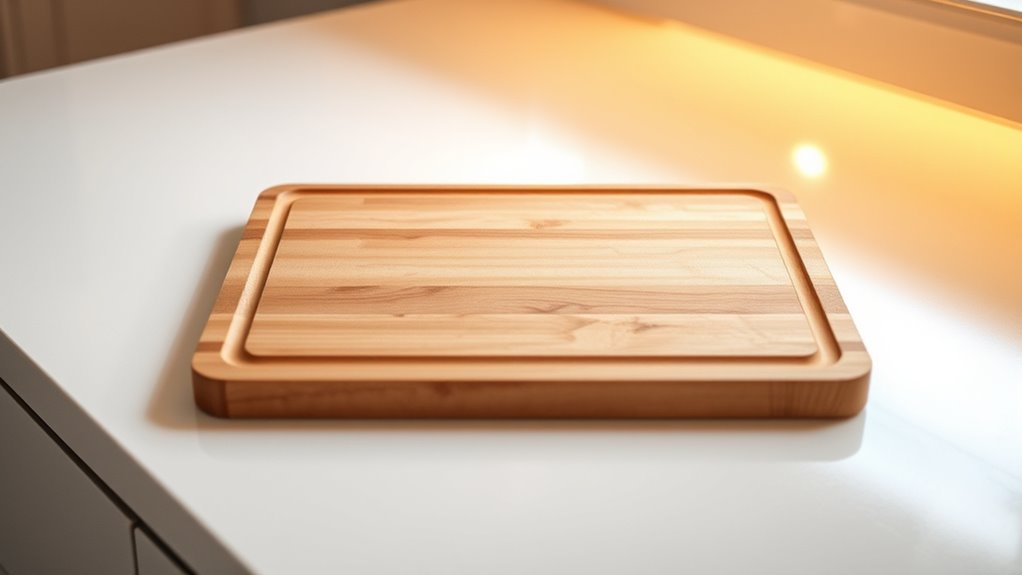
Proper lighting is essential for safe and precise use of your cutting board. You want to make sure you have adequate task lighting directly over your workspace so you can see ingredients clearly and avoid accidents. Bright, focused lighting helps you cut accurately and reduces eye strain. In addition, ambient illumination around your kitchen creates an even, well-lit environment that minimizes shadows and enhances overall visibility. Combining task lighting with ambient illumination ensures your cutting area is fully illuminated from every angle. Consider installing adjustable lights or under-cabinet LEDs that can be directed as needed. Proper lighting not only improves safety but also boosts efficiency, allowing you to work confidently and avoid mishaps while preparing food.
Regularly Maintaining and Reassessing Your Layout
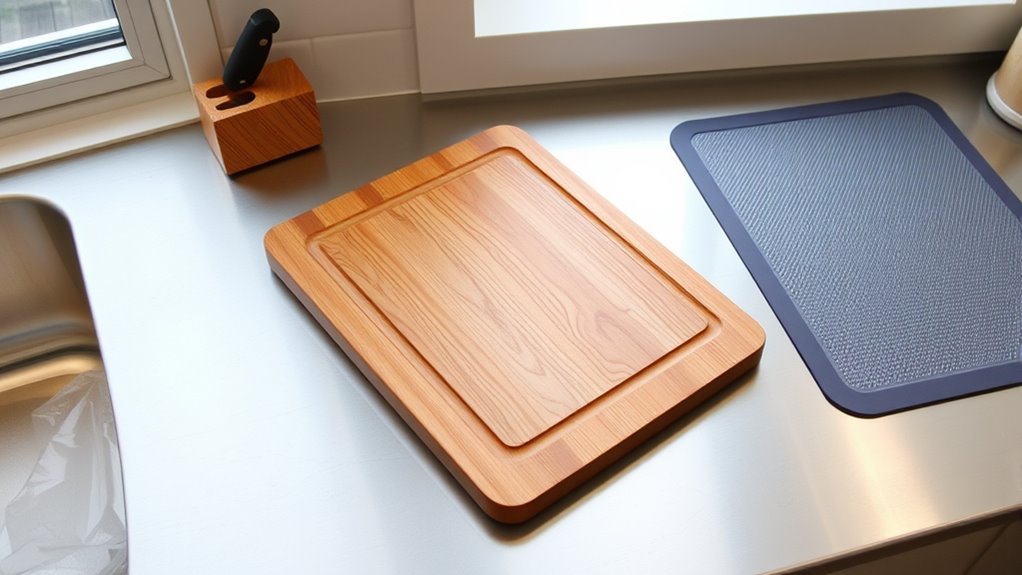
Maintaining and reassessing your kitchen layout regularly guarantees that your setup continues to support safe and efficient food preparation. Establish routine maintenance routines to identify potential hazards or clutter that could cause accidents. Periodically review your layout to guarantee it still meets your needs and workflows. Consider these key points:
- Inspect for wear and tear on surfaces, including cutting boards and countertops.
- Reevaluate the placement of your cutting board and other utensils for maximum safety.
- Adjust your layout to improve accessibility and minimize cross-contamination risks.
- Remove unnecessary items that clutter your workspace and hinder movement.
Frequently Asked Questions
How Often Should I Change My Cutting Board’s Placement?
You should change your cutting board’s placement regularly to maintain ideal hygiene and prevent cross-contamination. Aim for a weekly cutting board rotation and guarantee placement consistency to avoid confusion and accidents. This practice helps keep germs in check and promotes safe food handling. By maintaining a routine, you reduce the risk of bacteria buildup and create a safer kitchen environment, making it easier to remember where your cutting boards are at all times.
What Materials Are Best for Slip-Resistant Cutting Boards?
For slip-resistant cutting boards, opt for materials with a non-slip grip like bamboo or plastic with textured surfaces. You can also enhance safety by placing rubber mats underneath your board, which provide extra stability. These materials and added grips prevent slipping during use, reducing accidents. Always make certain your cutting board stays in place while chopping to keep your workspace safe and efficient.
How Can I Prevent Bacteria Buildup on My Cutting Surface?
Think of your cutting board as a battleground, where bacteria hotspots can lurk. To prevent buildup, regularly sanitize your surface with hot water and a mild disinfectant after each use. Focus on areas like edges and grooves where bacteria hide. Use proper sanitizing techniques, such as soaking or wiping thoroughly, to keep your surface safe. This simple routine helps stop bacteria from spreading and keeps your food preparation hygienic.
Is It Safe to Use the Same Cutting Board for All Foods?
It’s not safe to use the same cutting board for all foods because it increases the risk of food contamination and cross contamination. Bacteria from raw meats can transfer to fruits or vegetables, causing illness. To prevent this, use separate boards for raw meats, vegetables, and cooked foods. Wash boards thoroughly between uses, and consider color-coded boards to make it easier to avoid cross contamination and keep your food safe.
What Tools Can Help Organize My Kitchen Workspace Effectively?
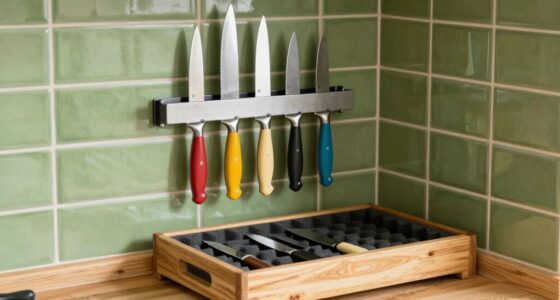
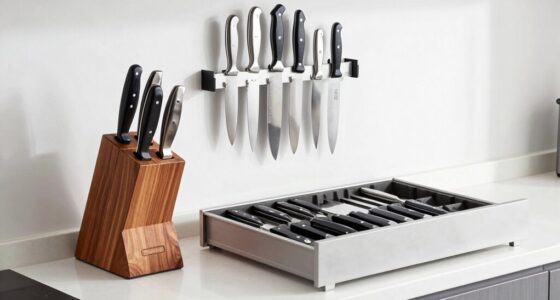
You can organize your kitchen workspace effectively with magnetic strips and drawer dividers. Magnetic strips hold knives and metal tools securely, keeping them accessible yet safe. Drawer dividers help separate utensils, gadgets, and small items, preventing clutter and making everything easy to find. Using these tools, you’ll maximize space, improve safety, and create a more efficient kitchen environment where everything has its place.
Conclusion
By mastering your cutting board placement, you’ll turn your kitchen into an unstoppable fortress of safety. No more slips, spills, or cross-contamination—just smooth, lightning-fast prep like a culinary superhero! With the perfect layout, you’ll feel invincible, conquering every chopping challenge with ease. Say goodbye to kitchen chaos and hello to a domain where safety rules and accidents are utterly defeated. Get your layout right, and watch your cooking game soar to legendary heights!