Choosing the right cutting board material can considerably extend your knife’s sharpness and reduce dulling. Soft surfaces like rubber, impact-absorbing composites, and end-grain wood gently cushion blades, helping them stay sharper longer. Hard materials like glass or stone cause quick dulling and damage. Grain orientation, surface texture, and material hardness all influence how fast your edge wears. If you want to learn more about how specific surfaces impact your knives, keep exploring these important factors.
Key Takeaways
- Soft materials like wood and rubber absorb impact, reducing knife dulling and extending edge life.
- Hard surfaces such as glass or stone cause rapid dulling due to their abrasiveness.
- End-grain wooden boards offer self-healing properties that help preserve knife edges over time.
- Proper surface texture (smooth or textured) influences stability and wear, impacting knife sharpness longevity.
- Matching knife material with cutting surface prevents faster dulling and maintains optimal edge retention.
The Impact of Wooden Cutting Boards on Knife Sharpness
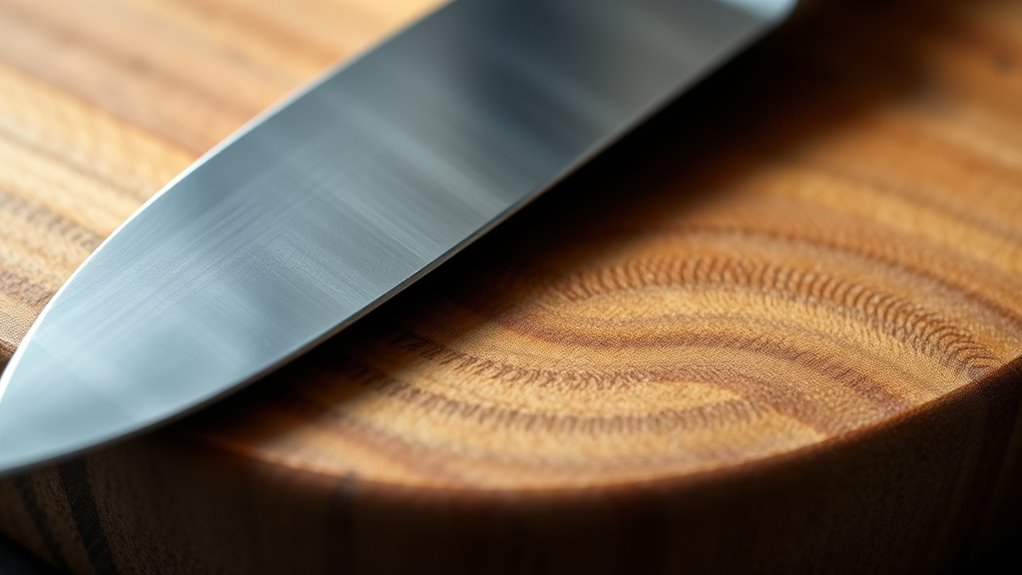
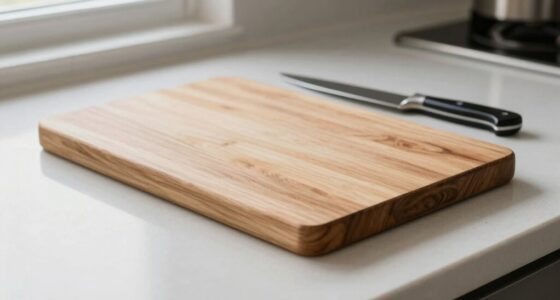
Wooden cutting boards are often praised for their ability to preserve knife sharpness better than harder surfaces. You’ll notice that their natural fibers create a forgiving surface, reducing the chances of dulling your blades quickly. Unlike steel or glass, wood absorbs some impact, allowing your knife edges to glide smoothly without excessive wear. The self-healing properties of wood mean small cuts close up over time, maintaining a relatively smooth surface that’s gentle on your knives. End-grain boards, with their vertical fibers, are especially good at protecting blades because they let the knife slip between fibers rather than cut through them. Additionally, connected cooking technology can provide real-time feedback on cutting techniques, helping users minimize blade wear while improving their skills. This combination of material properties and proper maintenance can significantly extend the life of your knives. Regularly cleaning and maintaining your wooden cutting board also plays a crucial role in preserving its protective qualities and ensuring a safe cutting surface. Incorporating proper maintenance practices such as oiling and sanitizing further enhances the board’s ability to safeguard your knives. As a result, your knives stay sharper longer, saving you time and effort in sharpening or replacing blades. Incorporating the right cutting surface can be a key factor in extending the life of your knives and ensuring safer, more efficient cutting.
Comparing End-Grain and Edge-Grain Wood Surfaces
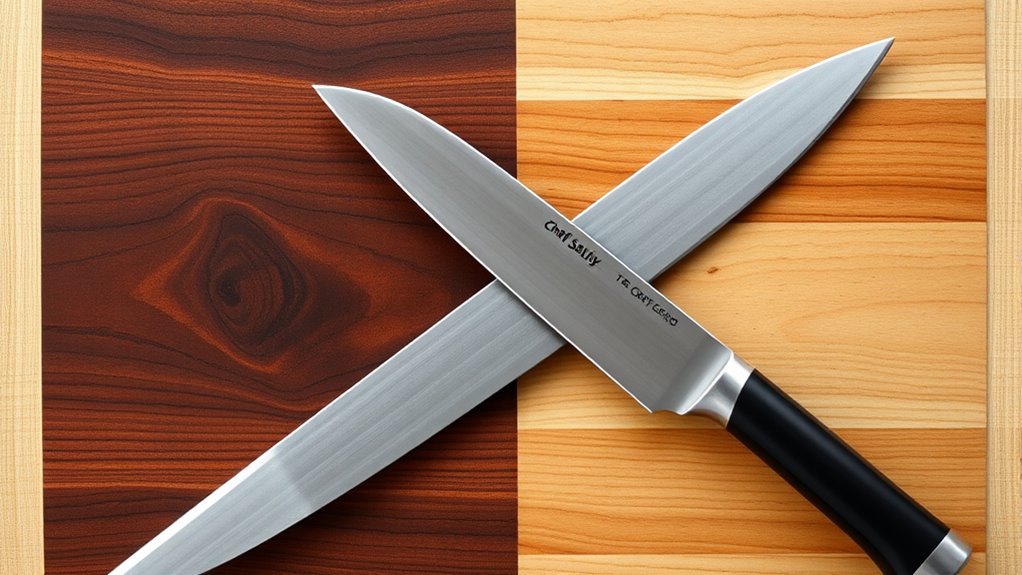
While both end-grain and edge-grain surfaces are popular choices for wooden cutting boards, they differ considerably in how they interact with your knife edges. End-grain boards feature vertical fibers that allow your knife edges to slip between them, theoretically reducing dulling and preserving sharpness longer. In contrast, edge-grain boards have horizontal fibers that are severed by cuts, exposing the fibers directly to blade contact. Proper board material plays a crucial role in maintaining your knives’ longevity. Additionally, wood grain orientation influences how the surface responds to cutting and wear. Moreover, the grain structure impacts the surface’s ability to resist deep cuts and grooves. – End-grain surfaces tend to be softer, gently forgiving your knives. – Edge-grain boards are harder and more durable but may cause more wear. – End-grain’s self-healing fibers reduce visible cuts over time. – Edge-grain surfaces can develop more deep cuts and grooves. – Both types show similar dulling rates in practical testing, with minimal difference in edge retention.
Bamboo Boards: Grain Orientation and Knife Dulling
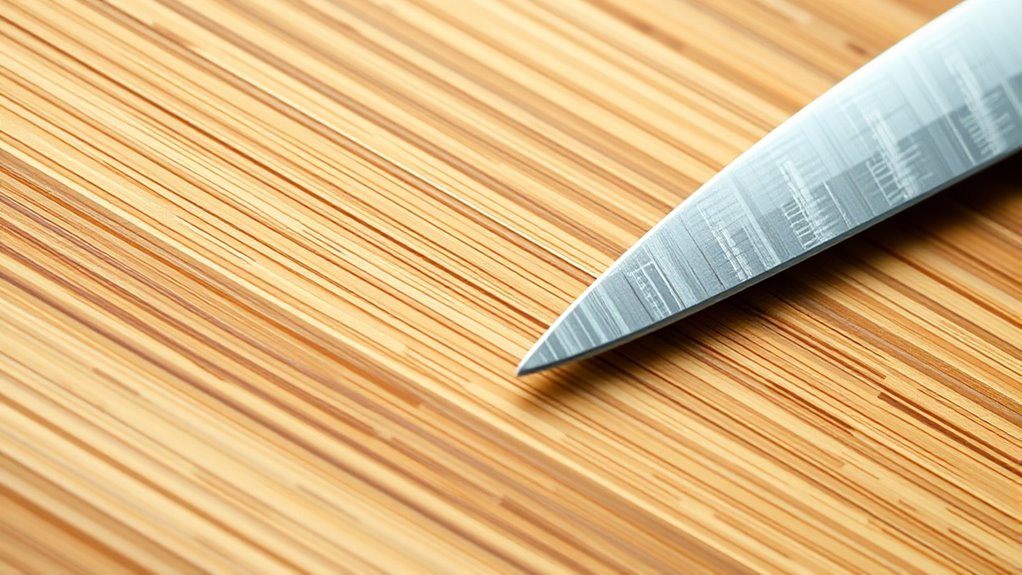
Grain orientation in bamboo boards considerably influences how quickly your knives dull. When you use a bamboo end-grain board, the knife cuts against the vertical fibers. Surprisingly, this can dull blades faster than expected because the dense bamboo nodes and fibrous structure create more resistance. In contrast, long-grain bamboo boards have horizontal fibers, allowing the knife to glide more smoothly and reducing dulling. The dense, compact nature of bamboo means that knife edges contact harder surfaces, regardless of grain orientation, but the impact is more pronounced with end-grain cuts. Over time, repeated use on end-grain bamboo boards can lead to noticeable dulling. If preserving your knife edge is a priority, choosing bamboo long-grain boards is generally better than end-grain options, though both still outperform harder surfaces like glass or stone. Additionally, the grain orientation can also influence how easily food particles become lodged in the board’s surface, affecting hygiene and maintenance.
Rubber and Composite Surfaces: Preserving Edges and Durability
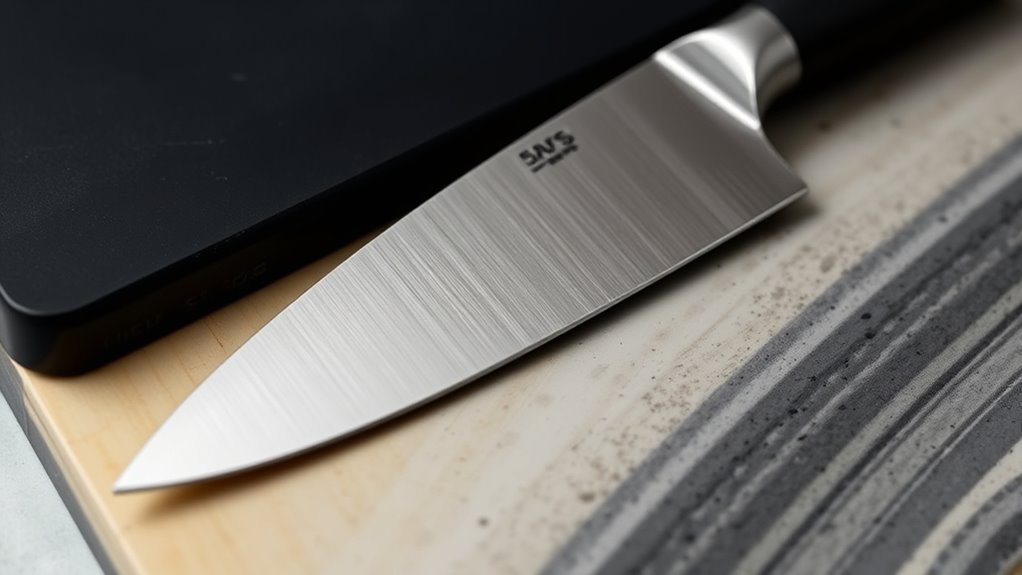
Rubber and composite surfaces excel at absorbing impact, helping to keep your knife edges sharper for longer. Their textured, soft surfaces provide added grip and reduce slipping during cutting, protecting both the knife and your work. Plus, their resistance to wear and tear means they stay durable through frequent use, maintaining their protective qualities over time. Additionally, their impact absorption capabilities contribute significantly to preserving your knife edges and extending their lifespan.
Impact Absorption Benefits
Impact absorption is a key factor that makes rubber and composite cutting surfaces highly effective at preserving knife edges and extending their lifespan. These materials cushion the blade during cutting, reducing the force transmitted to the edge and minimizing micro-damage. The soft, textured surfaces dampen vibrations and absorb shocks that would otherwise chip or dull blades. This protection helps maintain sharpness longer and prevents premature wear. Additionally, impact absorption enhances safety by stabilizing the knife and reducing slips. The benefits include:
- Damping sudden impacts from chopping or pounding
- Decreasing micro-chipping of blades over time
- Reducing stress on knife edges during use
- Lowering the risk of blade deformation or chipping
- Supporting consistent cuts with minimal dulling
- Understanding psychological resilience can also help users develop better control and confidence when handling knives in high-stress environments.
- The combination of impact absorption and material composition ensures a more durable and reliable cutting surface.
Surface Texture Advantages
Surface texture plays a vital role in how well a cutting board preserves your knife edges and withstands regular use. Rubber surfaces are soft and textured, absorbing impact and reducing blade dulling. Their damping effect prevents chips and minimizes wear, keeping your edges sharper longer. Non-slip textures add stability, so you can cut confidently without slipping that might damage your knife. Composite surfaces, however, tend to be harder and less forgiving. They often dull knives faster because their abrasive nature increases wear on the blade. While composite boards are durable and easy to clean, their rougher textures can cause more micro-damage to your edges over time. Choosing a surface with a softer texture, like rubber, helps extend your knife’s sharpness and overall lifespan. Additionally, surface texture and material choices significantly influence how well your knives are maintained over time, especially considering different sound therapy techniques that can be applied to improve maintenance routines. Selecting a surface with proper abrasion resistance not only helps protect your knives but also minimizes micro-damage during regular use, further enhancing their longevity.
Wear and Tear Resistance
Because rubber and composite cutting boards are designed to withstand regular use, they generally offer excellent wear and tear resistance, helping your knives stay sharper longer. Rubber surfaces are soft and textured, absorbing impact and reducing blade damage. They rarely develop nicks or cuts, maintaining their integrity over time. Composite boards, while more durable than plastic, tend to dull knives more quickly due to their harder surface. Here are key points to contemplate:
- Rubber’s soft texture minimizes blade dulling and impact damage
- Self-healing surfaces resist cuts and nicks, extending board lifespan
- Non-slip textures increase stability, protecting knife edges during use
- Composite boards are more resistant to warping but can dull knives faster
- Regular maintenance helps preserve both rubber and composite surfaces
- Choosing rubber offers better protection for your knives’ edges and long-term durability. wear and tear resistance
- Additionally, rubber’s impact absorption properties help prevent accidental damage to both knives and the cutting surface.
Plastic Cutting Boards: Balancing Maintenance and Blade Care
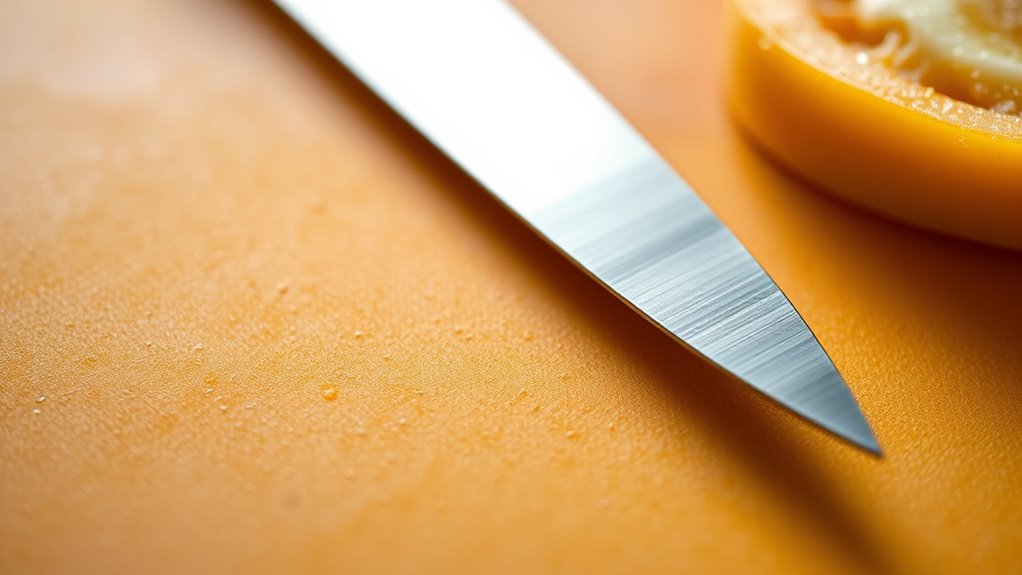
Plastic cutting boards, especially those made from high-density polyethylene (HDPE), strike a practical balance between ease of maintenance and protecting your knife edges. They’re lightweight, dishwasher-safe, and resistant to moisture and bacteria, making cleanup straightforward. While they don’t provide the same forgiving surface as wood, HDPE boards tend to dull knives less quickly than harder materials like glass or stone. Regular cleaning prevents bacteria buildup and helps maintain a smooth surface, reducing micro-abrasions that can dull blades over time. However, they can develop deep cuts and scoring with frequent use, which may trap debris and bacteria. To extend your knife’s edge life, replace or refurbish plastic boards when they become heavily scored. Proper maintenance ensures your boards stay safe and your knives stay sharper longer.
The Dangers of Glass and Stone Surfaces for Knives
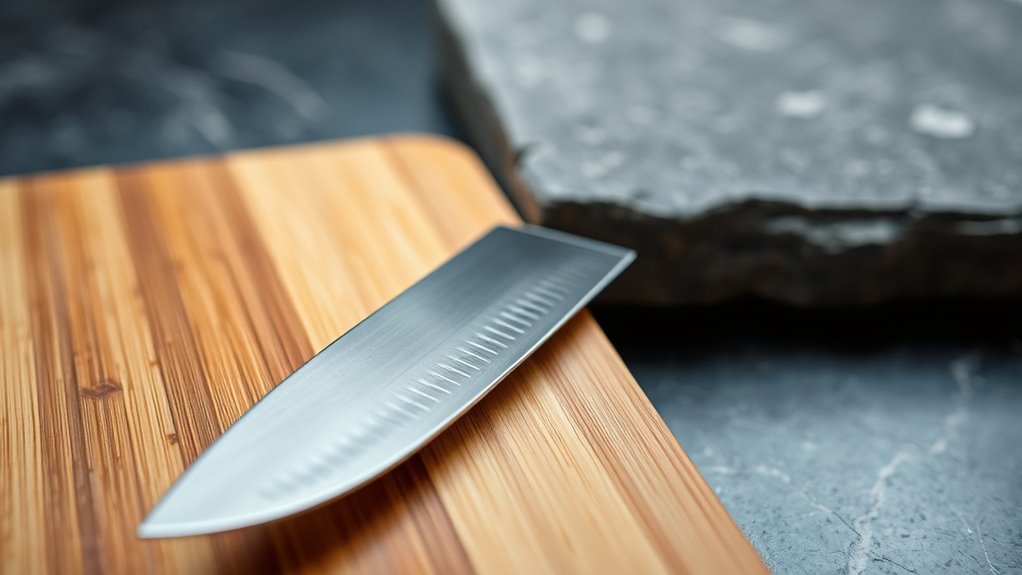
Glass and stone cutting surfaces pose significant risks to your knives because their hardness often exceeds that of the blade material. This hardness causes excessive abrasion, dulling your blades quickly. Additionally, these surfaces lack give, so your knife edges can roll or chip from the impact. The rigid nature also prevents blades from sliding smoothly, increasing wear. Using glass or stone boards can lead to frequent sharpening and reduced knife lifespan. Here are some key points:
- Glass and stone are nearly as hard as steel, causing rapid dulling
- They create a harsh impact that rolls or chips blades
- Lack of flexibility leads to faster edge deformation
- Bouncing force from the rigid surface accelerates wear
- Easy to clean but sacrifices knife sharpness over time
Opt for softer surfaces to extend your knife’s life and maintain its edge.
Material Hardness and Its Effect on Knife Edge Wear
The hardness of a cutting board material directly influences how quickly your knife dulls. Harder surfaces tend to cause more wear, especially if they’re incompatible with your blade’s resilience. Understanding how material strength affects surface compatibility and blade longevity can help you choose the right cutting board for your needs.
Hardness Impact on Dulling
Material hardness directly influences how quickly a knife edge dulls during cutting. Harder surfaces tend to cause more wear because they resist the blade’s cutting action, leading to faster dulling. Softer materials absorb impact and reduce abrasion, helping maintain sharpness longer. Factors affecting dulling include:
- Hard surfaces like glass and stone cause rapid edge rolling and chipping
- Dense, hard woods can sharpen or dull blades depending on grain orientation
- Rubber and soft composites absorb impact, preserving edge integrity
- Dense bamboo, especially end-grain, may dull knives faster than softer woods
- Surface texture and micro-roughness influence abrasive wear on the blade
Choosing a material with appropriate hardness balances durability and edge retention, ensuring your knife stays sharper longer during use.
Surface Compatibility and Wear
Choosing a surface that matches your knife’s hardness is essential for minimizing wear. If the material is too hard, it causes more abrasion and dulls your blade faster. Softer surfaces, like wood or rubber, absorb impact and reduce friction, helping preserve your edge. Hard surfaces like glass or stone, despite their durability, are highly abrasive and cause rapid dulling. Compatibility also depends on how the surface interacts with your knife’s steel; softer materials allow the edge to slip or glide more easily, lessening stress. Rubber and certain dense woods provide a gentle, forgiving contact that minimizes wear. Conversely, rigid, abrasive surfaces grind against the blade, rolling or rounding the edge and speeding up dulling. Selecting a surface with compatible hardness ensures your knife stays sharper longer and reduces overall wear. Additionally, understanding the field‑of‑view and imaging‑scale examples in deep-sky imaging can help you choose the right tools and surfaces for your specific needs, minimizing damage and optimizing longevity. Recognizing the material hardness of the surface is crucial for maintaining the integrity of your knife edge over time, especially when considering surface hardness testing to ensure proper match. Properly assessing surface hardness can prevent premature dulling and extend the life of your knives.
Material Resilience and Blade
Hardness plays a crucial role in how well your knife edge withstands contact with your cutting surface. When the material is too hard, it can cause your blade to dull quickly through abrasion or chipping. Conversely, softer materials absorb some impact, helping preserve your knife’s sharpness. Consider these factors:
- Harder materials, like glass or stone, accelerate dulling and cause rolling edges.
- Softer woods, such as certain softwoods, tend to mark up faster but protect the edge.
- Bamboo’s density varies, affecting how quickly it dulls knives—end-grain often wears blades faster.
- Rubber and composite surfaces dampen impacts, considerably reducing wear.
- Harder plastics can dull blades over time, although they’re easier to maintain.
Choosing the right material balances durability and blade preservation, extending your knife’s sharpness and lifespan.
Knife Composition and Its Interaction With Cutting Board Materials
Your knife’s composition plays a crucial role in how well it interacts with different cutting board surfaces. Harder steels, like those with Rockwell ratings above 60, resist dulling but can become brittle and chip on rigid surfaces like glass or stone. Softer steels, rated between 55-59, tend to dull faster but are more forgiving against harder materials. High-carbon knives cut more cleanly but are prone to corrosion if not maintained properly, affecting their interaction with porous wood or bamboo. Ceramic blades are extremely hard, offering excellent edge retention, but they’re brittle and chip easily on hard surfaces. Conversely, softer knives may dull faster but are less likely to chip, especially when used on forgiving materials like wood or rubber. Your choice of knife composition directly influences how different cutting surfaces impact edge life. Additionally, odor of certain materials can sometimes signal the need for maintenance or replacement, which underscores the importance of understanding material interactions. Furthermore, the type of cutting surface can also influence the longevity of your knife’s edge by either providing a gentle cutting environment or contributing to faster dulling. Understanding the material compatibility between your knife and cutting board helps optimize edge retention and reduces the risk of damage. Recognizing how abrasiveness of materials impacts your knife can help you select the right combination for prolonged sharpness.
Surface Texture and Impact Absorption in Cutting Boards
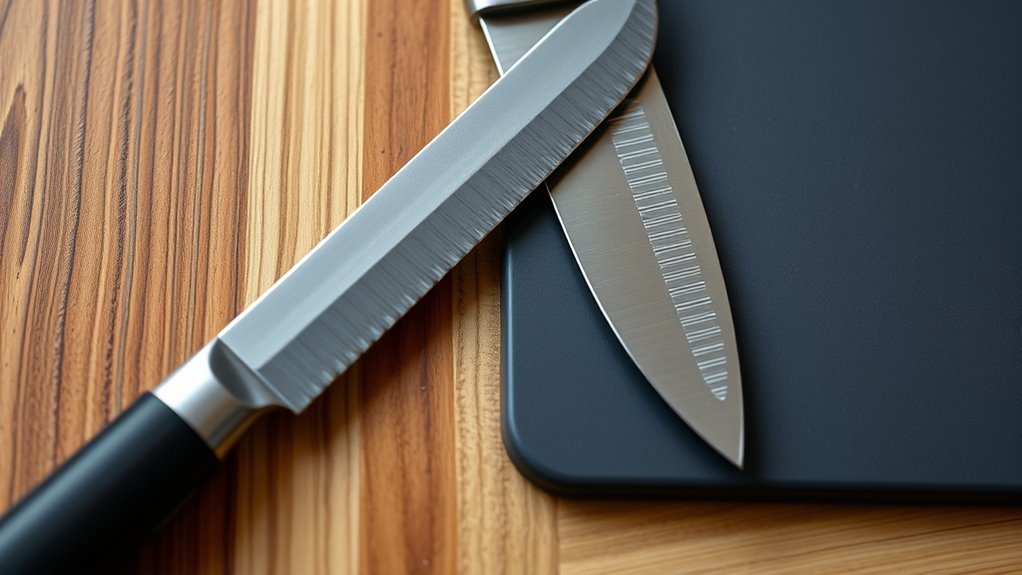
Surface texture and impact absorption considerably influence how cutting boards protect your knife edges during use. A smoother surface reduces friction, decreasing the risk of micro-damage that dulls blades. Impact-absorbing materials dampen shock, preventing blade chipping and maintaining sharpness longer. The texture also affects how easily food particles are released, impacting hygiene and maintenance. To optimize your cutting surface, understanding the cleaning and maintenance requirements of different materials is essential. Consider these factors: – Smooth surfaces minimize friction and micro-damage. – Textured surfaces help grip food but can increase blade wear. – Soft materials absorb impact, reducing edge stress. – Hard surfaces transfer more force, risking faster dulling. – Porous surfaces may trap debris, causing uneven wear. Selecting a surface with appropriate surface texture and impact absorption properties can help extend your knife’s sharpness and overall performance.
Long-Term Effects: Wear and Tear on Knives From Different Materials

Over time, the material of your cutting board can considerably influence the wear and tear on your knives. Hard surfaces like glass or stone cause rapid dulling by rolling or chipping your blade edges. Soft woods and rubber, however, absorb impact and preserve sharpness longer. The table below summarizes long-term effects:
| Material | Wear and Tear Impact |
|---|---|
| Wood (End-grain) | Self-healing fibers reduce wear, maintaining sharpness over time |
| Bamboo (End-grain) | Dulls knives faster due to denser fibers and grain orientation |
| Rubber/Composite | Minimal dulling, surfaces absorb impact, extend knife lifespan |
Choosing the right material minimizes long-term dulling, saving you time and money on sharpening and replacements.
Frequently Asked Questions
How Does Cutting Technique Influence Knife Edge Longevity on Various Surfaces?
Your cutting technique directly impacts your knife’s edge longevity across different surfaces. Use gentle, controlled cuts rather than sawing or applying excessive force, which can chip or dull the blade faster. When working on softer materials like wood or rubber, avoid pressing too hard; instead, let the knife glide smoothly. Proper technique minimizes stress on the edge, helping it stay sharper longer regardless of the surface you’re cutting on.
Can Regular Maintenance Extend Knife Sharpness on Harder Cutting Board Materials?
Yes, regular maintenance can considerably extend your knife’s sharpness on harder cutting boards. You should frequently hone your blade to realign the edge and remove microburrs, and sharpen it when needed to restore its original sharpness. Also, clean your knife properly after each use to prevent buildup that can dull the edge. Using proper cutting techniques, like avoiding excessive force, further reduces wear and helps your knife stay sharp longer.
What Role Does Knife Angle Play in Minimizing Edge Damage Across Different Surfaces?
You can minimize edge damage by adjusting your knife angle; a sharper angle, around 15-20 degrees, reduces force on the edge, especially on harder surfaces like glass or stone. Maintaining a proper angle guarantees less contact pressure, preventing rolling or chipping. For softer surfaces like wood or rubber, a slightly wider angle still protects your edge while allowing effective cutting. Consistently sharpening and honing your knife also helps sustain its integrity across different materials.
Are There Specific Cleaning Methods That Protect Knife Edges Better for Each Material?
Think of cleaning your knives as a delicate dance—each step matters. For wood, hand wash with mild soap and avoid soaking to prevent swelling. Rubber boards benefit from gentle scrubbing, while plastic boards can handle a bit more abrasion with dishwasher use. Steer clear of harsh abrasives on glass or stone, as they’ll chip your blade’s edge. Proper cleaning preserves your knife’s sharpness, no matter the surface.
How Do Environmental Factors Like Moisture and Temperature Affect Knife and Board Wear?
Moisture and temperature considerably impact your knives and cutting boards. Excess humidity causes wood boards to swell and develop cracks, shortening their lifespan, while dry environments can make them warp or crack. High temperatures soften plastics, dulling blades faster, and cold conditions make materials brittle, risking chipping. Keep your knives and boards in stable, moderate conditions to minimize wear, preserve sharpness, and extend their overall durability.
Conclusion
Choosing the right cutting board can substantially extend your knife’s sharpness. Did you know that plastic boards can cause up to 50% more blade dulling compared to wood? By understanding material hardness, grain orientation, and surface texture, you can make smarter choices that protect your knives. Opt for softer, well-designed surfaces, and you’ll enjoy sharper blades longer, saving you time and money in the long run.