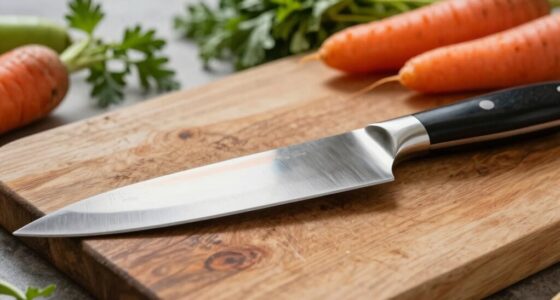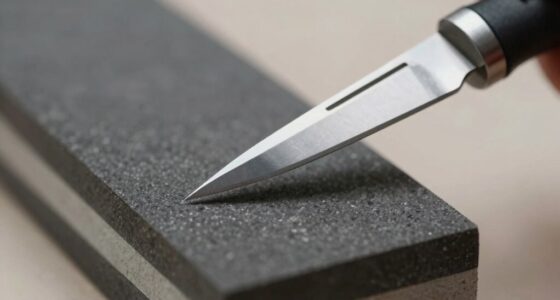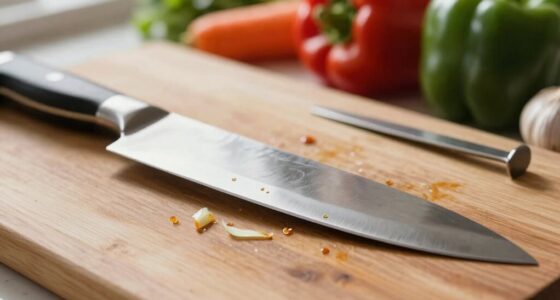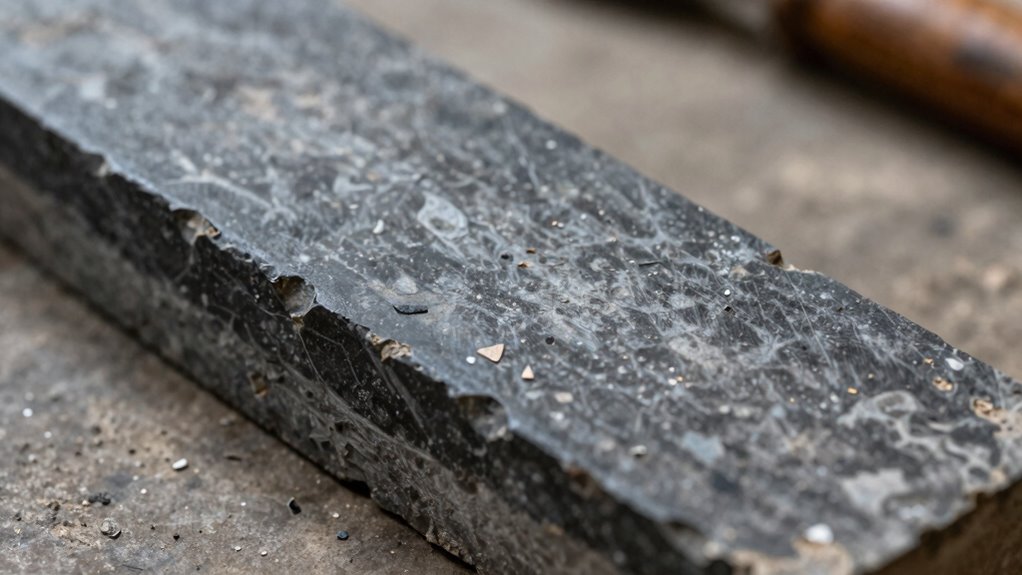
Applying too much pressure when sharpening with a whetstone may seem faster, but it can seriously harm your blade and stone. Excessive force causes surface dents, uneven wear, and even cracks in the blade, reducing its sharpness and lifespan. It also gouges the stone, shortening its life and making future sharpening trickier. To avoid these issues, focus on gentle, consistent pressure. Keep going to discover how mastering proper technique protects your tools and improves results.
Key Takeaways
- Excessive pressure damages the blade’s edge, causing chips, uneven wear, and faster dulling.
- Applying too much force leads to surface scratches and dents on the stone, reducing its lifespan.
- Heavy pressure weakens blade integrity, creating microscopic cracks and deformation over time.
- Over-pressing hampers control, making it harder to maintain proper angles and achieve a sharp edge.
- Proper technique involves steady, light pressure to preserve blade and stone condition, ensuring effective sharpening.

Intelitopia Complete Knife Sharpening Stone Set – Dual Grit Whetstone 400/1000 3000/8000 Knife Sharpener with Leather Strop, Flattening Stone, Bamboo Base, 3 Non-slip Rubber Bases & Angle Guide
【Complete Knife Sharpening Stone Kit】You don't need to be a Pro to sharpen your blades, all you need…
As an affiliate, we earn on qualifying purchases.
As an affiliate, we earn on qualifying purchases.
Why Applying Excessive Force Seems Intuitive but Is Harmful
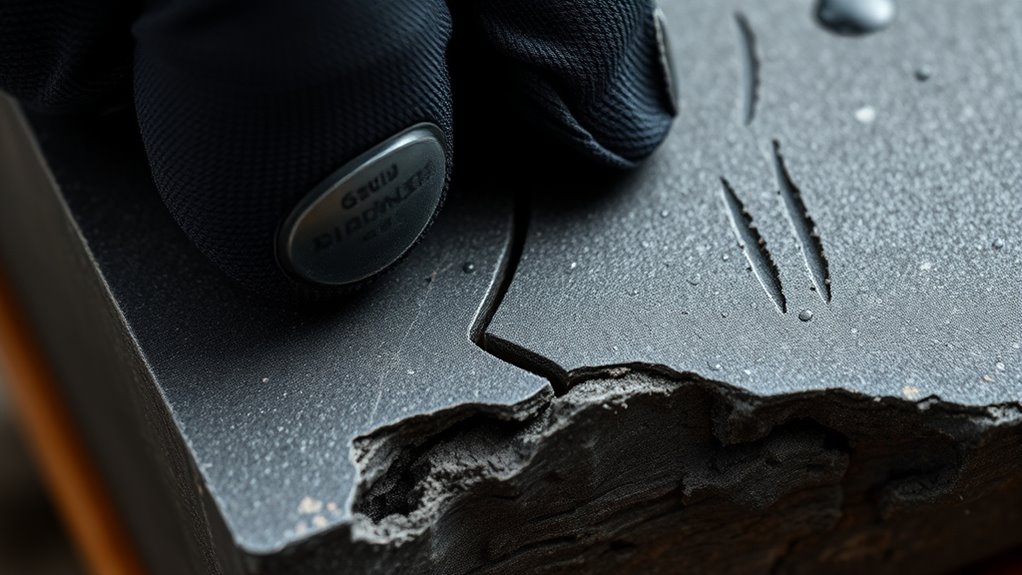
It might seem logical to press hard when sharpening a blade because more force feels like it should remove more material faster. However, applying excessive pressure can actually weaken the blade’s edge over time, reducing its overall strength. Pushing too hard doesn’t increase sharpening speed effectively; instead, it risks damaging the blade’s structure and causing uneven wear. When you exert too much force, you’re not just risking blade damage—you’re also diminishing your control, making it harder to achieve a smooth, even edge. Proper sharpening relies on consistent, moderate pressure to work with the stone’s abrasiveness without compromising blade integrity. Remember, patience and finesse often produce better results than brute force, protecting your blade’s longevity and maintaining its cutting performance.
Intelitopia Complete Knife Sharpening Stone Set – Dual Grit Whetstone 400/1000 3000/8000 Knife Sharpener with Leather Strop, Flattening Stone, Bamboo Base, 3 Non-slip Rubber Bases & Angle Guide
【Complete Knife Sharpening Stone Kit】You don't need to be a Pro to sharpen your blades, all you need…
As an affiliate, we earn on qualifying purchases.
As an affiliate, we earn on qualifying purchases.
The Physical Impact of Too Much Pressure on Blades
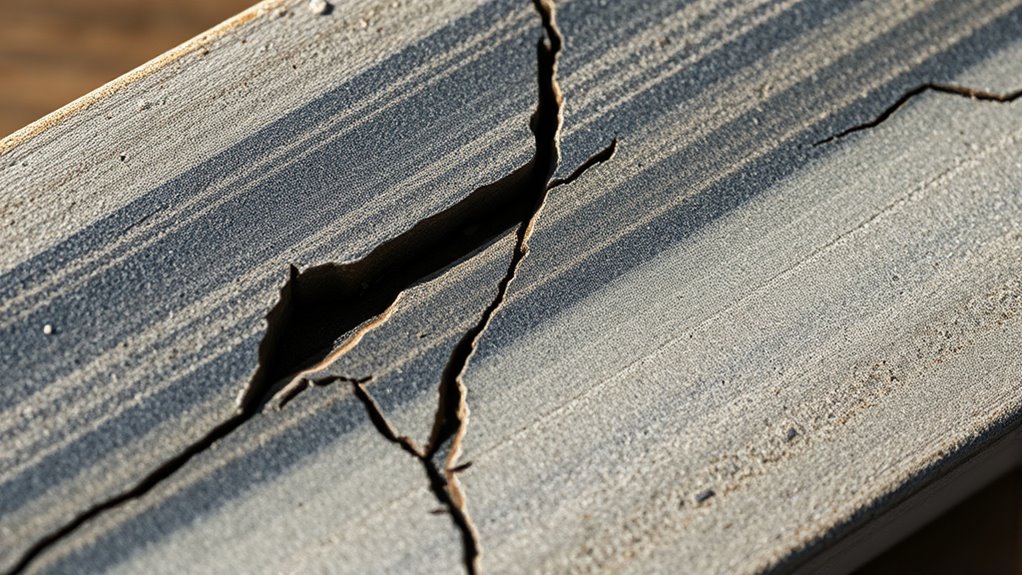
Applying too much pressure when sharpening can damage your blade surface, creating unwanted dents and scratches. It also increases the risk of burring the edge, making it less effective. As a result, your knife’s cutting performance drops, forcing you to spend more time honing it back to sharpness. To maintain optimal edge integrity, it’s important to use appropriate pressure levels and consider sustainable sharpening techniques that protect your blades and promote longevity. Proper technique and avoiding excessive force can also prevent damage to the blade materials, ensuring your knives stay in top condition. Additionally, understanding the solar system can help you appreciate the importance of precision and balance in all tools, including your knives. Recognizing the proper maintenance practices can further extend the life of your blades and improve overall performance.
Blade Surface Damage
Exerting excessive pressure on your blade can cause visible surface damage that undermines its effectiveness. When you push too hard during surface polishing or blade polishing, you risk creating scratches, dents, or uneven spots on the blade’s surface. These imperfections can hinder the sharpness and smoothness you aim for, leading to a less precise cut. Over time, the damage can accumulate, making the blade harder to sharpen evenly later. Instead of rushing the process with force, focus on gentle, consistent strokes to maintain the integrity of the surface. Proper technique guarantees the blade remains smooth and free of damage, improving its performance and longevity. Additionally, understanding the impact of pressure on blades can help prevent costly mistakes and prolong the lifespan of your tools. Being mindful of blade surface integrity ensures you avoid unnecessary repairs or replacements. Using the correct maintenance practices can further help preserve your blade’s condition and effectiveness. Applying appropriate sharpening techniques can also prevent damage caused by improper handling or excessive force. Recognizing the importance of appropriate pressure when working with blades is essential for maintaining optimal performance.
Edge Burring Risks
Pushing too hard during sharpening can cause a phenomenon known as edge burring, where tiny metal curls form along the blade’s edge. This compromises your blade’s durability and can make sharpening less precise over time. When excessive pressure is applied, the metal deforms, creating burrs that are difficult to remove and can lead to a dull edge quickly. To avoid this, focus on controlled, even strokes that preserve the integrity of the blade. Remember, Proper technique can help prevent damage and extend the life of your blades. Using precision in sharpening techniques ensures a cleaner edge and reduces the risk of burr formation.
- Burrs weaken the edge, reducing overall blade durability
- Excess pressure causes uneven metal removal, hindering sharpening precision
- Burrs can catch on materials, impairing cutting performance
Reduced Cutting Efficiency
When you use too much pressure during sharpening, it can actually decrease your blade’s cutting efficiency. Excessive force can damage the blade’s integrity by creating uneven or chipped edges, which hampers its ability to cut smoothly. Instead of enhancing sharpness, heavy pressure wears down the metal unevenly, forcing you to spend more time honing out imperfections later. This practice also undermines your sharpening finesse, as it prevents you from developing a steady, controlled technique. Proper sharpening relies on light, consistent pressure that preserves the blade’s structure while honing a precise edge. Over time, too much pressure dulls the blade faster and reduces its overall effectiveness. Proper technique is essential for maintaining optimal cutting performance. To maintain optimal cutting performance, focus on gentle, deliberate strokes that respect the blade’s natural geometry. Recognizing the importance of technique mastery can help prevent damage caused by excessive force, especially since blade integrity is crucial for long-term durability and function.
Intelitopia Complete Knife Sharpening Stone Set – Dual Grit Whetstone 400/1000 3000/8000 Knife Sharpener with Leather Strop, Flattening Stone, Bamboo Base, 3 Non-slip Rubber Bases & Angle Guide
【Complete Knife Sharpening Stone Kit】You don't need to be a Pro to sharpen your blades, all you need…
As an affiliate, we earn on qualifying purchases.
As an affiliate, we earn on qualifying purchases.
How Heavy Handing Leads to Uneven Edge Refinement

When you use too much pressure on your whetstone, you risk creating an uneven edge that looks rough and inconsistent. This heavy-handed approach can also cause damage to your blade, weakening its structure and reducing its lifespan. Plus, losing control over your movements makes it harder to refine the edge evenly, leading to frustration and poor results. Applying excessive force can also generate unnecessary heat, which may damage the steel and diminish the blade’s sharpness over time. Additionally, recognizing the importance of proper technique helps prevent these issues and ensures a safer sharpening process. Being mindful of blade material properties can also guide you in applying the right amount of pressure for different types of blades. Understanding heat transfer during sharpening allows you to better control the process and protect your tools from damage. Developing an awareness of blade hardness levels can further improve your sharpening approach and results.
Uneven Edge Formation
Ever wonder why your edge often ends up uneven after sharpening? Heavy pressure during honing causes blade deformation, which hampers sharpening precision. When you push too hard, you risk shaping the edge inconsistently, leading to an uneven finish. This uneven edge can feel rough and may not cut smoothly. To avoid this, focus on maintaining light, controlled strokes. Here’s what heavy hand pressure does:
- Causes blade deformation, making it harder to achieve a straight, even edge
- Reduces sharpening precision, resulting in an uneven or inconsistent edge
- Increases the chance of creating flat spots or dull areas along the blade
- Proper technique ensures a smoother, more consistent sharpening process.
Applying proper sharpening pressure helps maintain the integrity of the blade’s edge and ensures a more precise finish. Proper blade maintenance is essential for long-term sharpness and performance. Additionally, using appropriate filtration can help prevent debris from affecting the sharpening process.
Being mindful of technique during sharpening can significantly improve your results and preserve your blade’s longevity.
Increased Blade Damage
Heavy hand pressure during sharpening doesn’t just distort the edge; it also causes actual damage to the blade’s structure. Applying excessive force can lead to blade deformation, weakening the metal over time and making it more prone to chipping or breaking. Additionally, pressing too hard accelerates stone erosion, wearing down the sharpening stone unevenly and reducing its effectiveness. This uneven erosion can result in an inconsistent sharpening surface, forcing you to work harder to maintain a proper edge. Over time, the blade’s integrity suffers, decreasing its durability and cutting performance. Instead of improving your edge, heavy-handed sharpening creates microscopic cracks and deforms the blade, ultimately undermining your efforts for a clean, sharp edge and risking permanent damage. Proper technique and wiring basics are essential for maintaining safe and effective sharpening practices.
Loss of Control
Applying too much pressure while sharpening causes you to lose control over the angle and contact with the stone. When you press too hard, the blade’s flexibility diminishes, making it harder to maintain a consistent edge. This heavy-handed approach can cause uneven sharpening, leading to an inconsistent edge that requires more work to fix. Proper pressure calibration is essential to keep control and ensure an even, smooth finish.
- Over-pressing reduces blade flexibility, making it less responsive to your intended angle.
- Excessive pressure causes the blade to slip, risking uneven wear or gouges.
- Maintaining proper pressure helps you stay in control, resulting in a refined, uniform edge.

SHARPAL 162N Double-sided Diamond Sharpening Stone Whetstone Knife Sharpener |Coarse 325 / Extra Fine 1200 Grit | Storage Case with NonSlip Base & Angle Guide (8 in. x 3 in.)
FAST, Durable and Heavy-Duty: Industrial monocrystalline diamonds are electroplated onto a stainless steel base of 0.35 inch thickness….
As an affiliate, we earn on qualifying purchases.
As an affiliate, we earn on qualifying purchases.
The Damage Caused to Your Whetstone by Over-Pressing
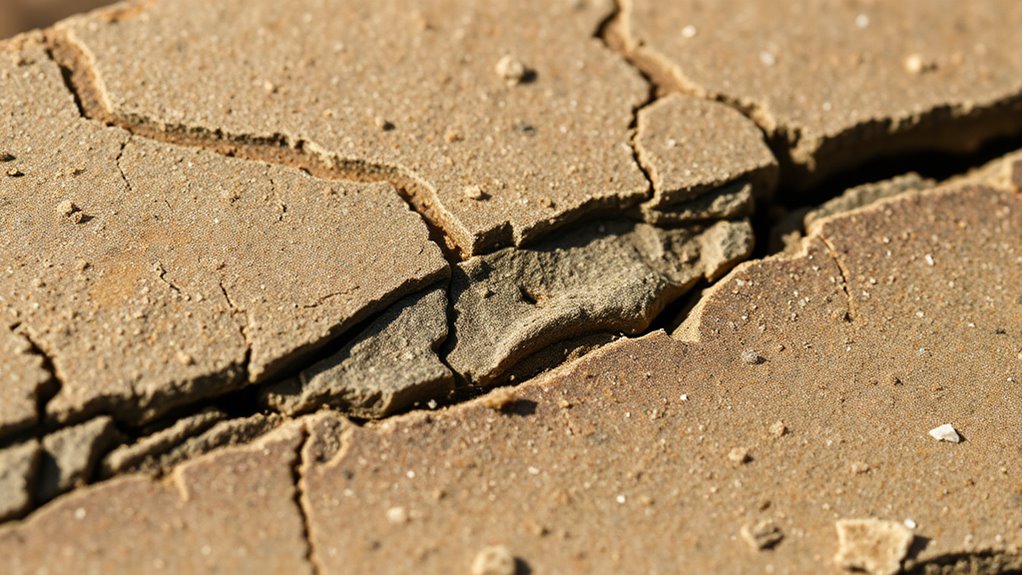
While pressing too hard on your whetstone might seem like a quick way to sharpen your blade, it actually causes significant damage. The pressure pitfalls stem from neglecting force fundamentals, leading to uneven wear and gouges on the stone’s surface. Excessive force accelerates abrasive breakdown, creating deep scratches and hollow spots that reduce the stone’s effectiveness. Over-pressing also shortens the lifespan of your whetstone, forcing you to replace it sooner. You might think more pressure equals faster sharpening, but it only undermines the stone’s integrity. Maintaining proper force guarantees even abrasion and preserves the stone’s flatness. By understanding and respecting force fundamentals, you prevent damage and ensure your whetstone remains a reliable tool for a long time.
Recognizing the Signs of Over-Pressing During Sharpening
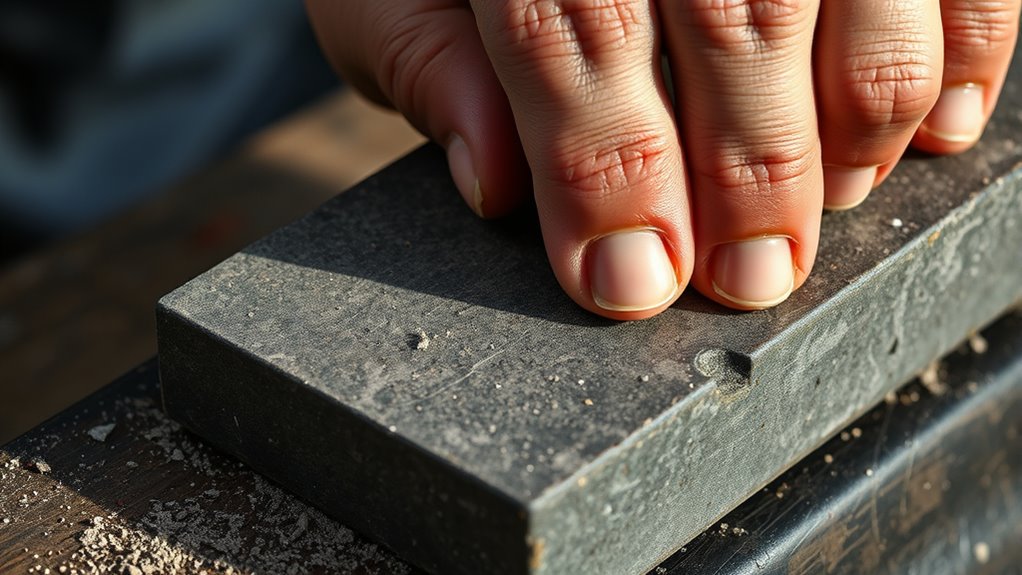
Recognizing the signs of over-pressing during sharpening is crucial to prevent damage to your whetstone. When you press too hard, you’ll notice pressure buildup that feels unnatural or excessive. Your force perception shifts, making it harder to gauge the right amount of pressure. Look for these signs:
Over-pressing causes pressure buildup and uneven wear, risking damage to your whetstone and blade.
- Unusual wear patterns or grooves on the stone
- Increased resistance, making the stroke feel forced
- Slower sharpening progress despite added effort
If you feel you’re pushing harder than necessary, it’s a clear indication of over-pressing. Over-pressing can cause uneven edges or gouges, so staying mindful of pressure buildup ensures a smoother, more effective sharpening process. Keep your force perception balanced to protect both your blade and your whetstone.
The Role of Proper Technique in Achieving a Razor-Sharp Edge
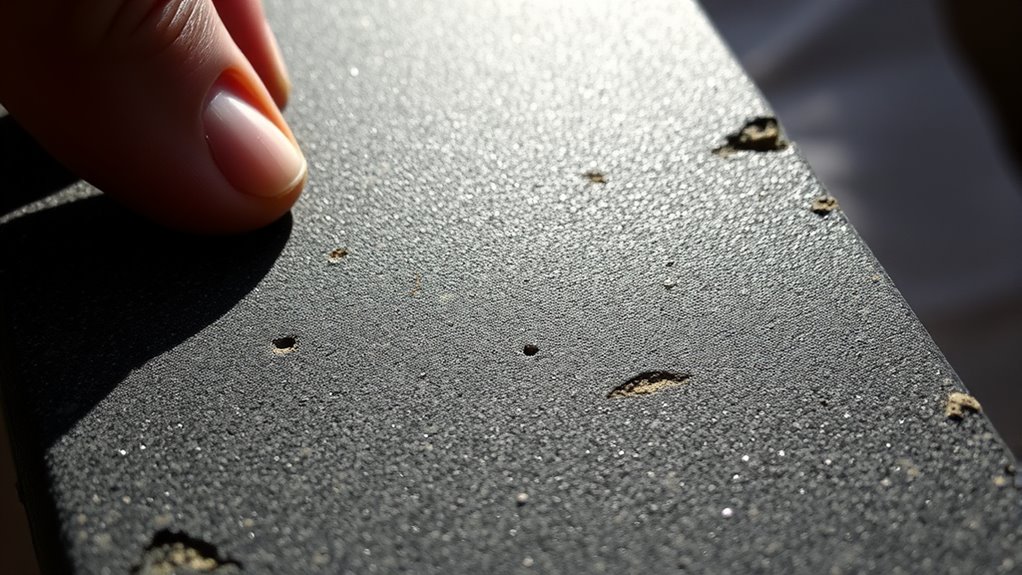
Achieving a razor-sharp edge depends heavily on proper technique, which guarantees consistent contact and ideal results. You need to focus on maintaining steady, controlled movements that match your blade’s resilience. Using the correct grinding speed prevents overheating and preserves metal integrity, ensuring your blade stays strong and durable. Proper technique involves applying just enough pressure to keep the edge in contact with the stone without forcing it, which can dull the blade or cause uneven sharpening. This balance allows you to develop a fine, uniform edge efficiently. By controlling your grinding speed and maintaining consistent contact, you’ll improve the effectiveness of each stroke, reduce the risk of damage, and achieve a sharper, more precise edge every time.
Tips for Maintaining Consistent, Gentle Pressure

Maintaining consistent, gentle pressure during sharpening is essential for a smooth, even edge. Proper pressure control guarantees you avoid dulling the blade or creating an uneven bevel, both of which hinder sharpening finesse. To keep your pressure steady, focus on these tips:
- Use light, steady touches, avoiding sudden pushes or presses.
- Keep your wrist relaxed and let the weight of your arm guide the pressure.
- Regularly check your technique to prevent applying uneven force.
Common Myths About Applying Pressure in Sharpening
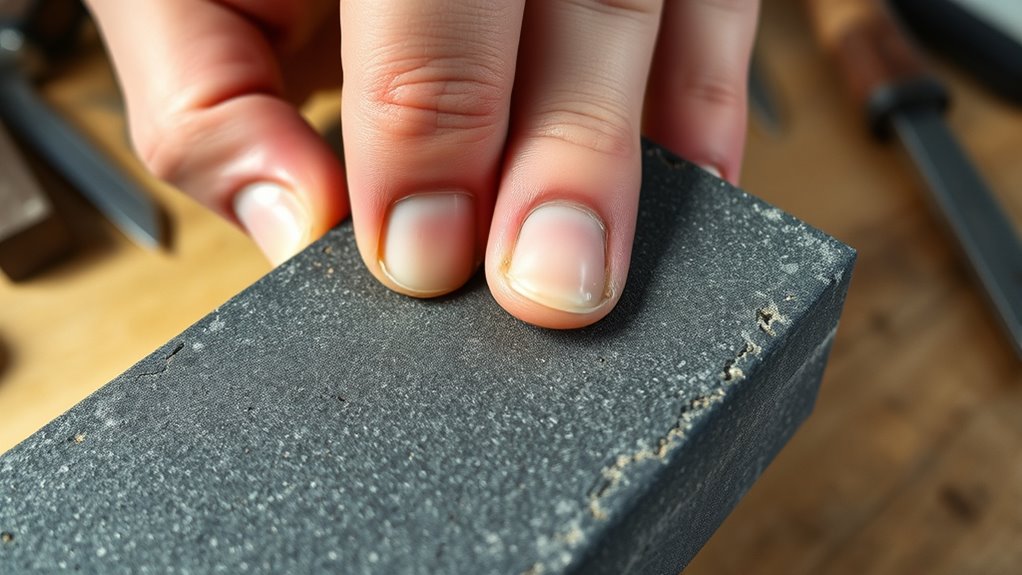
Many believe that applying more pressure speeds up the sharpening process, but that’s a myth. Excessive force can damage your edge and reduce control, leading to worse results. Still, misconceptions about pressure persist, causing many to overdo it and make costly mistakes.
Excessive Force Risks
Applying too much pressure while sharpening can seem like the right way to speed up the process, but in reality, it often leads to damaging your blade rather than improving it. Excessive force risks removing too much material, creating uneven edges, and reducing your knife’s lifespan. Without proper pressure control, you lose sharpening finesse, making it harder to achieve a fine, precise edge.
Be aware that:
- Too much force causes unnecessary metal removal, dulling your blade faster.
- It can create nicks or uneven surfaces, compromising safety and performance.
- Overexertion leads to inconsistent bevel angles, making future sharpening more difficult.
Focusing on pressure control helps you develop sharpening finesse, resulting in a sharper edge without damaging your blade.
Misconceptions Persisted
Have you ever believed that pressing harder on your sharpening stone will quickly create a razor-sharp edge? Many think that more pressure equals faster sharpening, but that’s a myth. Applying excessive force can lead to blade corrosion, as it damages the metal’s surface and opens it to rust. It also slows down sharpening speed in the long run because it causes uneven wear and dulls your edge faster. The misconception is that pressure directly correlates to efficiency, but in reality, gentle, controlled strokes produce better results. Overpressing doesn’t cut through material more effectively; it risks damaging your blade and reducing its lifespan. Resist the urge to push hard—focus on proper technique and patience for a safe, efficient sharpening process.
How to Develop a Feel for the Right Amount of Force
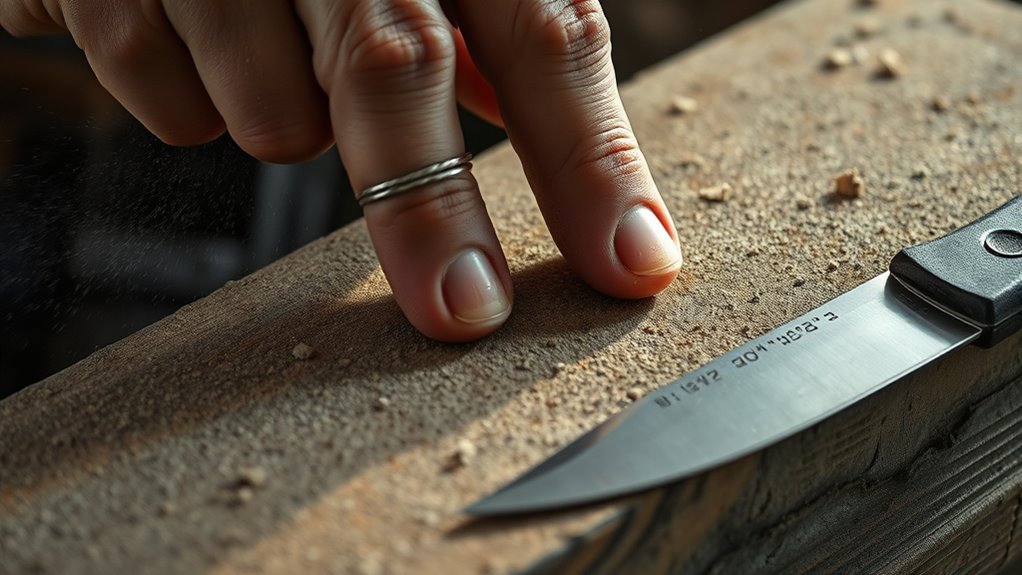
Try these tips:
- Keep your fingers lightly on the stone to monitor changes in resistance.
- Practice consistent strokes, noting how much force produces a smooth, even edge.
- Use gentle, controlled pressure, gradually increasing to find the point where the stone responds best.
As your tactile sensitivity sharpens, you’ll instinctively apply just enough force. Remember, fine-tuning this skill takes time but results in a sharper, more precise blade.
Best Practices for Perfecting Your Whetstone Skills

Mastering whetstone skills requires consistent practice and attention to technique. To improve, focus on maintaining blade flexibility, which helps you control the angle and pressure, ensuring even sharpening. Avoid rushing; sharpening speed should come naturally as your technique improves, not from applying excessive force. Regularly evaluate your progress by checking the edge’s sharpness and consistency. Use light, steady strokes rather than heavy pressure, which can damage the blade or hinder skill development. Develop a routine that emphasizes proper angle control and smooth, deliberate movements. Over time, you’ll find that your ability to sharpen efficiently and safely increases. Remember, patience and precision are key to perfecting your skills and achieving a razor-sharp edge with minimal effort.
Frequently Asked Questions
Can Using Too Little Pressure Damage My Blade?
Using too little pressure won’t damage your blade, but it can affect its edge durability and overall longevity. Light pressure may make sharpening less effective, leading to a less sharp edge over time. To maximize blade longevity, apply consistent, moderate pressure during sharpening. This helps create a finer edge and prevents uneven wear, ensuring your blade stays sharp longer and maintains its edge durability.
How Does Pressure Affect Different Types of Blades?
Think of your blade as a fine instrument—pressure impacts each differently. For softer blade materials, too much pressure can cause chipping or uneven edges, while harder materials like stainless steel tolerate more aggressive sharpening. Your sharpening technique should adapt accordingly; gentle strokes preserve your blade’s integrity, while firm pressure might be needed for tougher steels. Adjust your pressure based on blade material to achieve a sharp, durable edge without damage.
Is There an Ideal Pressure for Various Sharpening Stones?
For different sharpening stones, there isn’t a one-size-fits-all pressure calibration. Generally, you should apply light to moderate pressure, focusing on maintaining a steady, controlled sharpening technique. Too much pressure can damage blades and wear down the stone prematurely. Use gentle, consistent force, adjusting based on the stone’s grit and the blade’s hardness. This approach guarantees efficient sharpening without risking damage, making your technique more effective and prolonging the stone’s lifespan.
How Do I Correct Over-Pressing Mistakes?
To correct over-pressing mistakes, start by checking your honing angle and adjust it to match your blade’s geometry. Lighten the pressure you apply on the stone, allowing the edge to sharpen evenly without gouging or uneven wear. Focus on maintaining a consistent angle, and regularly inspect your blade to make certain you’re not removing too much material too quickly. Practice patience, and you’ll improve your technique over time.
Can Improper Pressure Cause Long-Term Blade Degradation?
Improper pressure can indeed harm your blade’s longevity and compromise sharpening consistency. When you press too hard, you risk removing too much metal, weakening the edge over time, and causing long-term degradation. Consistent, gentle pressure preserves the blade’s integrity, ensuring it stays sharper longer and maintains a reliable edge. By adjusting your technique, you protect your investment and enjoy improved performance with every use.
Conclusion
Don’t let the fear of dull blades push you to press harder. Gentle, consistent pressure will sharpen your knives effectively without damaging your whetstone or blades. It might seem slow at first, but with patience, you’ll develop the feel for the right touch. Remember, the best sharpeners trust technique over force—so relax, practice, and enjoy the process. Your blades will thank you with a long-lasting, razor-sharp edge.